
08-06-2026 17:00
François BartholomeeusenGood day everyone, On June 5 2026, I collected de
08-06-2026 10:16
 Spooren Marco
I don`t have a clou about this fungus,it is not in
07-06-2026 15:10
 William Slosse
Hello everyone,On 05-06-26, I found following asco
05-06-2026 11:02
Thomas Læssøehttps://svampe.databasen.org/observations/10596691
07-06-2026 12:09
 François Freléchoux
Bonjour, Voici une brève description de ce qui m
07-06-2026 12:43
Steve ClementsBojour. This was a strange find on a stick on my
12-07-2015 00:05
 Nedim Jukic
This one from the same locality as the previous on
06-06-2026 17:44
Steve ClementsBonjour, This disco was on planed wood 3 x 1.5 cm
14-08-2016 23:15
 Alex Akulov
Dear friendsCan you help me to find the descriptio

Hi again
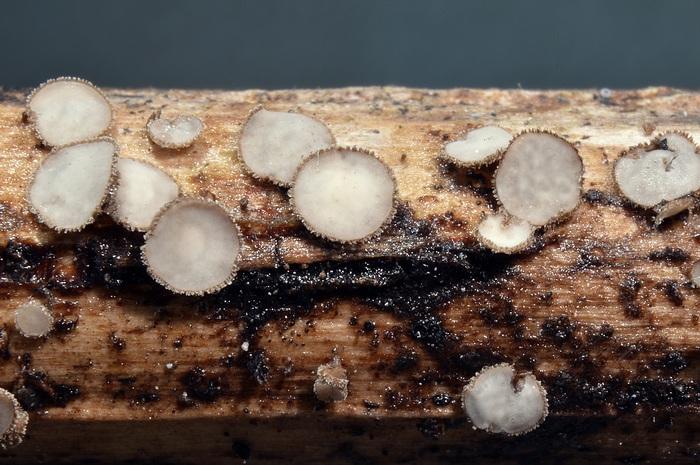
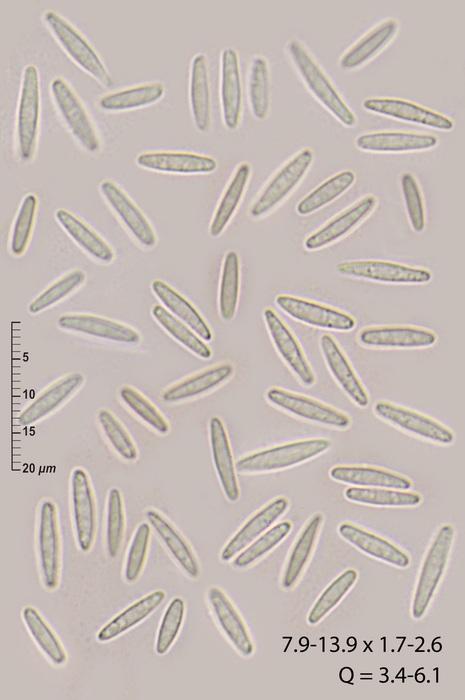
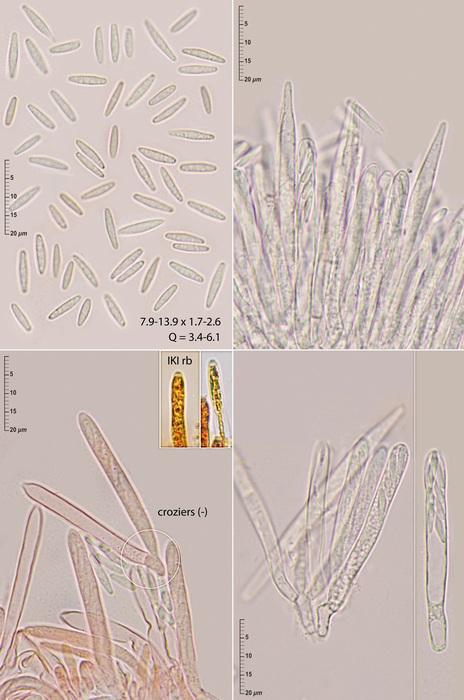
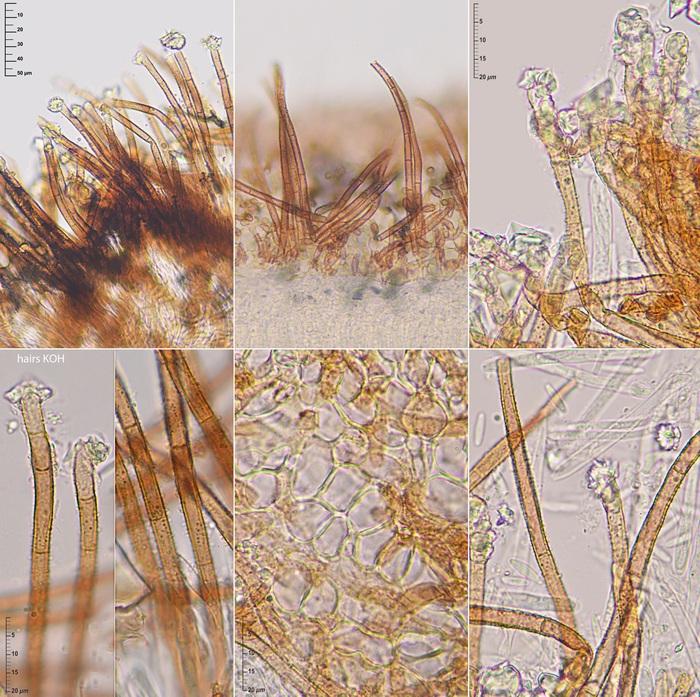
The brownish hairs of these narrowly sessile apothecia are sepate, granulate, with crystal drusses at their tips, so I think it could belong to the genus Brunnipila. But I don't find a taxon that fits well with my collection, because the asci are IKI rb and don't have croziers at their bases. The paraphyses are broadly lanceolate and exceed the hymenium level.
This fungus grew on subalpine environnement (1700 m) on a decorticated branch of an ericaceous plant, maybe Geista florida.
Have you some ides for me?
Thanks again

But there is a sample that has H-:
Brunnipila aff. calyculiformis, 20.VI.2013, by Ruben Martinez Gil, on twigs and leaves of Quercus ilex at 1200 masl in northern Spain, in La Rioja. Ap. up to 1.5 mm, spores 8-12 x 1.5-2.5 µm. Hairs 150-175 µm long.
maybe it is the same.
Forgot to mention B. latebricola on Rhododendron which likewise is H+.
Also a sample as calyculiformis from Collado La Farrapona, on Vitis idaea (?, as Erica), by Jens Petersen was H+.
Hi Zotto
Certainly Ruben's collection is very close...
Many thanks