
22-04-2026 01:06
 Richard VALERI
Bonjour à tous.Je vous présente cette Nectria s.
21-04-2026 22:14
Margot en Geert VullingsThis cup fungus was found on April 10, 2026, on lo
21-04-2026 13:36
Gernot FriebesHi,I am out of ideas for this one. I collected Sal
21-04-2026 13:19
Gernot FriebesHi,this Lophodermium on Typha has ascospores measu
21-04-2026 13:05
Gernot FriebesHi,this hyphomycete feels familiar but I was not a
20-04-2026 22:00
 Malcolm Greaves
These pale yellow, hairy ascos were growing on cul
19-04-2026 21:23
Steve ClementsBonjour, I found this anamorphic fungus on old pl
19-04-2026 20:46
Steve Clements1 mm diameter approx spherical conidiophores on pl
12-04-2026 17:56
 Hardware Tony
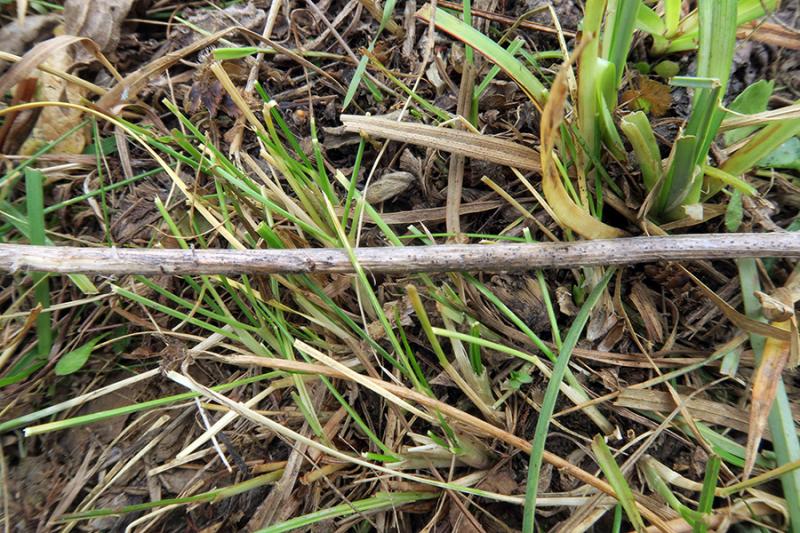
Found on dead stems in February earlier this year
Leptosphaeria?
Josep Torres,
04-11-2025 14:53
 Hello.
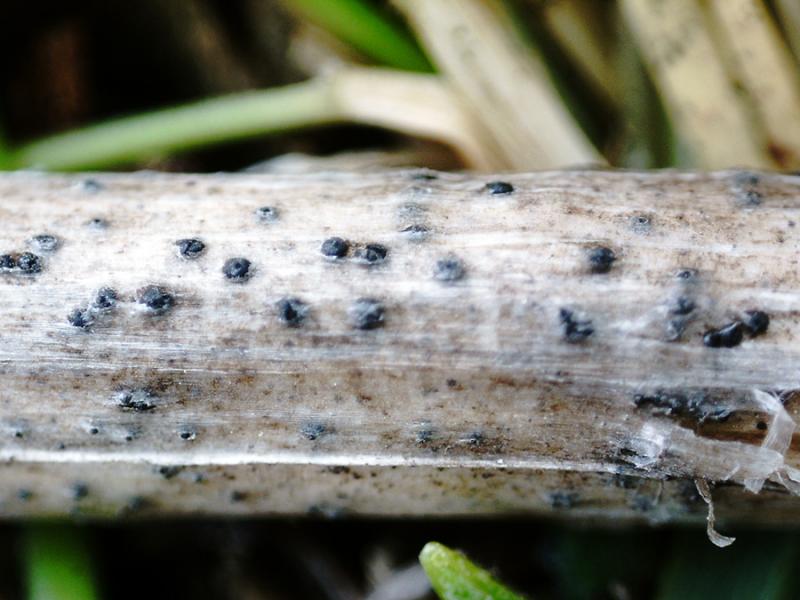
Very small, globose, mucronate perithecia, blackish in color and very uniform in size, between 0.25 and 0.30 mm in diameter, sprouting sporadically from a dry herbaceous stem still attached to the plant.
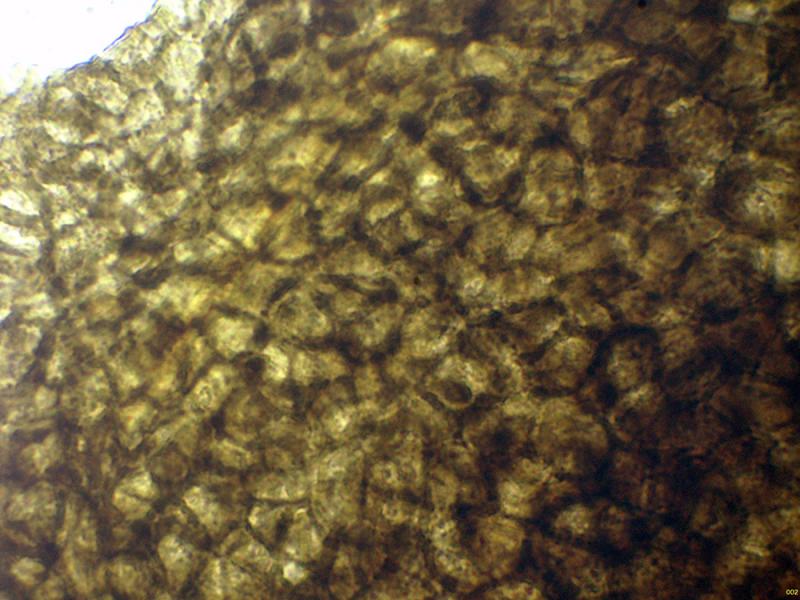
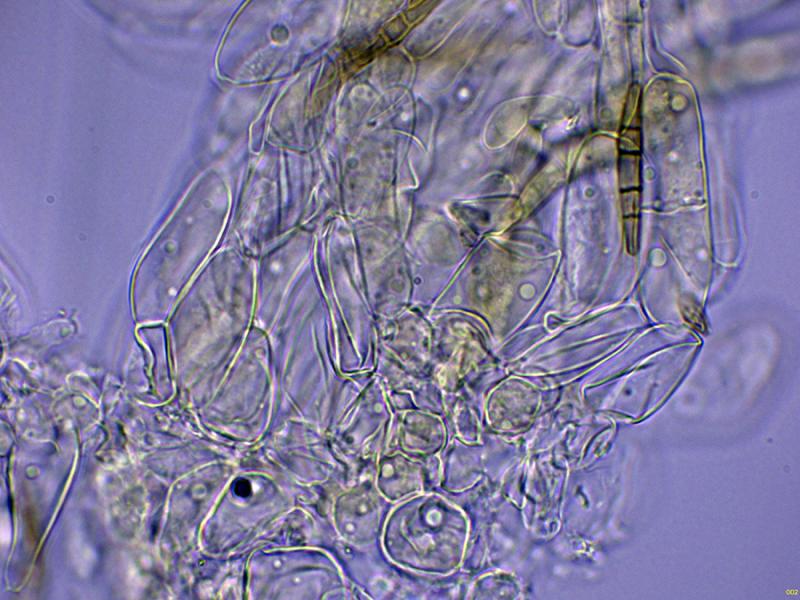
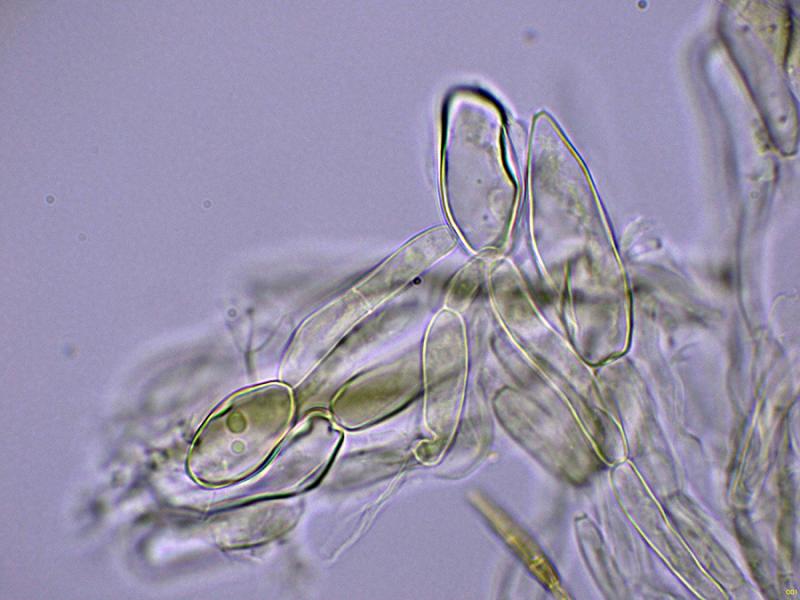
Hyphae of the perithecium wall, globose angular in texture, with an intracellular brown pigment.
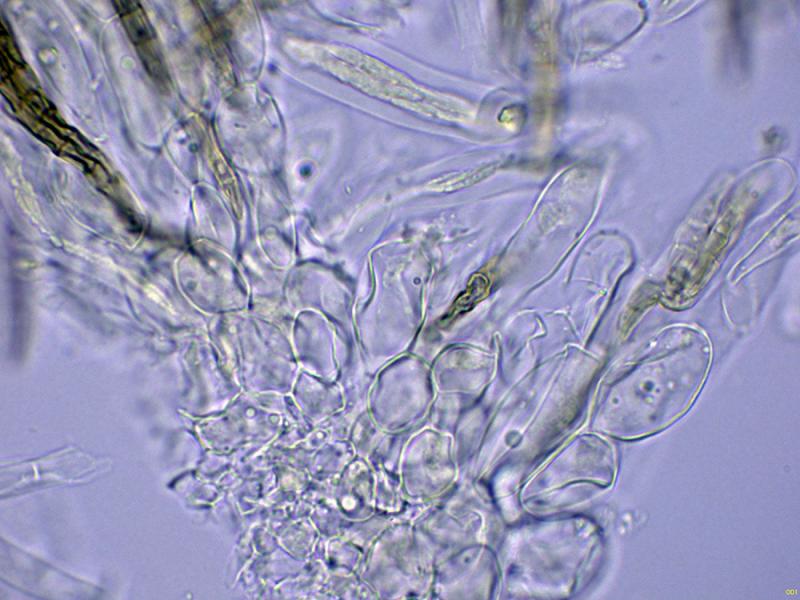
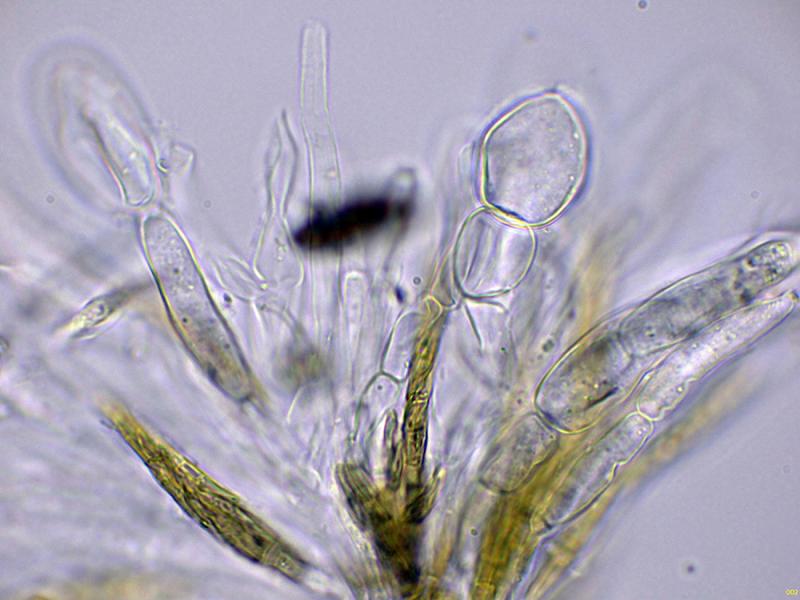
Hyphae of the excipulum globose and hyaline, from which arise paraphyses with swellings and short septa.
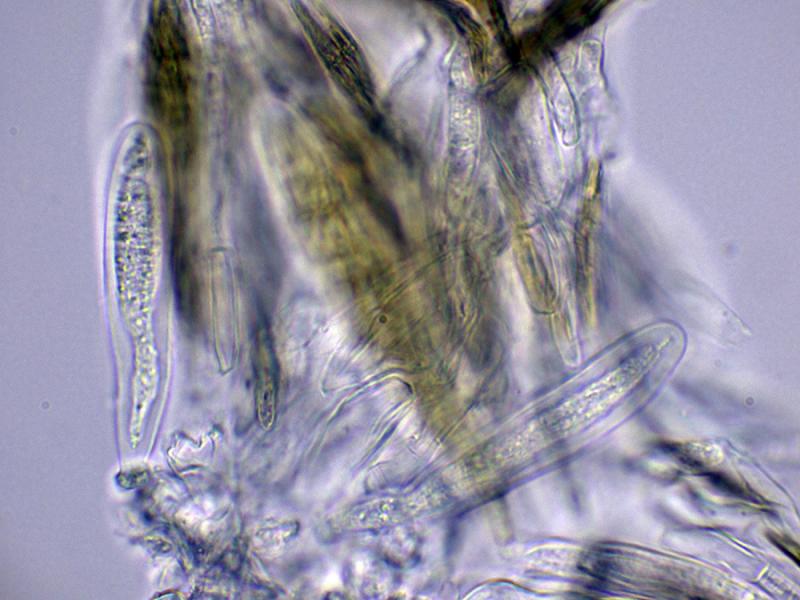
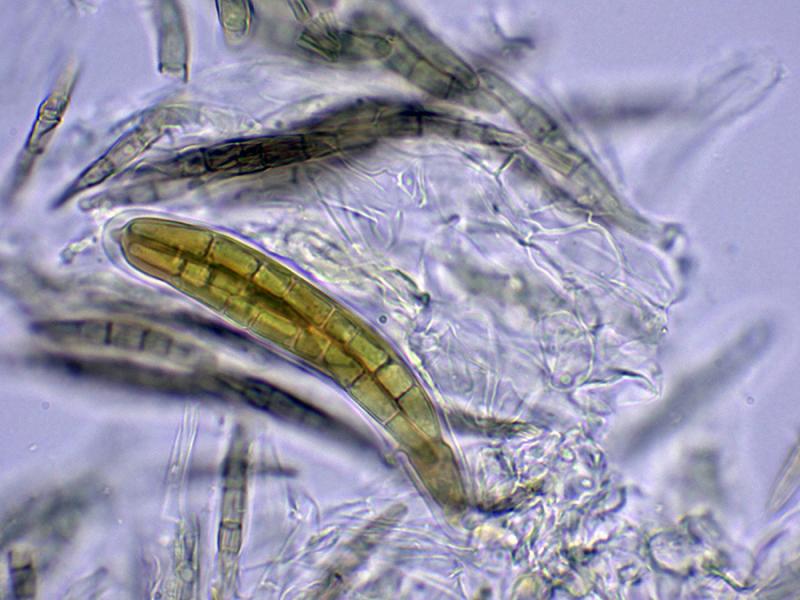
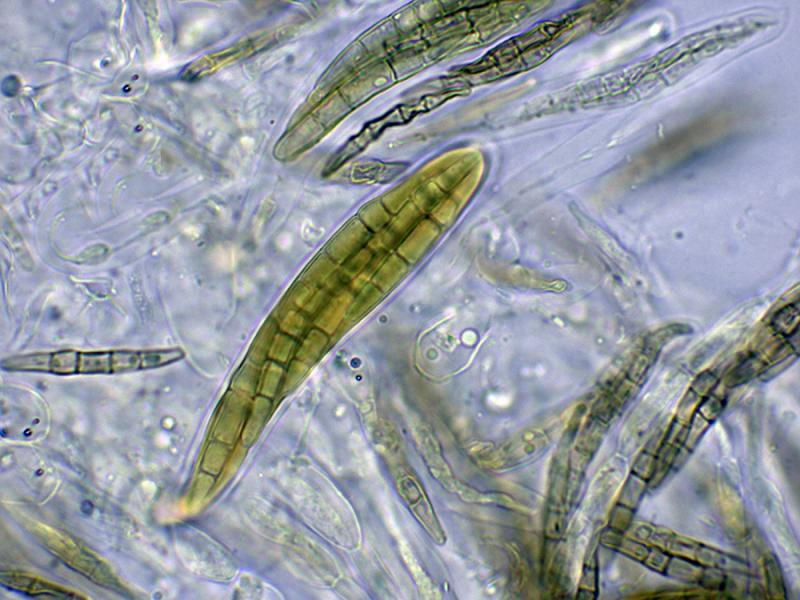
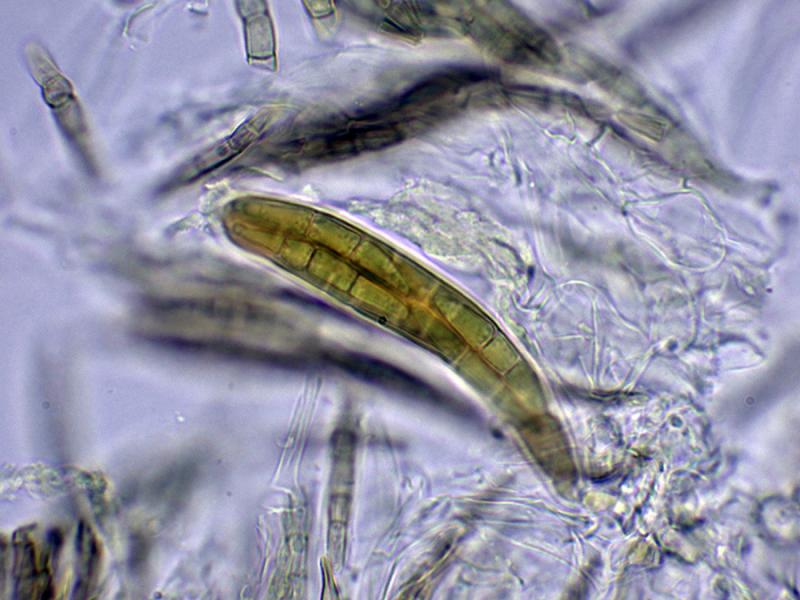
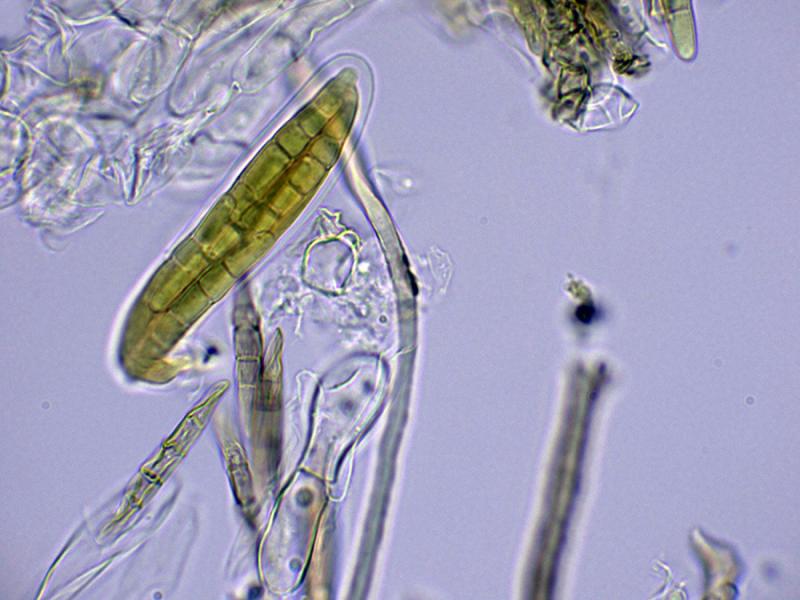
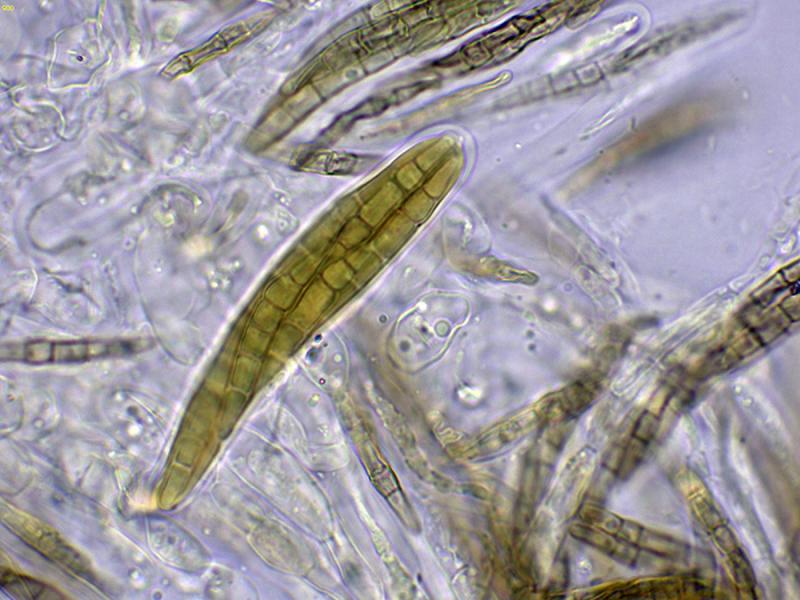
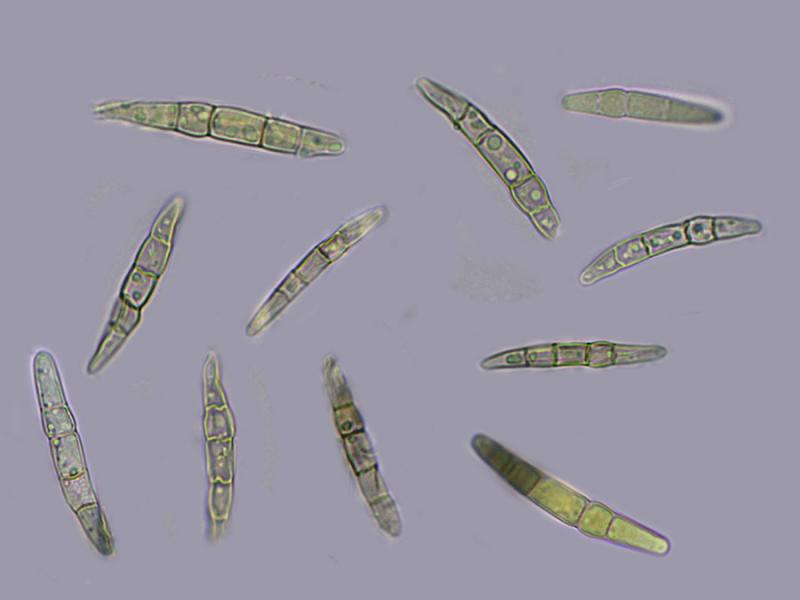
Asci apparently eight-spored, with no reaction to Melzer's reagent in their apical apparatus. Fusiform, hyaline ascospores with 2 to 4 septa, no reaction with Melzer's reagent, and with the following measurements of free spores:
(28.9) 30.4 - 42.4 (43) × (3.9) 4.5 - 6.3 (6.7) µm
Q = (5.3) 6 - 7.4 (8.5) ; N = 12
Me = 35.8 × 5.4 µm ; Qe = 6.7
Based on the microscopic data obtained, the closest match I know would be Ophiobolus sp., but I admit I'm not entirely sure.
Any suggestions would be greatly appreciated.
Thank you in advance.
Best regards.
Josep Torres,
06-11-2025 09:25
Re : Leptosphaeria?
Hello.
It seems the issue isn't with Ophiobolus, and it's most likely a Leptosphaeria, perhaps even, but only perhaps, Leptosphaeria maculans, something I can't confirm since the ascomata were already in poor condition.
http://www.ascofrance.com/search_recolte/3097
I'll edit the post.
Best regards.
It seems the issue isn't with Ophiobolus, and it's most likely a Leptosphaeria, perhaps even, but only perhaps, Leptosphaeria maculans, something I can't confirm since the ascomata were already in poor condition.
http://www.ascofrance.com/search_recolte/3097
I'll edit the post.
Best regards.
Mathias Hass,
08-11-2025 12:20

Re : Leptosphaeria?
Hi Josep,
I doubt its L. maculans, which should have 5-septate spores at least when fully developed and the firstformed septum (the one with the strongest constriction) should be the 3rd septum fom the top in the fully formed spore, and in you spores it seems to be the second septum. Finaly your sporemeasures are on the short side for L. maculans. If genuinely 4-septate that would narrow possibilities down (althoug there seems to be one 5-septate spore in one of your asci, could be an exception). Nodulosphaeria modesta might be a possibilty, but probably more fresh material is needed.
Kind regards Mathias
Josep Torres,
08-11-2025 15:42
Re : Leptosphaeria?
Thanks Mathias, you're right. I'll try to get more fresh specimens. For now, I'll leave this study as Nodulosphaeria cf. modesta = Leptosphaeria cf. modesta.
Best regards