
11-05-2026 12:32
 Bernard CLESSE
Pourriez-vous m'aider à identifier cette héloti
13-05-2026 15:26
 François Freléchoux
Bonjour,Voici une récolte faite il y a quelques j
12-05-2026 15:41
 Nicolas VAN VOOREN
Dear Ascolovers, especially interested in Pezizale
13-05-2026 12:05
 Thierry Blondelle
Bonjour à tous,J'aimerais avoir confirmation de c
10-05-2026 23:17
 Andreas Gminder
Hello,today we found in a moist steep decidous for
28-04-2026 20:07
 Lothar Krieglsteiner
... on twig in the air at standing Ceratonia siliq
27-04-2026 20:52
Lothar Krieglsteiner
Found on hanging tiwg of Olea europaea in dried-ou
11-05-2026 20:22
Lothar Krieglsteiner
on attached twig of standing Ficus caricaquite uns
29-04-2026 10:44
Lothar Krieglsteiner
growing at moist, drying-out soil at the side of a
Hairy anamorph on plywood with beaked curved conidia
Steve Clements,
19-04-2026 21:23
Bonjour,
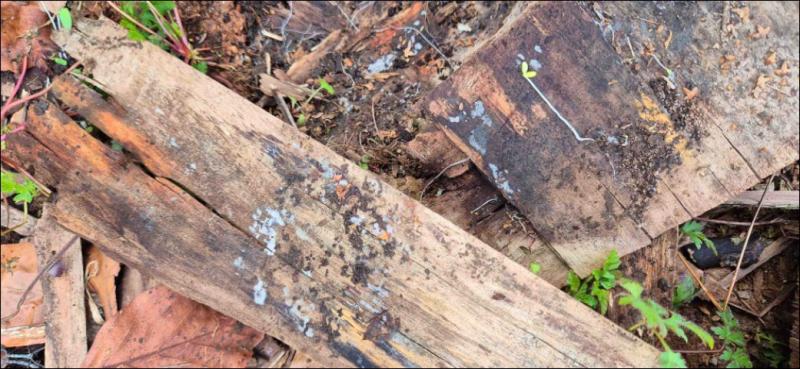
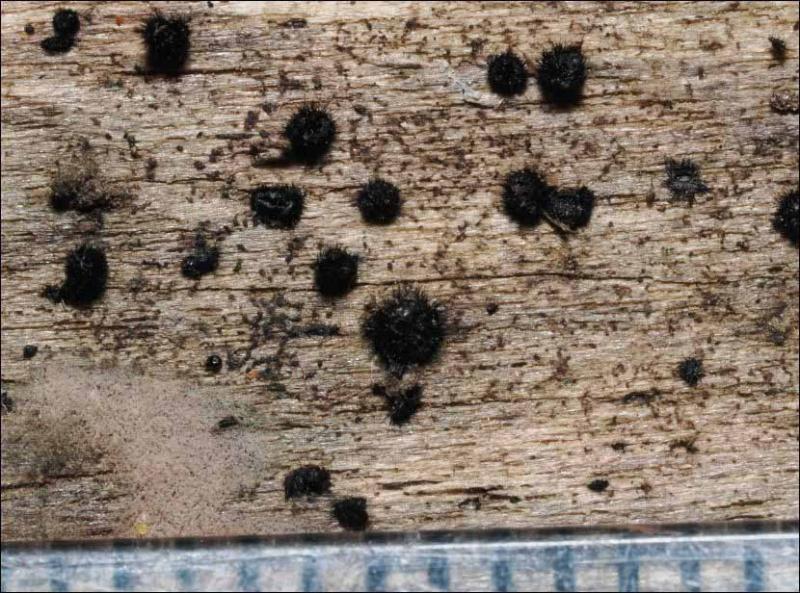
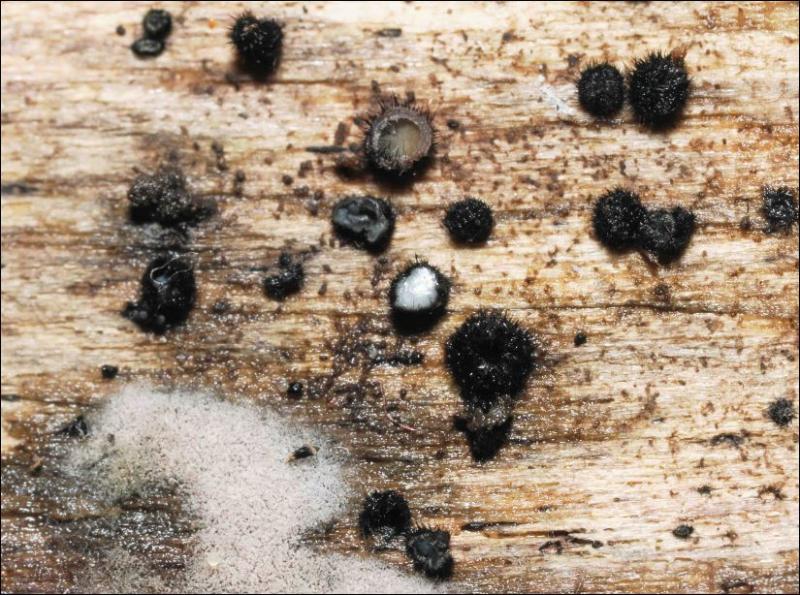
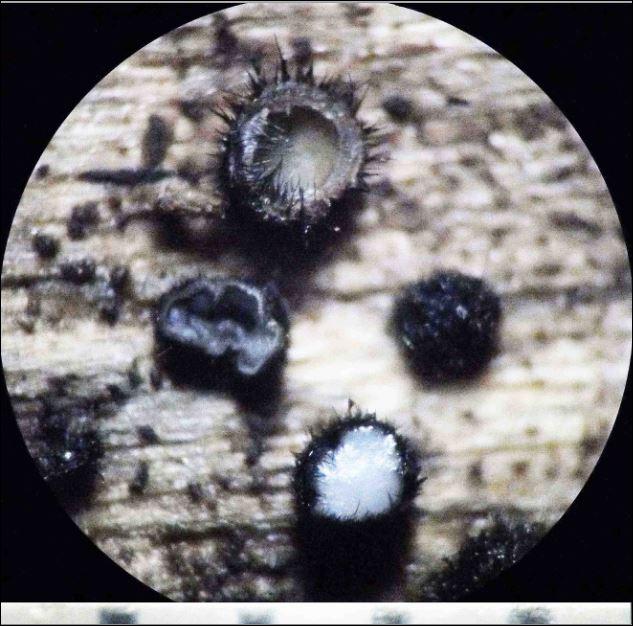
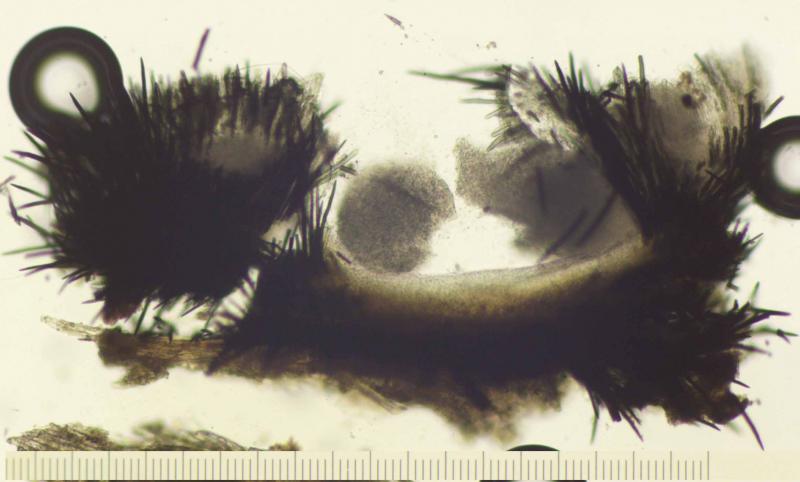
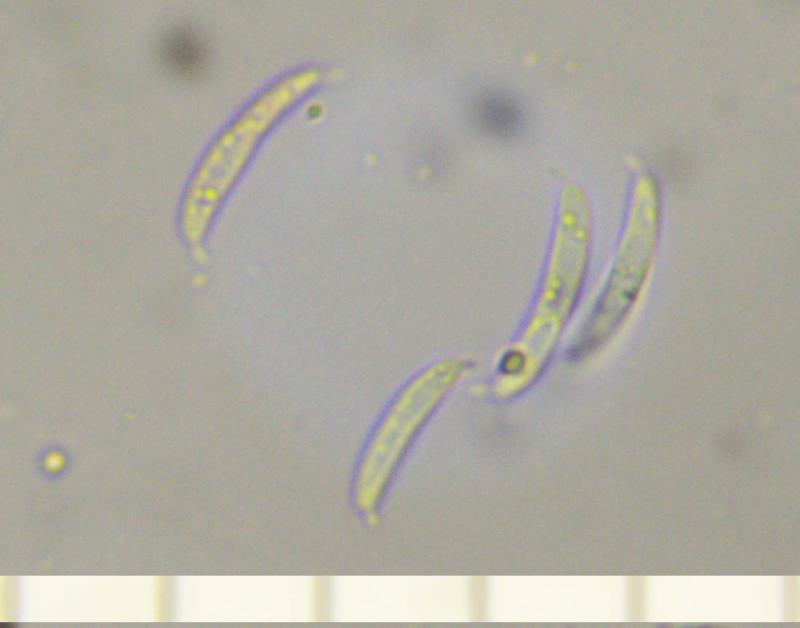
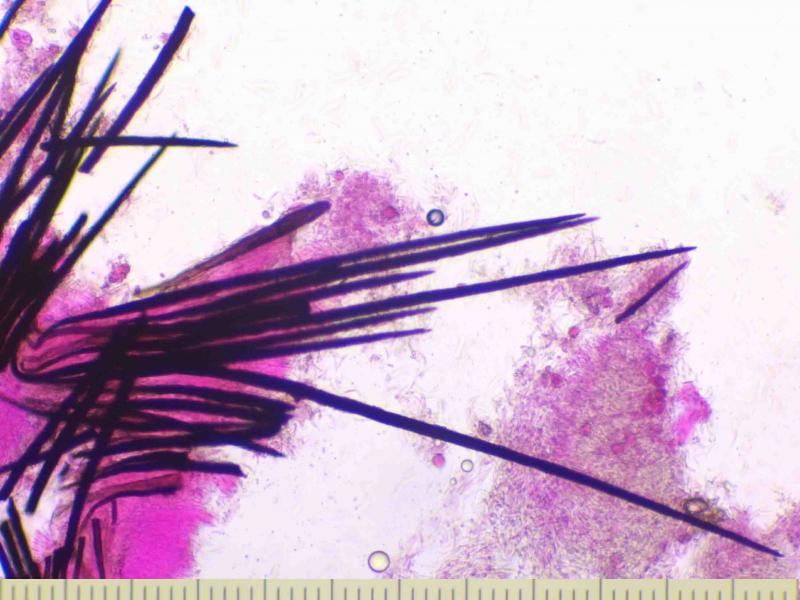
I found this anamorphic fungus on old plywood in our allotment garden in Sheffield, N. England. It was approx 1 mm diameter, roughly sperical, covererd densely with setae uo to 150 um. It contained a mass of curved conidia 12-15 x 2.5 um, with beaks at each end visible on oil-immersion. On hydration in a moist chamber, the conidiophores tended to open/split to reveal the whitish conidial mass. I cannot find any matches in Ellis & Ellis Microfungi on Land Plants.
I am compiling a list of fungi found on the allotment gardens over the past 20 years in order to add to the data illustrating the biodiversity value of allotment gardens in large cities. Any help in allocating this fungus to any level would be appreciated,
Merci beaucoup,
Steve
Steve Clements,
19-04-2026 21:46
Re : Hairy anamorph on plywood with beaked curved conidia
Merci Mathias!
My conidia measure a little smaller but the description and illustration in Ellis & Ellis no. 1321 look right for Pseudolachnea hispidula.
Here is a section which looks like the illustration.
My conidia measure a little smaller but the description and illustration in Ellis & Ellis no. 1321 look right for Pseudolachnea hispidula.
Here is a section which looks like the illustration.
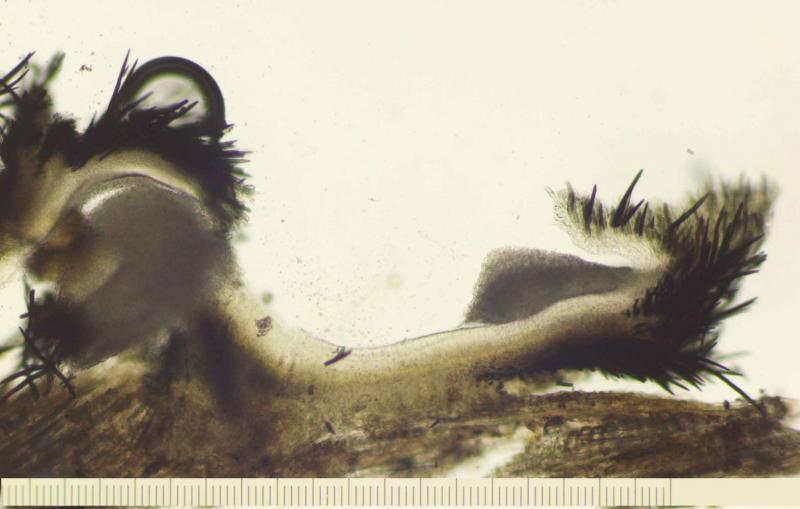
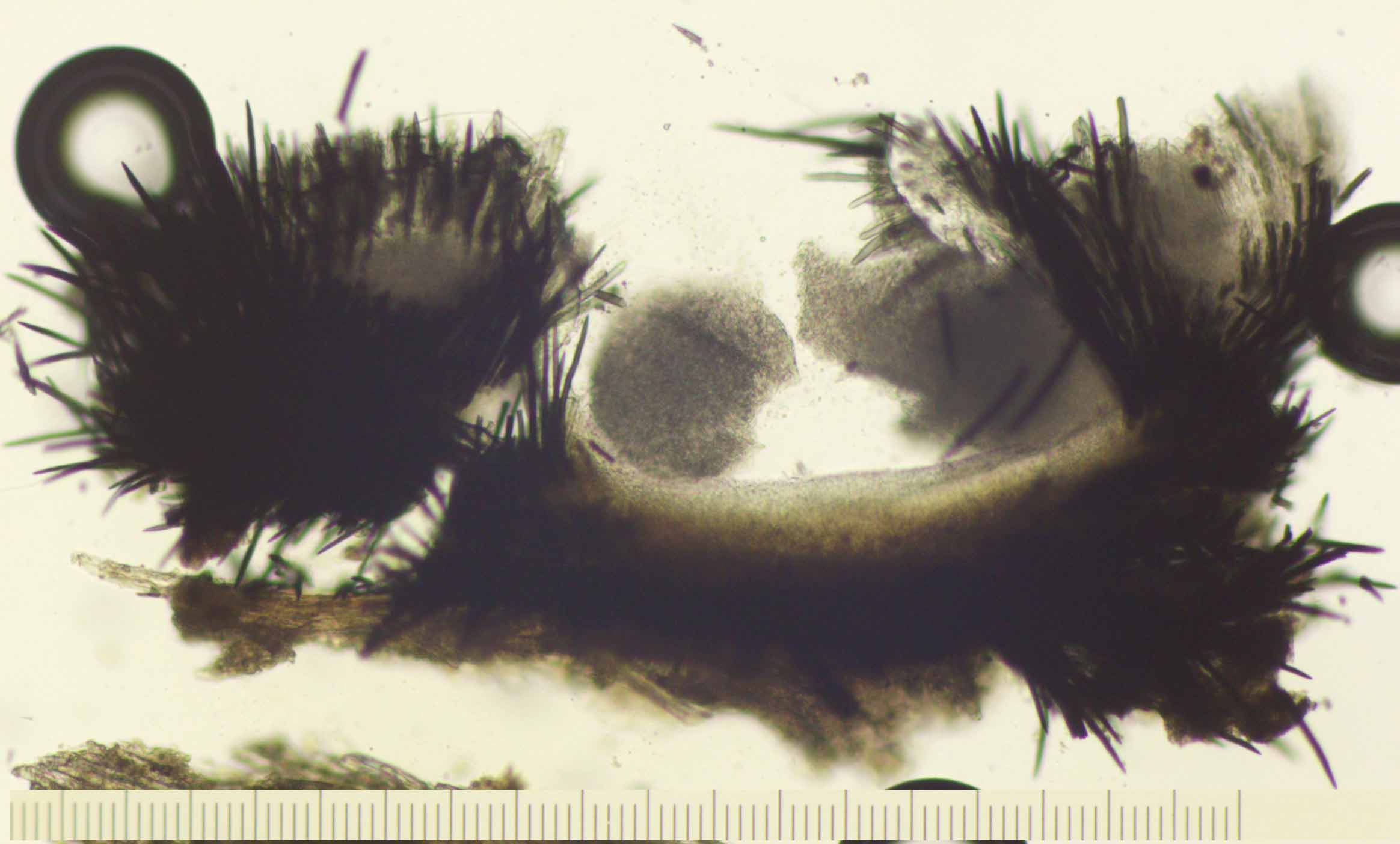 conidiophore opening to become cupulate