
09-06-2026 18:32
Camille MertensSur morceau de roseau immergé 0,5 - 0,7 mm de dia
08-06-2026 10:16
 Spooren Marco
I don`t have a clou about this fungus,it is not in
08-06-2026 17:00
François BartholomeeusenGood day everyone, On June 5 2026, I collected de
07-06-2026 15:10
 William Slosse
Hello everyone,On 05-06-26, I found following asco
05-06-2026 11:02
Thomas Læssøehttps://svampe.databasen.org/observations/10596691
07-06-2026 12:09
 François Freléchoux
Bonjour, Voici une brève description de ce qui m
07-06-2026 12:43
Steve ClementsBojour. This was a strange find on a stick on my
12-07-2015 00:05
 Nedim Jukic
This one from the same locality as the previous on
06-06-2026 17:44
Steve ClementsBonjour, This disco was on planed wood 3 x 1.5 cm
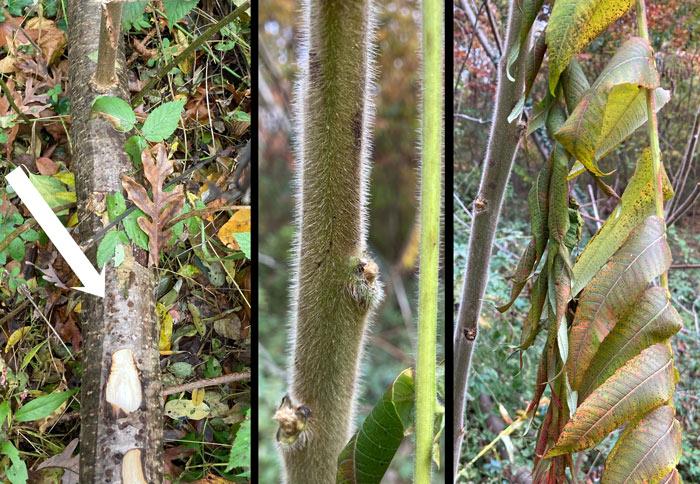
I'm having trouble identifying a pyrenomycete I collected last week in New York City. I believe that the substrate is Rhus typhina, which was lying on the forest floor of a Bronx park.
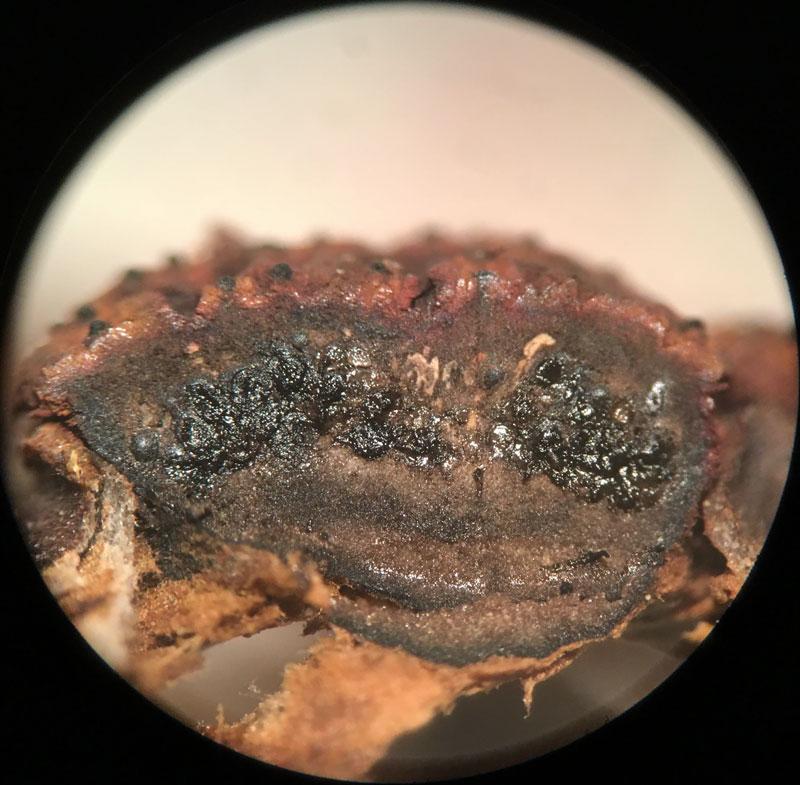
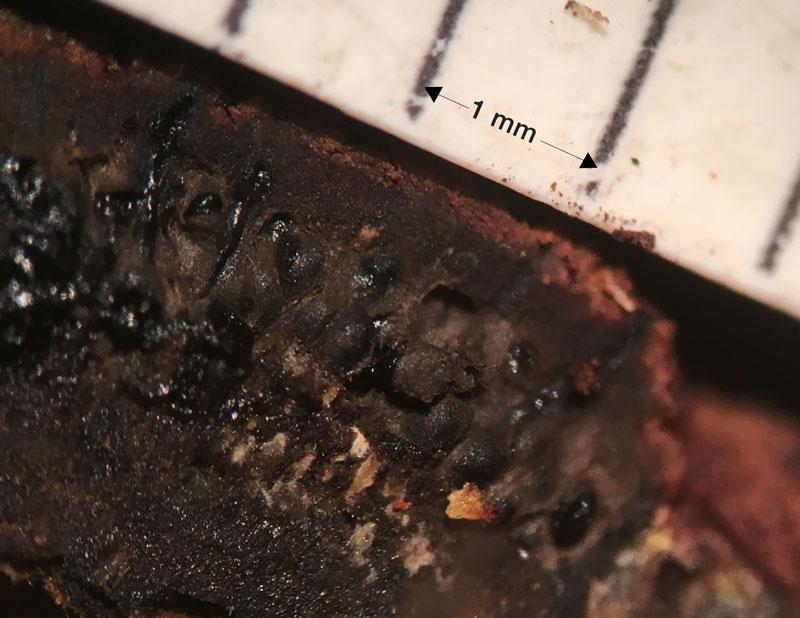
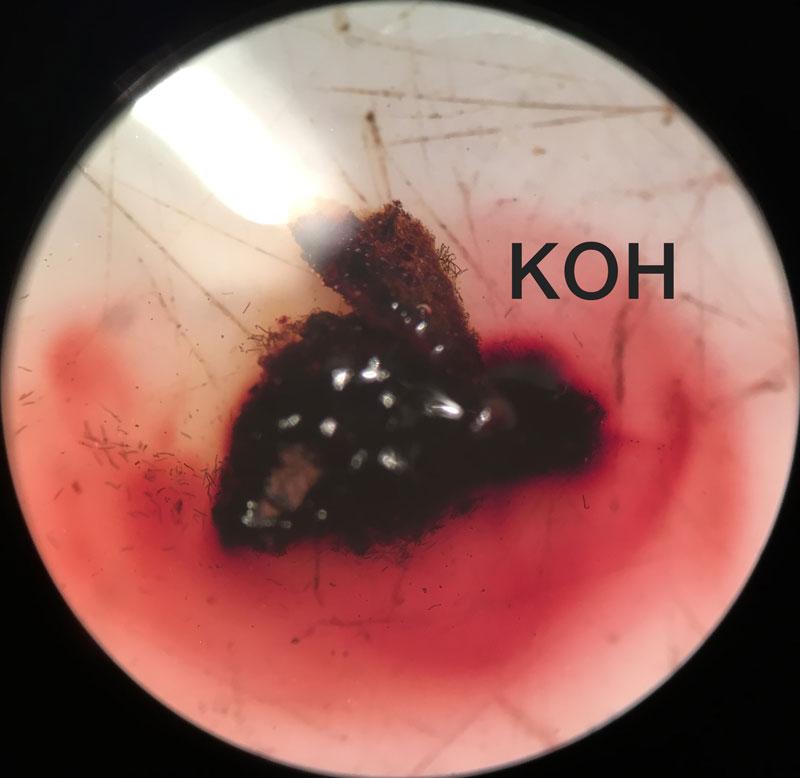
The reddish stromata are erumpent through the bark of the substrate. The surface is quite wrinkled and quite deeply sulcate around the ostioles. The ostioles are black and most ejected a large blob of dark spores. The interior tissue is black. Perithecia are embedded at many different depths in the stroma with long necks. The tissue produces red pigments in KOH.
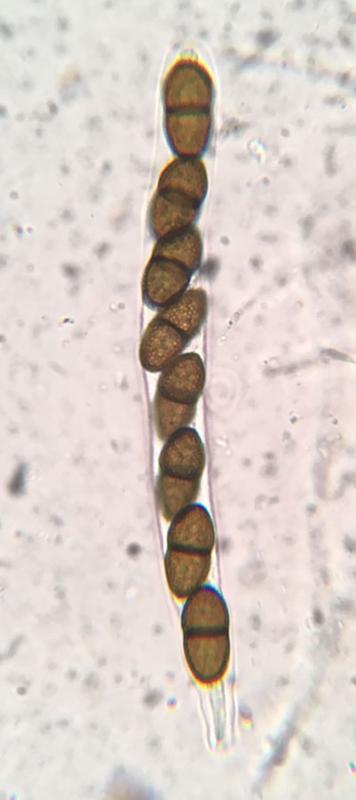
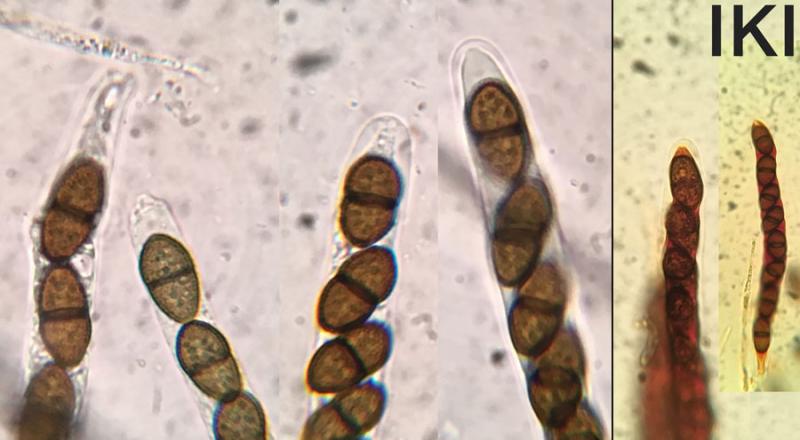
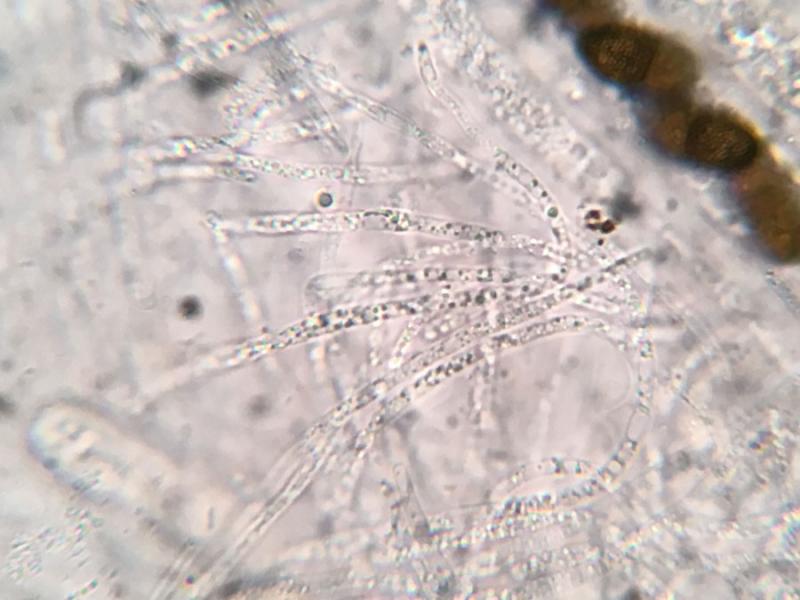
Asci are 123-134 x 11.8-12.5µm. They appear to be bitunicate, or if not, quite thick-walled. IKI-
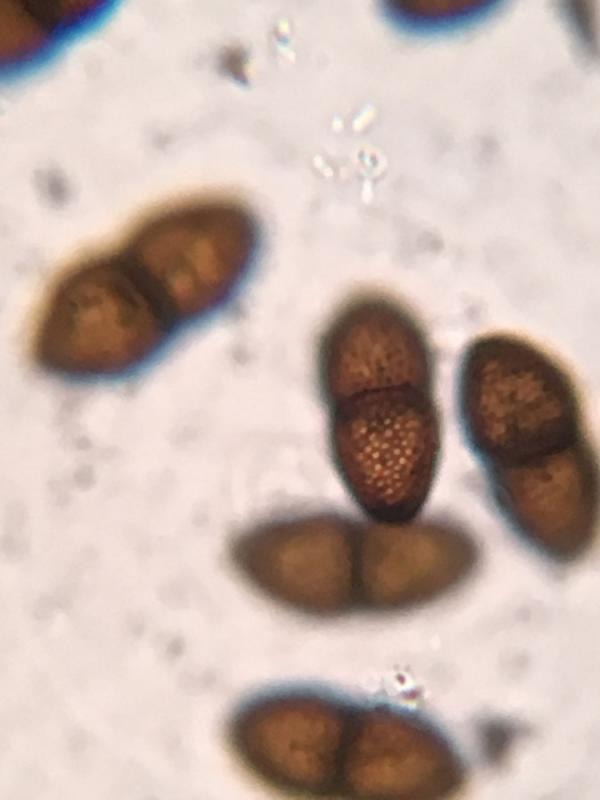
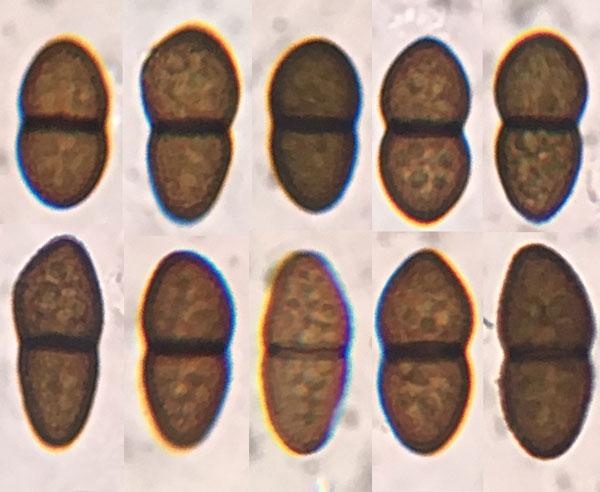
Spores brown, 1-septate, constricted at the septa. For the most part, the two cells of the spores are equal in size. There appears to be a texture to the spores. Perhaps they are punctate, or maybe they are pitted? 15.5-19.9 x 6.9-9µm. Q= 2.2 N=20
Paraphyses (Pseudoparaphyses?) about 2.5µm wide.
Does anyone recognize this pyreno?
Thanks in advance.
Ethan
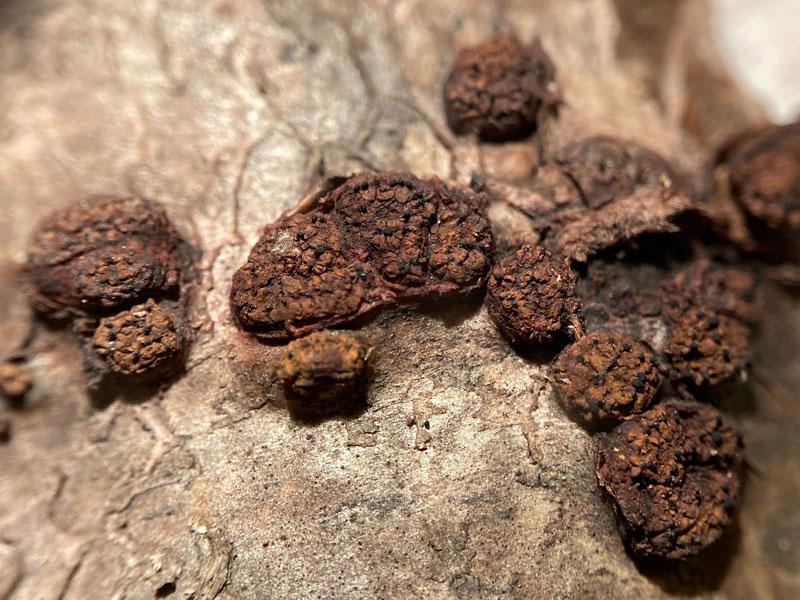
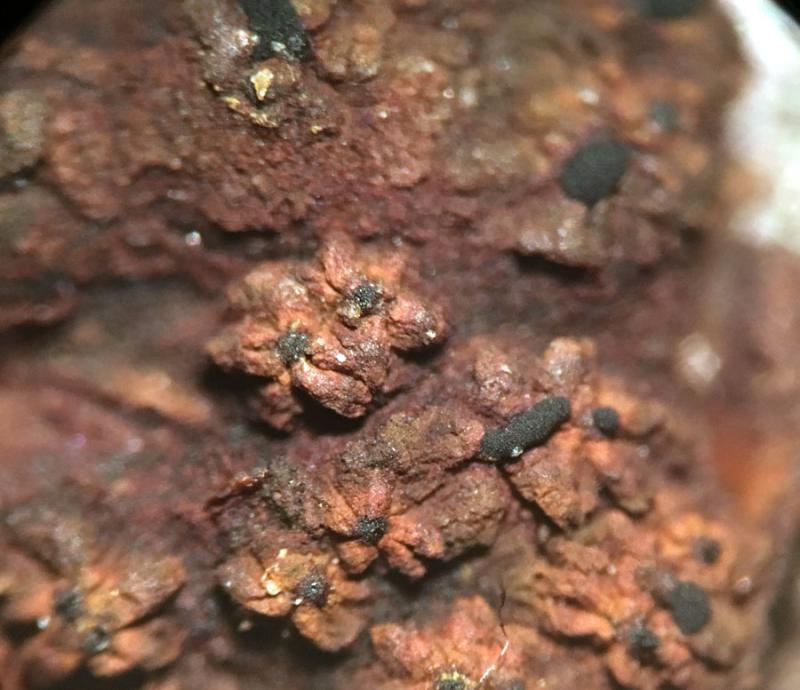


I agree with Jacques that aged Stromata of fulvopruinatum lose the yellow scurf and then mimick rubricosum. According to own observations fulvopruinatum is much more common at least in Europe , and this may be also the case in other temperate areas.
Concerning your collection I assume it is fulvopruinatum as the two small stromata clearly have a yellowish hue, a feature I haven't seen in rubricosum.
Best wishes Hermann