
12-04-2026 17:56
 Hardware Tony
Found on dead stems in February earlier this year
12-04-2026 15:52
Gernot FriebesHi,I'm looking for help with this anamorph collect
12-04-2026 12:22
 William Slosse
In a dune grassland in Oostduinkerke (Belgium), on
11-04-2026 15:45
 Zuzana Sochorová (Egertová)
Please, could anyone send me this paper?Moyne G.,
11-04-2026 13:34
Artem PtukhaHello, I am seeking assistance with the identific

11-04-2026 10:19
 Michel Hairaud
Chers amis d'Ascofrance , voici une très bonne no
11-04-2026 10:10
Michel Hairaud
Dear Ascofrance members, here is some very good ne
10-04-2026 23:22
Gernot FriebesHi,ascospores are 1- to 3-septate, approximately
10-04-2026 15:51
William Slosse
Hello everyone, On 08/04/26, I found a growth sit
 Hello.
An ascomycete from last May 10th, sprouting on the surface of a barked trunk of Pinus sylvestris on the ground.
Apothecia sprouting in a scattered manner, like grains, between 0.4 and 0.7 mm in diameter.
Hyphae of the exciple with ochre-brown intracellular pigment.
Apparently octosporic asci, which appear bitunicate. I have not been able to clearly observe any uncinules at their bases, and they are practically unreactive to KOH or Melzer's reagent, with measurements of (101.4) 114.2 - 126.1 (129.7) × (16.2) 16.24 - 19.5 (19.9) µm.
The paraphyses are slightly branched, filiform, with few septa and a width of 1.3 to 1.8 µm.
Some asci appear to have what could be considered ascoconidia inside, and the few more or less developed spores I have observed have a moriform appearance, with a slightly pointed end, 3 or 4 transverse septa, and some scattered longitudinal septa. The measurements within the ascus are (14.1) 14.2 - 17.1 (17.9) × (5.9) 6.6 - 6.7 (6.8) µm.
With this appearance and for Pinus sylvestris, the closest I know would be Placynthiella uliginosa, but microscopy does not match at all.
Any feedback from you would be welcome.
Thank you very much in advance.
Best regards.
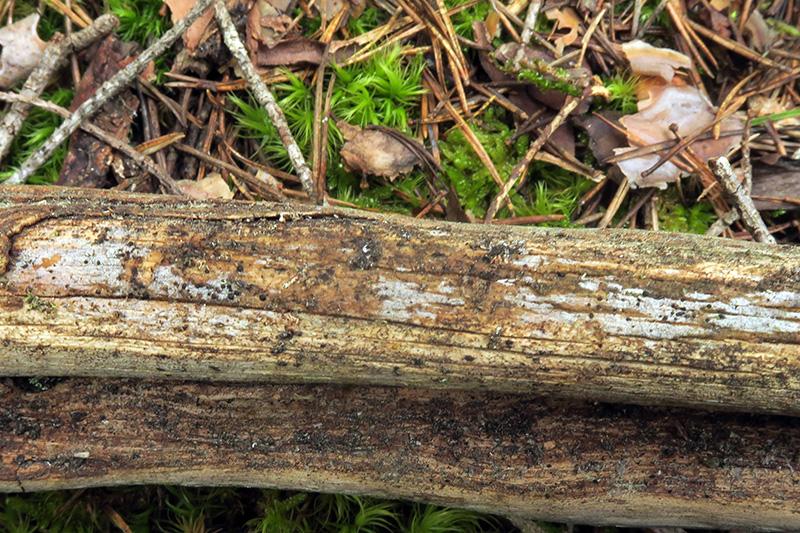
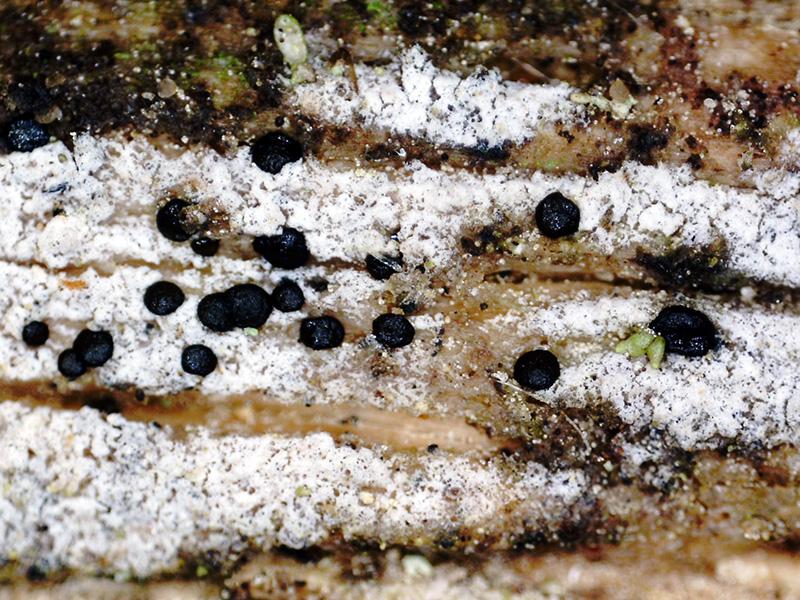
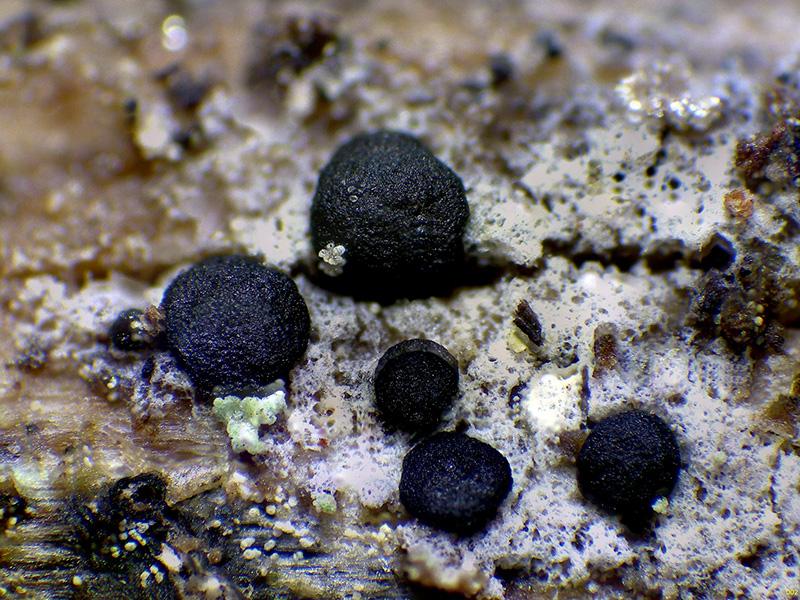
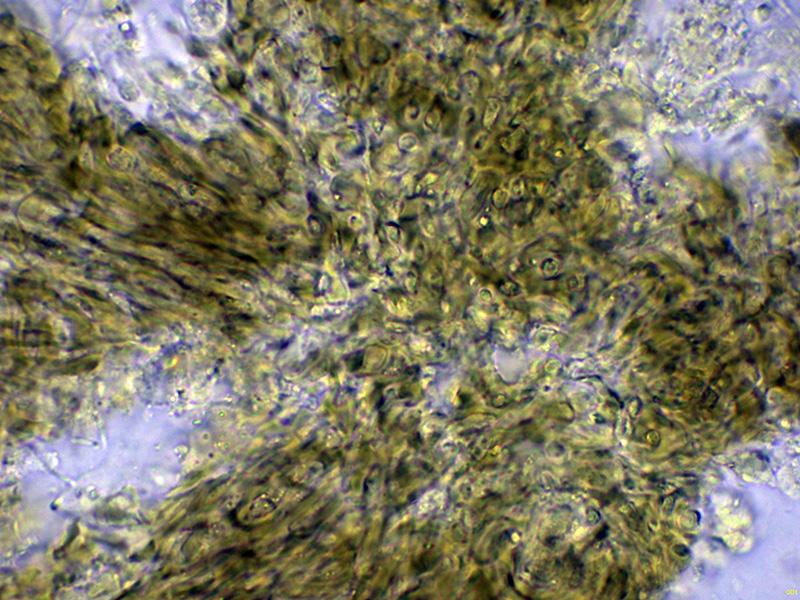
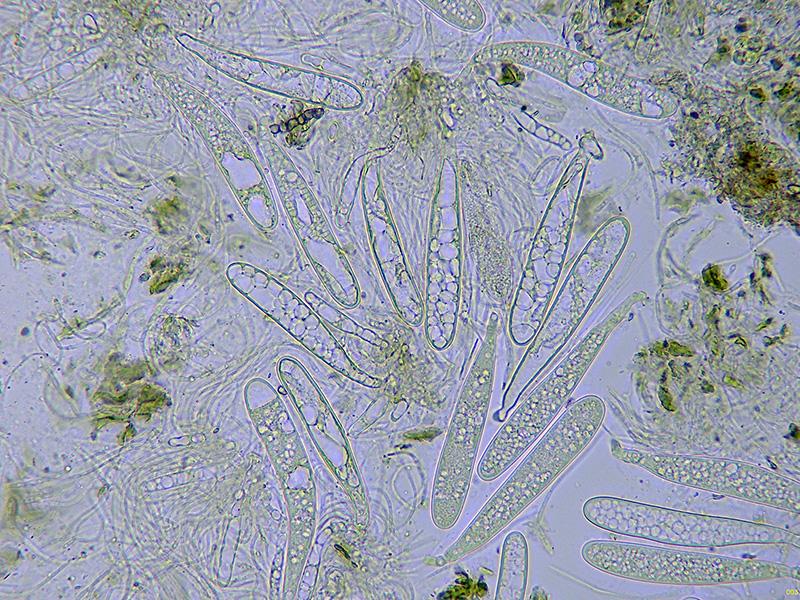
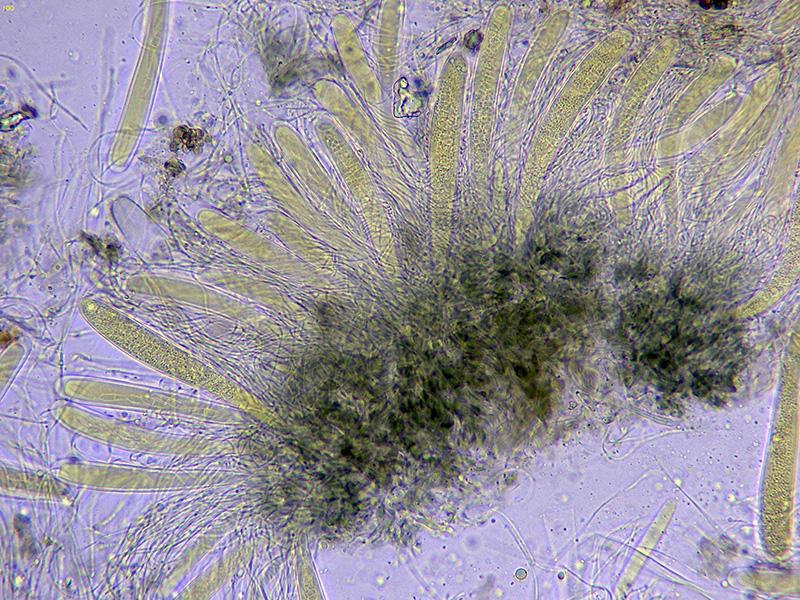
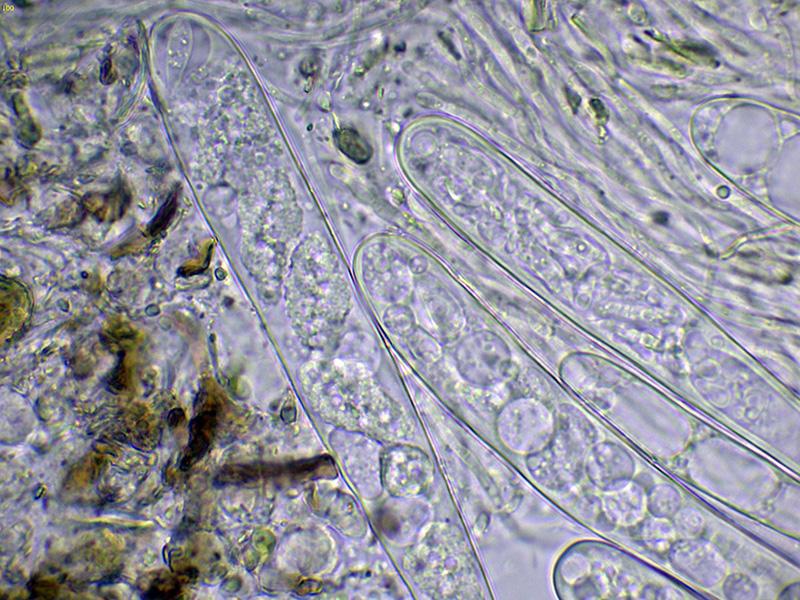
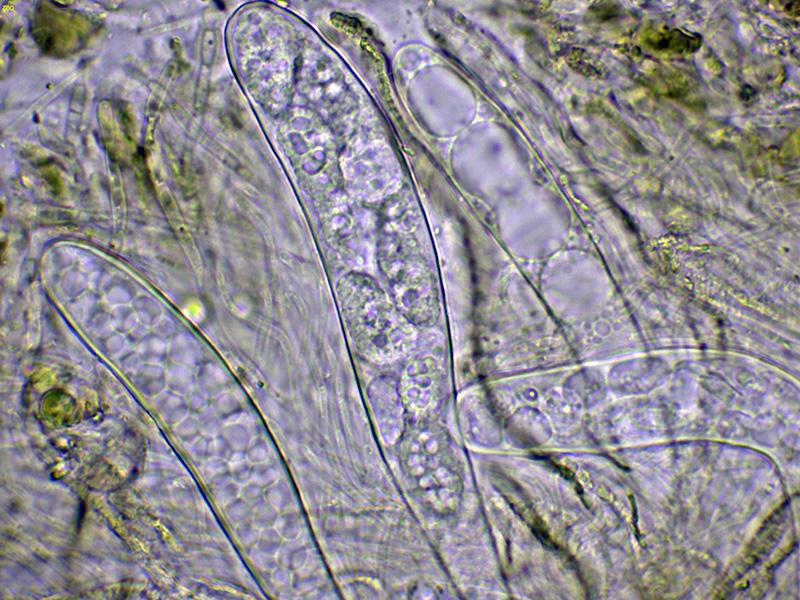
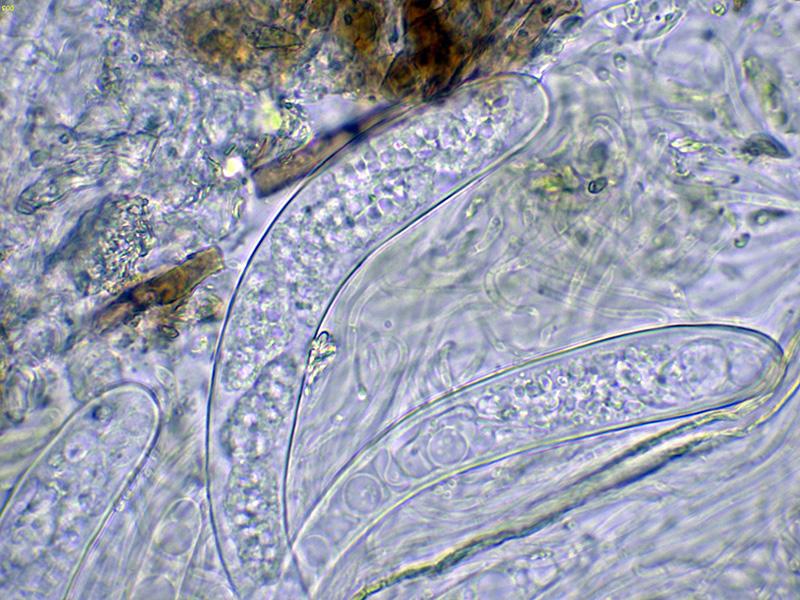
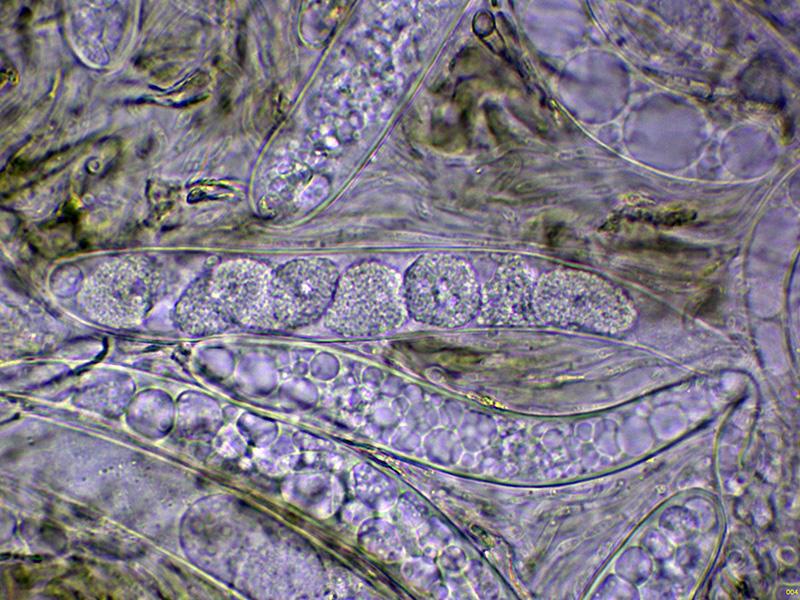
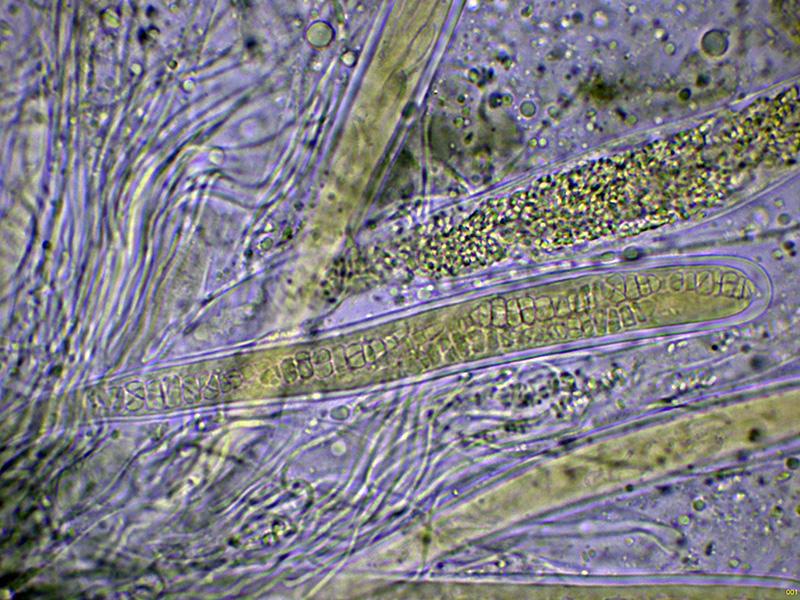
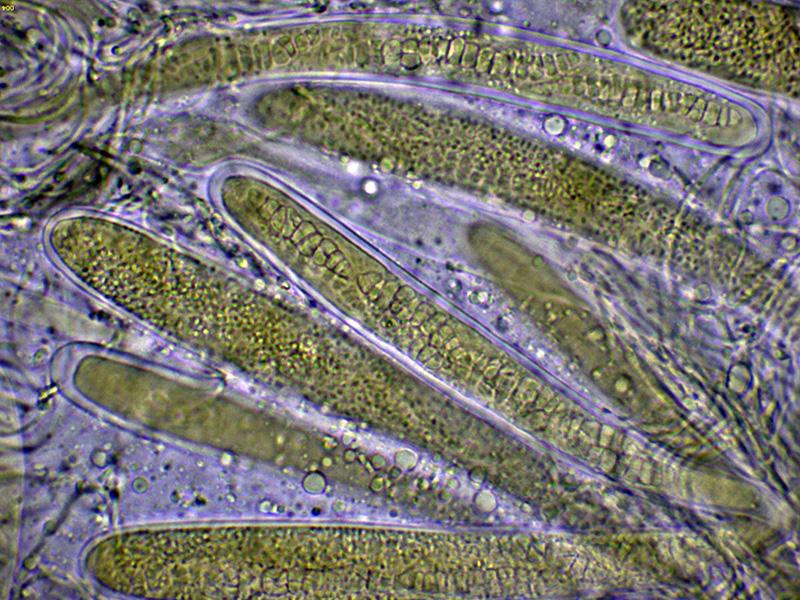
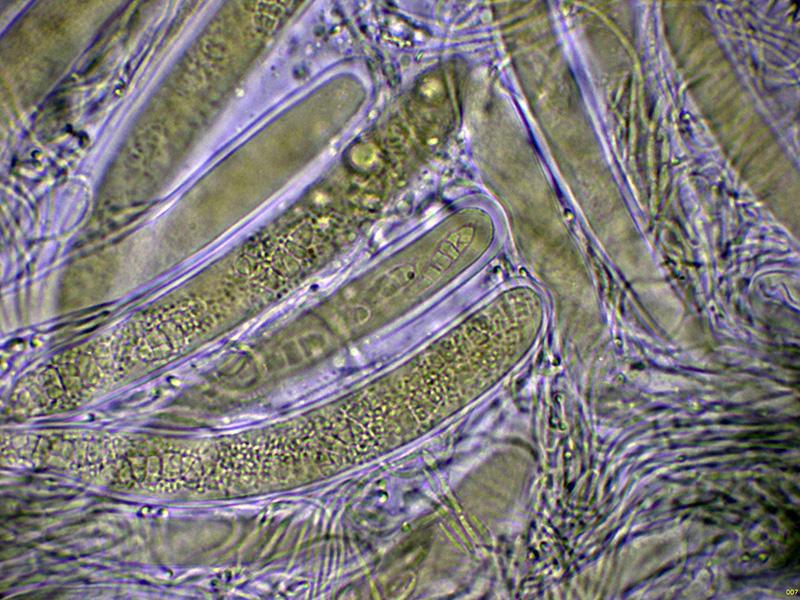
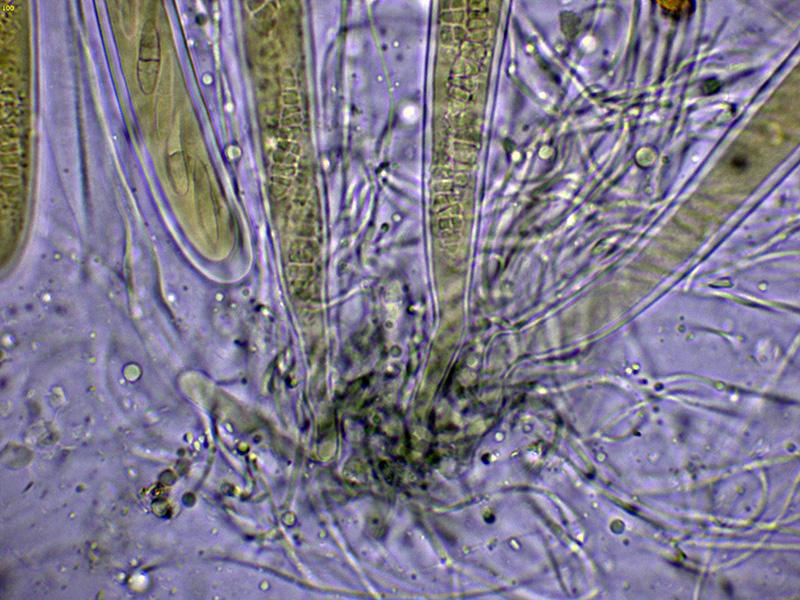
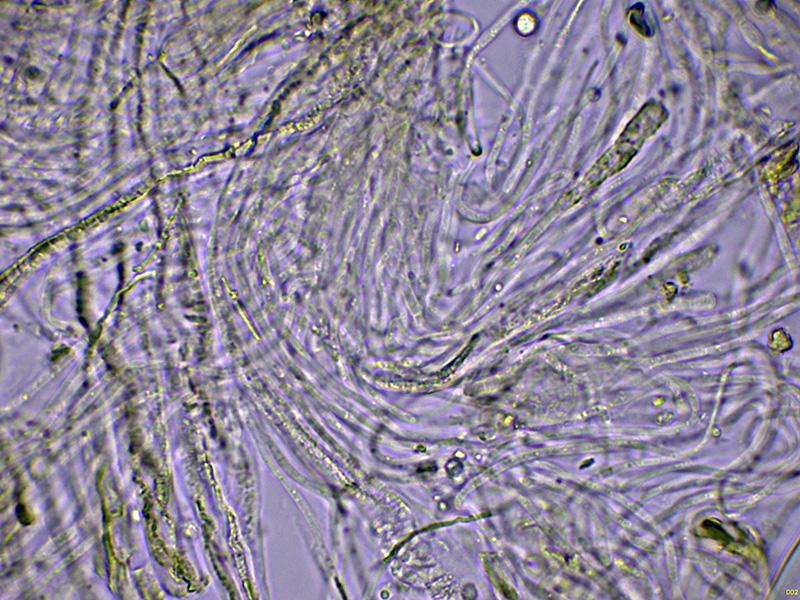
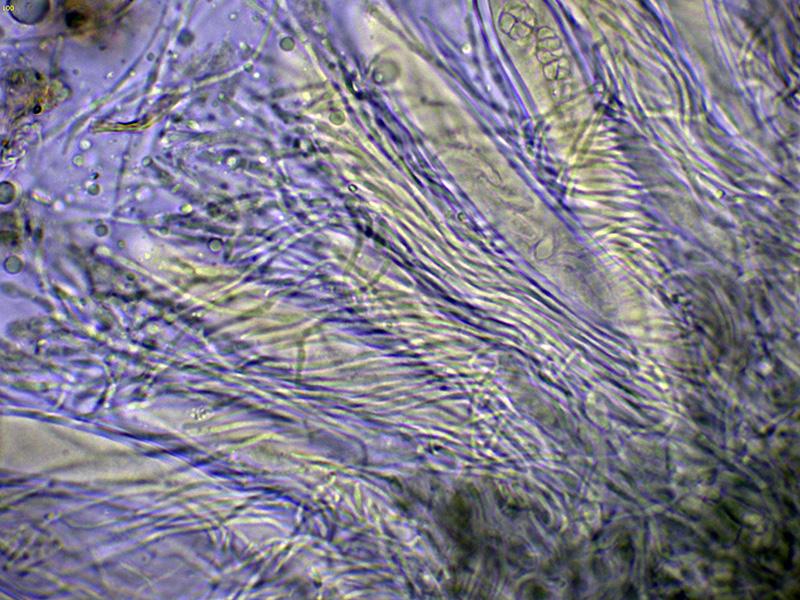
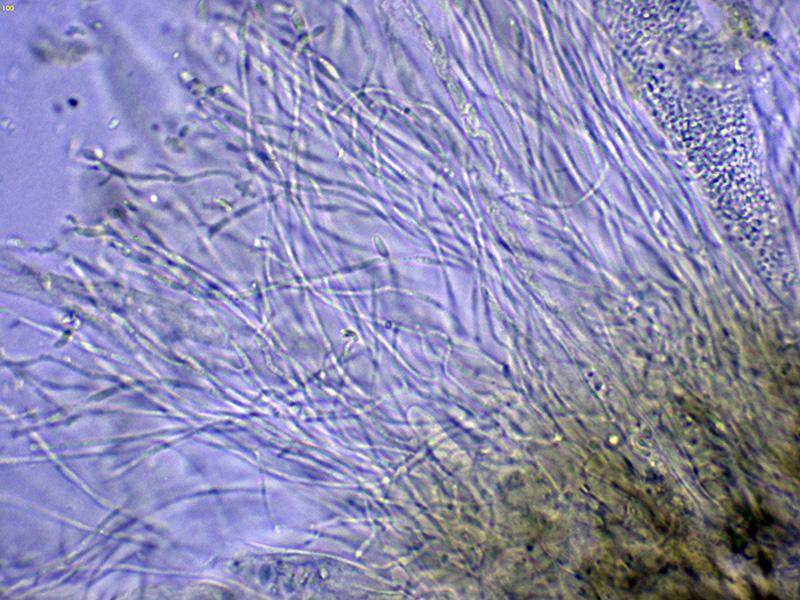
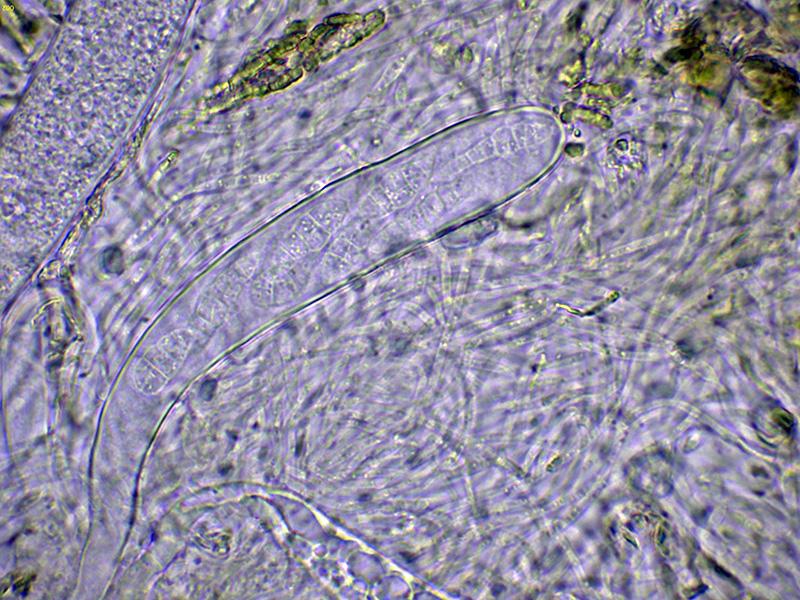

I'm lost in my head. I don't understand why I didn't recognize it. It must be my age. I studied Vexillomyces atrovirens a little over a year ago, and back then, you identified it for me. Here's the link to the topic I presented at the time.
https://www.fungipedia.org/setas-informacion-y-consultas/19-microscopia/74335-vexillomyces-atrovirens-pers-baral-quijada-g-marson-microscopia.html#109930
Best regards.