
12-04-2026 17:56
 Hardware Tony
Found on dead stems in February earlier this year
12-04-2026 15:52
Gernot FriebesHi,I'm looking for help with this anamorph collect
12-04-2026 12:22
 William Slosse
In a dune grassland in Oostduinkerke (Belgium), on
11-04-2026 15:45
 Zuzana Sochorová (Egertová)
Please, could anyone send me this paper?Moyne G.,
11-04-2026 13:34
Artem PtukhaHello, I am seeking assistance with the identific

11-04-2026 10:19
 Michel Hairaud
Chers amis d'Ascofrance , voici une très bonne no
11-04-2026 10:10
Michel Hairaud
Dear Ascofrance members, here is some very good ne
10-04-2026 23:22
Gernot FriebesHi,ascospores are 1- to 3-septate, approximately
10-04-2026 15:51
William Slosse
Hello everyone, On 08/04/26, I found a growth sit
Pyreno on Pinus
Juuso Äikäs,
23-03-2025 01:00
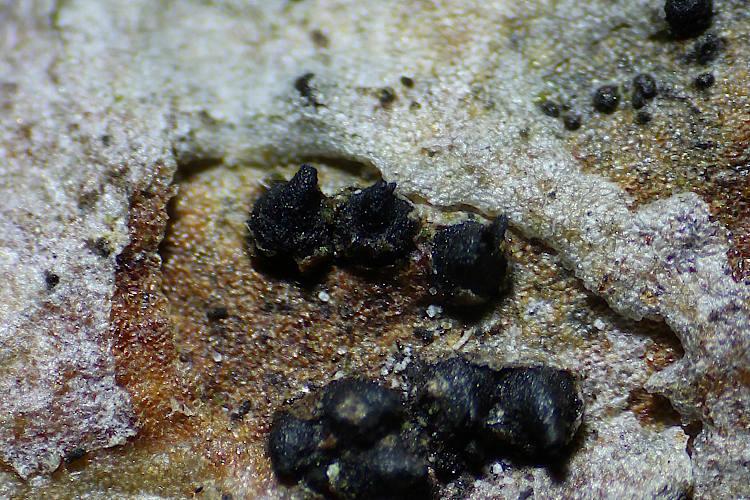
These little black pyrenos were growing on bark of a fallen Pinus sylvestris branch. Some of the perithecia were more or less round, and some had a little neck.
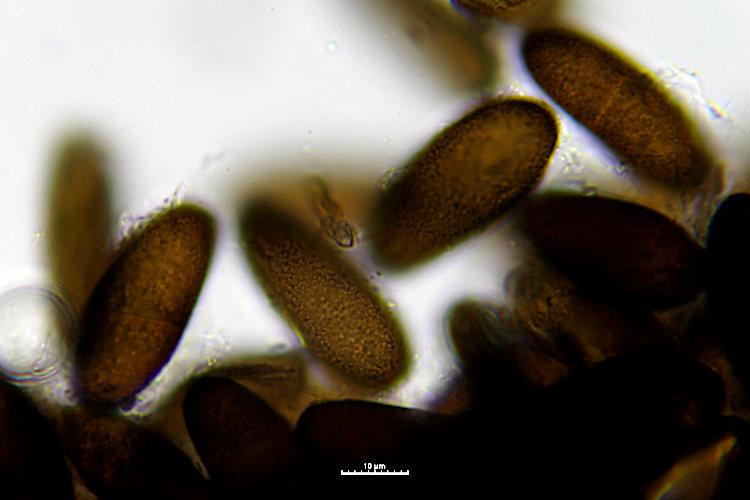
These appeared to be rather old fruitbodies, but there were spores inside. Some had a septum, which was located either centrally or inequilaterally. The spore surface has some minute ornamentation, and the size of the spores is quite large: 34.5 - 38.5 × 12.9 - 15.6 µm, Q = 2.2 - 2.7; avg = 35.8 × 14.4 µm, Qav = 2.5; n = 5.
Any thoughts about the species/genus/family?

Mathias Hass,
23-03-2025 06:37

Re : Pyreno on Pinus
Hi Juuso
Looks very much like Diplodia sapinea, pycnidia with conidia. This fungus is very common on Pinus cones, needles, twigs and bark. May occasionally also be found on other coniferous trees, at least as D. sapinea s.l.
Kind regards
Mathias
Juuso Äikäs,
23-03-2025 06:57
Re : Pyreno on Pinus
Thank you Mathias. Yes, that does seem to fit. Apparently this species has just recently begun spreading here.