
20-05-2026 12:57
 Ingo Ibelshäuser
Hello everybody, on decayed hardwood e.g. Quercus
20-05-2026 20:08
 Andreas Millinger
Good evening,another quite distinctive find from M
20-05-2026 21:49
Margot en Geert VullingsWe found this Lachnum on Juncus stems mown last ye
20-05-2026 17:47
Margot en Geert VullingsWe found this Mollisia on dead Juncus stems mown l
22-04-2026 20:54
 Enrique Rubio
Hi to everybody.This Pyrenopeziza grew in moist le

19-05-2026 12:55
 Hardware Tony
After checking Gminder and Otto's library I cannot
19-05-2026 10:27
Patrice TANCHAUDBonjour, récolte récente sur terre retournée i
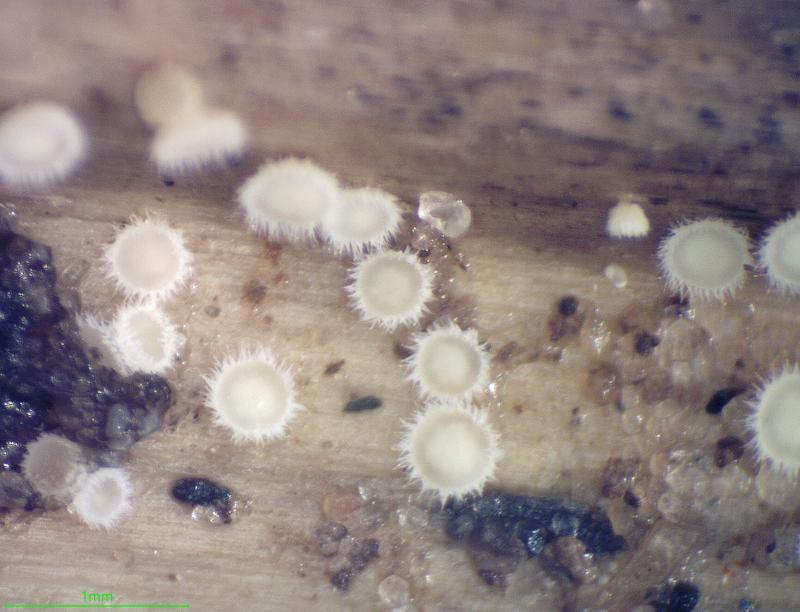
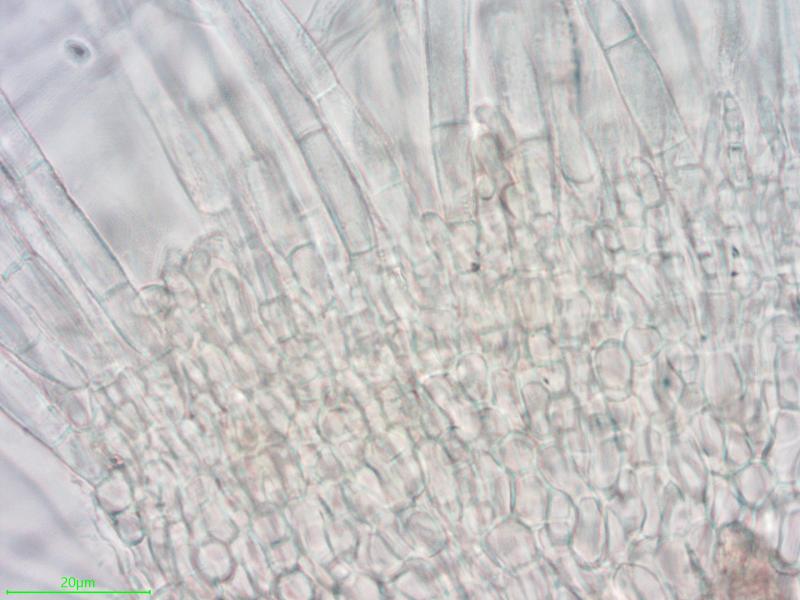
The apos are centrally attached, subsessile, up to half a mm diameter excluding hairs, light beige.
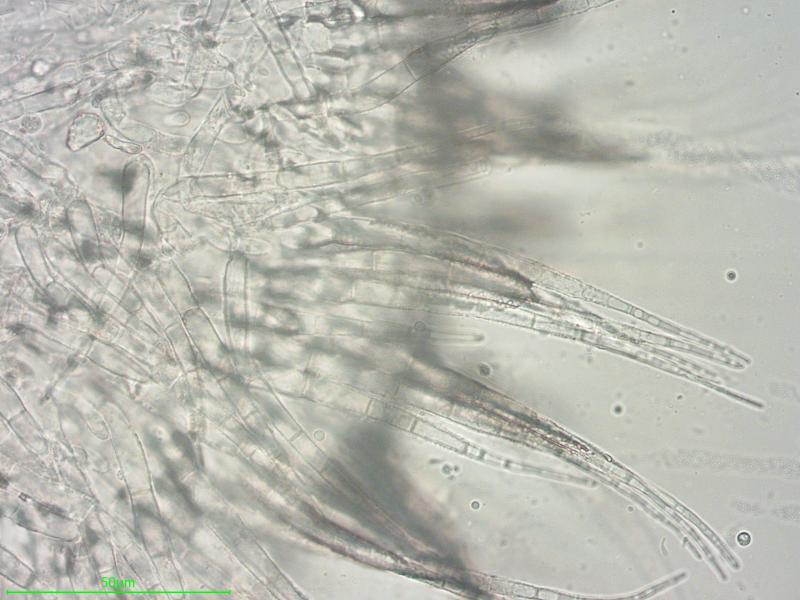
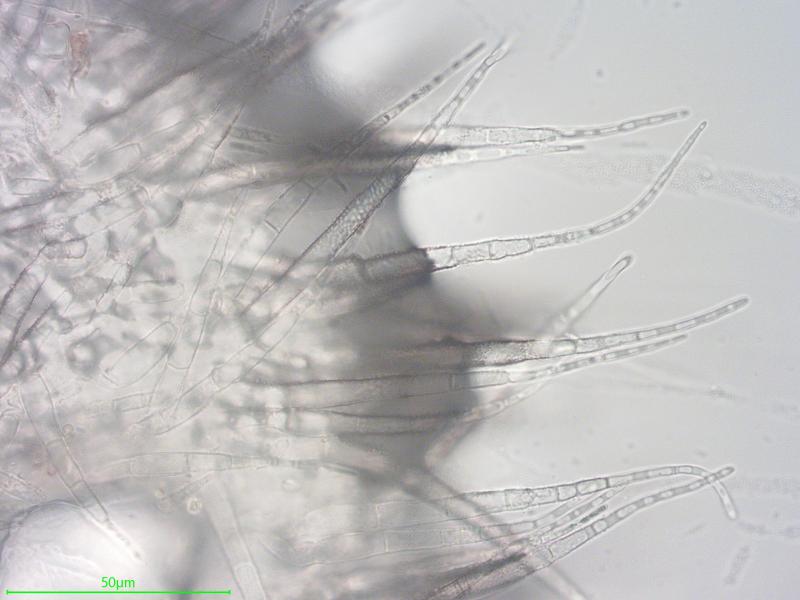
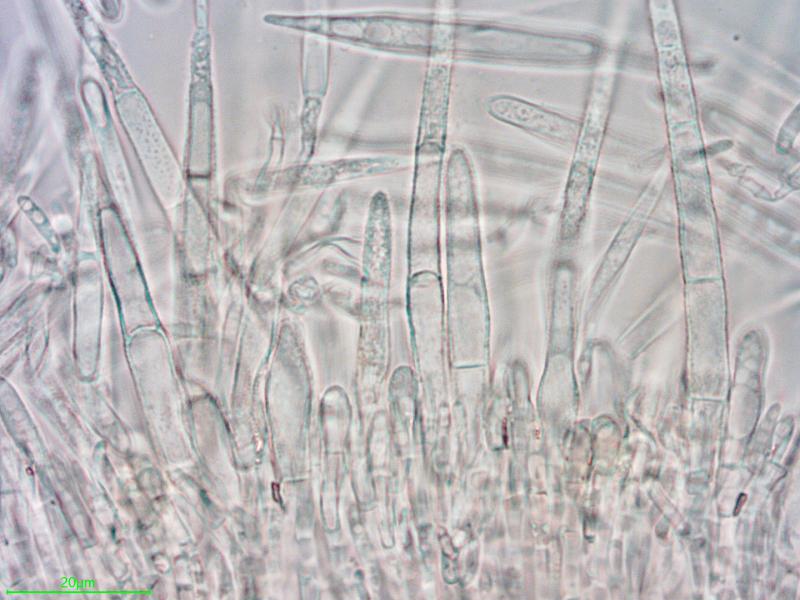
The marginal hairs are 102-137 × 5.8-7.1 µm, tapering to a point, without crystals, only slighly refractive content, 5-7 times septate, faintly granulose but perhaps not all the way to the very apex. In addition also some shorter hairs less acute, granulose to the apex.
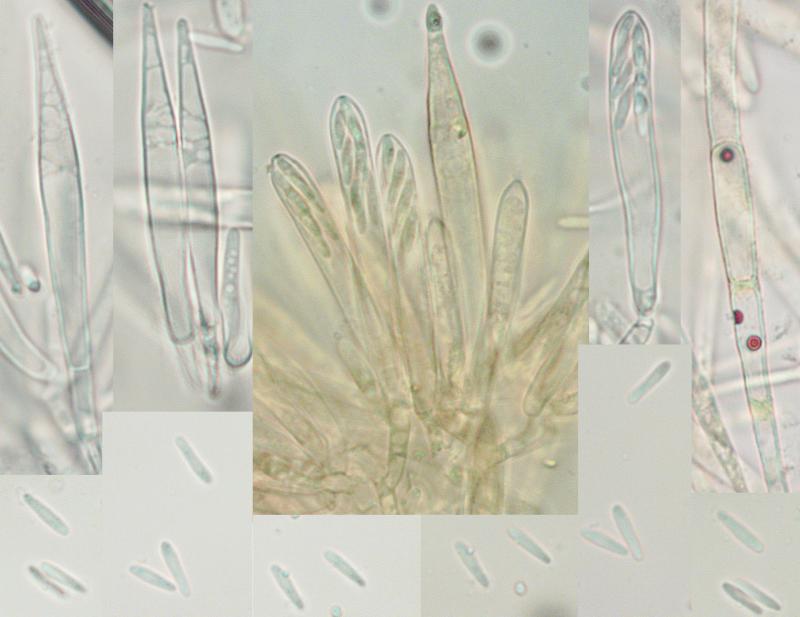
The asci are 34-44 × 3.8-5.5 µm, eight-spored, without croziers, spores biseriate, apex slightly blue with IKI.
The paraphyses are 53-63 × 4.3-5.4 µm, lanceolate, with low-refractive content, protruding 15-25 µm beyond the ascus tips.
The spores are 6.8-9.1 × 1.5-1.8 µm, Q = 3.9-5.4, oil 0.
A few hairs (perhaps 1-2 percent) develop one or a few red brown internal droplets within a few minutes after addition on Lugol.
I have not found many species of neither Dasyscyphella nor Lachnum on ferns in the litterature and not either anything else matching. Perhaps somebody has an idea?
If someone has access to the following paper I would be greatful for a copy:
Bøhler HC (1974) Taxonomical studies on some Norwegian Helotiales (Ascomycetes) on fern remains. Norw J Bot 21:79–100.
Stefan

I'll see what I can do with the sequncing.
Stefan