
12-06-2026 14:50
 François Freléchoux
Bonjour, Voici la brève description d'une Mollis
10-06-2026 21:16
François Freléchoux
Bonsoir,Le dernier du jour, en attendant votre avi
11-06-2026 19:01
 William Slosse
Hello all,In an attempt to make a culture of a sus
11-06-2026 19:03
 Nicolas VAN VOOREN
Chers membres d'Ascofrance,Le site sera placé en

09-06-2026 18:32
Camille MertensSur morceau de roseau immergé 0,5 - 0,7 mm de dia
10-06-2026 12:54
Steve ClementsBonjour encore, Pouvez-vous m'aider, s'il vous pl
10-06-2026 21:07
François Freléchoux
Toutes les tiges de gentianes jaunes de l'an passÃ
10-06-2026 13:41
François Freléchoux
Bonjour à nouveau, Voici une trouvaille d'hier.
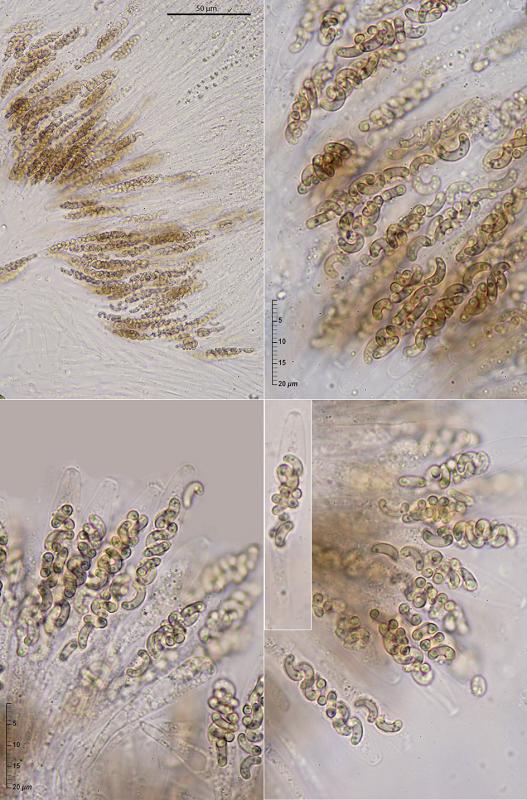
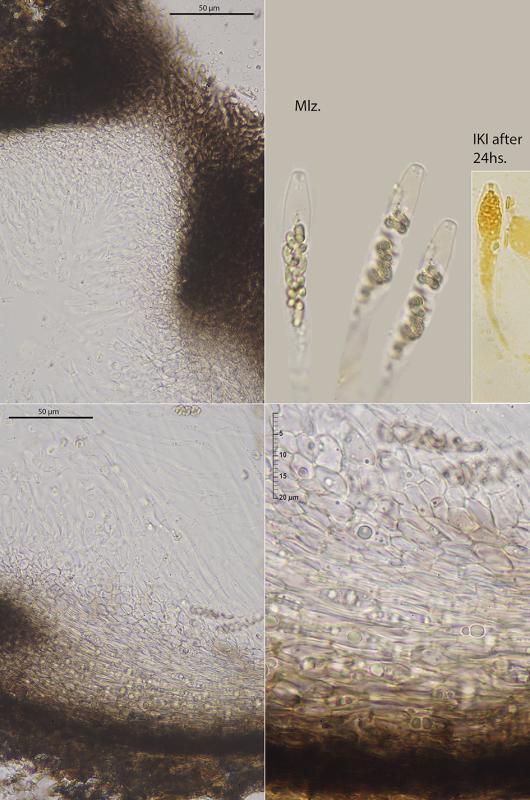
Eutypa-like on Ulex europaeus
Enrique Rubio,
15-01-2021 20:43
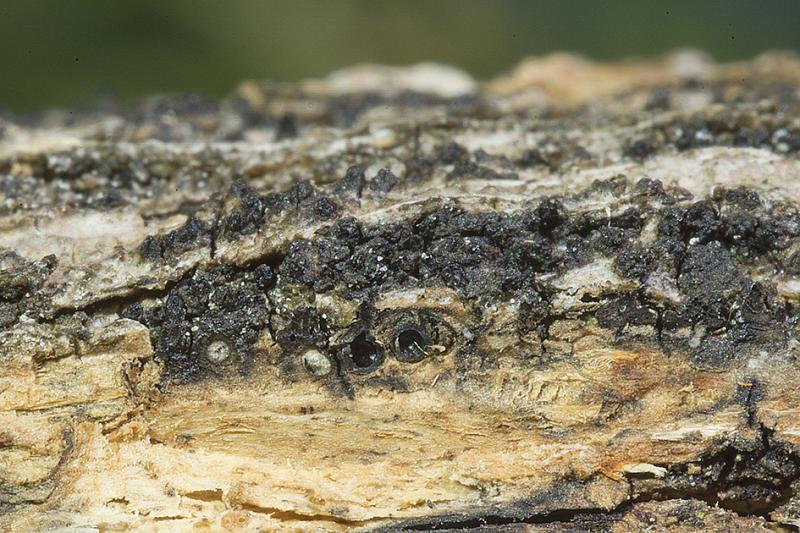
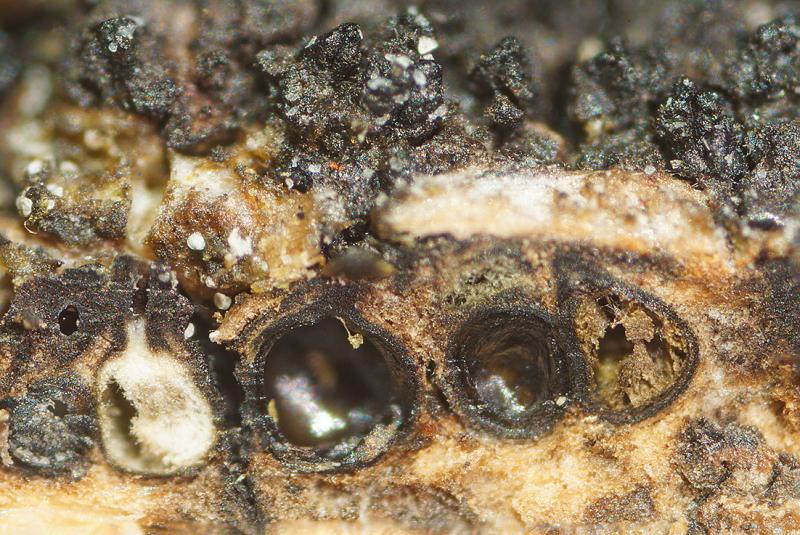
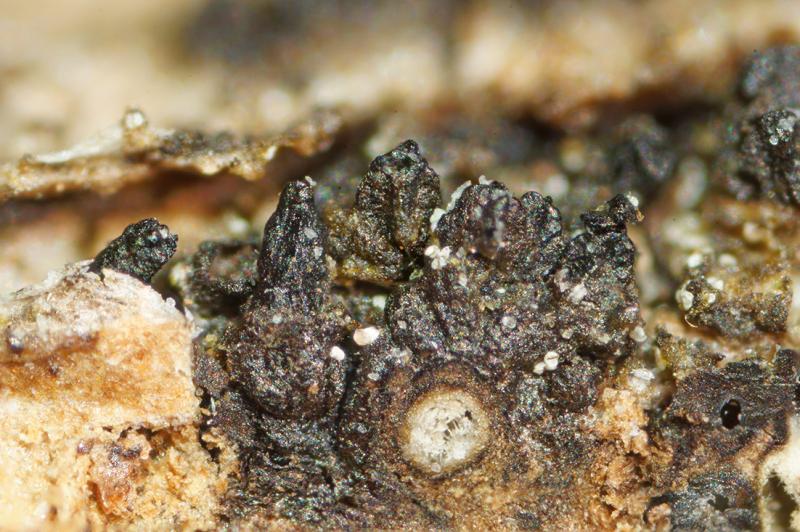
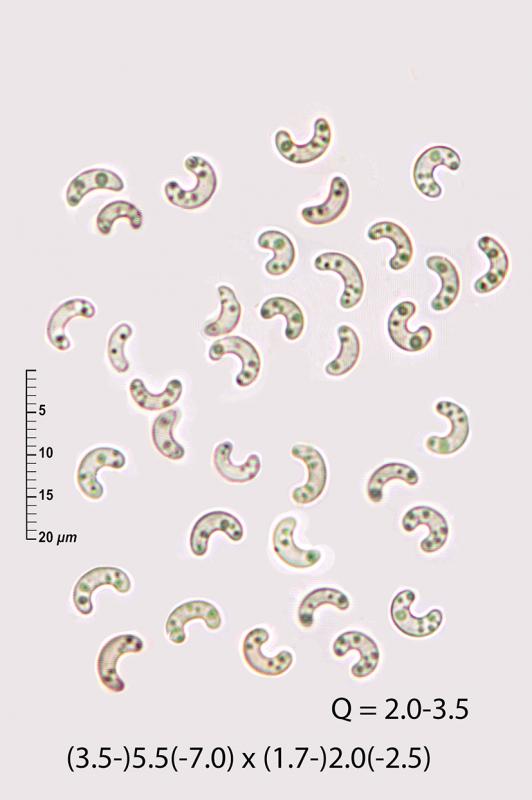
 This pyrenomycete grew inconspicuously on Ulex wood at an altitude of 400 m. The necks are relatively long and furrowed and the spores recurved but smaller and less recurved than expected for Eutypa crustata.
Maybe Peroneutypa obesa?
Do you have any ideas that can help me?
Thanks again
Jacques Fournier,
15-01-2021 22:21

Re : Eutypa-like on Ulex europaeus
Hola Enrique,
again a strange fungus!
Peroneutypa is indeed the most suitable genus.
I would not suggest P. obesa that has pulvinate stromata with massive white to brown entostroma and long and more cylindrical ostioles; ascospores are also more strongly curved and thicker,occasionally circular.
Compare it to Rappaz' description of P. curvispora, known from Bolivia but also collected once in Martinique. If it does not fit well, it might be new.
Good luck!
Jacques
Enrique Rubio,
18-01-2021 14:11
Re : Eutypa-like on Ulex europaeus
Dear Jacques
Thank you again for your quick and wise response. I had already contemplated Peroneutypa curvispora, but Rappaz's microscopic description does not seem to coincide so much in the dimensions of the pars sporifera of the asci as in the spores themselves.
Best regards
Enrique
Thank you again for your quick and wise response. I had already contemplated Peroneutypa curvispora, but Rappaz's microscopic description does not seem to coincide so much in the dimensions of the pars sporifera of the asci as in the spores themselves.
Best regards
Enrique