
20-05-2026 12:57
 Ingo Ibelshäuser
Hello everybody, on decayed hardwood e.g. Quercus
20-05-2026 20:08
 Andreas Millinger
Good evening,another quite distinctive find from M
20-05-2026 21:49
Margot en Geert VullingsWe found this Lachnum on Juncus stems mown last ye
20-05-2026 17:47
Margot en Geert VullingsWe found this Mollisia on dead Juncus stems mown l
22-04-2026 20:54
 Enrique Rubio
Hi to everybody.This Pyrenopeziza grew in moist le

19-05-2026 12:55
 Hardware Tony
After checking Gminder and Otto's library I cannot
19-05-2026 10:27
Patrice TANCHAUDBonjour, récolte récente sur terre retournée i
 Bonjour,
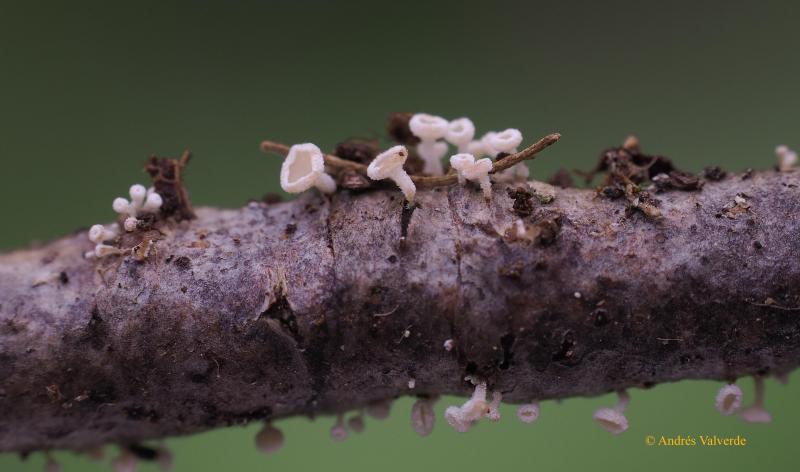
 Je vous envoie ces images d'un échantillon de Lachnum, trouvé sur une brindille de Corylus, dans une forêt humide des Pyrenées catalanes.
Coupe 0,8-0,9 mm diamètre. Pied 0,5-0,6 mm d'haut.
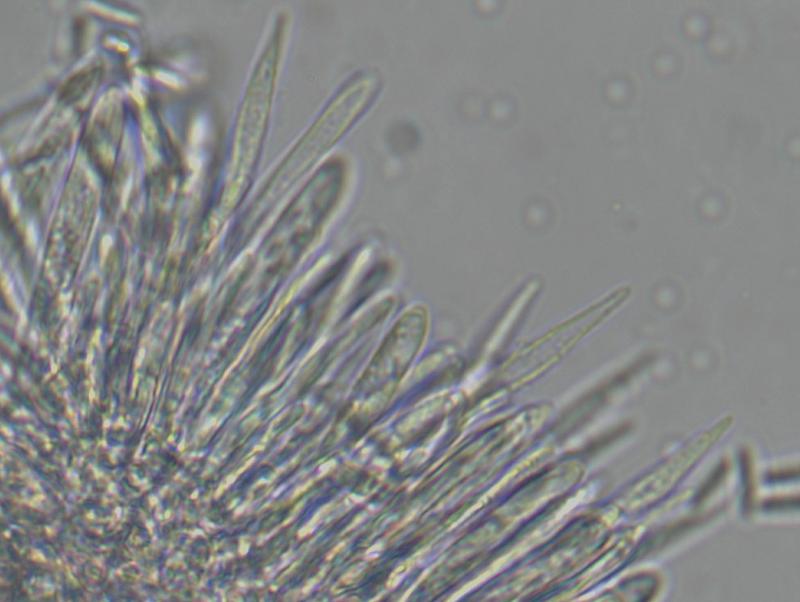
Asques 34,8 – 40,8 x 5,1 – 5,5 µm.
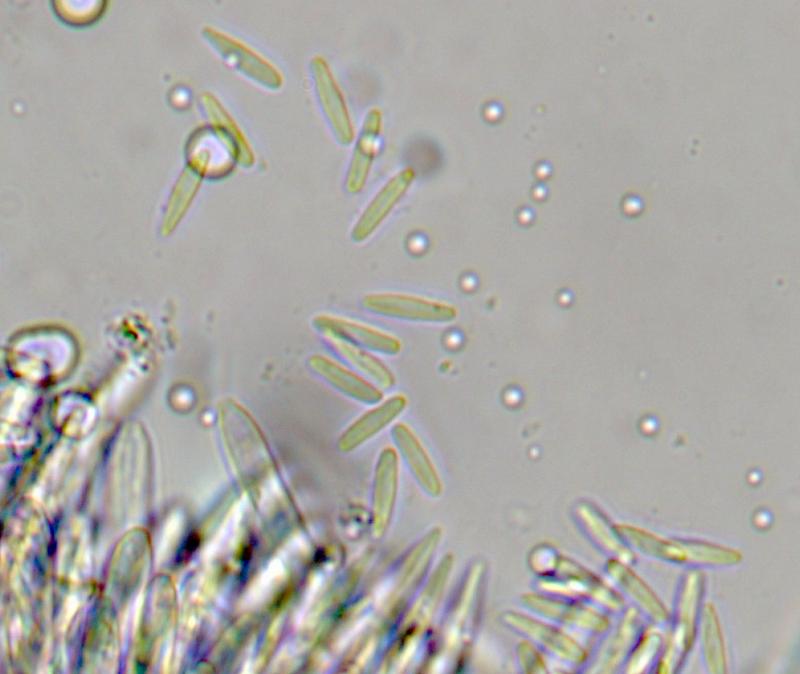
Spores 7,7 – 10 x 1,5-2,7 µm.
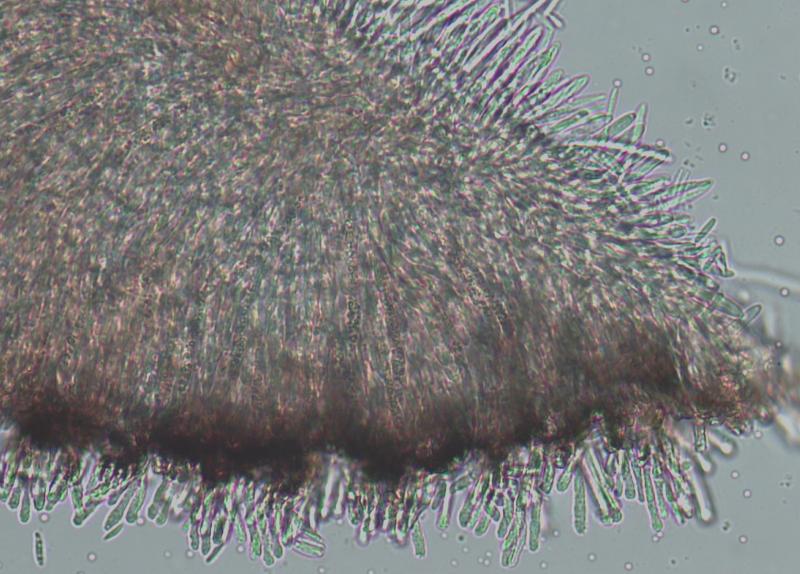
Poils avec incrustations, légèrement élargis au sommet, 25,7-28,2 x 2,6-3,3 µm.
Paraphyses terminées en point, 53,7-53,9 x 3,7-3,9 µm.
Je pense en Lachnum crystallinum, mais je ne suis pas sûr du tout.
Merci d'avance pour votre aide,
Andrés
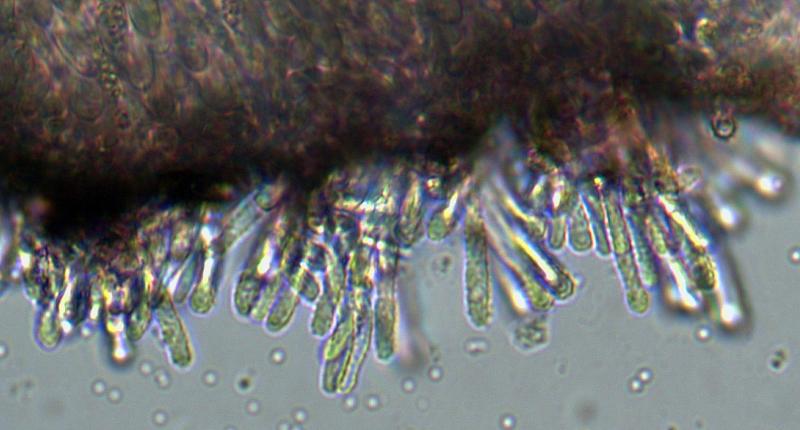

Hello Andres,
your Lachnum (s.str.) cannot be L. crystallinum (former Dasyscyphella crystallina) because of the hairs that are granulate to the top. Further, this species grows on Quercus only (?).
Which Lachnum you have found is difficult to say, because we for instance do not know if there are croziers at the base of the asci.
As I see, the paraphyses do not contain (many) vacuoles, and there are no crystals on the top of the hairs.
Best, Lothar
Thank you very much for your answer.
I add two more photos, of the squash of the asci. Luckily I think I could have seen some croziers... and a paraphyse with more vacuolar content?
Best,
Andrés
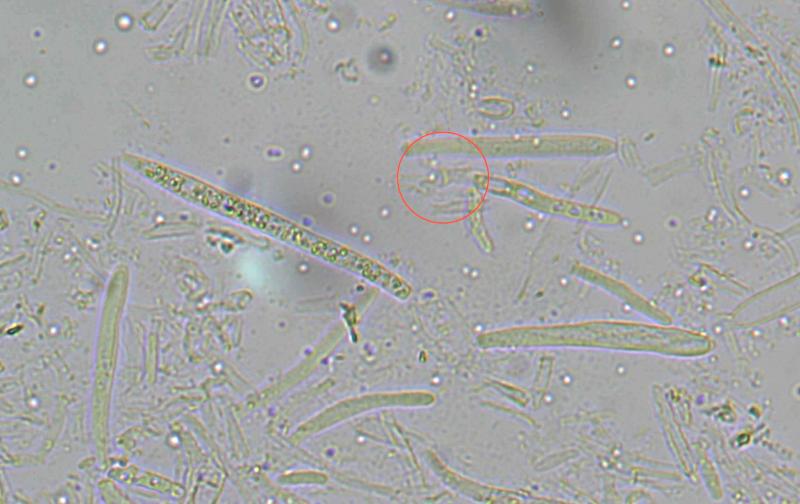
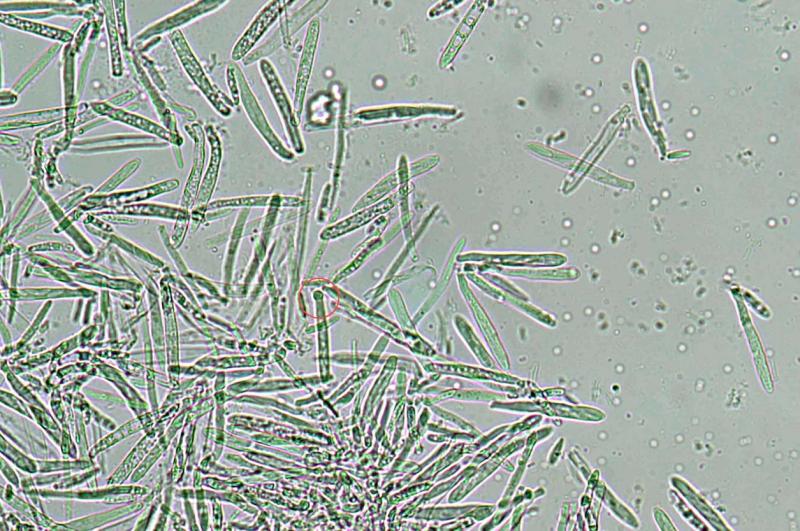

About the hairs, it's the length that I could measure, from the top of the hair to the most dense and colored part (I can't ruled out that they will continue in this part). I'm going to try to separate these hairs.
Andrés