
12-04-2026 17:56
 Hardware Tony
Found on dead stems in February earlier this year
12-04-2026 15:52
Gernot FriebesHi,I'm looking for help with this anamorph collect
12-04-2026 12:22
 William Slosse
In a dune grassland in Oostduinkerke (Belgium), on
11-04-2026 15:45
 Zuzana Sochorová (Egertová)
Please, could anyone send me this paper?Moyne G.,
11-04-2026 13:34
Artem PtukhaHello, I am seeking assistance with the identific

11-04-2026 10:19
 Michel Hairaud
Chers amis d'Ascofrance , voici une très bonne no
11-04-2026 10:10
Michel Hairaud
Dear Ascofrance members, here is some very good ne
10-04-2026 23:22
Gernot FriebesHi,ascospores are 1- to 3-septate, approximately
10-04-2026 15:51
William Slosse
Hello everyone, On 08/04/26, I found a growth sit
Calycina conorum ?
Viktorie Halasu,
06-04-2018 17:31
 Hello,
this seems to be very close to Calycina conorum, except that I found different data about amyloidity too (IKI+red in M.Hairaud's article or on asco-sonnenberg.de web). Is there some variability like in Lachnellula? Or is this another species? (I don't think my Lugol is diluted - it's only half year old and on some Lachnellula sp. on the same day showed the red reaction very well.)
Thank you for your opinions.
Viktorie
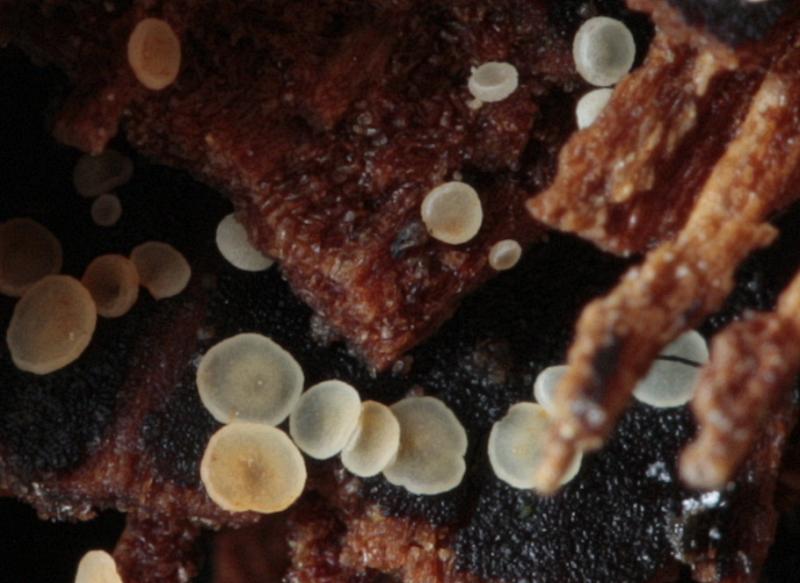
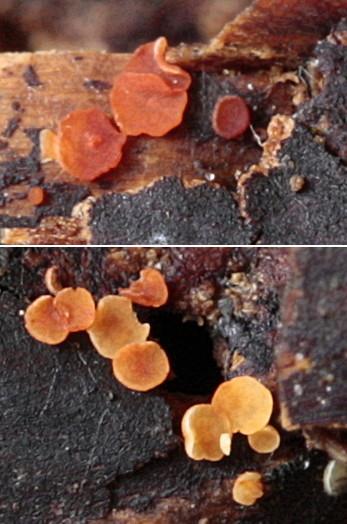
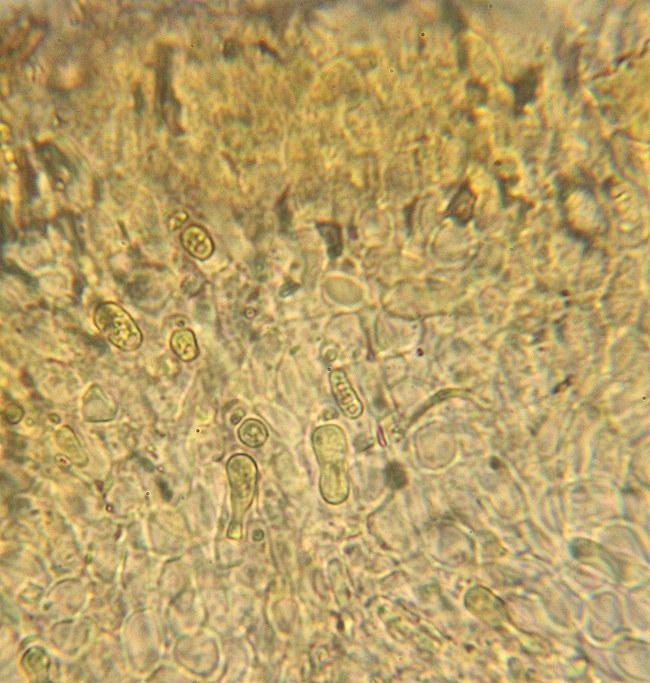
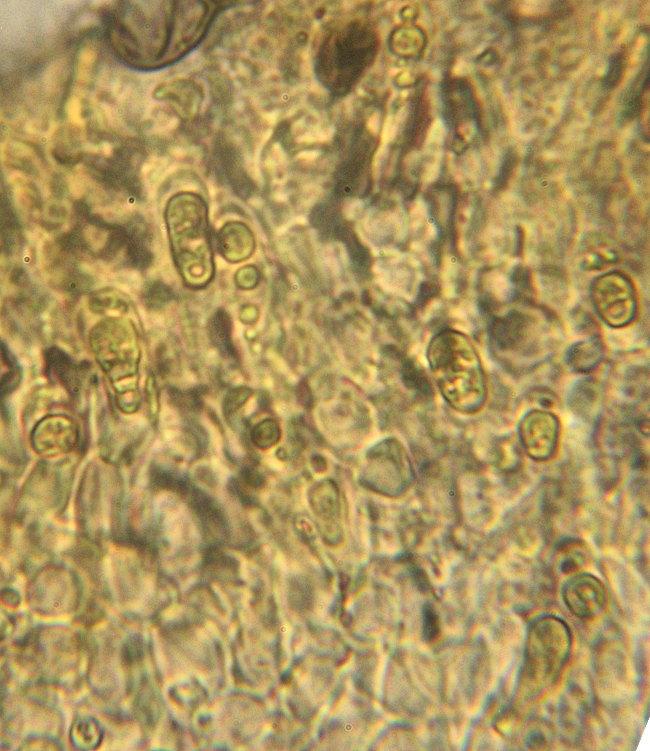
On cones of Pinus cf. nigra (long needles, probably planted trees near a cottage), Slovakia, 1.IV.2018.
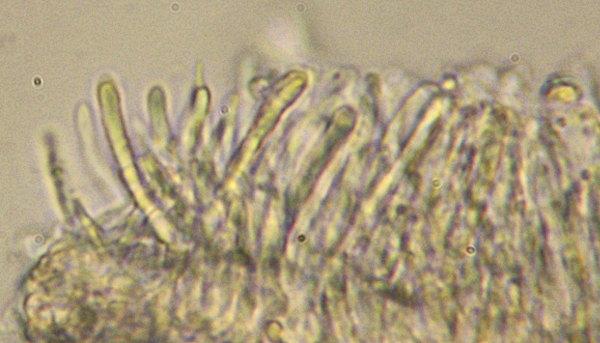
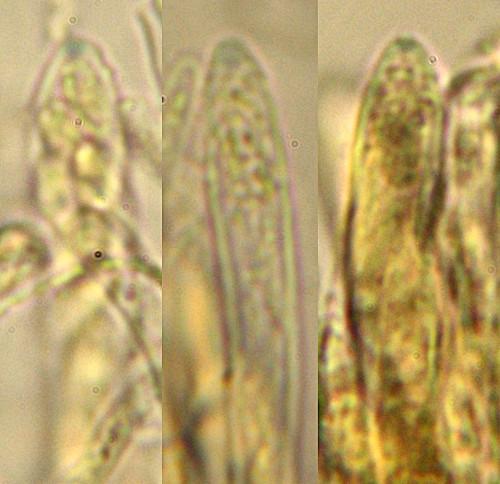
Apothecia sessile, less than 1 mm wide, white to yellowish, oxidating to wine red.
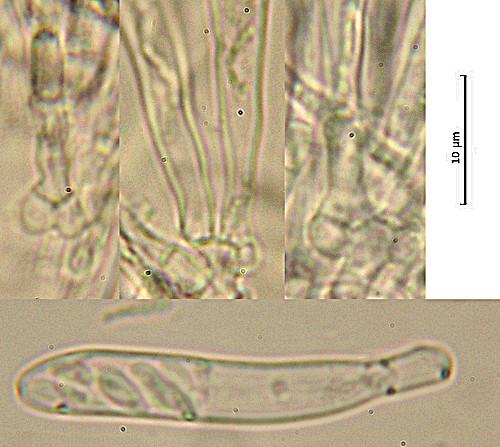
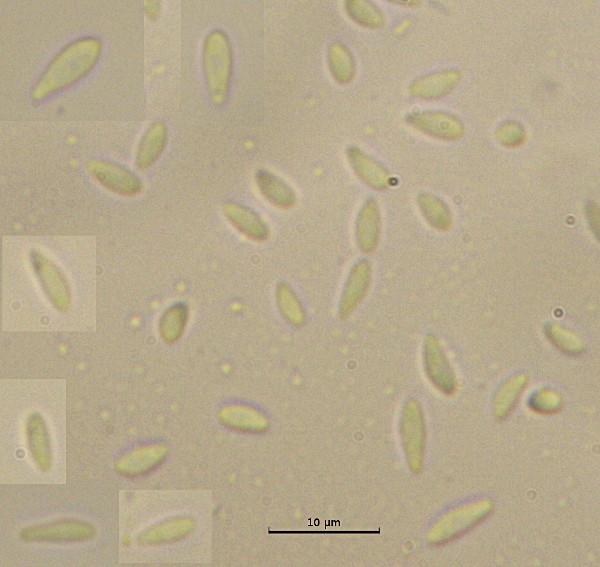
Sp. *(4,3)5-7(7,6) × (1,4)1,8-2,4(2,7) um, avg. = 5,9 × 2,1 um, Q = 2,5-3,4. OCI = 0(-1?).
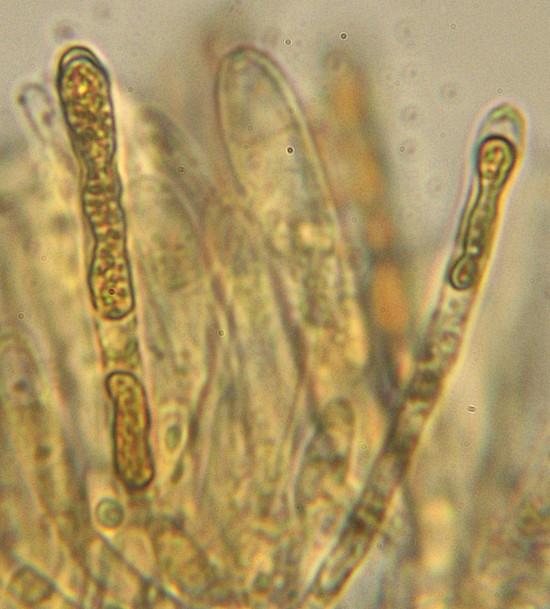
Paraphyses cylindric, with long VBs (turquise in CRB, golden in IKI).
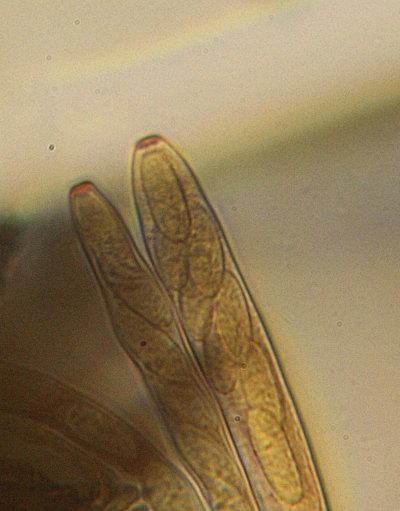
Asci 8spored, IKI+blue, with croziers.
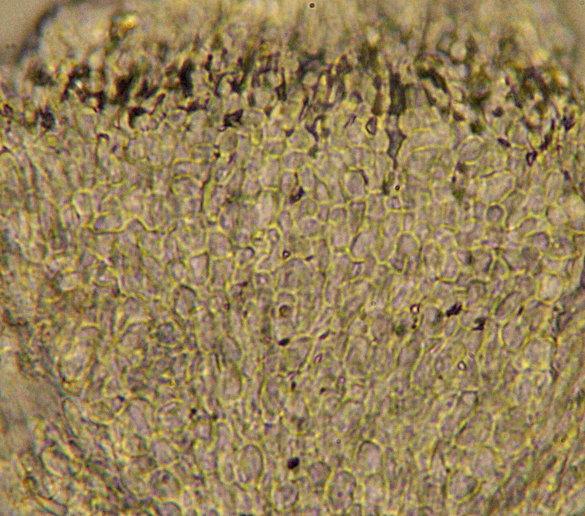
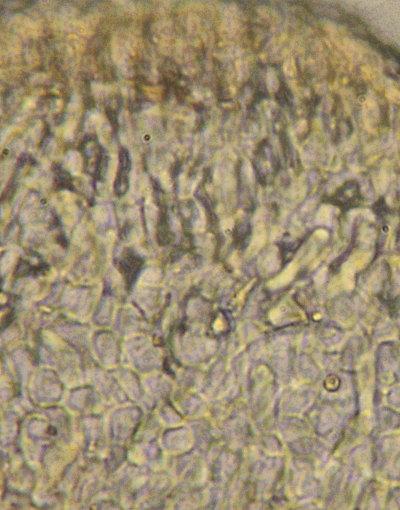
Clavate hairs on margin and receptacle with some vacuoles (VBs or LBs? don't know).
Hans-Otto Baral,
06-04-2018 17:37

Re : Calycina conorum ?
I suppose it is. The red reaction comes only at higher concentration, it is blue at low iodine conc.
Spore length seems variable, up to 9 (-10).
Spore length seems variable, up to 9 (-10).
Viktorie Halasu,
06-04-2018 17:43
Re : Calycina conorum ?
Hello Zotto,
about the IKI reaction: I updated a bit the first post, probably after you've already answered. On the same day I microscoped some Lachnellula which showed red reaction pretty well. So I don't think my Lugol is diluted. Except if there was different threshold concentration between blue/red reaction for different species/genus - is that possible?
edit: I'll check the reaction again later today.
about the IKI reaction: I updated a bit the first post, probably after you've already answered. On the same day I microscoped some Lachnellula which showed red reaction pretty well. So I don't think my Lugol is diluted. Except if there was different threshold concentration between blue/red reaction for different species/genus - is that possible?
edit: I'll check the reaction again later today.
François Valade,
06-04-2018 17:51

Re : Calycina conorum ?
Hello
I use Lugol made according to the following recipe,1 % iodine and 3% IK for 100 ml, and for this species ascus tip is blue.
Same host for my collection.
François
I use Lugol made according to the following recipe,1 % iodine and 3% IK for 100 ml, and for this species ascus tip is blue.
Same host for my collection.
François
Hans-Otto Baral,
06-04-2018 18:19
Re : Calycina conorum ?
There are strong differences among species at which concentration the red appears. I noticed the red reaction in several collections in my folder, but I am not sure how constant it is within the concept of conorum.
Viktorie Halasu,
06-04-2018 23:10
Re : Calycina conorum ?
Hello,
I checked pieces from 3 apothecia in pure Lugol, apical apparatus is still blue only.
Viktorie
I checked pieces from 3 apothecia in pure Lugol, apical apparatus is still blue only.
Viktorie