
12-04-2026 17:56
 Hardware Tony
Found on dead stems in February earlier this year
12-04-2026 15:52
Gernot FriebesHi,I'm looking for help with this anamorph collect
12-04-2026 12:22
 William Slosse
In a dune grassland in Oostduinkerke (Belgium), on
11-04-2026 15:45
 Zuzana Sochorová (Egertová)
Please, could anyone send me this paper?Moyne G.,
11-04-2026 13:34
Artem PtukhaHello, I am seeking assistance with the identific

11-04-2026 10:19
 Michel Hairaud
Chers amis d'Ascofrance , voici une très bonne no
11-04-2026 10:10
Michel Hairaud
Dear Ascofrance members, here is some very good ne
10-04-2026 23:22
Gernot FriebesHi,ascospores are 1- to 3-septate, approximately
10-04-2026 15:51
William Slosse
Hello everyone, On 08/04/26, I found a growth sit
I have black, immersed perithecia on the cone scales of Picea orientalis. Diameter is about 0.2-0.3 mm. There is an elongated crest-like ostiolum. Spores are 12-14 x 3-3.4, hyaline, two-celled with a constriction at the septum. It seems to fit quite good to Lophiotrema boreale Math. as seen in Holm&Holm 1988. The problem is, this species seems to live on salix wood, not on conifers.
I wonder whether someone has alternative ideas as to this species or knows that L. boreale is that plurivorous. Probably I'm completely wrong.
Thanks in advance for any suggestions
Stefan
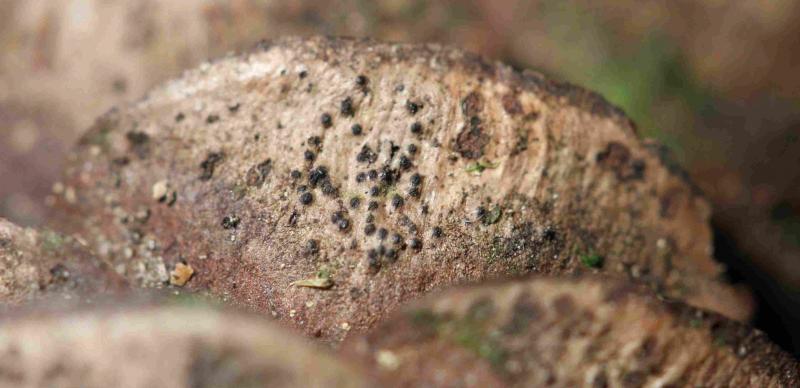
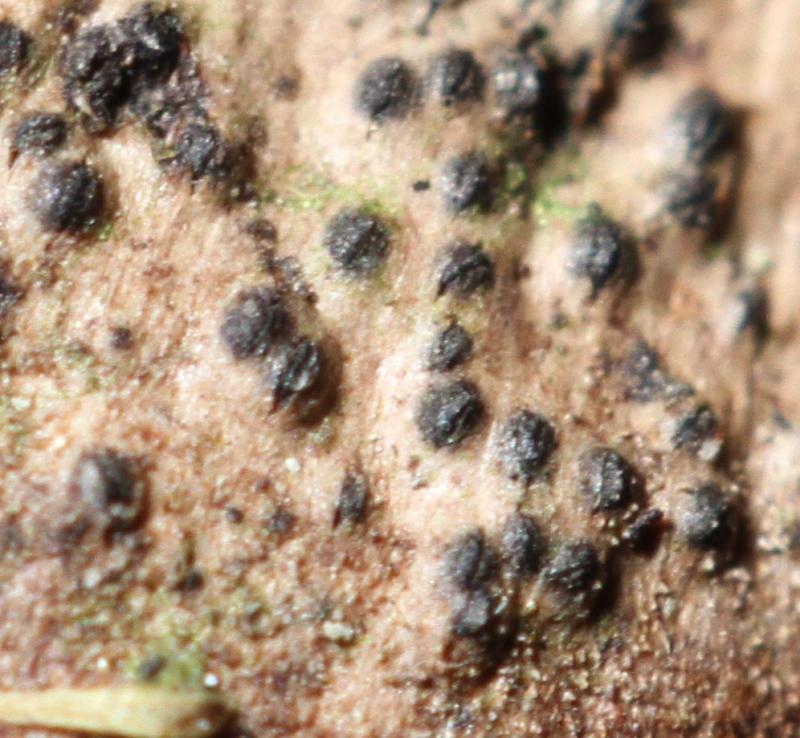
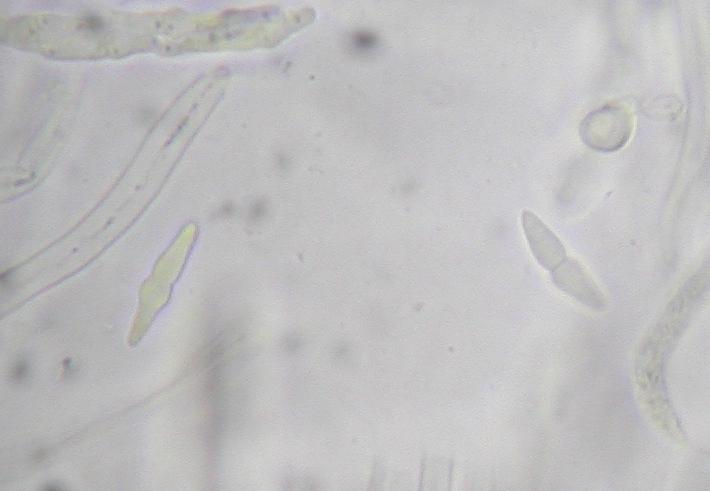

Have you observed ascospores in ink ? Perhaps, you could see gelatinous apical caps ? I have already found several times L. fuckelii on cones. But spores are longer.
If not, L. boreale would be the better solution.
Alain
Thanks a lot for the fast response. I can try ink tomorrow. But I don't think there are caps.
Stefan
Stefan
Hi Alain
Yes, I think I will name it L. boreale as long as there is no further knowledge. L. fuckelii also seems to be very plurivorous, isn't it?
Thanks
Stefan
Alain

Sehr schön. Vielen Dank!
Lieber Gruss
Stefan
In 2018 , GEIR MATHIASSEN & al. described a new species : L. borealiforme, rather close to L. boreale but with no spore guttulation.
It also says that many collections were erroneously identified as L. boreale instead of boleariforme.
I lately found on a Pinus sylvestris cone a collection with clearly guttulated spores which could actually be L. boreale. , with spores maxi 16 x 6µm
And the collection presented here by Stefan could be L. borealiforme.
AmitiésMichel
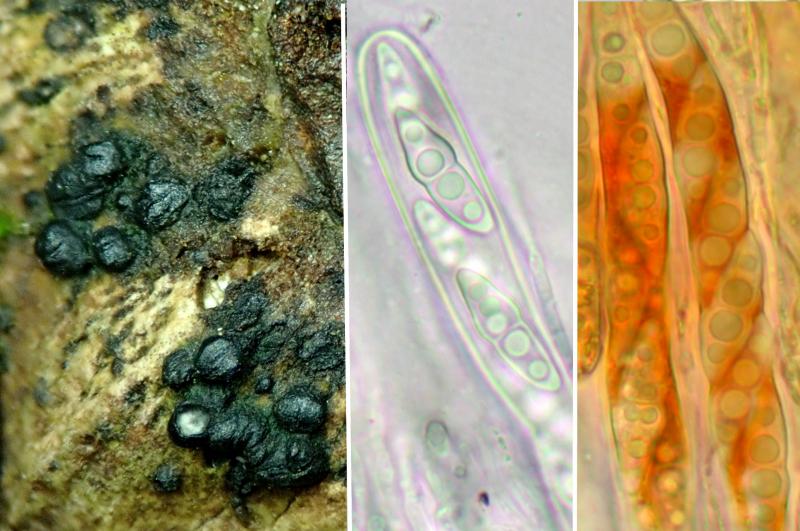
as said Björn,
Hi Stefan,
there IS further knowledge ;)
Merci Michel pour cet updating.
Pour ton Lophiotrema, la forme des ascomes et particulièrement la zone ostiolaire m'a fait penser au Mytilinidion byssisedum de Crouan fort heureusement recombiné en Lophiotrema byssisedum par Chenantais.
Je te join s la publi. Tu verras que beaucoup de caractères convergent. Mais qu'il en manque un, tu ne vas pas y échapper : la mise en évidence d'une enveloppe à l'encre, un réflexe dans cette famille.
Amuse toi bien, pour une fois que tu as un bel ascomycète sous les mains :)
Alain
 CHENANTAIS-J.-E.-1918-Etude-sur-les-pyrenomycetes-Lophiotrema-byssisedum-Bull.-Soc.-Mycol-.-France-Tome-34-p.134-136-0001.pdf
Dans les papiers de Holm & Holm, et de Mathiassen, Crouan et Chenantais sont ignorés.
J'avais juste vérifié l'absence d'appendices dans le Bleu coton mais pas du halo autour des spores.
Comme il n y avait que 3 prithèces apparemment vivants, (esthétiquement massacrées pour la microscopie ) il va me falloir le retrouver , ce qui n'est pas si simple.
Il faudrait donc l'appeler L. byssisedum , c'est ça ? Amitiés
Michel
Tu connais la chanson... rentre le prudemment en L. cf byssisedum. Car je ne t'ai lancé qu'une idée (pas mal c'est vrai) , sans avoir vu la bête est son enveloppe sporale gélatineuse. Observer cette dernière permettrait d'avoir une bonne conviction.
Alain