
11-05-2026 12:32
 Bernard CLESSE
Pourriez-vous m'aider à identifier cette héloti
13-05-2026 15:26
 François Freléchoux
Bonjour,Voici une récolte faite il y a quelques j
12-05-2026 15:41
 Nicolas VAN VOOREN
Dear Ascolovers, especially interested in Pezizale
13-05-2026 12:05
 Thierry Blondelle
Bonjour à tous,J'aimerais avoir confirmation de c
10-05-2026 23:17
 Andreas Gminder
Hello,today we found in a moist steep decidous for
28-04-2026 20:07
 Lothar Krieglsteiner
... on twig in the air at standing Ceratonia siliq
27-04-2026 20:52
Lothar Krieglsteiner
Found on hanging tiwg of Olea europaea in dried-ou
11-05-2026 20:22
Lothar Krieglsteiner
on attached twig of standing Ficus caricaquite uns
29-04-2026 10:44
Lothar Krieglsteiner
growing at moist, drying-out soil at the side of a
 Hi to all
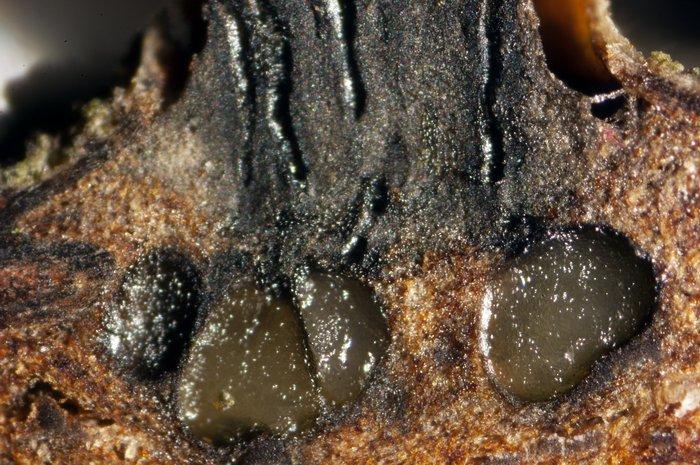
On medium size (40-70 mm in diam.) felled branches of Alnus glutinosa lying on the ground
I have found many inmersed, at first hyaline later greenish, perithecia that no
are into a clearly definited stroma. No ventral black lines. The necks are protruding across a well visible greyish disc.
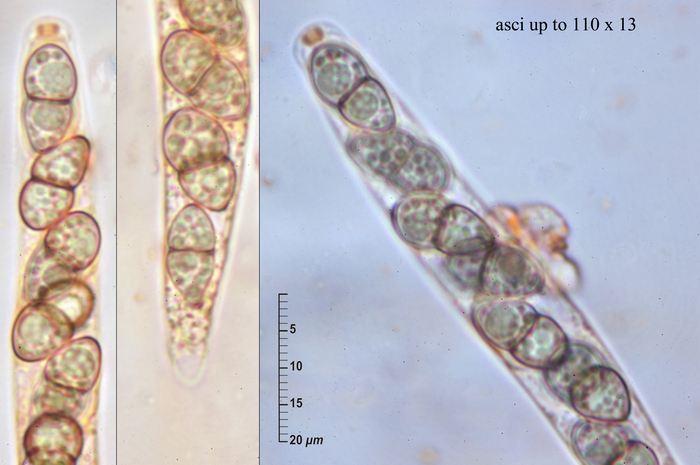
The asci have an apical refringent apparatus and they are abruptly contracted at their base
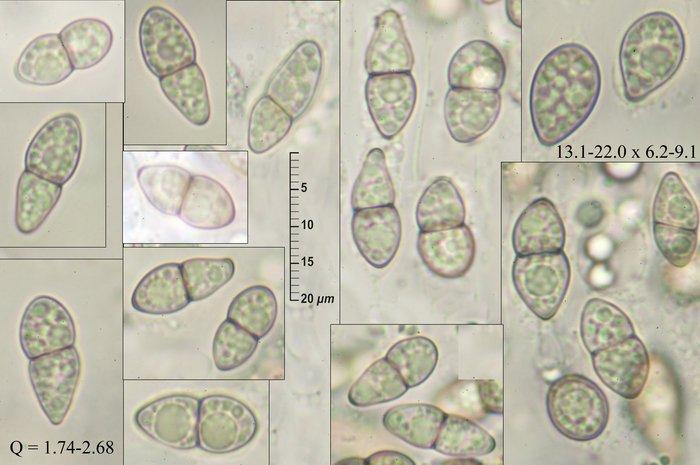
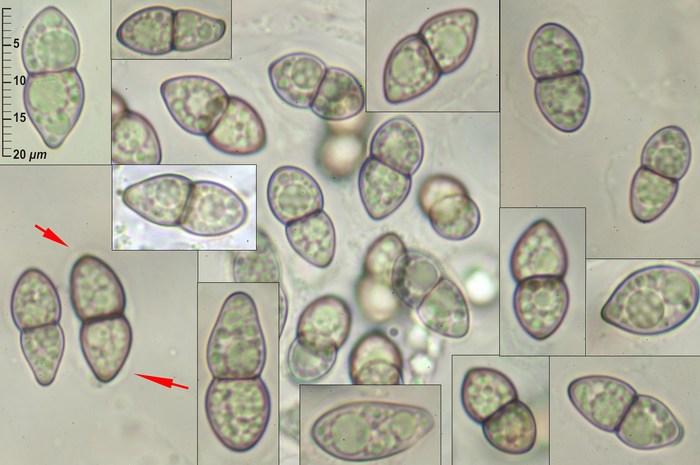
(Diaporthales). No paraphyses I have seen. The ascospores are hyaline, later greenish, 1-(0) septate, very polimorphic, with some aberrant forms. No appendages. The spores are surrounded by a gelatinous sheath.
Dispersed between the perithecia they are many inmersed greenish conidiomata that could
be the anamorphic state of this fungus.
What do you think?
Thanks again
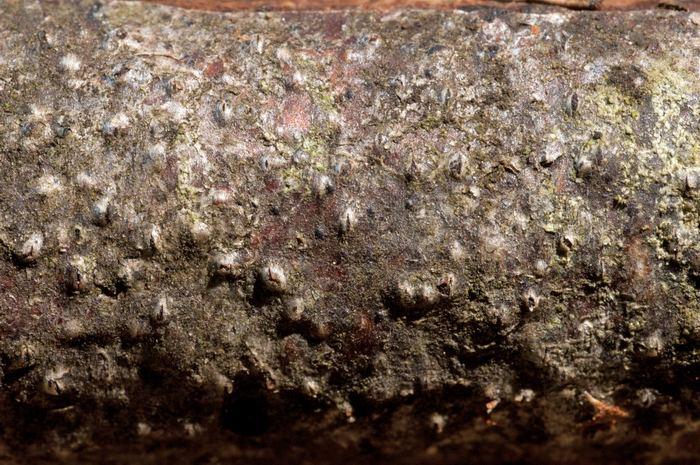
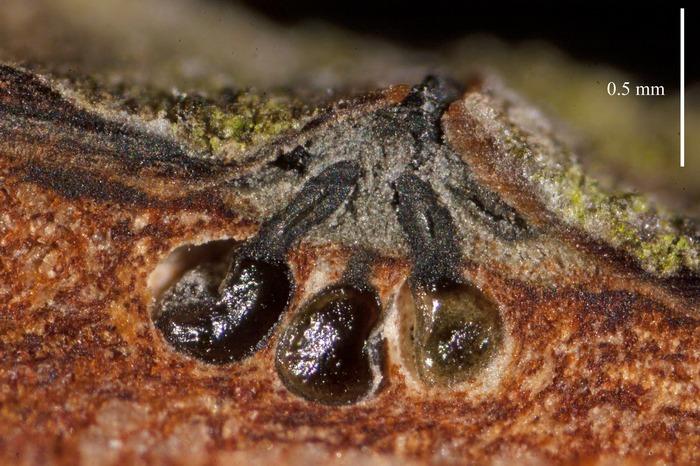
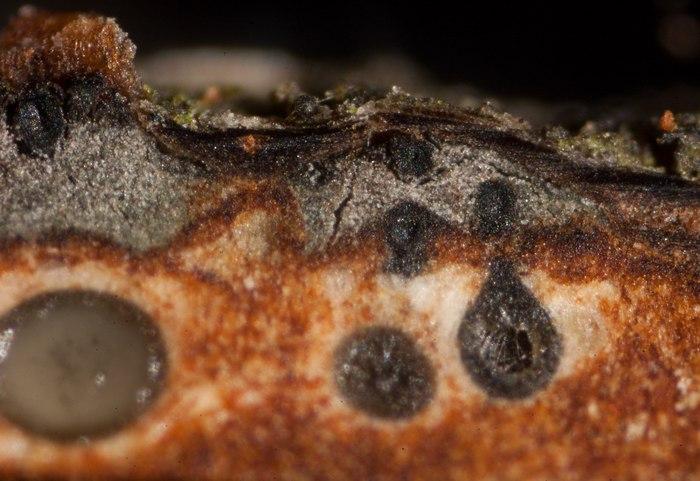
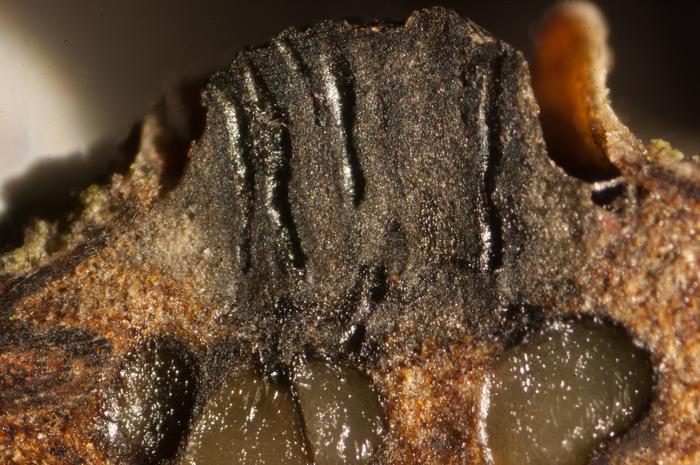
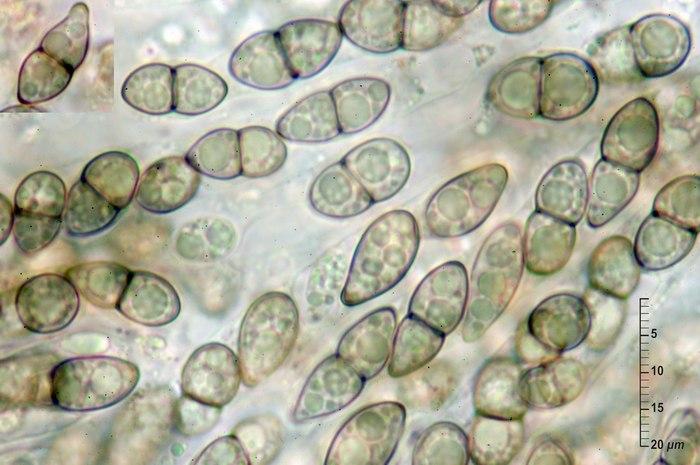


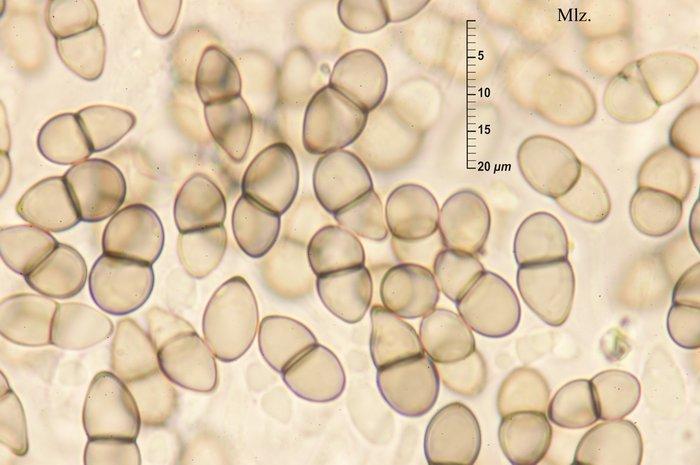
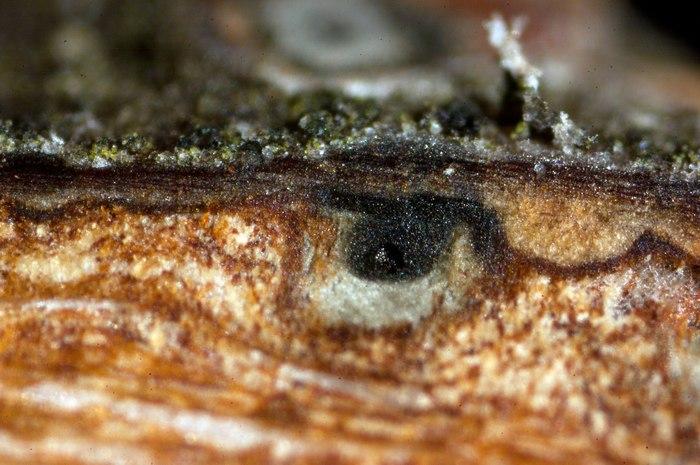
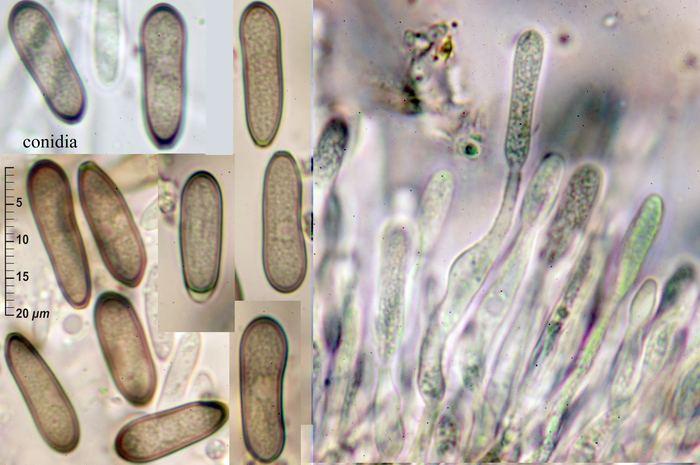

I have tried to find out your finding for several hours yeasterday, but without success. I think it belongs to Melanconidaceae and probably near Massariovalsa, a genus with quite darker spores. According to Barr 1978 (Diaporthales and its segregates), your fungus matches the genera Massariovalsa, Hercospora and Hapalocystis, this because of the small layer of a gray stromatic tissue right under the surface, embedding the perithecia into wood and not into a stroma. I have also checked several original descriptions of species of aforementioned genera but without any matching conclusion. Probably a new species, perhaps Walter will say something about it :)
btw: you can put this one into the dropbox, too. Many thanks.
regards,
björn