
27-04-2026 18:48
Tony MoverleyCollected 23rd April 2026, Norfolk, EnglandSwarms
27-04-2026 17:41
 Lothar Krieglsteiner
.. Algarve, same leaf than the last post. The con
27-04-2026 18:05
Lothar Krieglsteiner
... still attached at standing tree. The green con
27-04-2026 17:16
Lothar Krieglsteiner
.. Algarve, moist lying.The conidiomata look like
27-04-2026 12:54
Steve ClementsBonjour. Ce petit champignon blanc résupiné et
27-04-2026 09:59
Pauline. PennaBonjour Can anyone advise me on these pycnidia fo

22-04-2026 20:54
 Enrique Rubio
Hi to everybody.This Pyrenopeziza grew in moist le
24-04-2026 03:16
 David Chapados
Found while looking at something else from wood in
Micropodia pteridina?
Tony Moverley,
27-04-2026 18:48
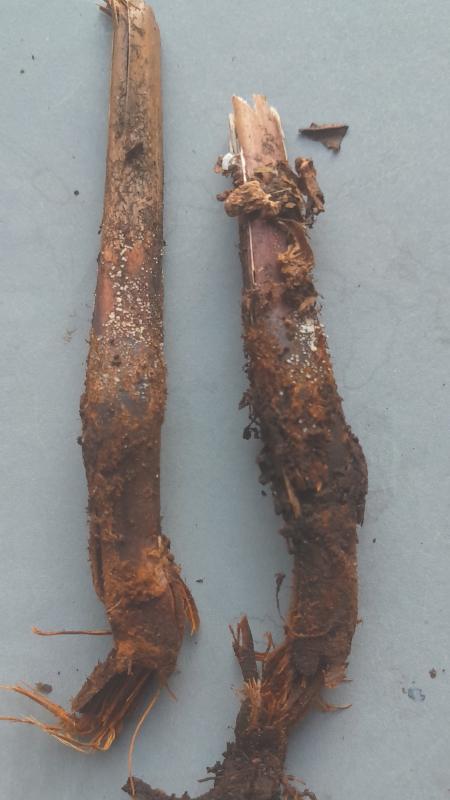
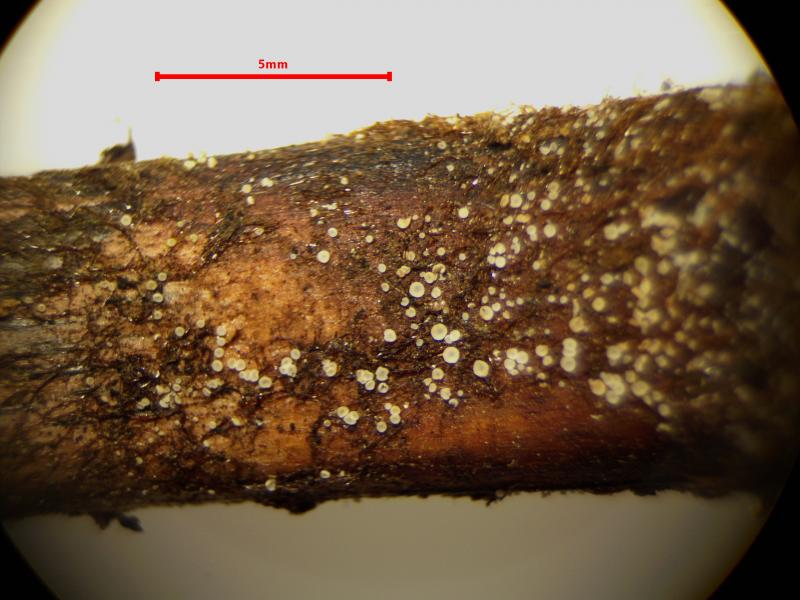
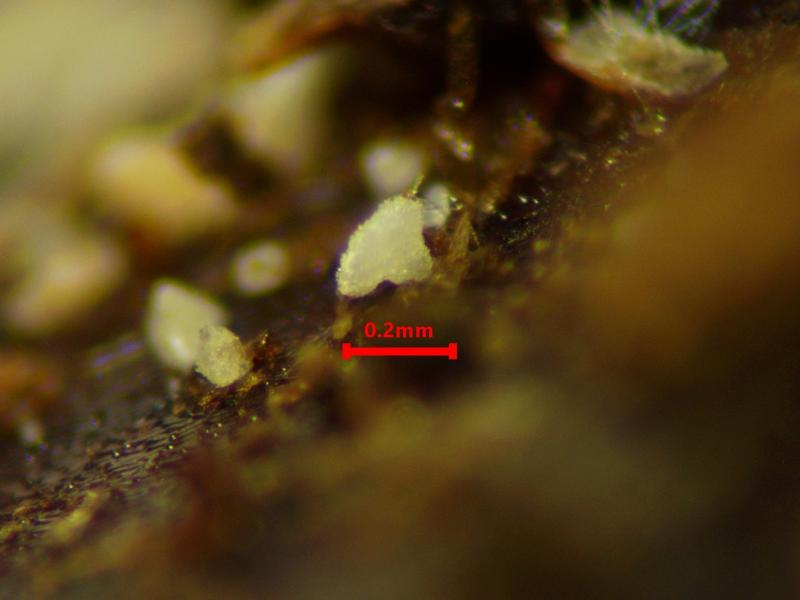
Swarms of white apothecia (0.1-0.2mm diameter) on surface of blackened Pteridium aquilinum (Bracken) stems, just below ground level.
Apothecia with short stalks
Superficial on the substrate surface (ie nor emerging from within the stem).
All white - no differentiation in colour between the internal hymenial disc, rim or external (ectal) surface.
No marginal hairs evident
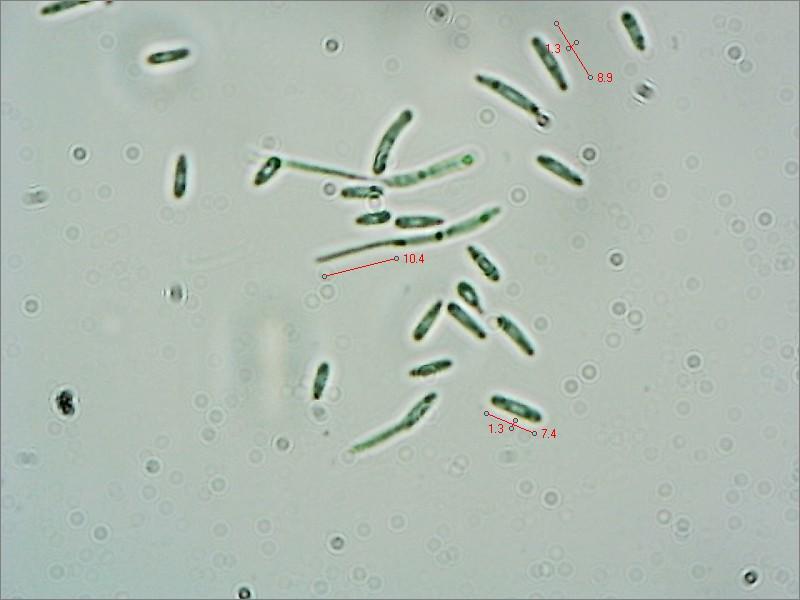
Ascospores (5.7-) 6.4 (-9.3) x (1.0-) 1.5 (-1.8) n=10 with guttules at each end.
In the UK, collections like this appear to be recorded as Micropodia pteridina, supported by the entry in Ellis & Ellis Microfungus on Land Plants (2nd Ed. 1997).
However, Zotto Baral (Micropodia pteridina, a misinterpreted fern-inhabiting discomycete with unclear relationship within the Helotiales, Baral H.-O., 2023, ascomycete.org 15 (1): 1-8) points out there are several confusion species:
Psilachnum sp. (chrysostigma agg.)
Fuscolachnum pteridis (sessile and with marginal hairs so ruled out in this case?)
Mycroscypha arenula (but only on leaves, not stems?)
Mollisia sp.
According to Zotto's paper, these species can be differentiated with regard to exicipular structure, presence/absence of marginal hairs and apothecial stipe and apothecial development.
I have the opportinity to ITS barcode but with no publicly available reference sequences for M. pteridina, is there any benefit?
Tony Moverley
Norfolk Fungus Study Group
Hans-Otto Baral,
27-04-2026 20:13
Re : Micropodia pteridina?
Hi Tom
it is a good idea to obtain a sequence. The true M. pteridina is sessile and erumpent. This one has a short stipe. I am quite sure this is the sibling of Psilachnum chrysostigma, differing in the ascus base (without croziers). Do you think you can verify this? Only from the spores there is no real differences. I recommend to mount in Congo Red by strong pressure to separate the elements.
Zotto