
08-06-2026 17:00
François BartholomeeusenGood day everyone, On June 5 2026, I collected de
08-06-2026 10:16
 Spooren Marco
I don`t have a clou about this fungus,it is not in
07-06-2026 15:10
 William Slosse
Hello everyone,On 05-06-26, I found following asco
05-06-2026 11:02
Thomas Læssøehttps://svampe.databasen.org/observations/10596691
07-06-2026 12:09
 François Freléchoux
Bonjour, Voici une brève description de ce qui m
07-06-2026 12:43
Steve ClementsBojour. This was a strange find on a stick on my
12-07-2015 00:05
 Nedim Jukic
This one from the same locality as the previous on
06-06-2026 17:44
Steve ClementsBonjour, This disco was on planed wood 3 x 1.5 cm
14-08-2016 23:15
 Alex Akulov
Dear friendsCan you help me to find the descriptio
Ombrophila on cone of Picea
Stefan Jakobsson,
31-07-2021 20:39
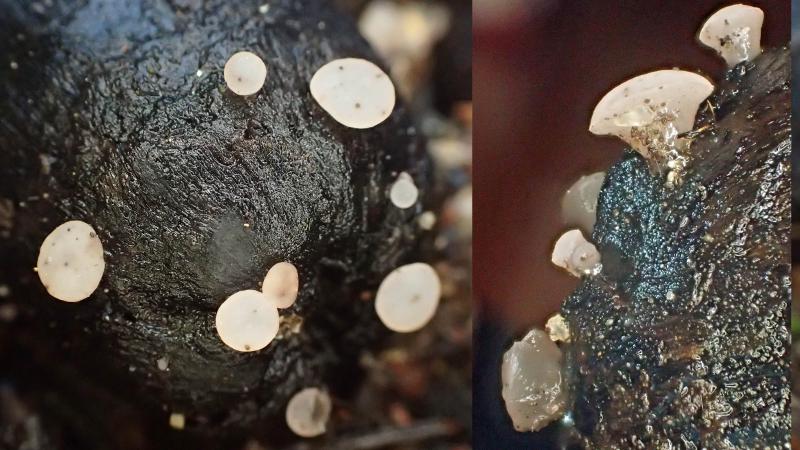
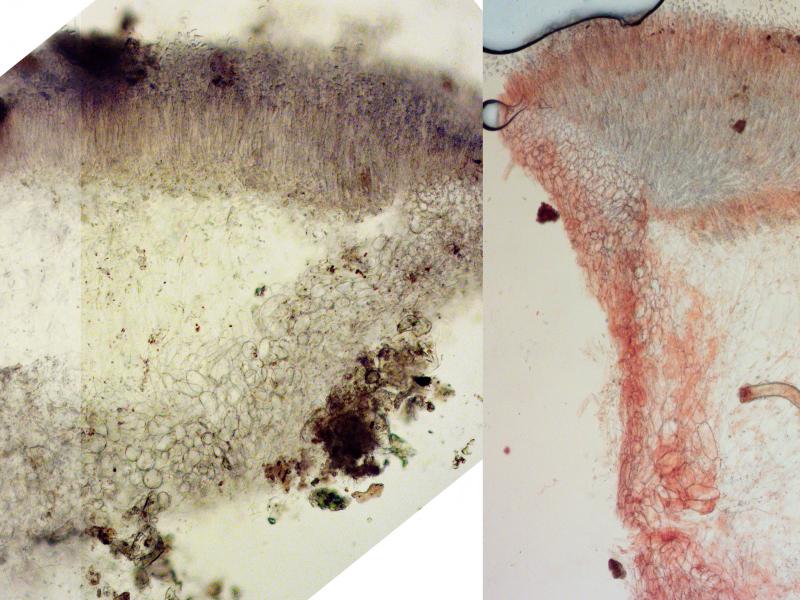
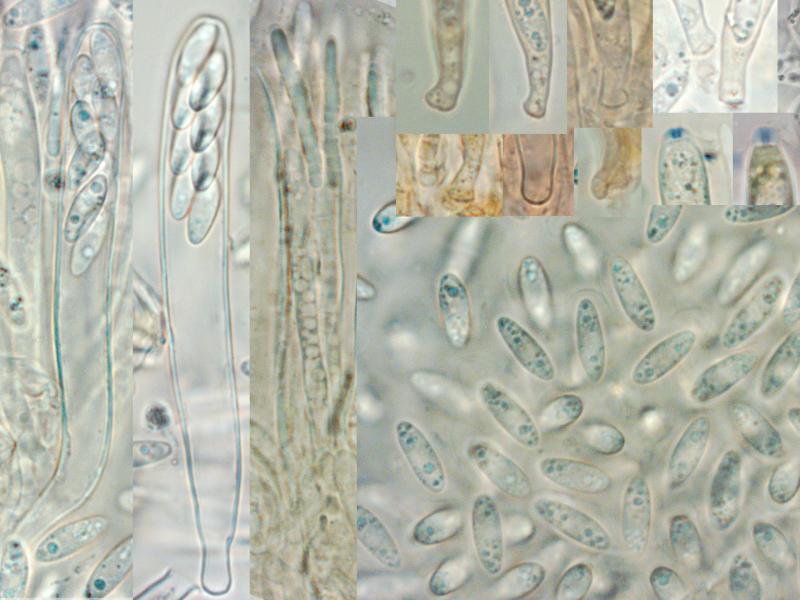
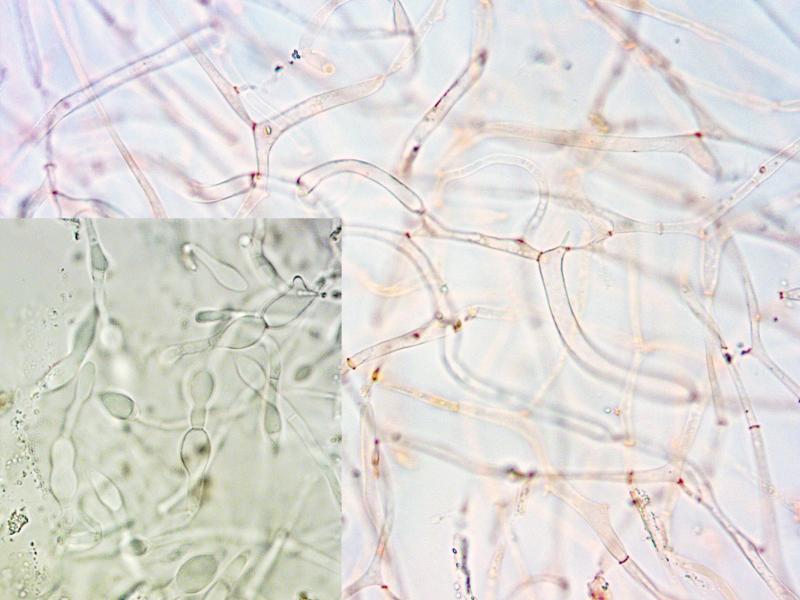
On the verge of a forest rivulet I found an Ombrophila on blackened cones of Picea abies. The width of the apos is up to 4 mm and spore size is 10.9 - 12.7 × 3.7 - 4.1 µm, Q = 2.71 - 3.23. Is this something with a name?
Stefan
Hans-Otto Baral,
01-08-2021 20:59

Re : Ombrophila on cone of Picea
For a quick ID I suggest my Ombrophila "Eigenried" (spec. 3) in my old key (on pine or spruce cones). You can find images in my folders.
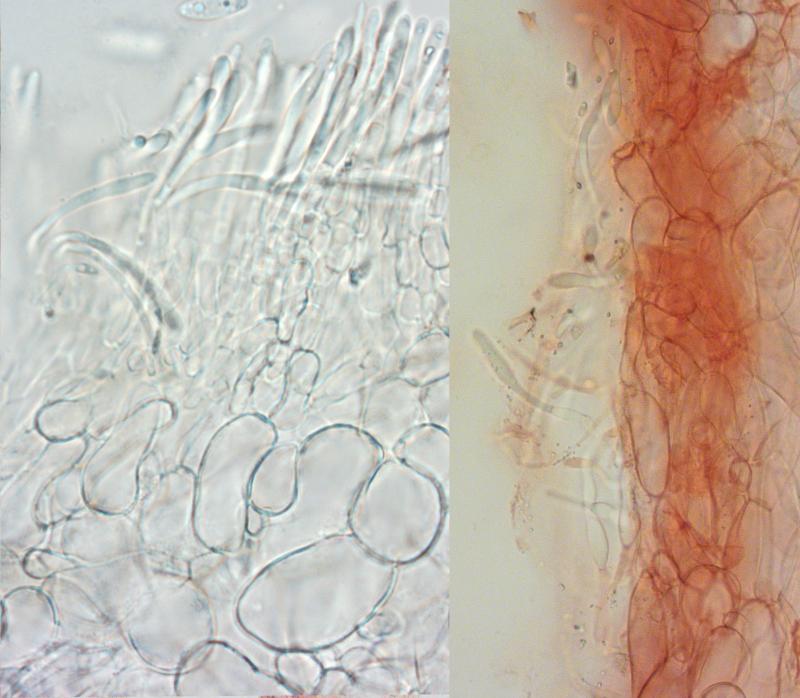
There are different samples which more or less concur. My HB 3090 drawing looks quite similar to yours. Only I miss a bit the criytals, but I think yours has them also. One find has large-guttulate spores but it has a pic of moniliform elements as in your docu.
Stefan Jakobsson,
01-08-2021 23:04
Re : Ombrophila on cone of Picea
Thank you! That is the one I had in mind but there is some difference in spore guttation. And I was not quite sure about how to interpret the amyloid ring. I have observed no crystals.
Hans-Otto Baral,
02-08-2021 09:36
Re : Ombrophila on cone of Picea
Your 5th photo shows these moniliform elements, I assume they represent the external gel layer outside the ectal excipulum. On its surface I see minute crystals. I always wrote for 3090 that there were no crystals in the medulla, only on the exterior. Your right IKI photo shows an immature ascus clearly of the Hymenoscyphus-type. In mature asci the type is often not so clearly seen.