
12-06-2026 14:50
 François Freléchoux
Bonjour, Voici la brève description d'une Mollis
10-06-2026 21:16
François Freléchoux
Bonsoir,Le dernier du jour, en attendant votre avi
11-06-2026 19:01
 William Slosse
Hello all,In an attempt to make a culture of a sus
11-06-2026 19:03
 Nicolas VAN VOOREN
Chers membres d'Ascofrance,Le site sera placé en

09-06-2026 18:32
Camille MertensSur morceau de roseau immergé 0,5 - 0,7 mm de dia
10-06-2026 12:54
Steve ClementsBonjour encore, Pouvez-vous m'aider, s'il vous pl
10-06-2026 21:07
François Freléchoux
Toutes les tiges de gentianes jaunes de l'an passÃ
10-06-2026 13:41
François Freléchoux
Bonjour à nouveau, Voici une trouvaille d'hier.
Mollisia albogrisea
Zuzana Sochorová (Egertová),
20-07-2021 15:08
 Hi,
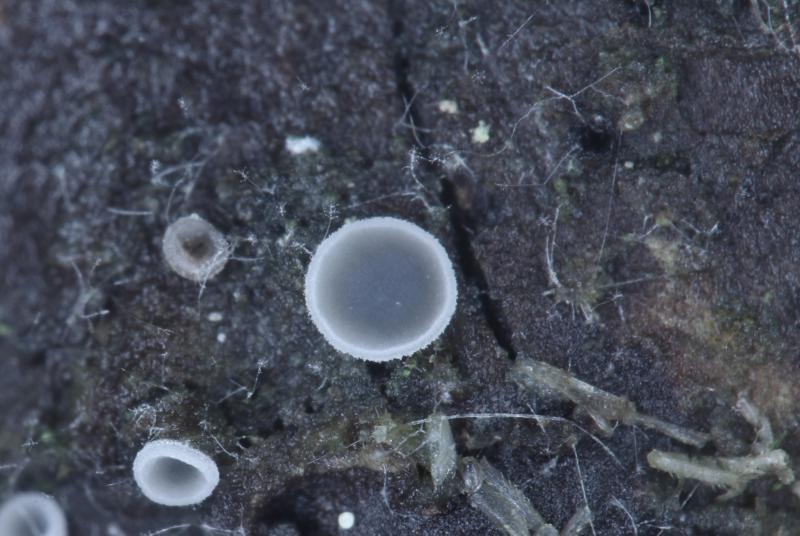
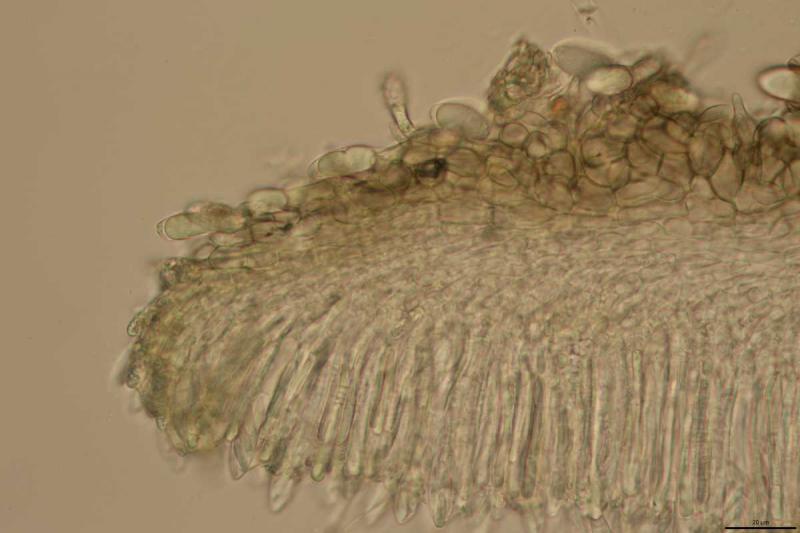
Hi, I have collected this ascomycete in a constantly wet and rather cold locality in the Czech Republic, on a twig of a deciduous tree, still with some bark.
Using the key to Mollisia by Andreas Gminder, I´m coming to point 18 in the subkey "wood, bark". Then, the best possibility is M. albogrisea, although the apothecia in my collection cannot be described as white.
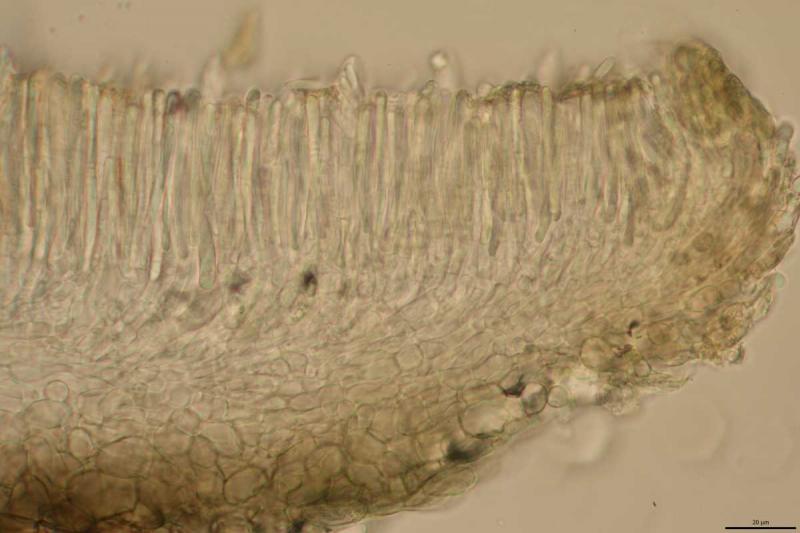
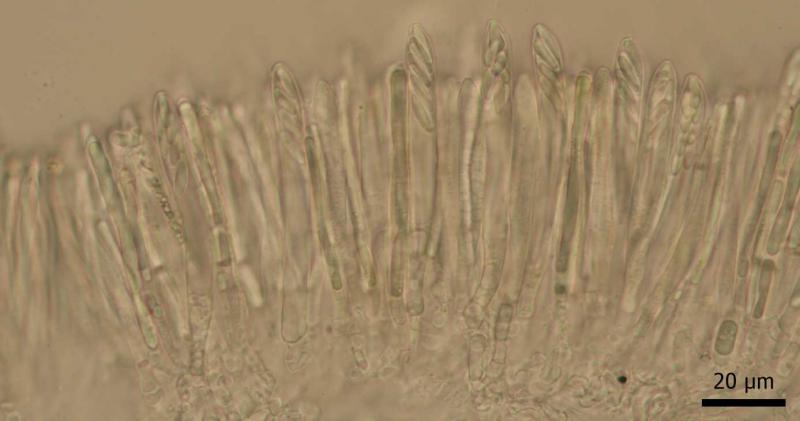
Key characters: Ascospores (9.1) 9.7 - 11.3 (12.1) × (2.3) 2.5 - 2.7 (2.9) µm, Q = 3.4-4.6, Me = 10.3 × 2.6 µm; Qe = 4, OCL = 0-1, 1-celled.
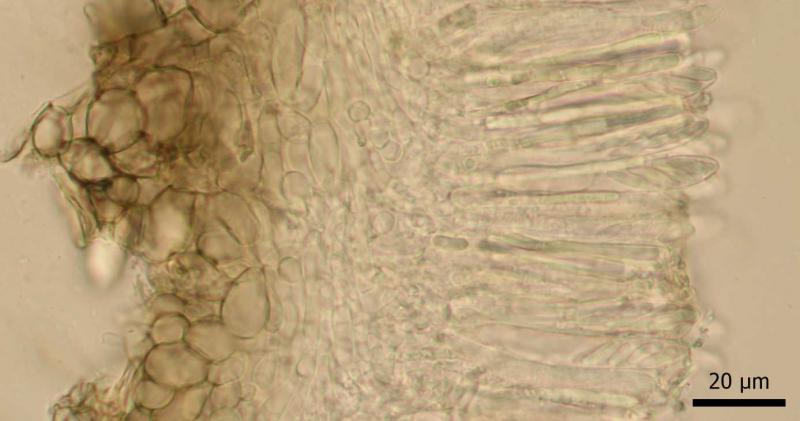
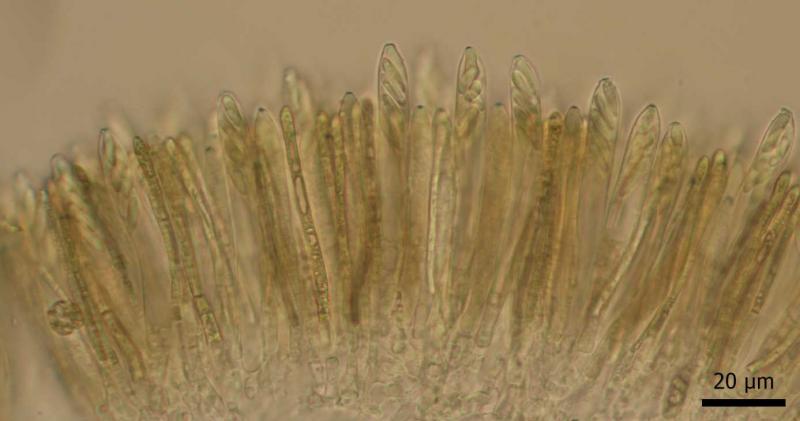
Asci (62.1) 67.2-70.7 (75.1) × (6.9)7-7.6 µm, IKI bb, H+.
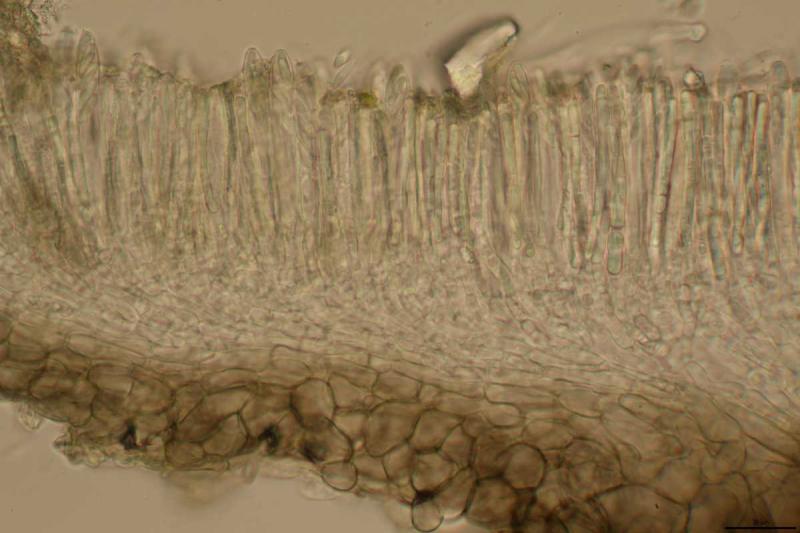
Subhymenium built of hyaline hyphae.
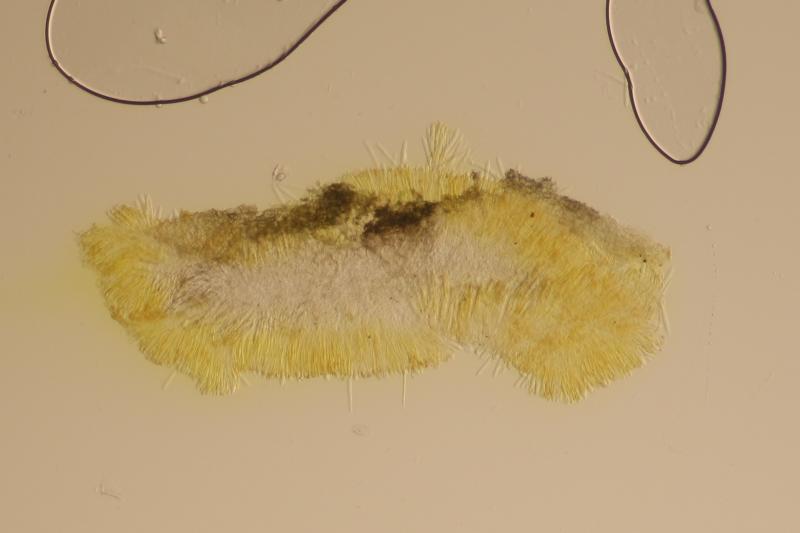
Very distinct yellow reaction in 5% KOH.
Do you agree with my identification?
I have read a discussion here at ascofrance, and if I understand it well, Mollisia albogrisea was a nom. prov., but the species was later described as Phaeomollisia piceae and then combined to Phialocephala piceae.
Zuzana
Zuzana Sochorová (Egertová),
20-07-2021 15:10
Re : Mollisia albogrisea
more photos
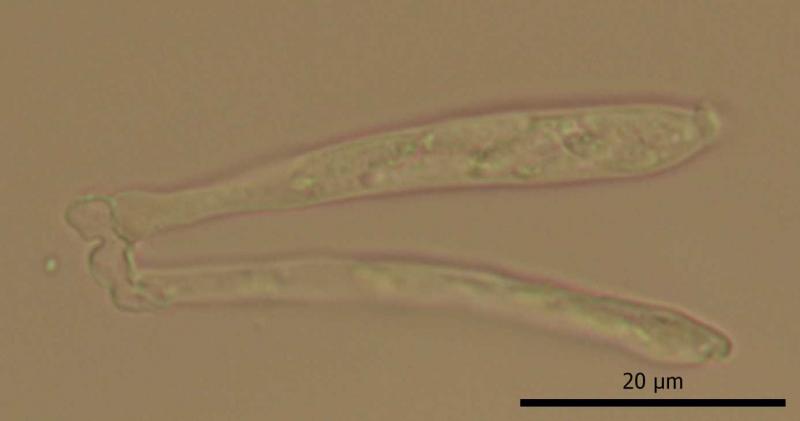
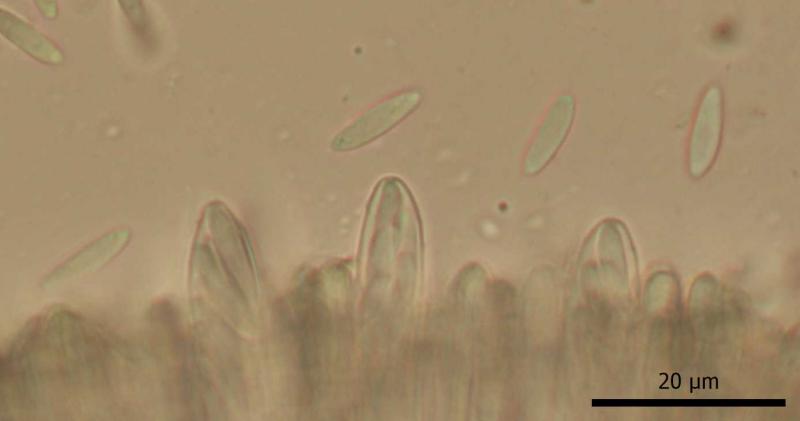
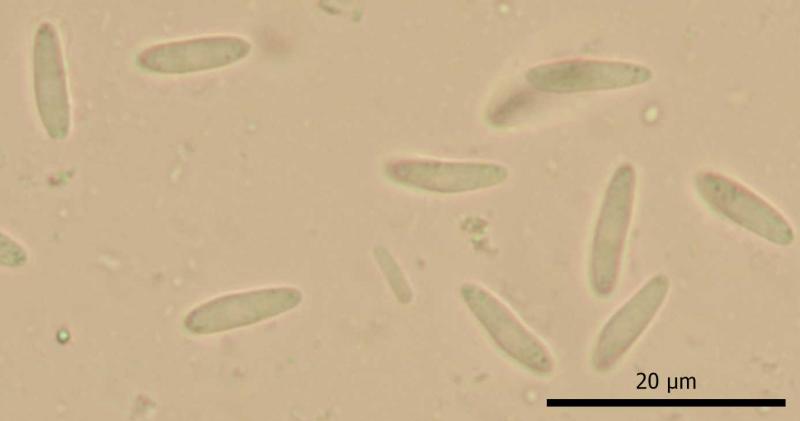
Zuzana Sochorová (Egertová),
20-07-2021 15:13
Re : Mollisia albogrisea
the substrate
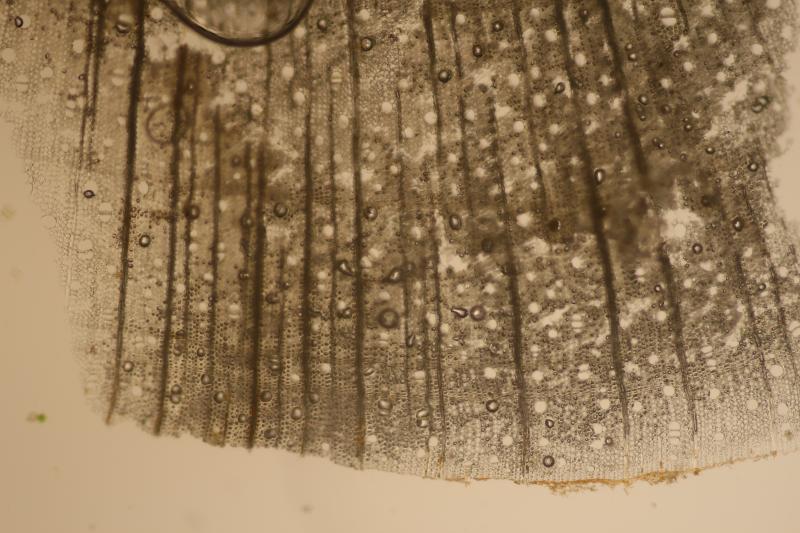
Hans-Otto Baral,
21-07-2021 08:43

Re : Mollisia albogrisea
Hi Zuzana
I asked Ingo Wagner and he tends to accept this ID. For comparison he sent a link
At least the marginal ectal excipulum is hyaline in your sample. M. albogrisea is well-explored by ITS sequences, and sequences of the anamorph Phialocephala picea have a strong match. Even ITS1 or ITS2 alone would be enough to confirm the species.
Since there is a Mollisia piceae (Pers.) Quel. which is of unclear identity, a new name must be proposed when not splitting Mollisia in several genera. Gminder's name albogrisea would be a good cbhoice in our opinion.
Zotto
Zuzana Sochorová (Egertová),
21-07-2021 09:14
Re : Mollisia albogrisea
Hi Zotto,
thank you and also Ingo.
Yes, both our collections look +- the same.
Sequencing could surely help, but we don´t have a budget to sequence everything :-) I will think about it.
Best, Zuzana
thank you and also Ingo.
Yes, both our collections look +- the same.
Sequencing could surely help, but we don´t have a budget to sequence everything :-) I will think about it.
Best, Zuzana
Andreas Gminder,
22-07-2021 21:47

Re : Mollisia albogrisea
Dear Zuzana,
I also think that Mollisia albogrisea fits well for yur collection. The species is not always white or very light grey, but sometimes it can be deep grey.I prefer to maintain the name Phialocephala picea, as I think its better to split Mollisia to several genera than to keep one large genus Mollisia.
all the best,Andreas
I also think that Mollisia albogrisea fits well for yur collection. The species is not always white or very light grey, but sometimes it can be deep grey.I prefer to maintain the name Phialocephala picea, as I think its better to split Mollisia to several genera than to keep one large genus Mollisia.
all the best,Andreas
Zuzana Sochorová (Egertová),
22-07-2021 22:23
Re : Mollisia albogrisea
Dear Andreas,
thanks a lot for confirmation.
Zuzka
thanks a lot for confirmation.
Zuzka