
08-06-2026 17:00
François BartholomeeusenGood day everyone, On June 5 2026, I collected de
08-06-2026 10:16
 Spooren Marco
I don`t have a clou about this fungus,it is not in
07-06-2026 15:10
 William Slosse
Hello everyone,On 05-06-26, I found following asco
05-06-2026 11:02
Thomas Læssøehttps://svampe.databasen.org/observations/10596691
07-06-2026 12:09
 François Freléchoux
Bonjour, Voici une brève description de ce qui m
07-06-2026 12:43
Steve ClementsBojour. This was a strange find on a stick on my
12-07-2015 00:05
 Nedim Jukic
This one from the same locality as the previous on
06-06-2026 17:44
Steve ClementsBonjour, This disco was on planed wood 3 x 1.5 cm
14-08-2016 23:15
 Alex Akulov
Dear friendsCan you help me to find the descriptio
 Hi,
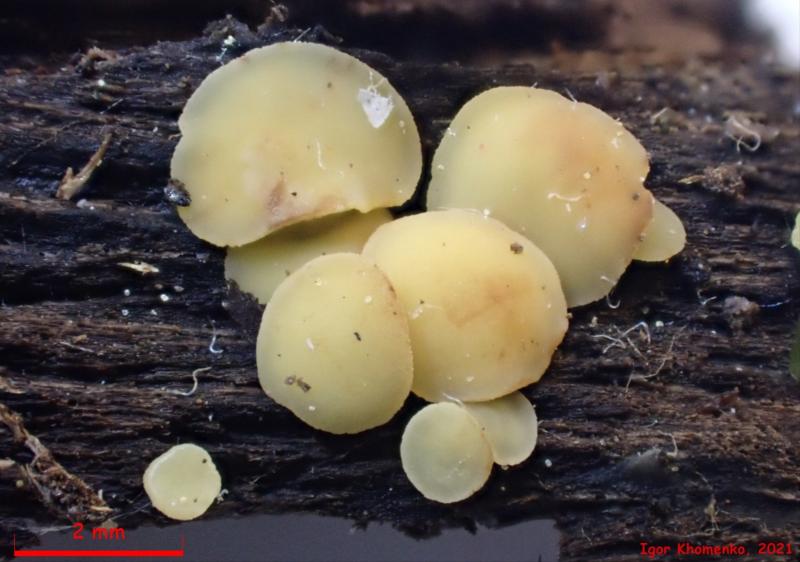
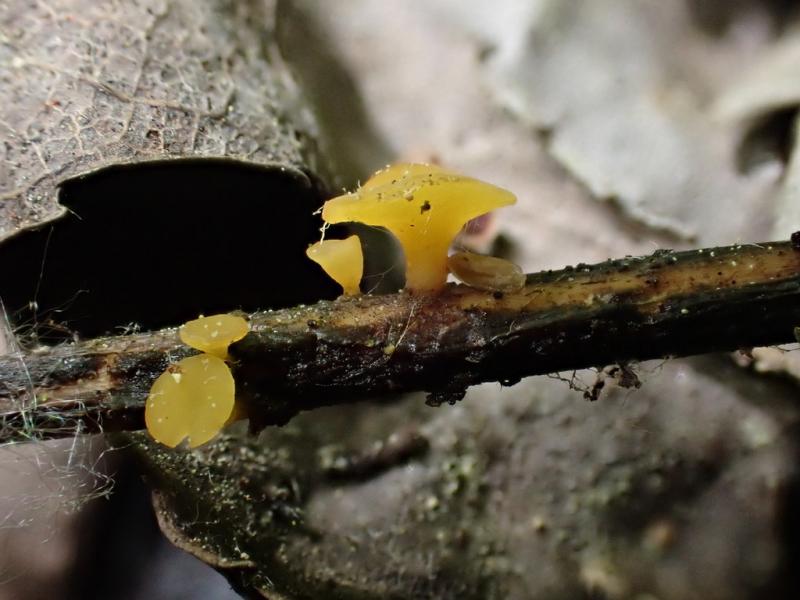
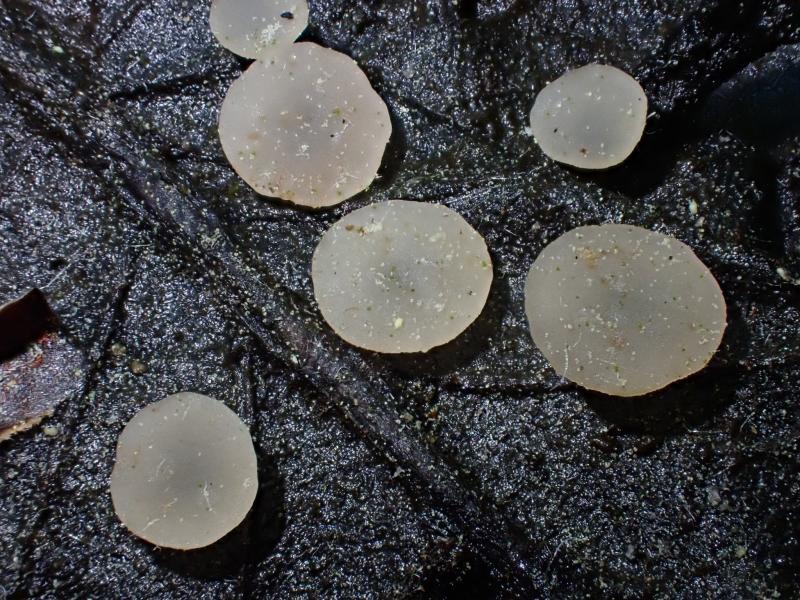
Hi,I recently found these three Hymenoscyphus around Ottawa, ON, Canada, and I was unable to identify them by myself. I still have fresh material in a fridge if something needs to be rechecked.
If someone could help with all or some of them I will be very appreciative.
#1 Hymenoscyphus Cudoniella group?
On buried wood.
https://inaturalist.org/observations/80770446
#2
On rotten leaves (probably Acer).
https://inaturalist.org/observations/80526192
#3
On rotten leaves (probably Betula).
https://inaturalist.org/observations/80526469 A-inamyloid
https://inaturalist.org/observations/81606383 B-amyloid
Thank you for your help,
Igor

These H. kathiae and H. immutabilis are different. I've previously seen H. kathiae with larger spores and H. immutabilis IKI+ only.
I haven't seen true H. repandus, so I will need to do more reading.
Igor

Il n'y a pas du tout de couche gélatineuse autour des jeunes apothécies de ta récolte N°3 ?
Amitiés.Michel
Thank you Zotto, I understand that IKI reaction does not determine the species, but the presence of croziers does and I have croziers in #3 (H. immutabilis). I got strong IKI+b after KOH for #3, but I'm not certain that this is the right type, but maybe I shouldn't expect the same look of apical apparatus after KOH.
I uploaded pictures of #3 https://inaturalist.org/observations/80526469
I'm getting an amyloid reaction from the specimen from one leaf (with or without KOH).
And I retested the specimen from the first leaf, I'm getting only an inamyloid reaction (with and without KOH).
They all look the same to me, but I'm getting a different reaction. They are from different spots of the same forest.
Should I treat them as two different species?
I split them into two collections IKI+ and IKI-. I'm going to keep specimens if someone wants to study them in the future.