Accès membres

Mot de passe perdu? S'inscrire

08-06-2026 17:00

François Bartholomeeusen

Good day everyone, On June 5 2026, I collected de

08-06-2026 10:16

Spooren Marco Spooren Marco

I don`t have a clou about this fungus,it is not in

07-06-2026 18:18

Mario Schulz

Hello everyone, i found on 31.5 the following Mol

07-06-2026 15:10

William Slosse William Slosse

Hello everyone,On 05-06-26, I found following asco

05-06-2026 11:02

Thomas Læssøe

https://svampe.databasen.org/observations/10596691

07-06-2026 12:09

François Freléchoux François Freléchoux

Bonjour, Voici une brève description de ce qui m

07-06-2026 12:43

Steve Clements

Bojour. This was a strange find on a stick on my

12-07-2015 00:05

Nedim Jukic Nedim Jukic

This one from the same locality as the previous on

06-06-2026 17:44

Steve Clements

Bonjour, This disco was on planed wood 3 x 1.5 cm

14-08-2016 23:15

Alex Akulov Alex Akulov

Dear friendsCan you help me to find the descriptio

« < 1 2 3 4 5 > »
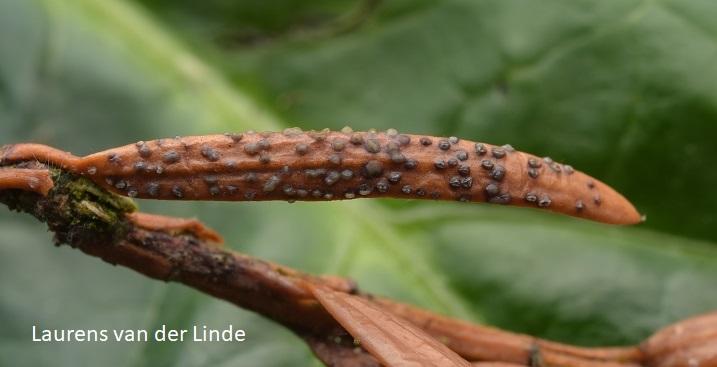
Diplodia taxi? = Cryptocline taxicola
Riet van Oosten, 31-05-2021 19:40
Riet van Oosten
Hello,

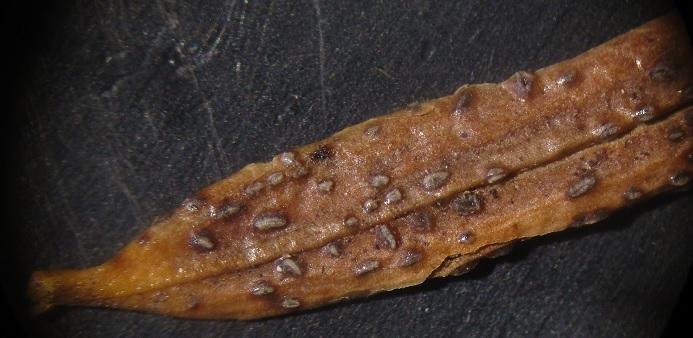
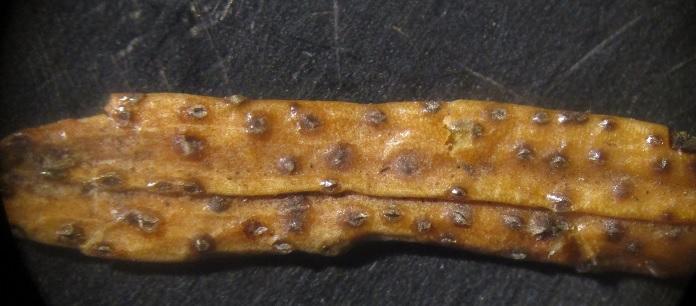
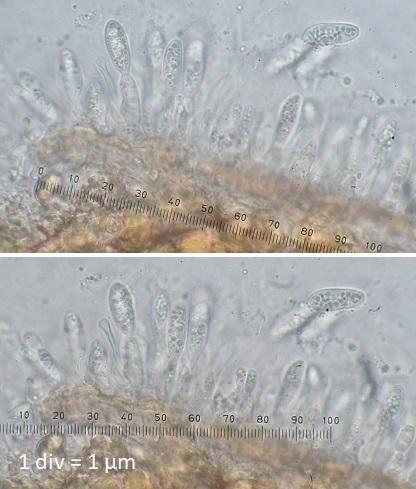
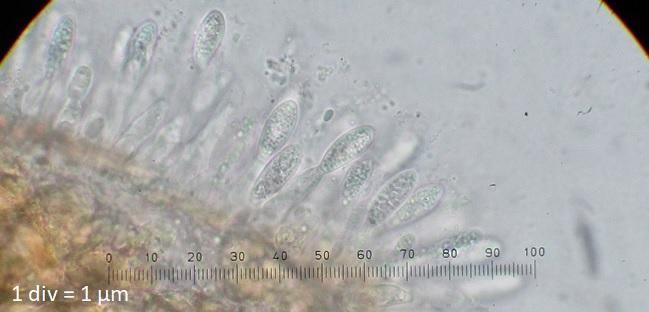
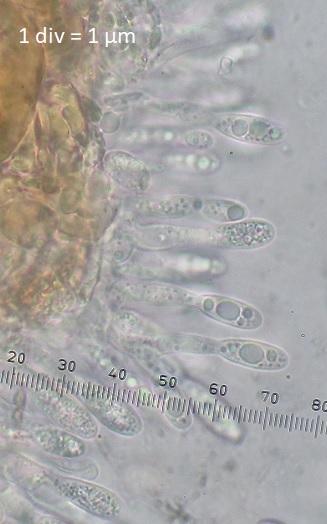
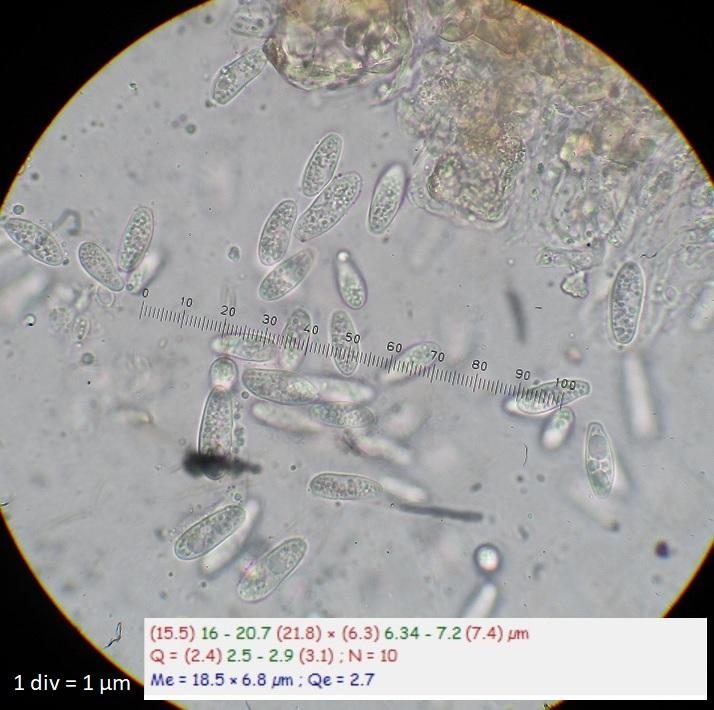
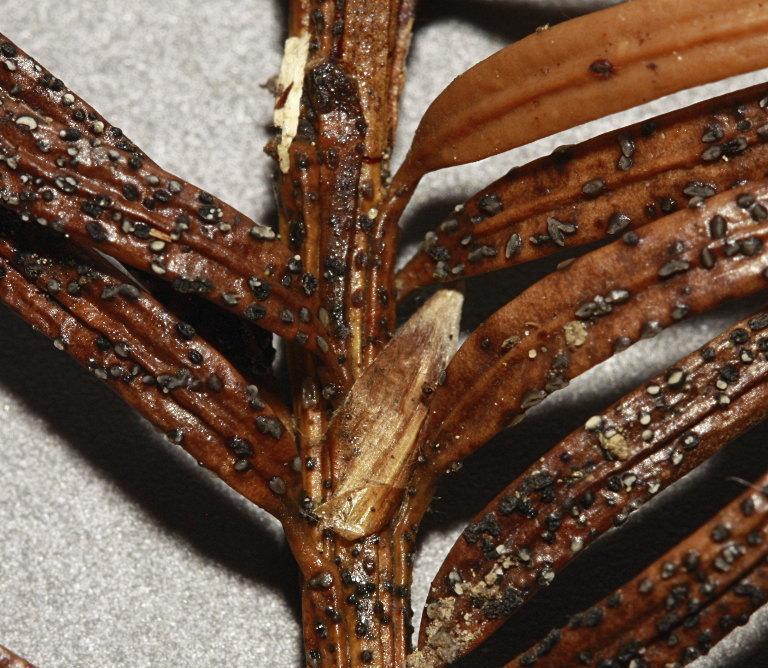
Found by Laurens van der Linde (May 2021, the Netherlands) on Taxus baccata "Repandens", on dead leaves still attached to the shrub.

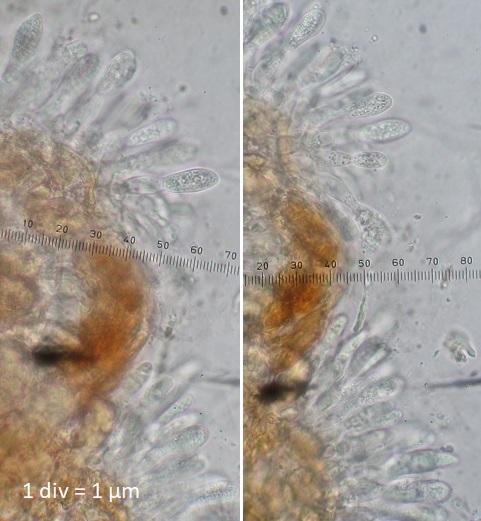
Is this Diplodia taxi? I read that the conidiogenous cells should have collarettes in case of Cryptocline.


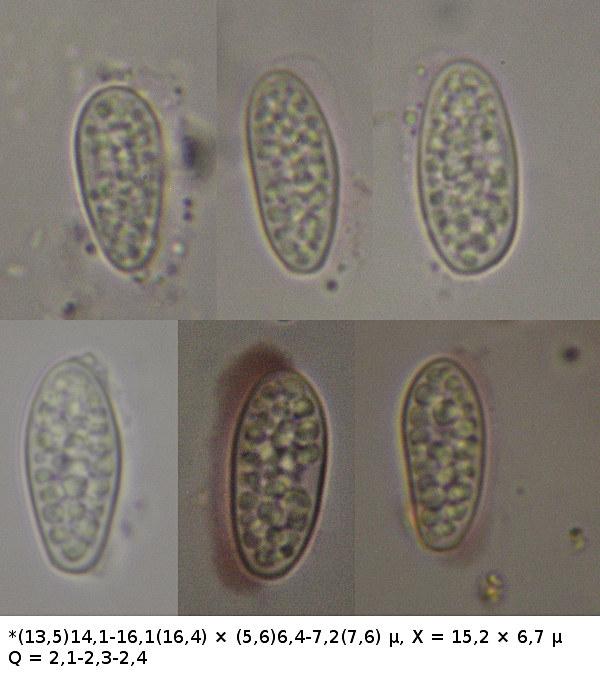
Conidia Me = 18.5 x 6.8 µm N = 10

Greetings, Riet


  • message #68986
  • message #68986
  • message #68986
  • message #68986
  • message #68986
  • message #68986
  • message #68986
  • message #68986
Chris Yeates, 01-06-2021 15:05
Chris Yeates
Re : Diplodia taxi?
Hello Riet

this reminded me of an earlier discussion - thanks for providing the link to that thread. My conviction that my fungus was Diplodia taxi was at a stage when I was unaware of the Cryptocline - although it is included (as a Gloeosporium) in vol. 2 of Grove's "British Stem and Leaf Fungi" - see http://www.cybertruffle.org.uk/cyberliber/01210/index.htm (page 226).

I have also come across https://core.ac.uk/download/pdf/235699268.pdf which perhaps you already know? Based on that and Marcus Yeo's useful comments on that earlier thread (especially the size of conidia and absence of any brown coloured ones) I am fairly sure that my fungus was Cryptocline - I must re-collect it.

It underlines a problem with the Internet: a search for images of Diplodia taxi brings up an image of my original find, and which I now think was mis-named. Many people trying to identify fungi unwisely "look for pictures on the web" as their main taxonomic tool, and any images there can assume a spurious accuracy - "onechte nauwkeurigheid".

I shall remove the image from that ASCOfrance thread, but it may stay on the web forever . . .?

Best wishes, Chris
Riet van Oosten, 01-06-2021 19:42
Riet van Oosten
Re : Diplodia taxi?
Hello Chris,
Thank you very much for page 226, the pdf and your information.
Because of the size of the conidia and the absence of any brown coloured ones Laurens's collection could also be Cryptocline taxicola.
Best wishes, Riet
Viktorie Halasu, 03-06-2021 01:15
Viktorie Halasu
Re : Diplodia taxi? = probably Cryptocline taxicola
Hello,

in a last year's collection of C. taxicola (from autochtonous population) I noticed spore sheaths, easily stainable with aqueous congo red. Usually they were wide and excentric, but sometimes they were tight and only a little bit loosened near the poles (bottom left photo). This might explain those "appendages" in the previous thread. I haven't noticed any sheath in Diplodia sp. on Fraxinus - are they lacking in D. taxi too?

Best wishes,
Viktorie
 

  • message #69019
  • message #69019
Riet van Oosten, 10-06-2021 16:10
Riet van Oosten
Re : Diplodia taxi? = probably Cryptocline taxicola
Got a mail from Laurens v.d. Linde. He had sent a mail to mr. R.K. Schumacher.
Mr. Schumacher: "......thank you for sharing your information.This is NOT a Diplodia-like. Only in a very young state of development the immature conidia can be hyaline and do have coarsely guttules. But the arrangement of the guttules is not the same as in Cryptocline. A good work name is Cryptocline taxicola ......."