
08-06-2026 17:00
François BartholomeeusenGood day everyone, On June 5 2026, I collected de
08-06-2026 10:16
 Spooren Marco
I don`t have a clou about this fungus,it is not in
07-06-2026 15:10
 William Slosse
Hello everyone,On 05-06-26, I found following asco
05-06-2026 11:02
Thomas Læssøehttps://svampe.databasen.org/observations/10596691
07-06-2026 12:09
 François Freléchoux
Bonjour, Voici une brève description de ce qui m
07-06-2026 12:43
Steve ClementsBojour. This was a strange find on a stick on my
12-07-2015 00:05
 Nedim Jukic
This one from the same locality as the previous on
06-06-2026 17:44
Steve ClementsBonjour, This disco was on planed wood 3 x 1.5 cm
14-08-2016 23:15
 Alex Akulov
Dear friendsCan you help me to find the descriptio
Goose dung disco
Chris Yeates,
02-05-2021 23:01

Bonsoir tous
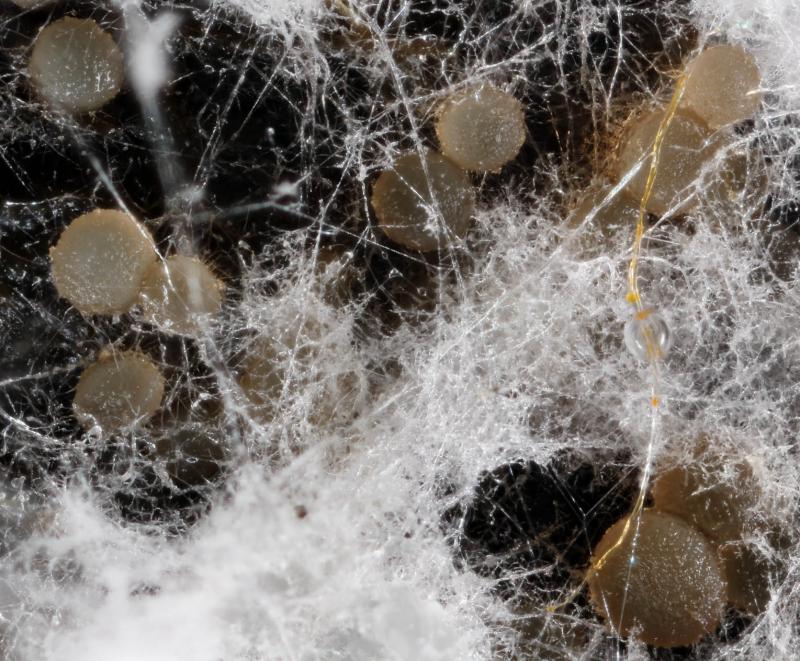
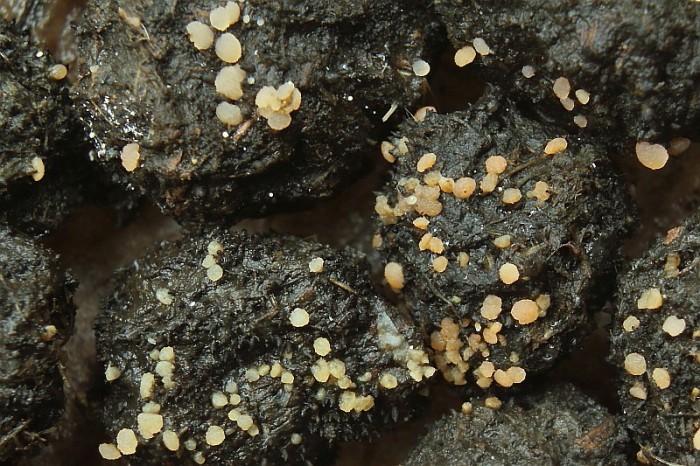
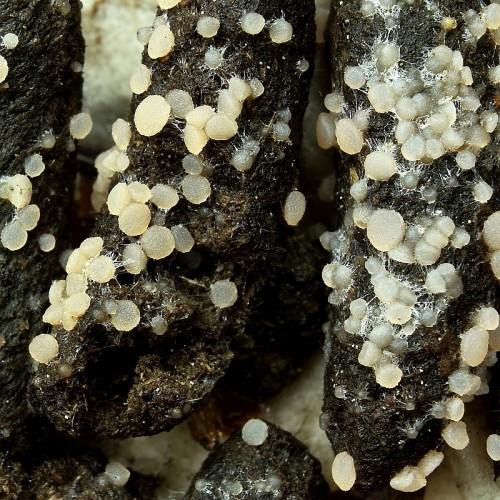
This fungus has appeared on the incubated dung of canada goose Branta canadensis collected by a canal 2½ weeks ago.
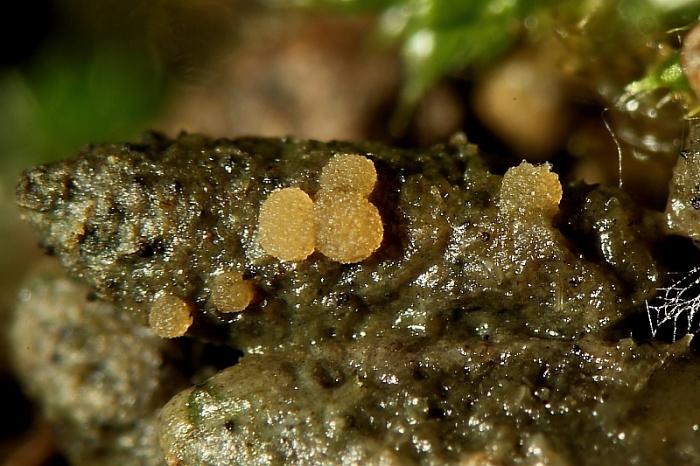
Perhaps because the dung was too wet a hyphal mat covered the droppings, but when a portion of this was carefully removed it revealed numerous pale yellow apothecia up to 750µm diameter.
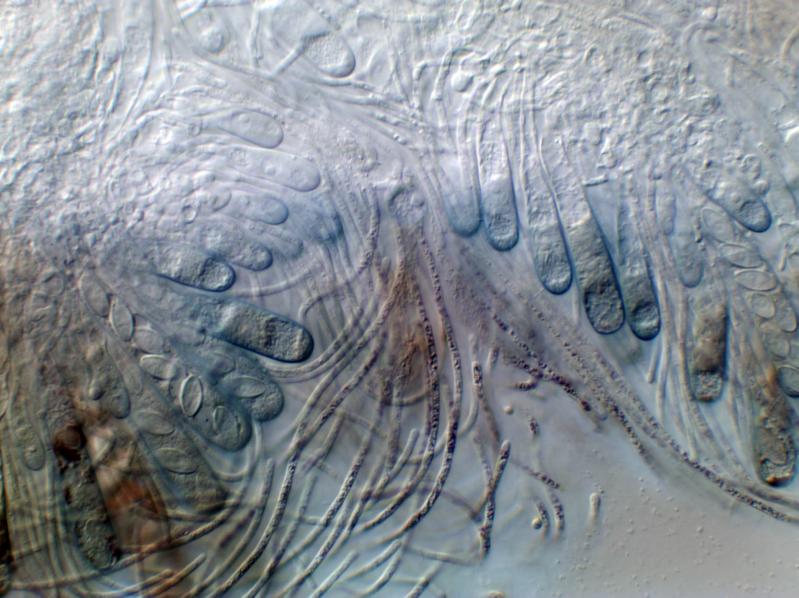
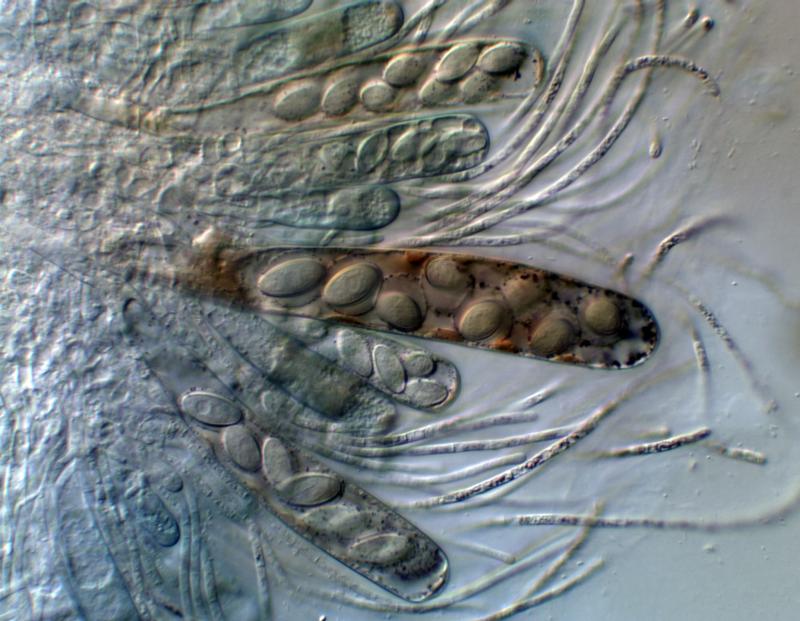
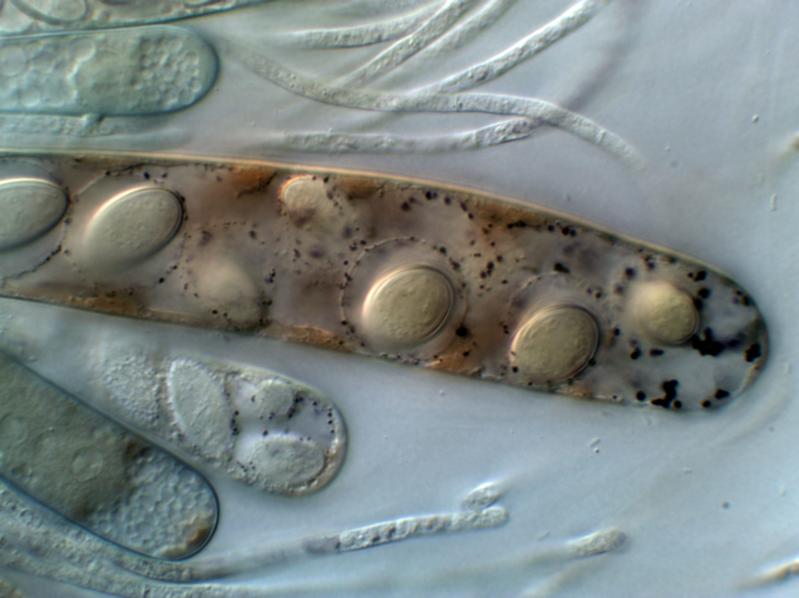
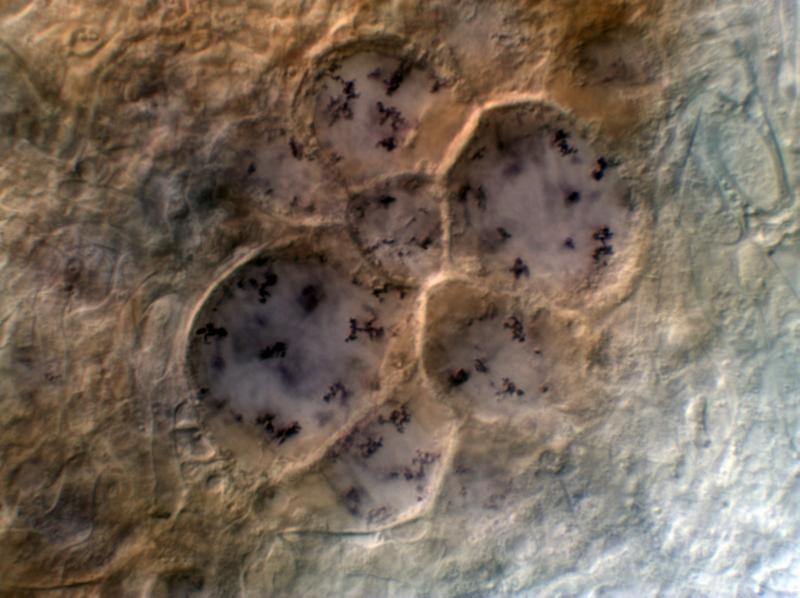
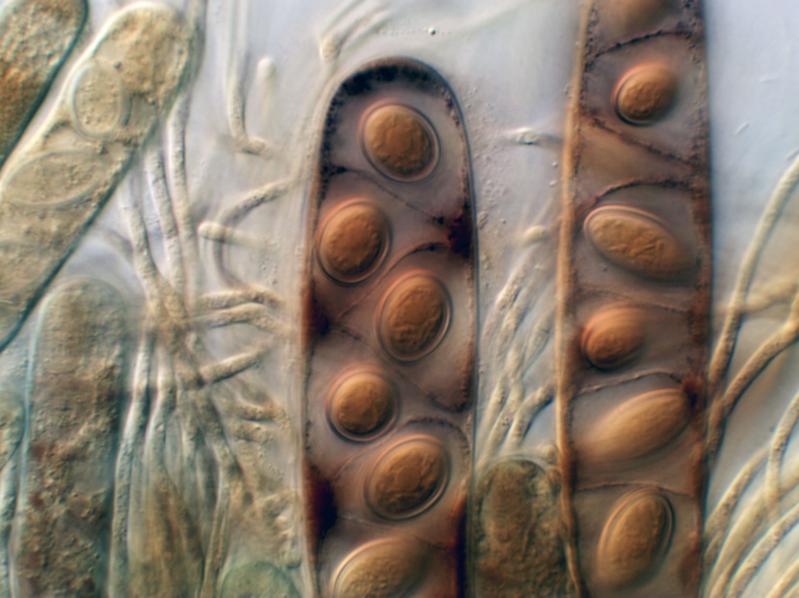
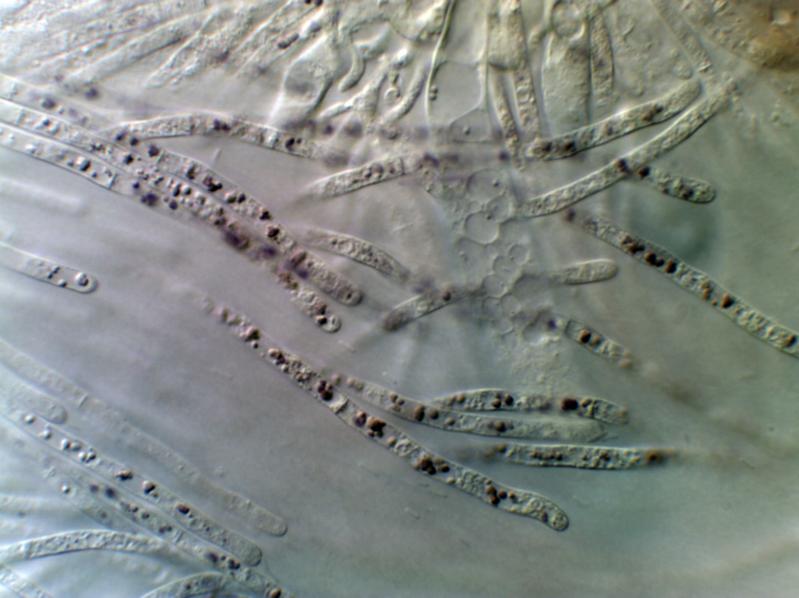
Before a more detailed study I would welcome suggestions as to what to look for or suggestions of a genus. The apothecia are operculate, 8-spored and reacted strongly in Baralsche Löhsung as can be seen in the photographs. The reaction went from clear blue in young asci to an interesting phenomenon in older ones. Inside the asci, many of the paraphyses and inside the larger excipular cells small deep purple granules were deposited.
I need to make sure that the spores are mature before I make comments on size and ornamentation (if any). In photograph #6 the sheaths surrounding the entire spores can be seen, finally filling the whole asci - when this filling the asci occurs does this imply ascal maturity - i.e. the turgidity which causes spore ejection?
Cordialement, Chris
Peter Püwert,
02-05-2021 23:22

Re : Goose dung disco
Hi, this could be Iodophanus.
Regards Peter.
Hans-Otto Baral,
03-05-2021 07:37

Re : Goose dung disco
You could compare the KOH-pretreated iodine reaction which is probably permanently blue. The wall reaction looks like hemiamyloid. The red granules is another phenomenon which may occur also in Helotiales.
Chris Yeates,
03-05-2021 14:46
Re : Goose dung disco
Thank you Pieter & Zotto
Of course I should have thought of Iodophanus - always think of the most obvious candidate! The pale ascomata are probably down to restricted light under the hyphal mat. I'll await mature spores and do what Zotto suggests.
Chris
Peter Püwert,
04-05-2021 02:14
Re : Goose dung disco
Hi, this species can be very variable in color.
Peter.
Chris Yeates,
10-05-2021 19:39
Re : Goose dung disco
Bonsoir tous
Of course my lesson should be "wait until the spores have ripened!" The fungus has matured to produced a splendid display of hundreds of apothecia of Ascobolus brantophilus - I'll post images in due course.
Chris