

10-06-2026 12:54
Steve ClementsBonjour encore, Pouvez-vous m'aider, s'il vous pl
09-06-2026 18:32
Camille MertensSur morceau de roseau immergé 0,5 - 0,7 mm de dia
10-06-2026 21:16
 François Freléchoux
Bonsoir,Le dernier du jour, en attendant votre avi
10-06-2026 21:07
François Freléchoux
Toutes les tiges de gentianes jaunes de l'an passÃ
10-06-2026 13:41
François Freléchoux
Bonjour à nouveau, Voici une trouvaille d'hier.
10-06-2026 11:53
Steve ClementsBonjour, This disco is abundant on dead stems of
10-06-2026 10:45
François Freléchoux
Bonjour à nouveau, Encore une détermination qui
08-06-2026 10:16
 Spooren Marco
I don`t have a clou about this fungus,it is not in
10-06-2026 09:24
François Freléchoux
Bonjour, J'imagine que cette détermination ne do
Delitschia winteri
Joop van der Lee,
18-11-2020 14:19
 I have posted a topic about this species as D. chodocola but it turned out to be wrong mainly because of the bracket in spore size.
Added files show the difference I only did measure a bracket from 65-72x25-27 um the first time but it proved to be lower than the bracket for D. chodocola. There are some details that are not documented and the bracket for the perithecia is far below the one mentioned in documentations.
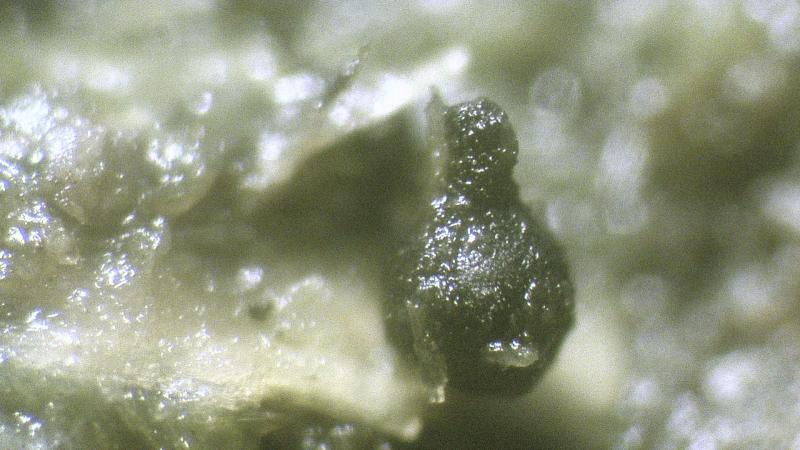
Perithecia: embedded with only the top of the neck visible; 511-655420-567 um.
Neck: straight; smooth; no hairs observed; 289-334x179-194 um.
Paraphyses: filiform; abundant; septated; branched; 2.0-2.7 um wide.
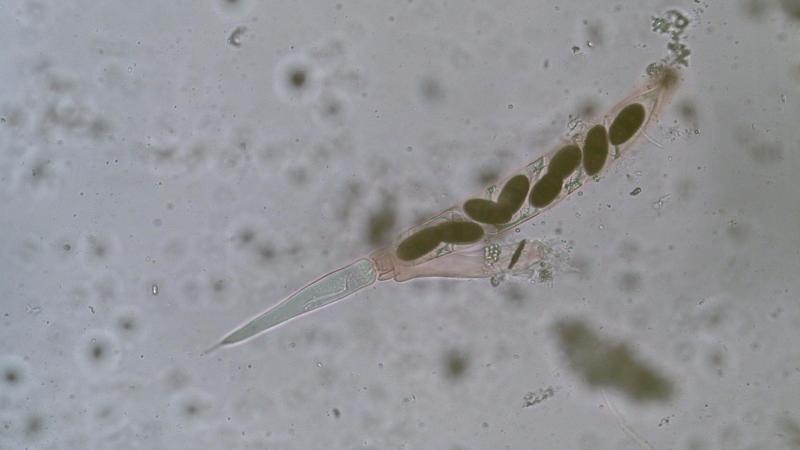
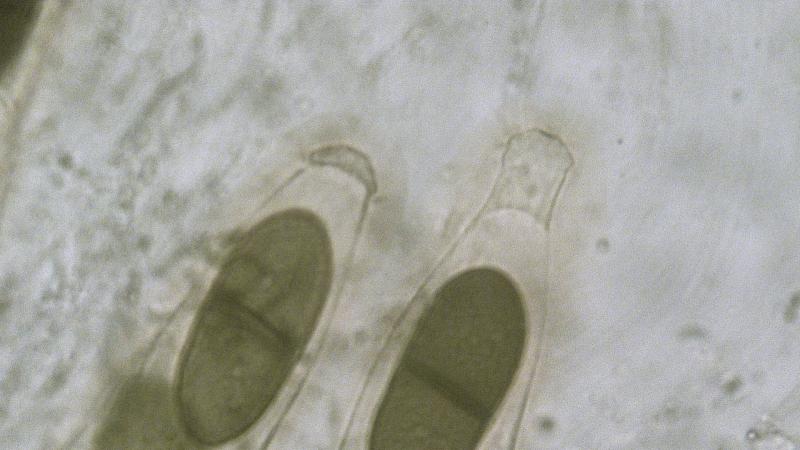
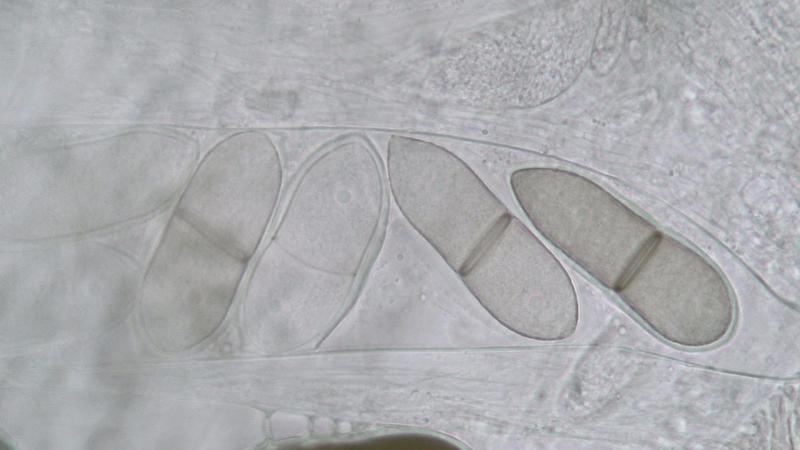
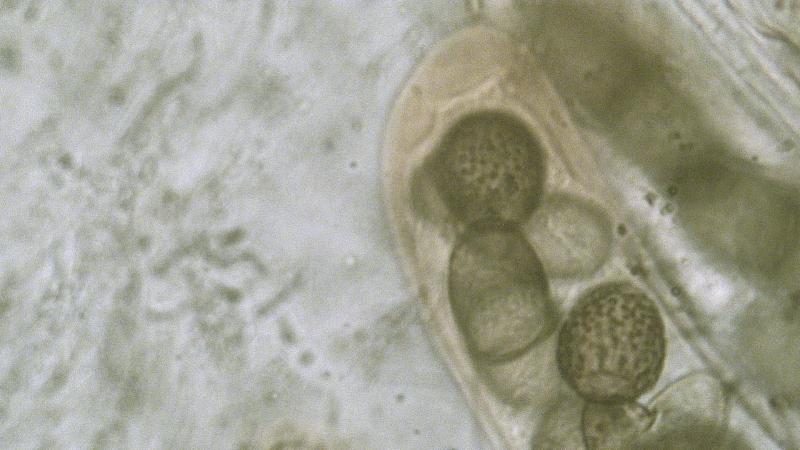
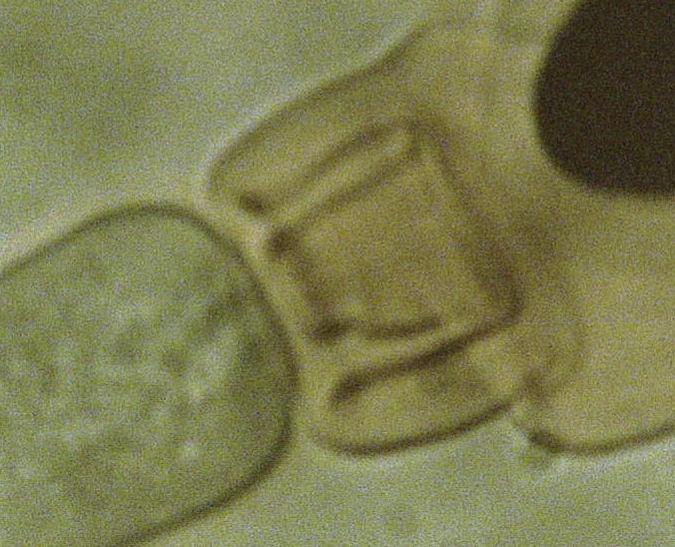
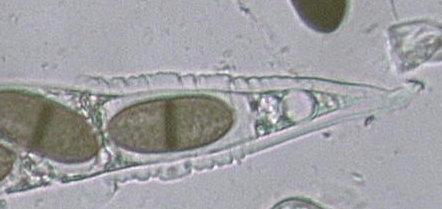
Asci: Bitunicate; no apical ring present because the outer wall retracts in total (photo 12) however there is an apical system in the living part (photo 4); 312-326x63-67 um; stolk abruptly separates from ascus in most cases (photo 11); asci swell and extend when in contact with water.
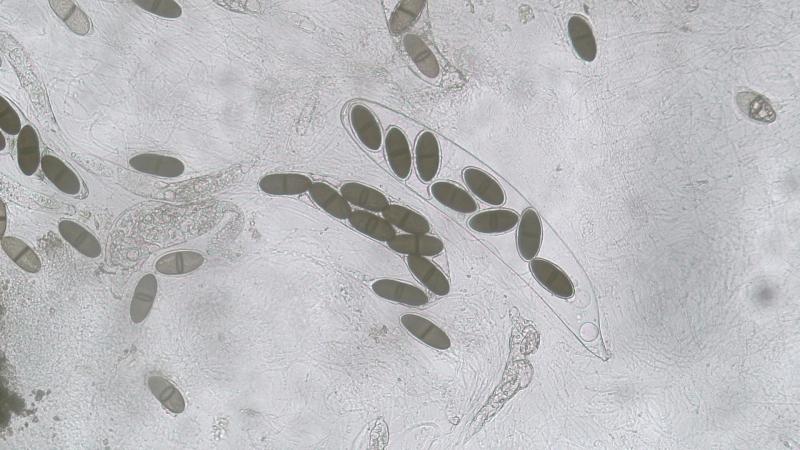
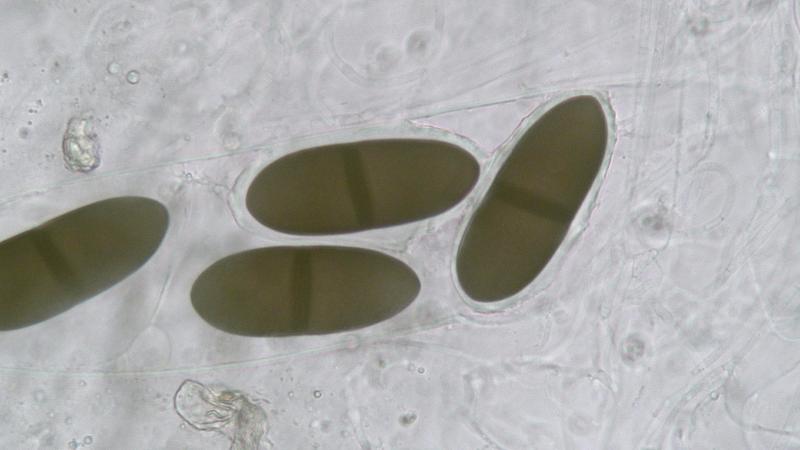
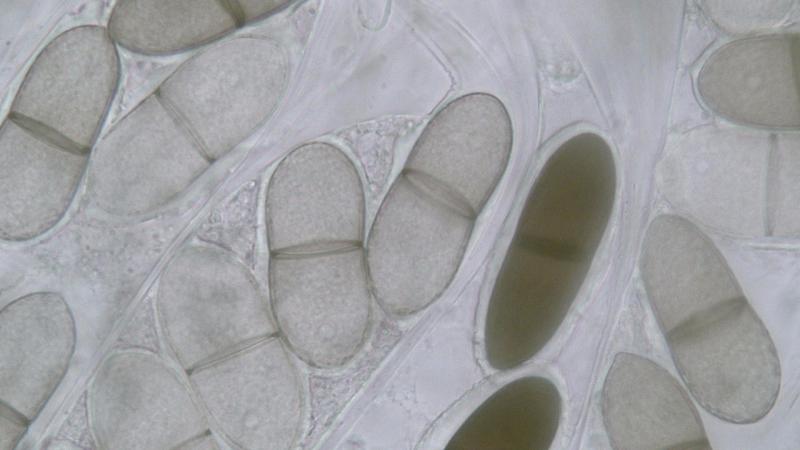
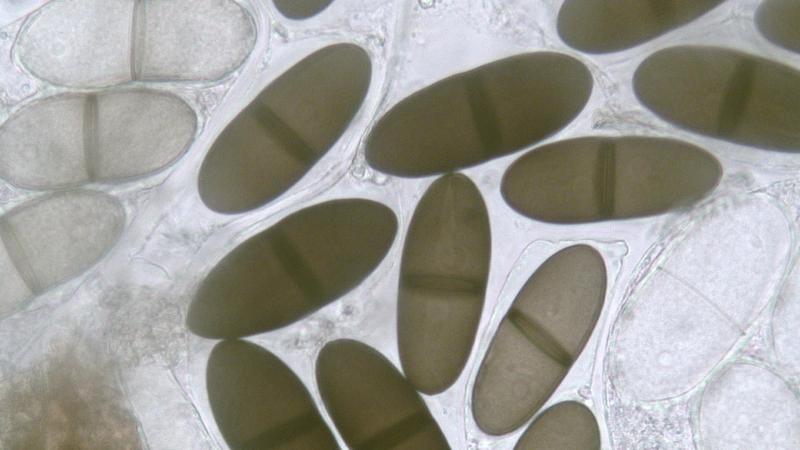
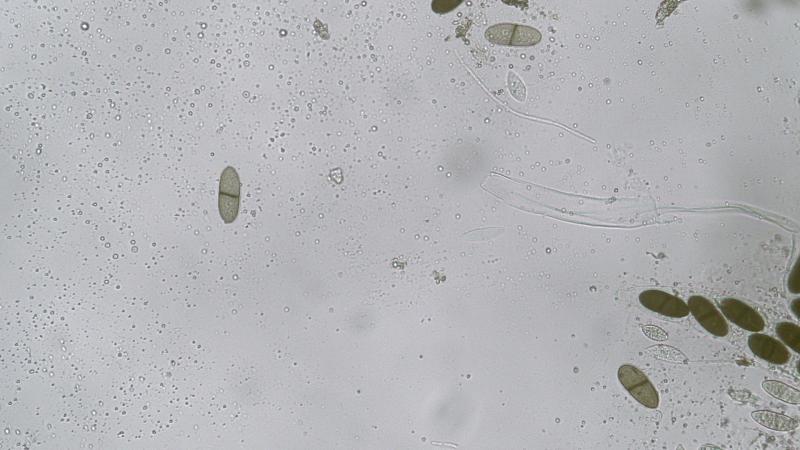
Spores: Biseriate soon becoming uniseriate; immature spores have rounded tops (with exceptions), mature spores conical; transvers occasionally oblique septum with small constriction; surrounded by a gelatinous sheath 3.5-3.5 um swelling in water; 51-72x23-27 um.
 Grevillea 2. New and rare British fungi