
11-05-2026 12:32
 Bernard CLESSE
Pourriez-vous m'aider à identifier cette héloti
13-05-2026 15:26
 François Freléchoux
Bonjour,Voici une récolte faite il y a quelques j
12-05-2026 15:41
 Nicolas VAN VOOREN
Dear Ascolovers, especially interested in Pezizale
13-05-2026 12:05
 Thierry Blondelle
Bonjour à tous,J'aimerais avoir confirmation de c
10-05-2026 23:17
 Andreas Gminder
Hello,today we found in a moist steep decidous for
28-04-2026 20:07
 Lothar Krieglsteiner
... on twig in the air at standing Ceratonia siliq
27-04-2026 20:52
Lothar Krieglsteiner
Found on hanging tiwg of Olea europaea in dried-ou
11-05-2026 20:22
Lothar Krieglsteiner
on attached twig of standing Ficus caricaquite uns
29-04-2026 10:44
Lothar Krieglsteiner
growing at moist, drying-out soil at the side of a
cf. Massaria on Fraxinus bark
Ibai Olariaga Ibarguren,
15-05-2020 09:36
This is a fungus that I found on bark of an old Fraxinus angustifolia tree, in central Spain (Ciudad Real, Brazatortas). Ascomata are erumpent and have a white disc at the apex with a black ostiole in the centre. Ascospores are 3-septate, 25-31 x 9-12 µm. I have failed to see any gelatinous sheath.
I think it might be related to Massaria, but I do not find any species that fits there. I would appreciate any kind of help.
Thank you in advance.
Best,
Ibai.
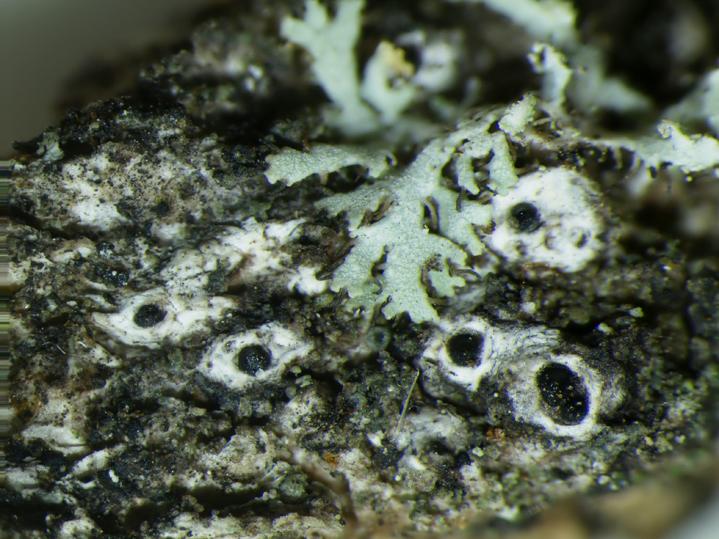
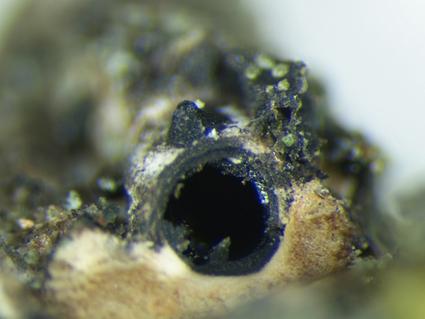
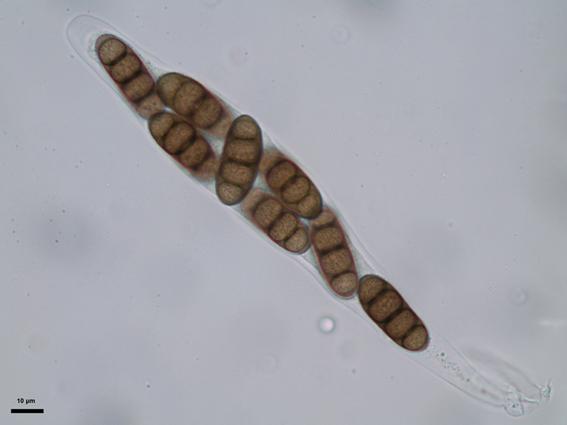
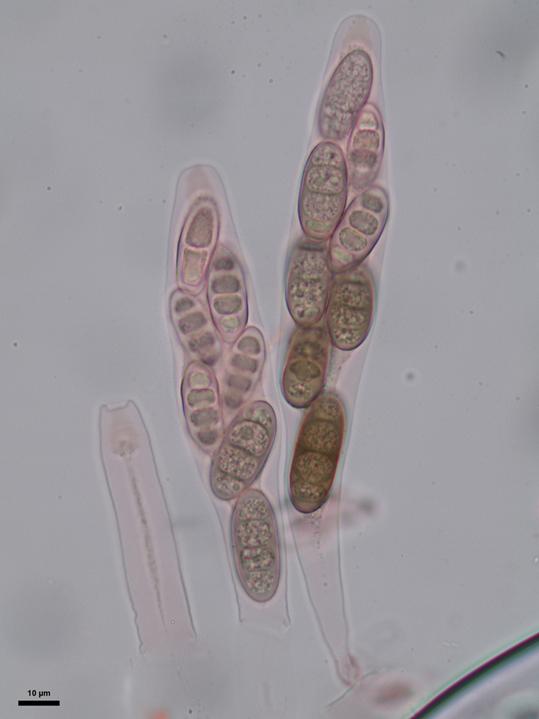
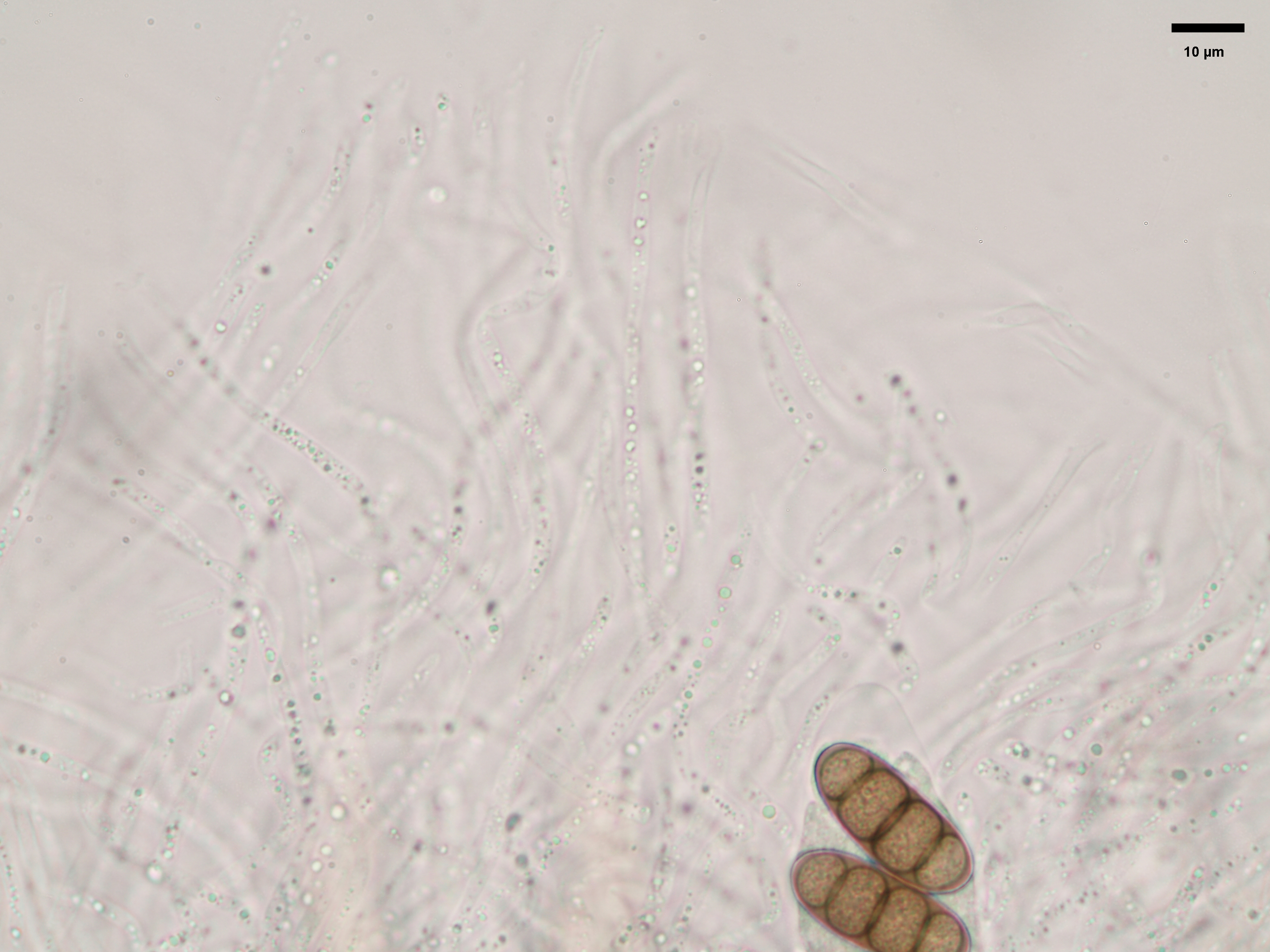 paraphyses
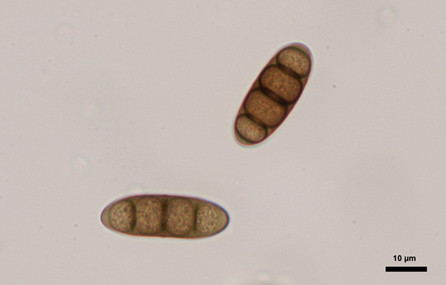 spores in water
Hermann Voglmayr,
15-05-2020 09:41

Re : cf. Massaria on Fraxinus bark
Dear Ibai,
that's Requienella fraxini. See https://www.ncbi.nlm.nih.gov/pmc/articles/PMC5238940/
Best,
Hermann
Alain GARDIENNET,
15-05-2020 09:51

Re : cf. Massaria on Fraxinus bark
Hermann, alias Lucky Luke !
Ibai Olariaga Ibarguren,
15-05-2020 10:12
Re : cf. Massaria on Fraxinus bark
Hi Hermann,
Thank you for your very quick answer! Nice species and very nice paper.
It is probably not very rare in central Spain, where there are areas with many old pollarded Fraxinus angustifolia. I had found empty perithecia before.
Best,
Ibai.
Hermann Voglmayr,
15-05-2020 10:25
Re : cf. Massaria on Fraxinus bark
Dear Ibai,
congratulations for this very nice find! It is very rare here in Austria, but seems to be much more common in Western Europe (atlantic to submediterranean areas). I have already seen material from Spain (Andalucia) - Requienella is very distinct already macroscopically by its erumpent cone-shaped black ascomata surrounded by a distinct white zone. However, you always need to microscope it, as in Spain on Fraxinus angustifolia also the second species (R. seminuda) can occur, which has usually five septa and is typically found on Olea europaea.
Best,
Hermann
Alain GARDIENNET,
15-05-2020 11:26
Re : cf. Massaria on Fraxinus bark
I confirm it's quite rare in France too.
For example, I didn't find it in my area, while I was looking for it.
Hermann Voglmayr,
15-05-2020 11:40
Re : cf. Massaria on Fraxinus bark
Ya, I think there are two factors: first, they need old living Fraxinus trees. and experience from Scandinavia (Norway, Sweden) where it is much more common than in Central Europe show that it is especially found on the bark of old, pollarded living Fraxinus trunks that are situated at forest margins, or on solitary trees in meadows, parks, etc. Second, it seems to be more common in areas with mild climate and, at least seasonally, high humidity. And as especially old Fraxinus trees are severely declining and disappearing in most of Europe due to ash dieback decline, it is expected to become much rarer and even endangered over much of its current distribution range...