
27-04-2026 20:52
 Lothar Krieglsteiner
Found on hanging tiwg of Olea europaea in dried-ou
27-04-2026 18:48
Tony MoverleyCollected 23rd April 2026, Norfolk, EnglandSwarms
27-04-2026 17:41
Lothar Krieglsteiner
.. Algarve, same leaf than the last post. The con
27-04-2026 18:05
Lothar Krieglsteiner
... still attached at standing tree. The green con
27-04-2026 17:16
Lothar Krieglsteiner
.. Algarve, moist lying.The conidiomata look like
27-04-2026 12:54
Steve ClementsBonjour. Ce petit champignon blanc résupiné et
27-04-2026 09:59
Pauline. PennaBonjour Can anyone advise me on these pycnidia fo

22-04-2026 20:54
 Enrique Rubio
Hi to everybody.This Pyrenopeziza grew in moist le
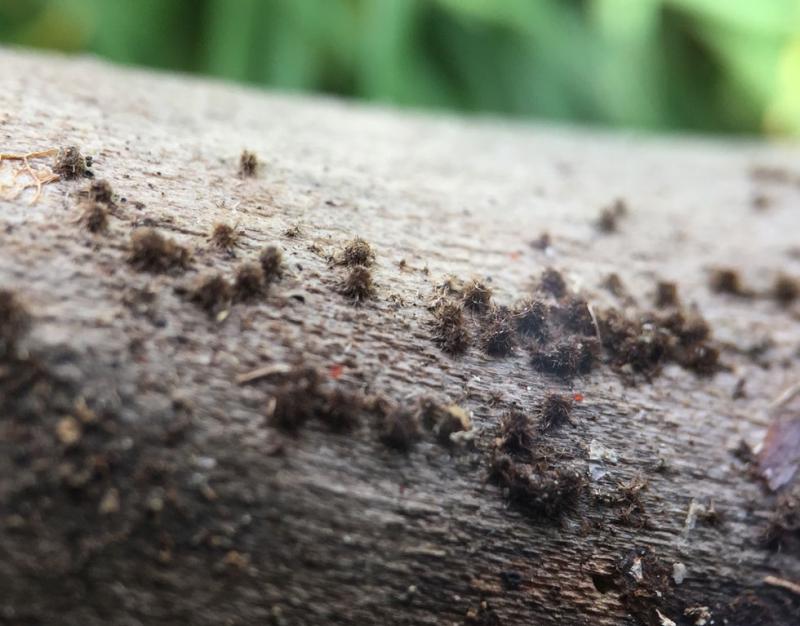
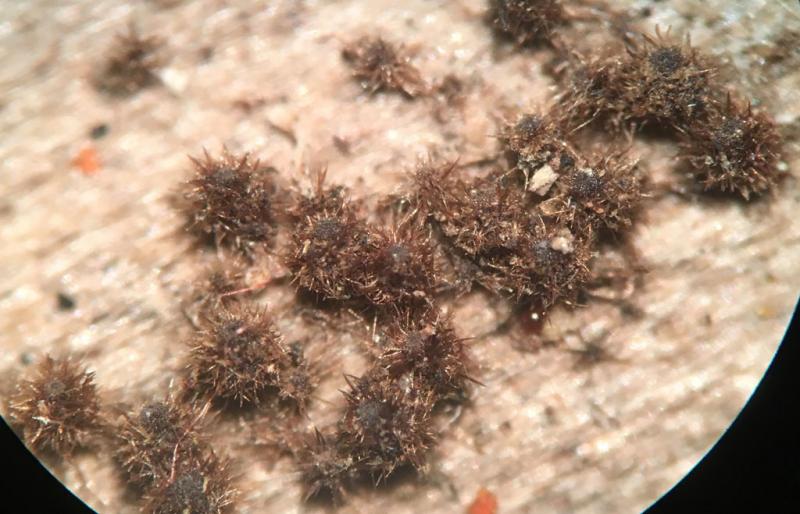
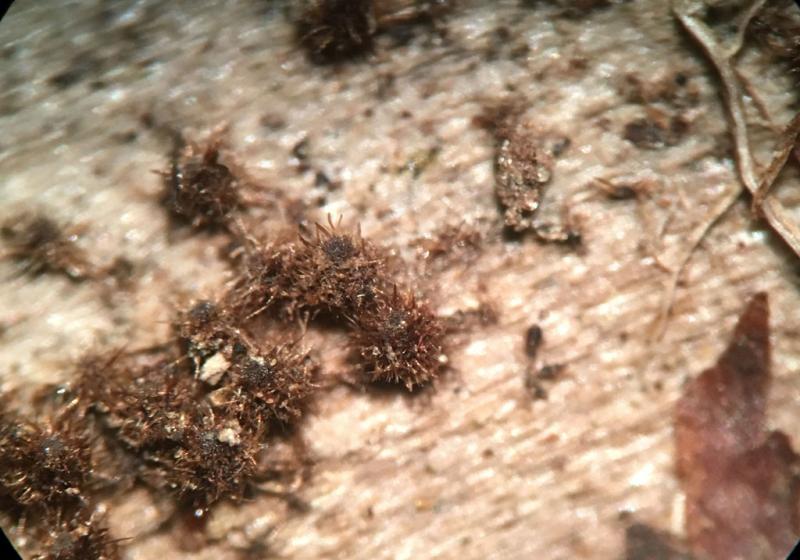
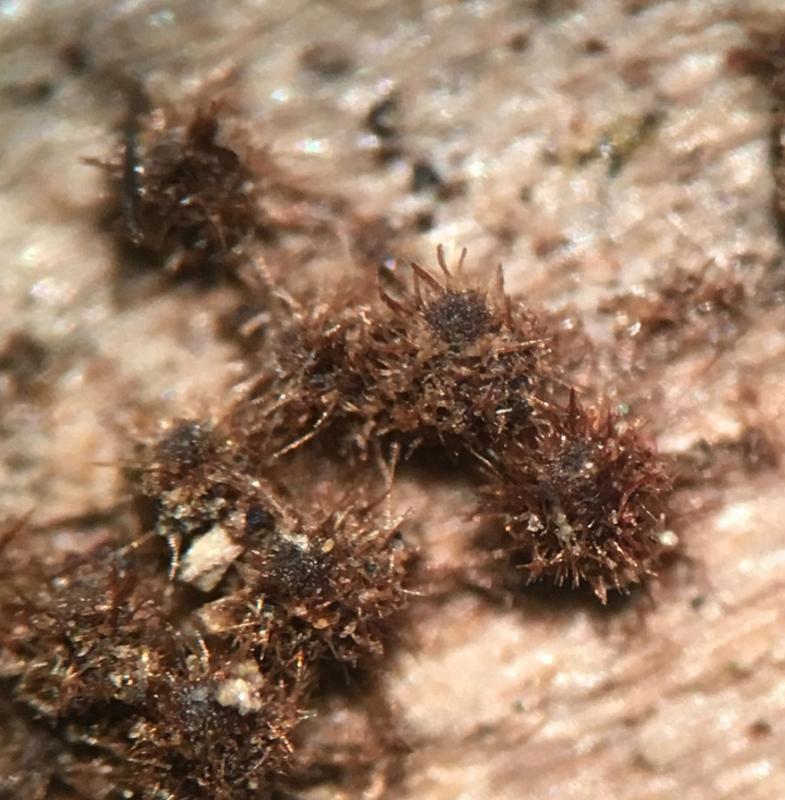
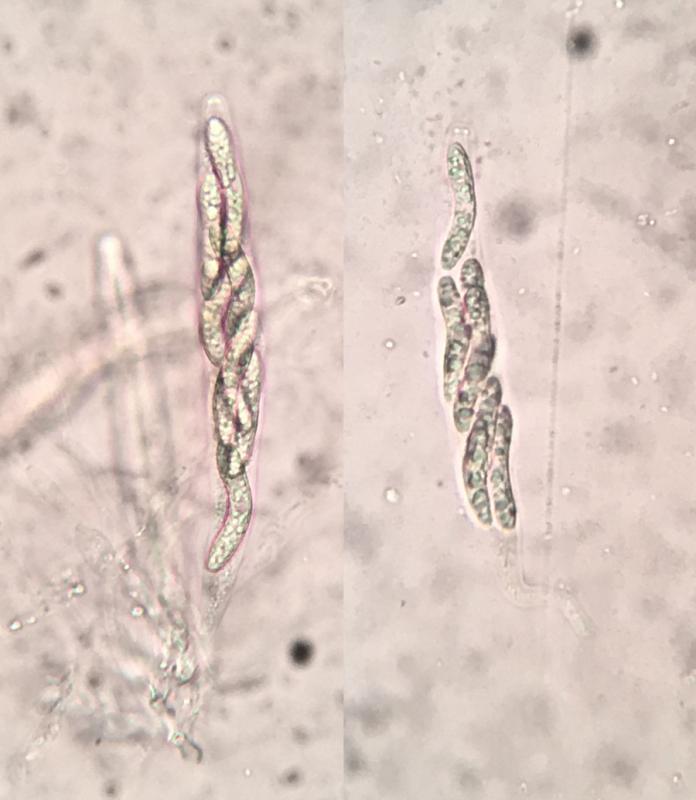
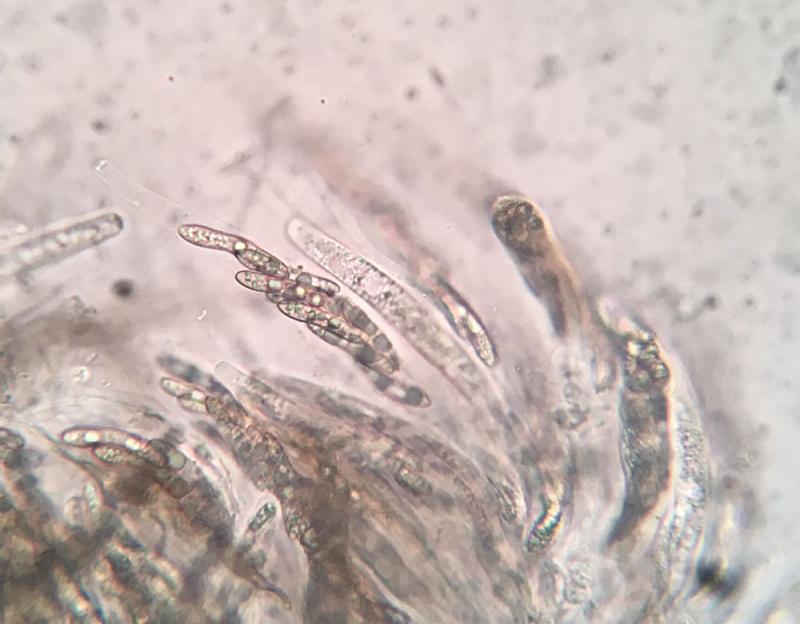
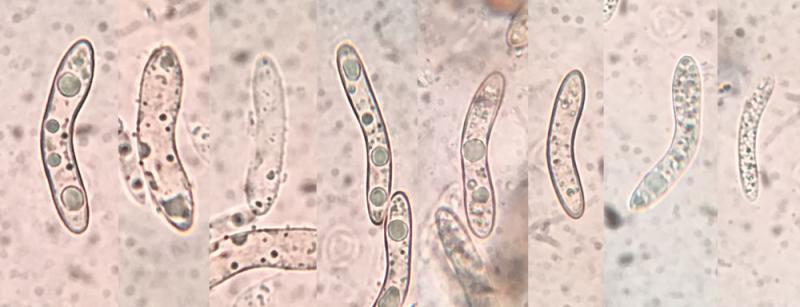
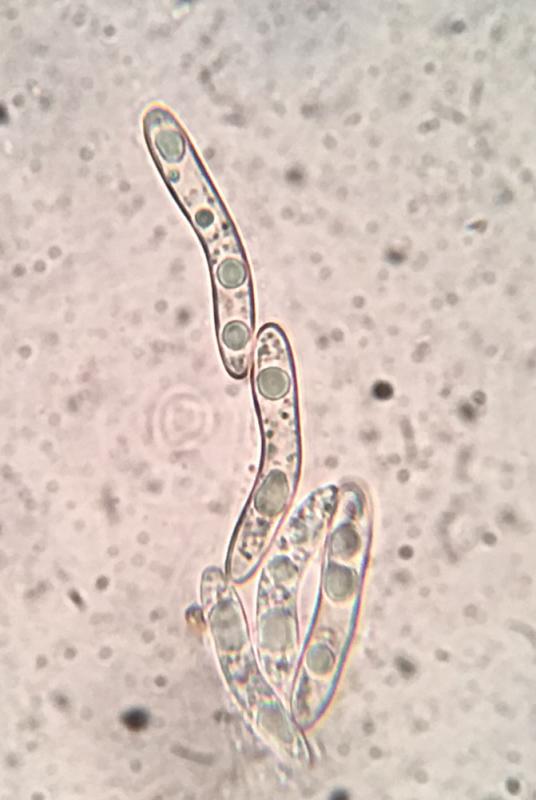
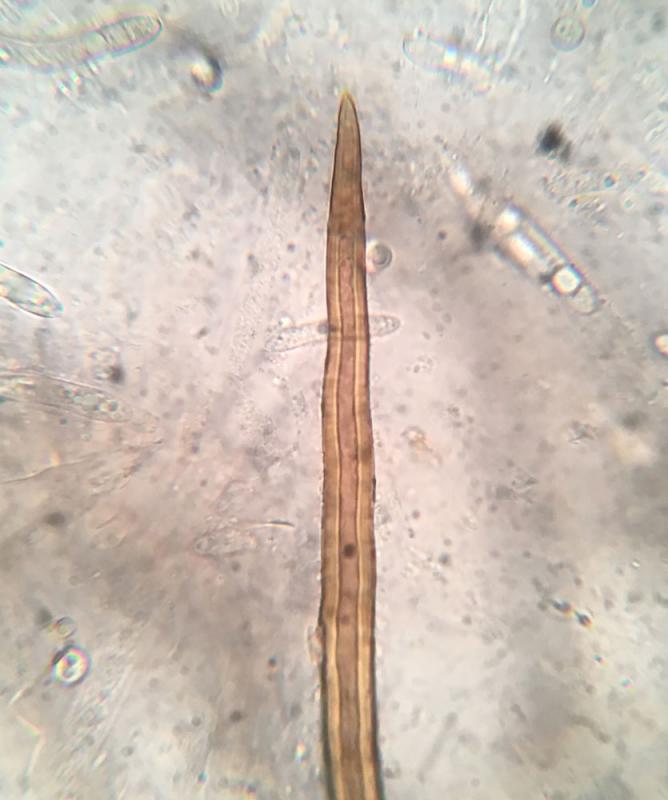
Could you check if the hair dissolves in KOH?
I checked my collections at KOH, but I don't have enough of them to have opinions on this subject.
The collection that I designated as E. canescens had hair that did not dissolve in KOH. In E. strigosa, however, the hair immediately melted.
I wonder if this feature can be helpful in identification and will this reaction be confirmed when testing a larger number of collections?
Pictures of such collections I saw on Zotto disk and I wonder why I can't find information on this subject in literature.
A photo of the hair dissolved by KOH, I also posted on my website with this species (Photo 15-16):
http://www.grzyby-pk.pl/gat-e/echinosphaeria-strigosa.php
Is this feature insignificant?
Is it found in all species of this genus or only in some? Or maybe such a reaction depends on other factors?
I would like to know the opinions of others on this topic?
Mirek
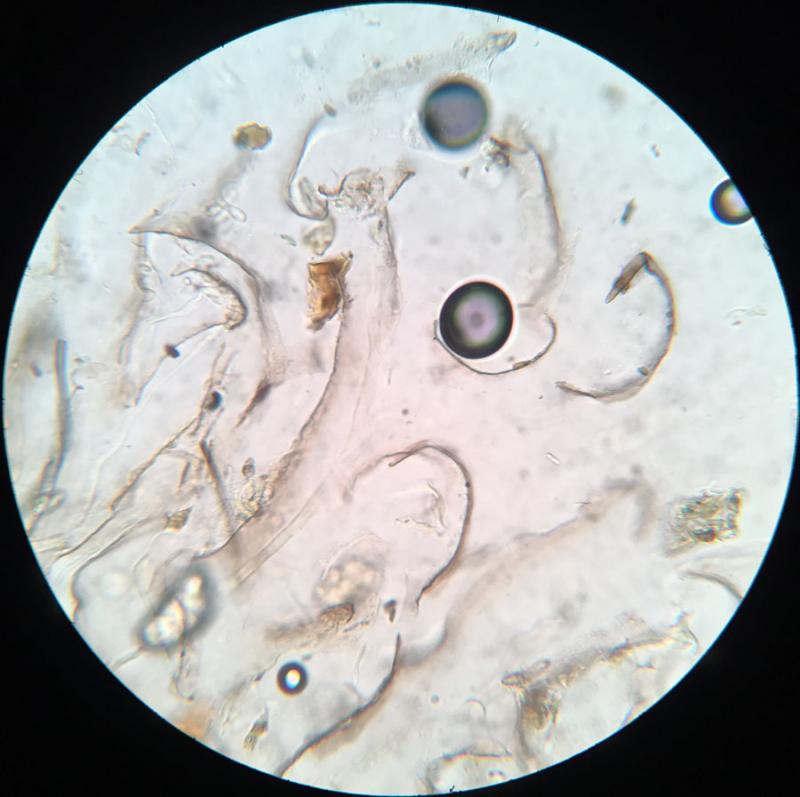
Thank you for checking reaction on KOH.
My experience with these mushrooms is small but I think your determination is correct.
I was hoping that someone more familiar with this kind would say something about the reaction.
Regards
Mirek

I also looked at Declercq's 2016 paper and that's why this feature made me wonder.
Andrew N. Miller maybe conducted such tests?
Mirek
Thank you, Zotto.
I thought about it because a few years ago, P. Perz mentioned such a reaction. In one of my collections, this reaction did not occur, which made me wonder.
Mirek

there are other microscopic features of Echinosphaeria I'm rather curious about, e.g. spore ornamentation. Bell & Mahoney (see below) mention finely punctate spores for their new E. incondita and E. leucolanosa, finely spinulose for E. strigosa and E. similistrigosa sp n, or longitudinally striate spores for E. striatispora sp n and E. stuppea.
Further they described new E. similistrigosa with intermediate spore size between canescens and strigosa (without knowing Declercq's species published in the same year). Perforated septum (E. medusa) or germ pores on overmature spores (E. minuta sp. n.) are other characters I never heard about in this genus.
Bell A., Mahoney D. (2016): Field studies in the Lasiosphaeriaceae and Helminthosphaeriaceae sensu lato. CBS Biodiversity Series 15. 124 p., Utrecht, CBS-KNAW Fungal Biodiversity Centre.
Viktorie
P.S. I only have a scanned copy of the book, the mentioned characters are well visible on drawings, not so much on microphotos. But that's probably due to low scanning resolution.