
14-04-2026 05:32
Ethan CrensonHi all, A few weeks back a friend pointed out som
27-04-2026 18:48
Tony MoverleyCollected 23rd April 2026, Norfolk, EnglandSwarms
27-04-2026 20:52
 Lothar Krieglsteiner
Found on hanging tiwg of Olea europaea in dried-ou
28-04-2026 22:51
 Bernard CLESSE
Bonsoir à toutes et tous,Pourriez-vous m'aider à
29-04-2026 08:01
Lothar Krieglsteiner
... on twig attached to small tree of Citrus auran
29-04-2026 10:44
Lothar Krieglsteiner
growing at moist, drying-out soil at the side of a
28-04-2026 20:33
Vitus SchäfftleinHello, I found Trochila ilicina on Ilex aquifoliu

28-04-2026 21:50
 Pablo Sandoval
Hola a todos,Espero se encuentren bien. Hace mucho
27-04-2026 18:05
Lothar Krieglsteiner
... still attached at standing tree. The green con
I need help identifying this lichenicolous species that grows on dead parts of Cladonia. Ascomatas are spherical, without hairs, 0.2-0.3mm in diameter.
Thanks anyway
Dragiša
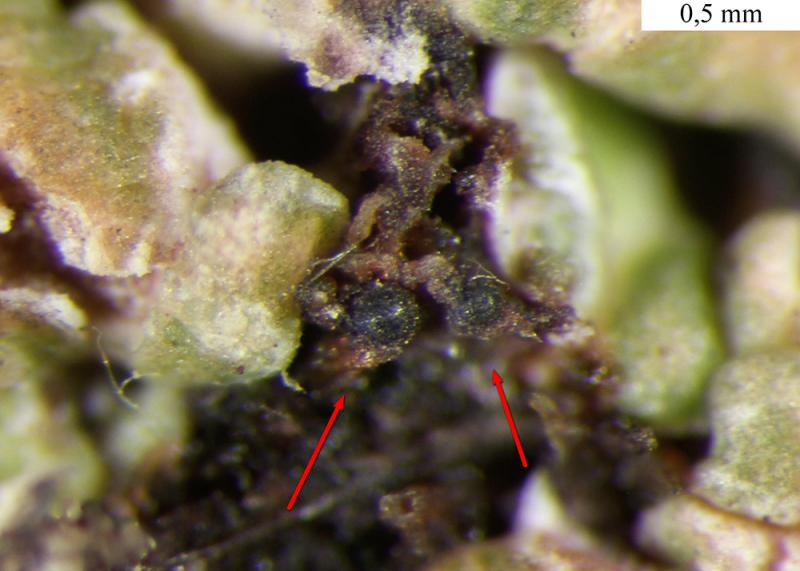
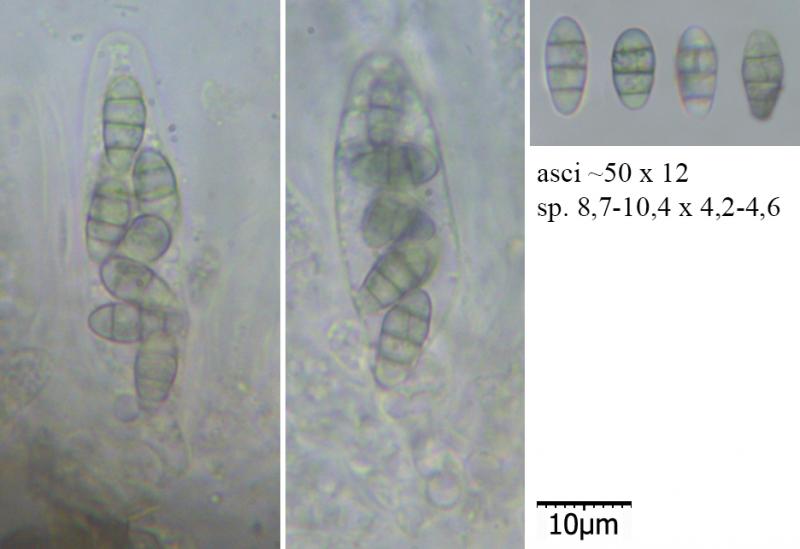
It looks like a Capronia. I'd love to try to culture this fungus!
Thanks.
Wendy
Capronia was my first idea too. I have a key for lichenicolous Capronia but it does not match any species. Unfortunately, I only found two ascomatas and I used both.
Dragiša
Yes, Capronia are not prolific fruiters. I hope you find it again and in sufficient numbers to lend me material.
Yours,
Wendy

Hi,
It's Merismatium heterophractum.
Alain
Dragiša
Hello Alain,
nothing to the fungus or the determination. But the name - I wonder if it is not a wrong form. What meanst "phractum"? It should be Greek (with ph) and I wonder if such a form exists (?). If it is Latin it would make sense: heterofractum (from frangere, to break-). If I am right the name must be corrected.
Best regards, Lothar