11-05-2026 12:32
 Bernard CLESSE
Pourriez-vous m'aider à identifier cette héloti
13-05-2026 15:26
 François Freléchoux
Bonjour,Voici une récolte faite il y a quelques j
12-05-2026 15:41
 Nicolas VAN VOOREN
Dear Ascolovers, especially interested in Pezizale
13-05-2026 12:05
 Thierry Blondelle
Bonjour à tous,J'aimerais avoir confirmation de c
10-05-2026 23:17
 Andreas Gminder
Hello,today we found in a moist steep decidous for
28-04-2026 20:07
 Lothar Krieglsteiner
... on twig in the air at standing Ceratonia siliq
27-04-2026 20:52
Lothar Krieglsteiner
Found on hanging tiwg of Olea europaea in dried-ou
11-05-2026 20:22
Lothar Krieglsteiner
on attached twig of standing Ficus caricaquite uns
29-04-2026 10:44
Lothar Krieglsteiner
growing at moist, drying-out soil at the side of a
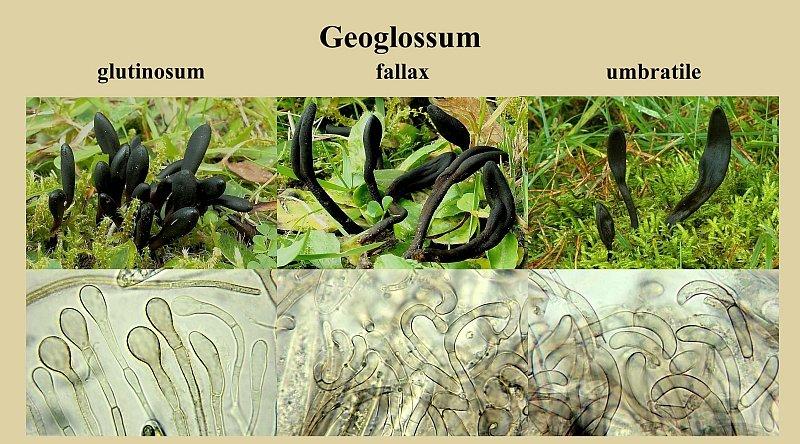
Geoglossum sp.
Vasileios Kaounas,
30-12-2019 09:12

Found in forest with Pinus halepensis, near to Olea.
asci (186.9) 192.9 - 220.1 (235) × (16.6) 19.4 - 21.2 (23.6) µm
spores (103.3) 110.7 - 135.7 (136.2) × (11.6) 12.9 - 13.4 (13.7) µm
 5775-0001.pdf
Jacky Launoy,
30-12-2019 09:43
Re : Geoglossum sp.
Try Geoglossum fallax. If not look if the ascus is amyloid or hemiamyloid
Luc Lenaerts,
30-12-2019 14:47

Re : Geoglossum sp.
Hi,
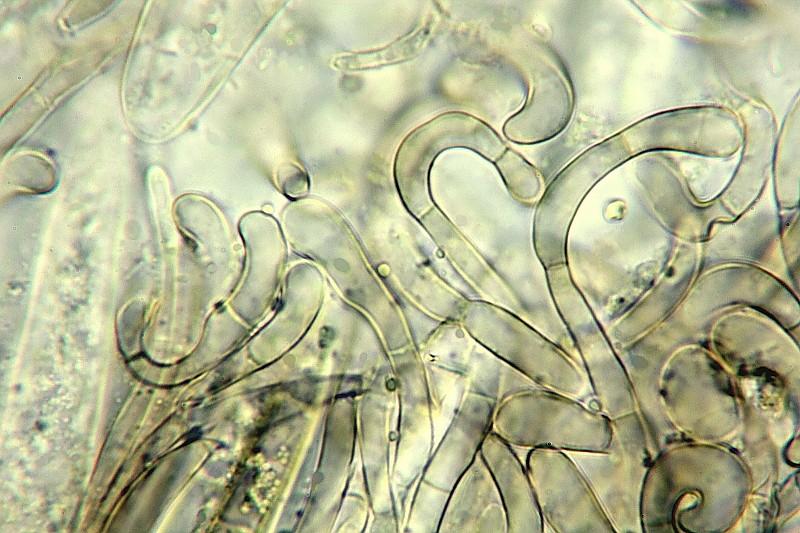
I think it's Geoglossum cookeanum, because of the 7-septate spores and the presence of much moniliform chaines in the parafyses. Difference with Geoglossum barlae sensu stricto with rotated, distorted and intertwined paraphyses and almost without clear moniliform chains in the paraphyses is sometimes difficult. In my opinion the spores here are not 110-135 µm long, but much smaller.
Kind regards
Luc Lenaerts
I think it's Geoglossum cookeanum, because of the 7-septate spores and the presence of much moniliform chaines in the parafyses. Difference with Geoglossum barlae sensu stricto with rotated, distorted and intertwined paraphyses and almost without clear moniliform chains in the paraphyses is sometimes difficult. In my opinion the spores here are not 110-135 µm long, but much smaller.
Kind regards
Luc Lenaerts
Sabino Arauzo,
30-12-2019 15:17
Re : Geoglossum sp.
Yes, Geoglossum cookeanum, the spore measures must be wrong.
Sabino.
Peter Püwert,
30-12-2019 15:25

Re : Geoglossum sp.
Hi,
I agree with Luc and Sabino.
Greetings Peter.