
14-05-2026 05:36
Ethan CrensonHi all, I haven't paid much attention to Lachnu
11-05-2026 12:32
 Bernard CLESSE
Pourriez-vous m'aider à identifier cette héloti
13-05-2026 15:26
 François Freléchoux
Bonjour,Voici une récolte faite il y a quelques j
12-05-2026 15:41
 Nicolas VAN VOOREN
Dear Ascolovers, especially interested in Pezizale
13-05-2026 12:05
 Thierry Blondelle
Bonjour à tous,J'aimerais avoir confirmation de c
10-05-2026 23:17
 Andreas Gminder
Hello,today we found in a moist steep decidous for
28-04-2026 20:07
 Lothar Krieglsteiner
... on twig in the air at standing Ceratonia siliq
27-04-2026 20:52
Lothar Krieglsteiner
Found on hanging tiwg of Olea europaea in dried-ou
11-05-2026 20:22
Lothar Krieglsteiner
on attached twig of standing Ficus caricaquite uns
An anamorph on the hymenium of Neottiella vivida
François Bartholomeeusen,
26-11-2019 18:41
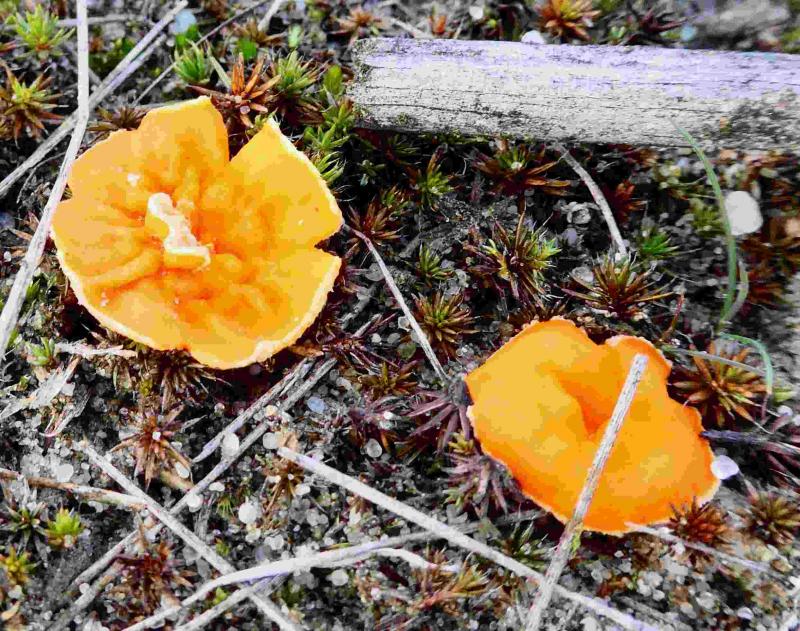
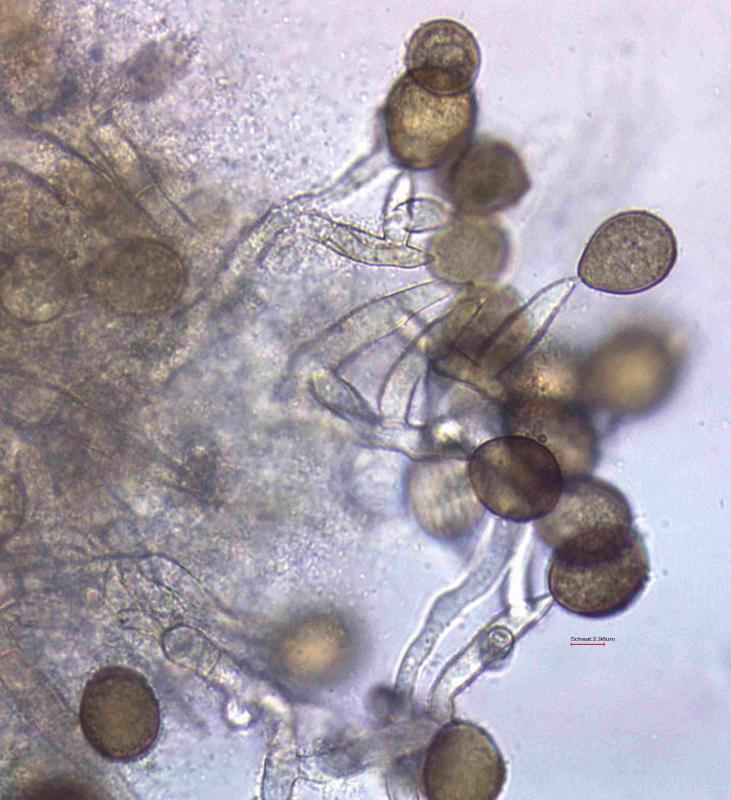
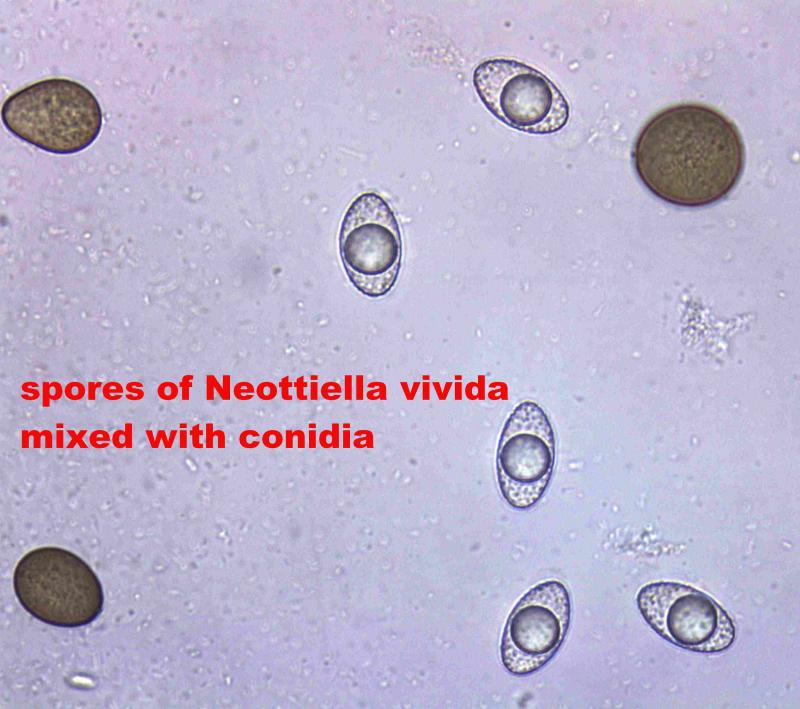
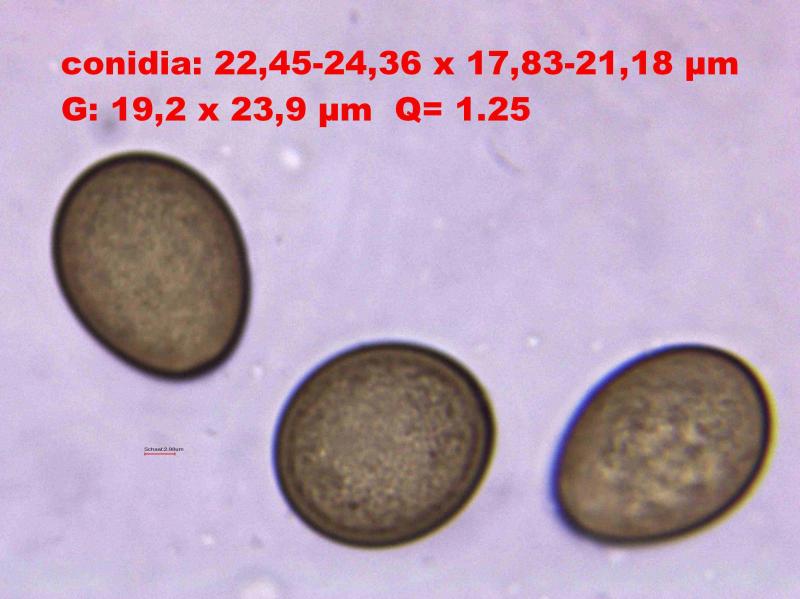
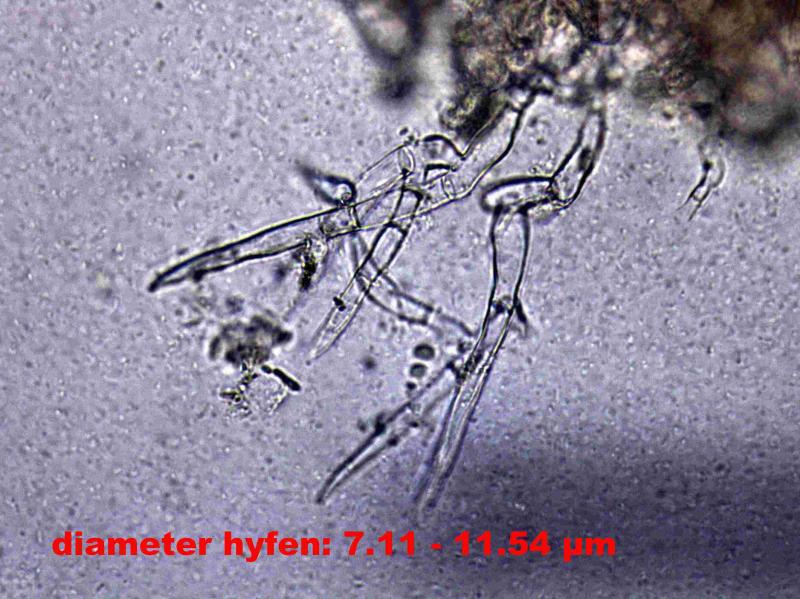
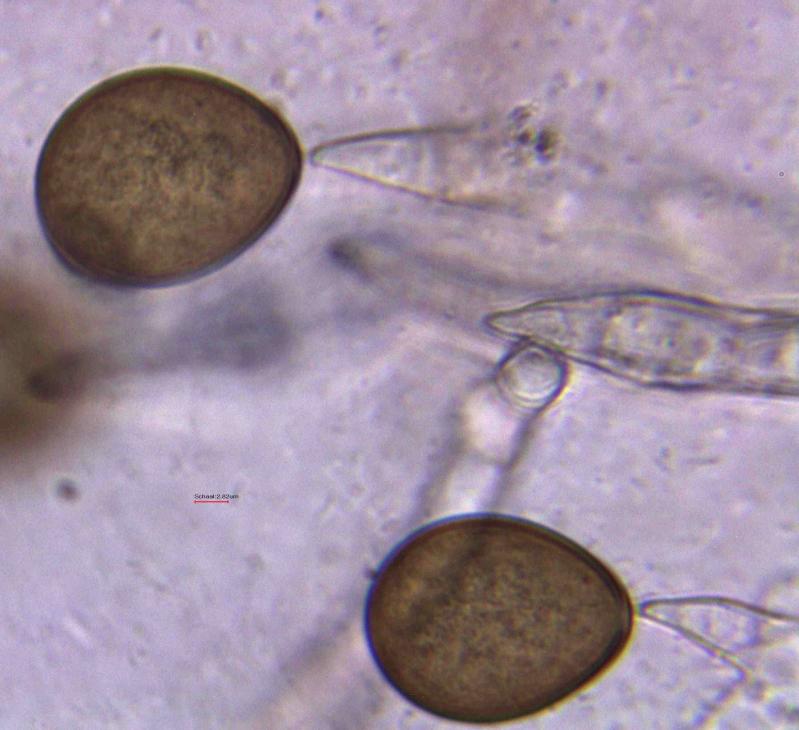
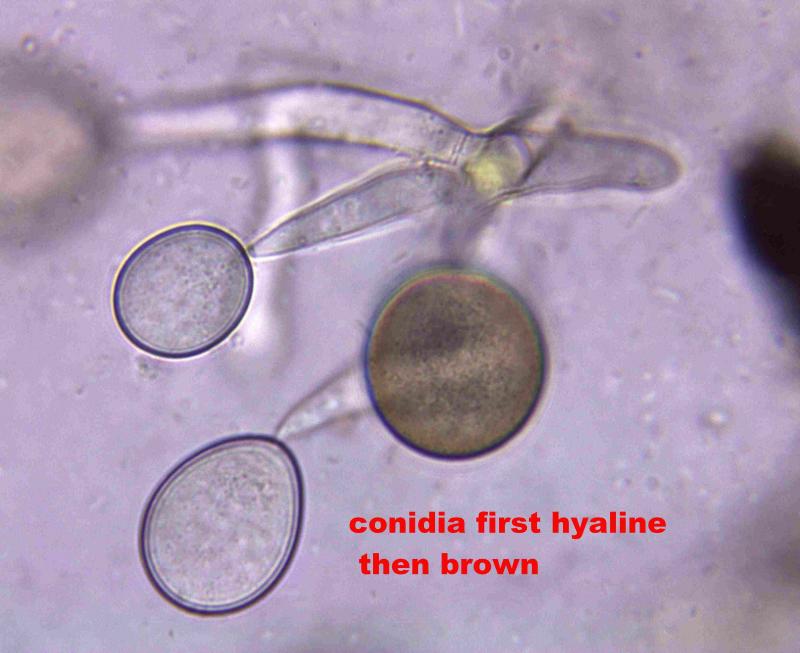
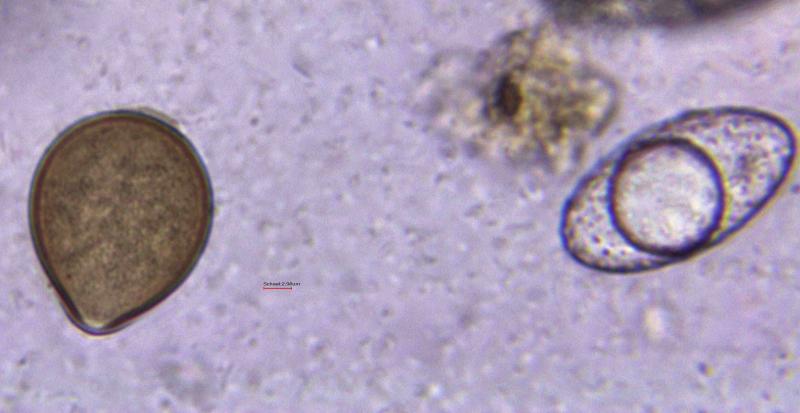
On October 15, 2019, I found several fruiting bodies on a heathland, which I determined on October 16, after microscopic examination, as Neottiella vivida. Two days later I repeated the examination in the hope that the spore ornamentation had improved. Instead, I found an anamorph. At first I thought of contamination but because of the presence of conidiophores this was ruled out. The, in first instance bright orange hymenium, was two days later covered with a black, powdery layer caused by the brown conidia.
Does anyone have experience with this anamorphic?
Thank you very much in advance,
François Bartholomeeusen
David Malloch,
27-11-2019 03:45

Re : An anamorph on the hymenium of Neottiella vivida
This looks like Harzia acremonioides (syn. Acremoniella atra). I have not seen this species, but I have cultured H. verrucosa, a very similar species with verrucose conidia. Harzia verrucosa is a mycoparasite producing typical contact cells on susceptible fungal hosts, so maybe your specimen was parasitic on Neottiella vivida.
François Bartholomeeusen,
27-11-2019 17:45
Re : An anamorph on the hymenium of Neottiella vivida
Dear David,
Thank you very much, I could never have solved this problem on my own. For me this is one less UFO (Unidentified Fungal Object)!
Kind regards,
François