
27-04-2026 20:52
 Lothar Krieglsteiner
Found on hanging tiwg of Olea europaea in dried-ou
27-04-2026 18:48
Tony MoverleyCollected 23rd April 2026, Norfolk, EnglandSwarms
27-04-2026 17:41
Lothar Krieglsteiner
.. Algarve, same leaf than the last post. The con
27-04-2026 18:05
Lothar Krieglsteiner
... still attached at standing tree. The green con
27-04-2026 17:16
Lothar Krieglsteiner
.. Algarve, moist lying.The conidiomata look like
27-04-2026 12:54
Steve ClementsBonjour. Ce petit champignon blanc résupiné et
27-04-2026 09:59
Pauline. PennaBonjour Can anyone advise me on these pycnidia fo

22-04-2026 20:54
 Enrique Rubio
Hi to everybody.This Pyrenopeziza grew in moist le
Cf. Paraleptosphaeria
Bernard Declercq,
10-10-2018 19:04
 Hi to all,
Collected on branch of Rosa sp. in Switzerland:
Ascomata erumpent, globose, 0.8-0.9 mm diam., solitary to gregarious, blackish, coriaceous, apically ostiolate, roughened wall, with basal setae and numerous anchoring hyphae.
Asci cylindrical, bitunicate, 8-spored, up to 160x10-12 µm.
Spores fusiform, pointed ends, straight to slightly curved, 36-48x5-6.5(7) µm, 1-septate, slightly constricted at the septum, cell swollen close to the middle septum, guttulate, smooth, hyaline, becoming pale brown, finely verruculose and sometimes 3-septate.
Hamathecium of numerous filiform 1-2 µm diam. pseudoparaphyses.
Peridium with dark brown outer layers and hyaline inner layers of textura angularis.
Your help is welcome.
Bernard Declercq
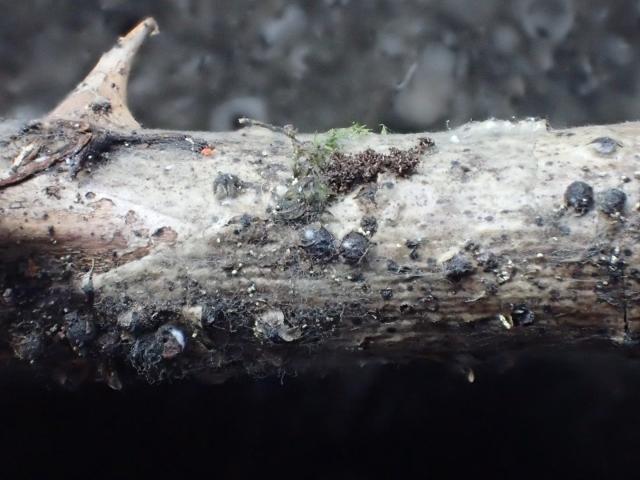
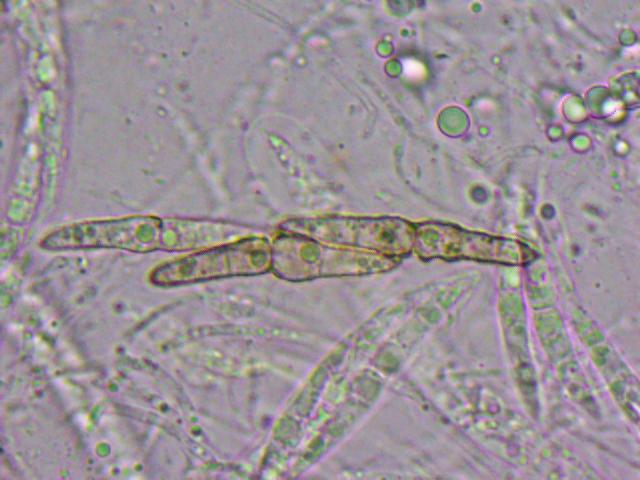
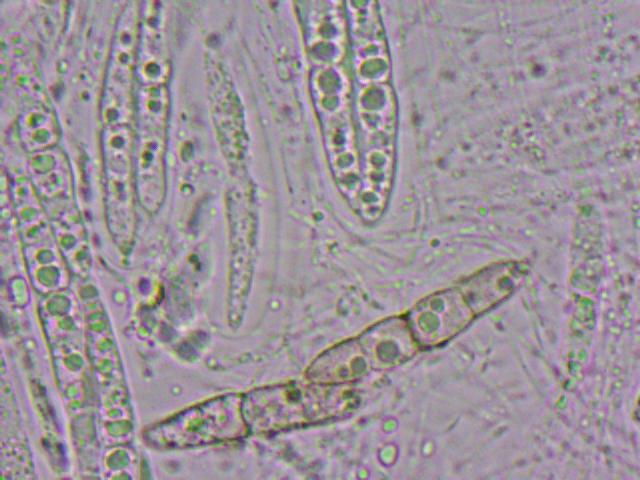
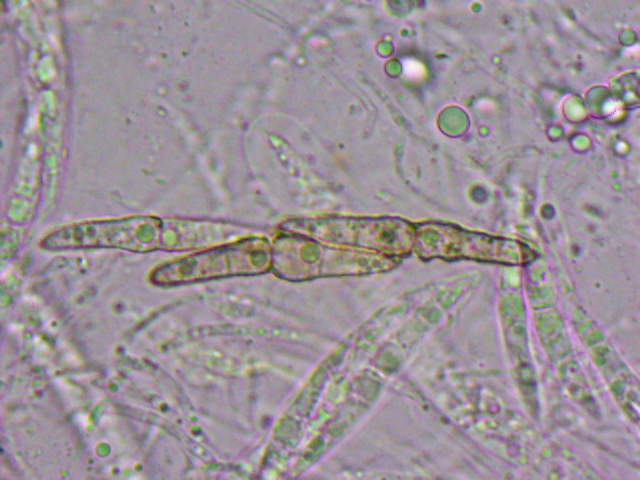 D-Paraleptosphaeria-sp.-Rosa-sp.-BD-18065-180904-0001.jpg
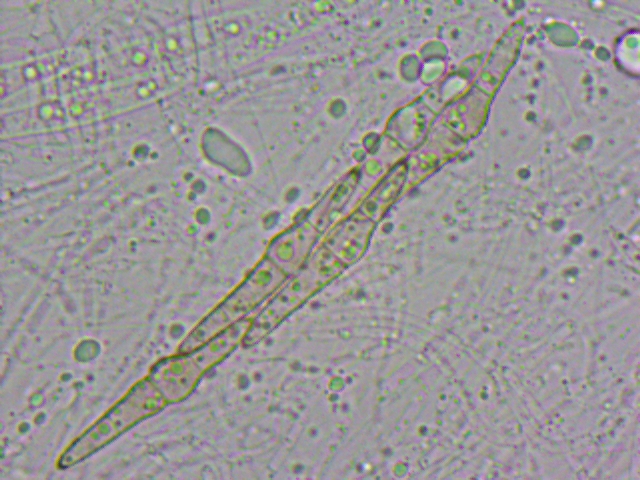 D-Paraleptosphaeria-sp-spores.2-BD-18065-0001.jpg
Mlcoch Patrik,
11-10-2018 11:57

Re : Cf. Paraleptosphaeria
Hi, Bernard,
This is very interesting collection, with Rosa is know only Leptosphaeria hazslinszkii, but it isn´t here. With the genus Paraleptosphaeria this can be only P. praetermissa, which growing on the Rubus and can also growth on another taxa with Rosaceae. Based to morphology of ascospores it belong to Leptosphaeria purpurea group. I don´t have to say, what it is, but I will like take to look on this your collection. Can you send me, please?
This is very interesting collection, with Rosa is know only Leptosphaeria hazslinszkii, but it isn´t here. With the genus Paraleptosphaeria this can be only P. praetermissa, which growing on the Rubus and can also growth on another taxa with Rosaceae. Based to morphology of ascospores it belong to Leptosphaeria purpurea group. I don´t have to say, what it is, but I will like take to look on this your collection. Can you send me, please?