
11-05-2026 12:32
 Bernard CLESSE
Pourriez-vous m'aider à identifier cette héloti
13-05-2026 15:26
 François Freléchoux
Bonjour,Voici une récolte faite il y a quelques j
12-05-2026 15:41
 Nicolas VAN VOOREN
Dear Ascolovers, especially interested in Pezizale
13-05-2026 12:05
 Thierry Blondelle
Bonjour à tous,J'aimerais avoir confirmation de c
10-05-2026 23:17
 Andreas Gminder
Hello,today we found in a moist steep decidous for
28-04-2026 20:07
 Lothar Krieglsteiner
... on twig in the air at standing Ceratonia siliq
27-04-2026 20:52
Lothar Krieglsteiner
Found on hanging tiwg of Olea europaea in dried-ou
11-05-2026 20:22
Lothar Krieglsteiner
on attached twig of standing Ficus caricaquite uns
29-04-2026 10:44
Lothar Krieglsteiner
growing at moist, drying-out soil at the side of a
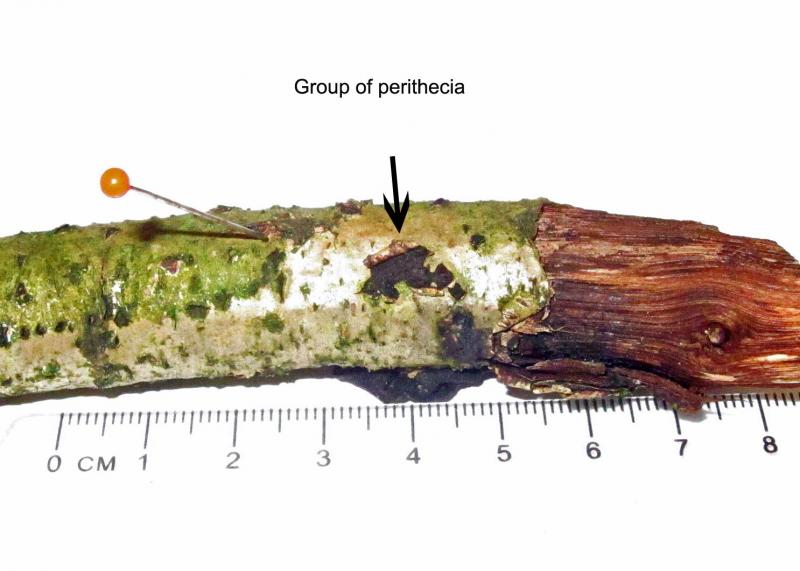
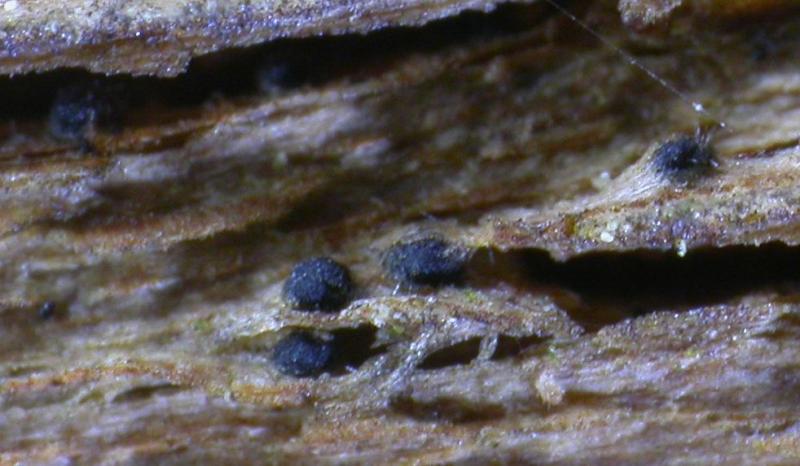
This fungus was growing on an attached dead branch of Quercus robur in a small wooded area in Capel, Surrey, England. Lat, long 51.151143, 0.313536, altitude 85m.
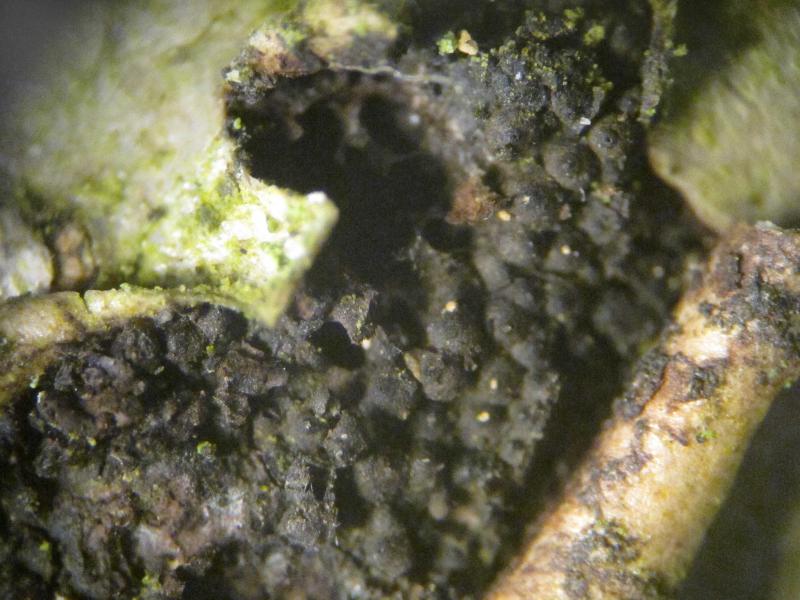
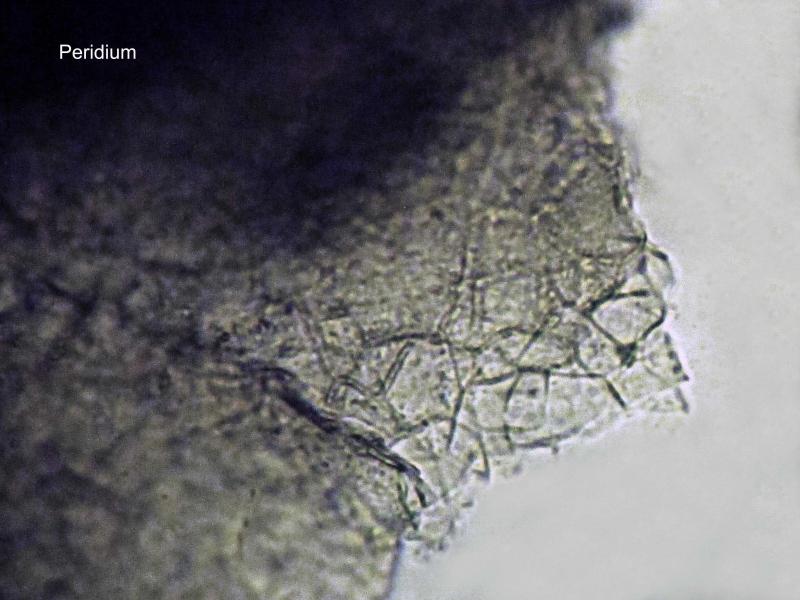
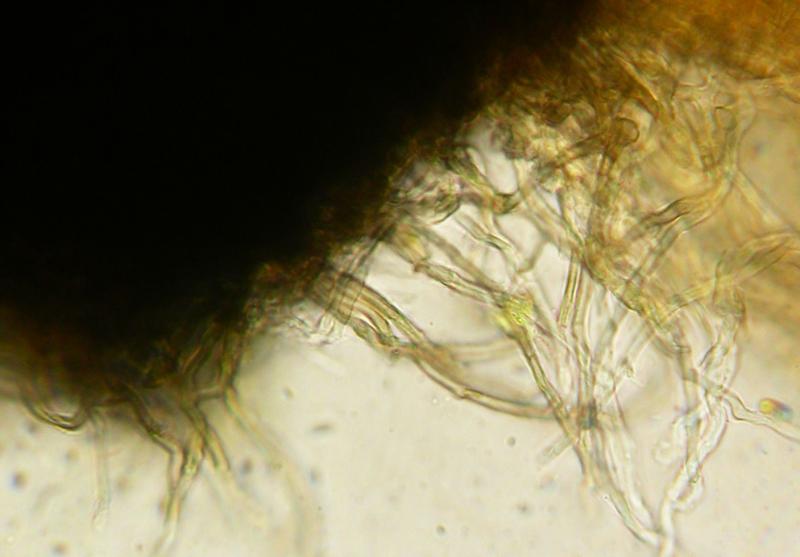
Perithecia were erumpent to superficial. Individual perithecia were about 0.25mm. in diameter, these occurred in various quantities from very small to a group of 1 cm across shown in 1st and 2nd photos. Peridium was textura angularis.
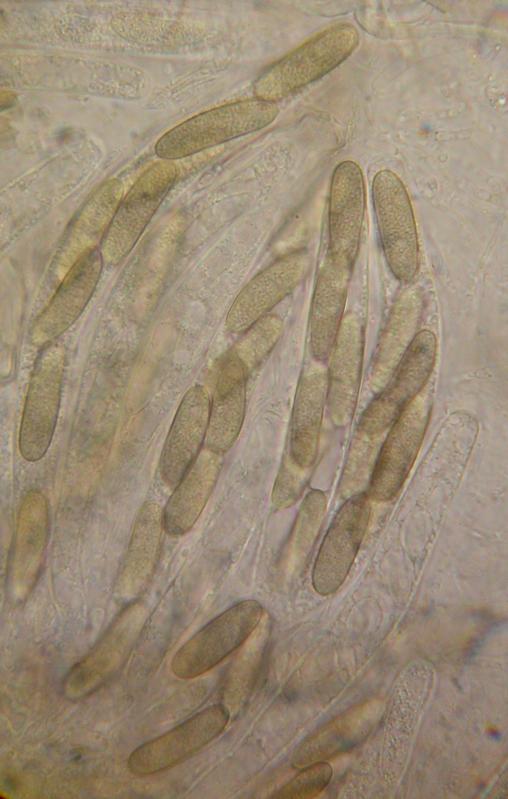
Most of the perithecia contained immature spores, these were golden, 35-37.5 x 5-7.5 and each had a very conspicuous nucleus. A few mature spores were found, these were 6-7 septate and averaged 41 x 7.5. The septae seemed to develop late and were not observed when the spores were within the asci. Asci on average were 150 x 15.
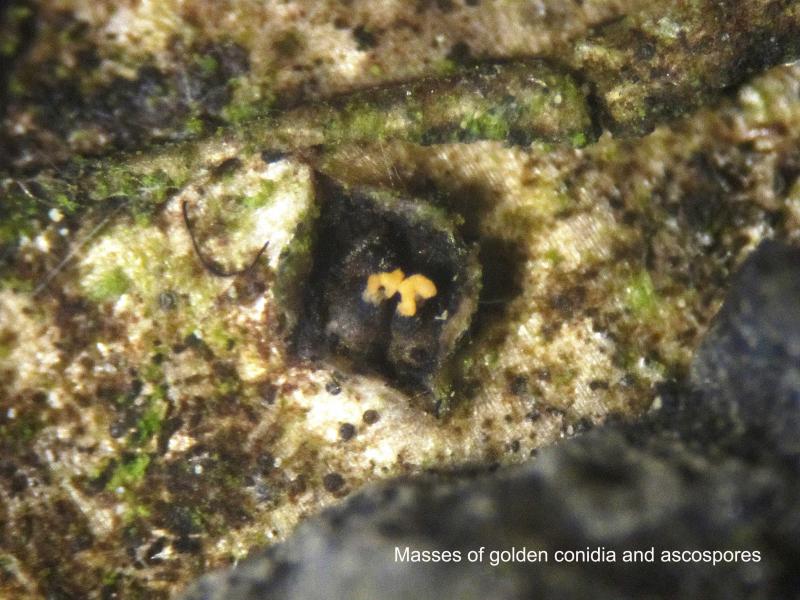
Some of the ascospores had conidia developing at the septae, the conidiospores were 10-12 x 2.5-3.5. Golden masses of spores were exuding from some of the ostioles, these consisted of both conidio and asco spores.
It seems to resemble a Lasiosphaeria or an allied genus but I cannot get any closer with its determination, can anyone help please?
Best wishes
Vivien
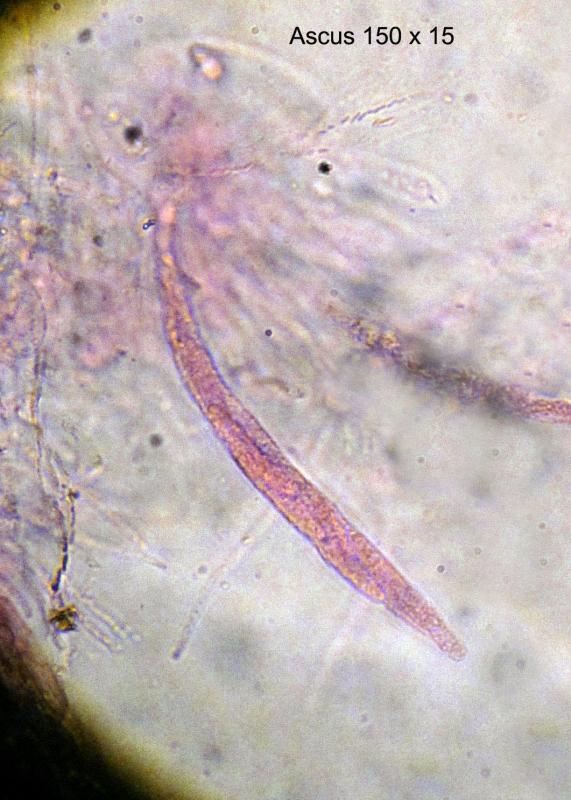
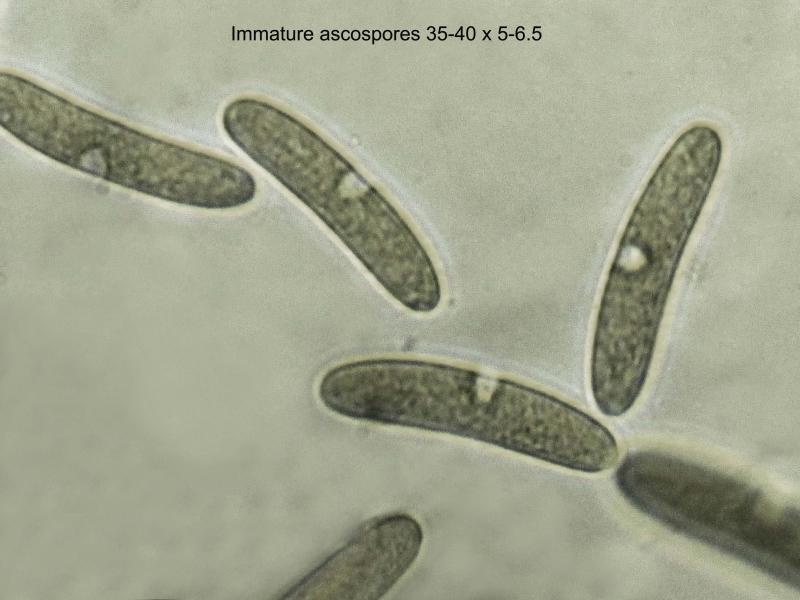
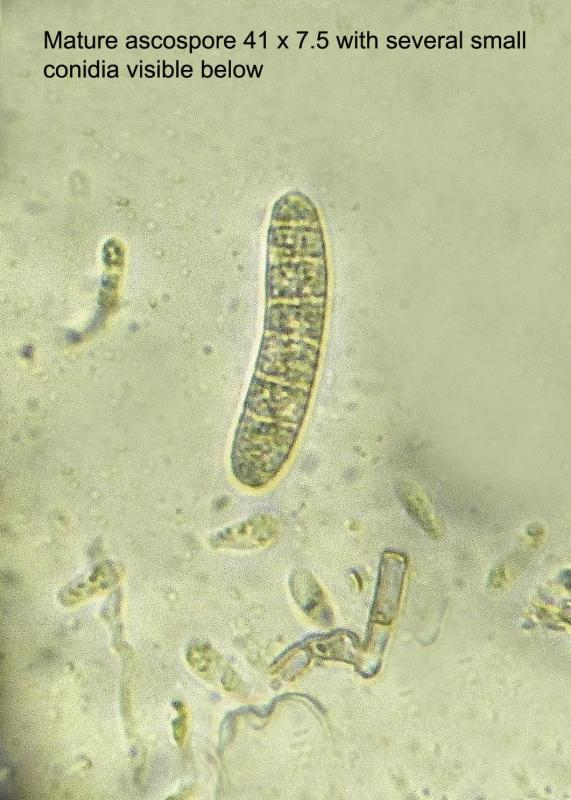
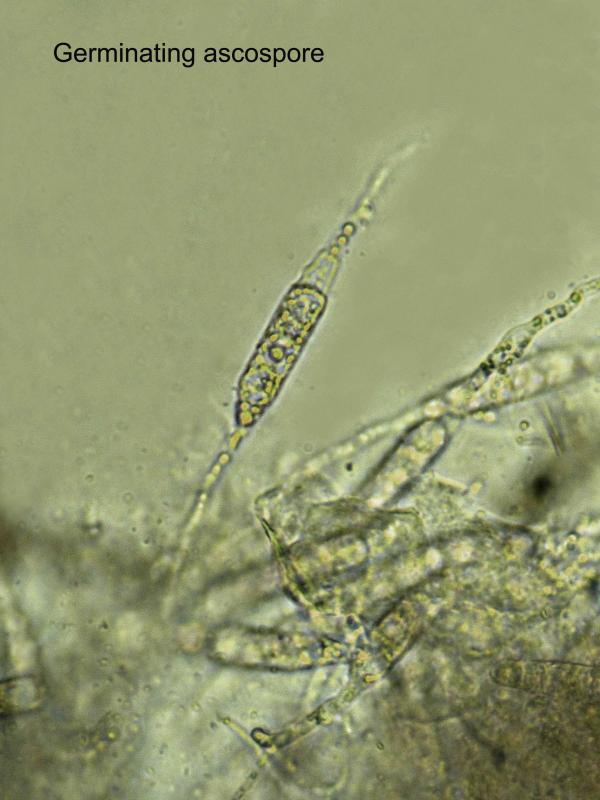


likely L. sorbina, as pointed out by Zotto.
You should check your collection against the detailed description given by Miller & Huhndorf in Mycologia, 96(5), 2004, pp. 1106–1127.
Cheers,
Jacques

http://wwx.inhs.illinois.edu/files/6813/2111/8750/Lasiosphaeria_ovina_Miller_Huhndorf_Mycologia2004.pdf
Andy
I have checked my collection and it does indeed seem consistent with the description of Lasiosphaeria sorbina given in the Miller & Huhndor paper that you refer to. The only slight difference is that the spores in my collection appeared golden particularly when in the ascus, could that just have been due to pigments present in the centrum?
It is apparently a very rare, or at least rarely recorded, fungus here in the UK so great to have it identified.
Best wishes
Vivien
Cheers,
Andy
Cheers
Vivien

An anecdote, I found it a new time yesterday, on Sorbus aria, around Eutypella sorbi, hidden under the bark. So I agree with the identification , of course. A nice fungus.
Alain
I actually saw the paratype of L. capitata, probably given to me by Jacques in 2004 for some reason.
In GenBank I only see L. sorbina, does a sequence of L. capitata exist?
I still wonder about a collection on Fagus bark (inner side), with light brown Sp. *19.5-23 x (5-6-)6.5-7 µm. - Munk reports L. sorbina on inner side of Fagus bark, but with sp. 28-45 x 6-8 µm.
Zotto
Cheers,
Andy