
11-05-2026 12:32
 Bernard CLESSE
Pourriez-vous m'aider à identifier cette héloti
13-05-2026 15:26
 François Freléchoux
Bonjour,Voici une récolte faite il y a quelques j
12-05-2026 15:41
 Nicolas VAN VOOREN
Dear Ascolovers, especially interested in Pezizale
13-05-2026 12:05
 Thierry Blondelle
Bonjour à tous,J'aimerais avoir confirmation de c
10-05-2026 23:17
 Andreas Gminder
Hello,today we found in a moist steep decidous for
28-04-2026 20:07
 Lothar Krieglsteiner
... on twig in the air at standing Ceratonia siliq
27-04-2026 20:52
Lothar Krieglsteiner
Found on hanging tiwg of Olea europaea in dried-ou
11-05-2026 20:22
Lothar Krieglsteiner
on attached twig of standing Ficus caricaquite uns
29-04-2026 10:44
Lothar Krieglsteiner
growing at moist, drying-out soil at the side of a
Asco from California, USA
Alan Rockefeller,
03-03-2017 11:58
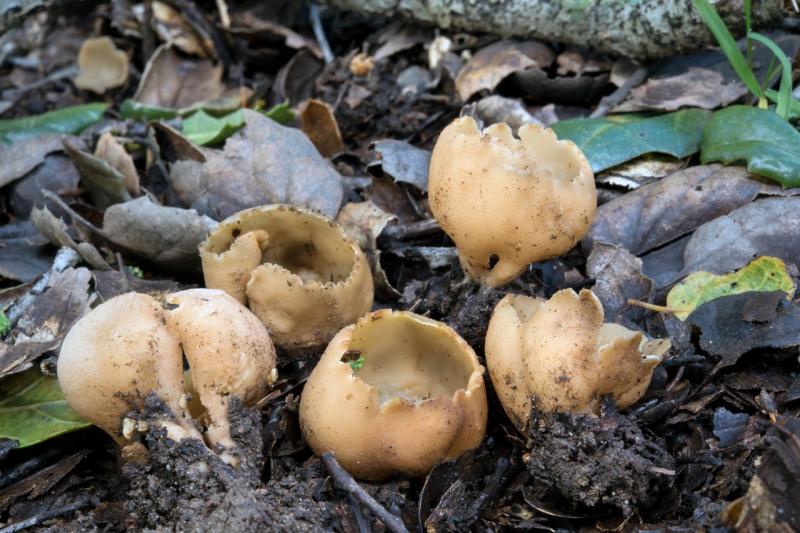
 What is this? Under Quercus agrifolia in Oakland. Size approx 2 - 3 cm diameter.
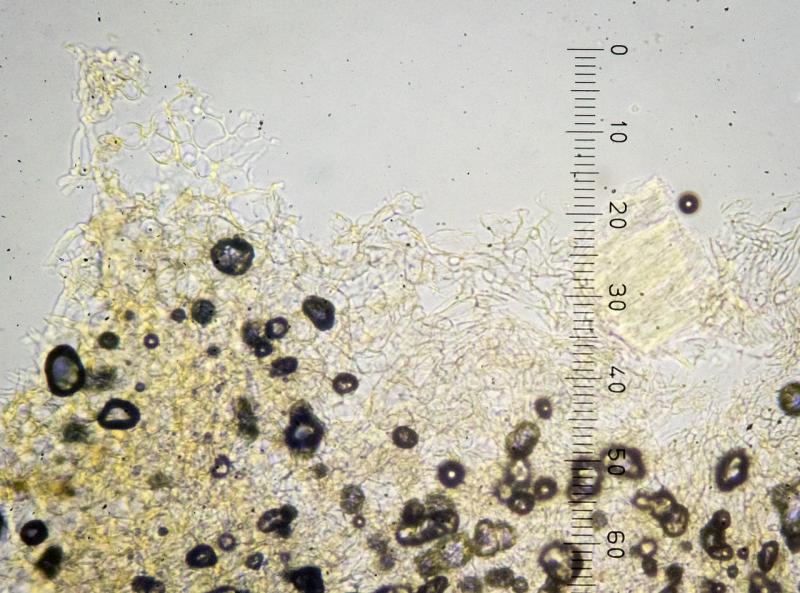
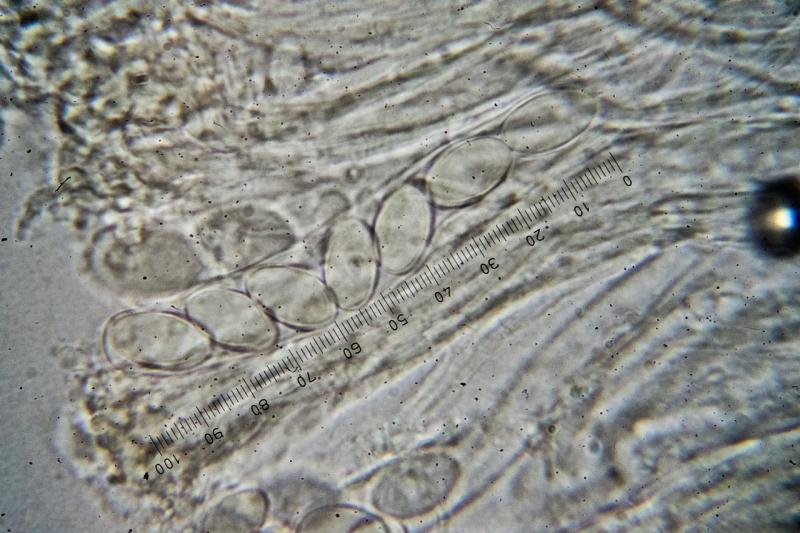
Spores smooth, inamyloid, 18 × 10 micrometers. Asci inamyloid and with a rounded apex. Micrographs in Meltzer's.
Viktorie Halasu,
03-03-2017 23:21

Re : Asco from California, USA
Hello,
that's an interesting discomycete. That stipe reminds me of Tarzetta, but if the spores really are without guttules, then my best guess is a Geopyxis. If you can check the ascus base, Tarzetta has simple septate base, Geopyxis has forked (pleurorhynchous) base.
Viktorie
that's an interesting discomycete. That stipe reminds me of Tarzetta, but if the spores really are without guttules, then my best guess is a Geopyxis. If you can check the ascus base, Tarzetta has simple septate base, Geopyxis has forked (pleurorhynchous) base.
Viktorie
Nicolas VAN VOOREN,
10-03-2017 00:02
Re : Asco from California, USA
Tarzetta species possess large guttules in their spores.
Consider also the genus Jafnea (especially J. semitosta) because your micrographs show immature ascospores, but the spore shape agrees.
Consider also the genus Jafnea (especially J. semitosta) because your micrographs show immature ascospores, but the spore shape agrees.