27-04-2026 20:52
 Lothar Krieglsteiner
Found on hanging tiwg of Olea europaea in dried-ou
27-04-2026 18:48
Tony MoverleyCollected 23rd April 2026, Norfolk, EnglandSwarms
27-04-2026 17:41
Lothar Krieglsteiner
.. Algarve, same leaf than the last post. The con
27-04-2026 18:05
Lothar Krieglsteiner
... still attached at standing tree. The green con
27-04-2026 17:16
Lothar Krieglsteiner
.. Algarve, moist lying.The conidiomata look like
27-04-2026 12:54
Steve ClementsBonjour. Ce petit champignon blanc résupiné et
27-04-2026 09:59
Pauline. PennaBonjour Can anyone advise me on these pycnidia fo

22-04-2026 20:54
 Enrique Rubio
Hi to everybody.This Pyrenopeziza grew in moist le
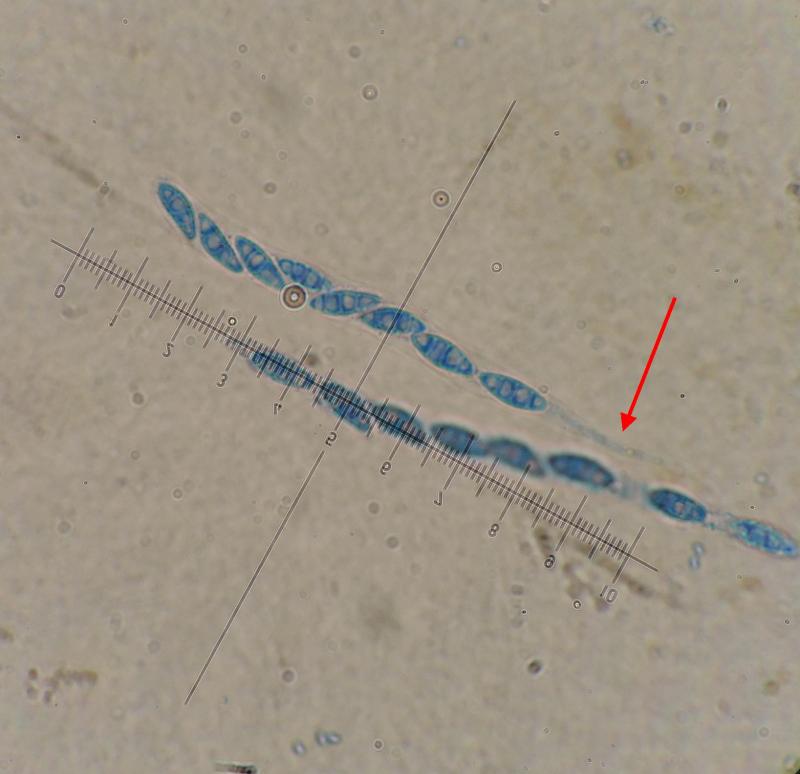
Periphyses septate, diameter 7 mu, apical part 4 mu.
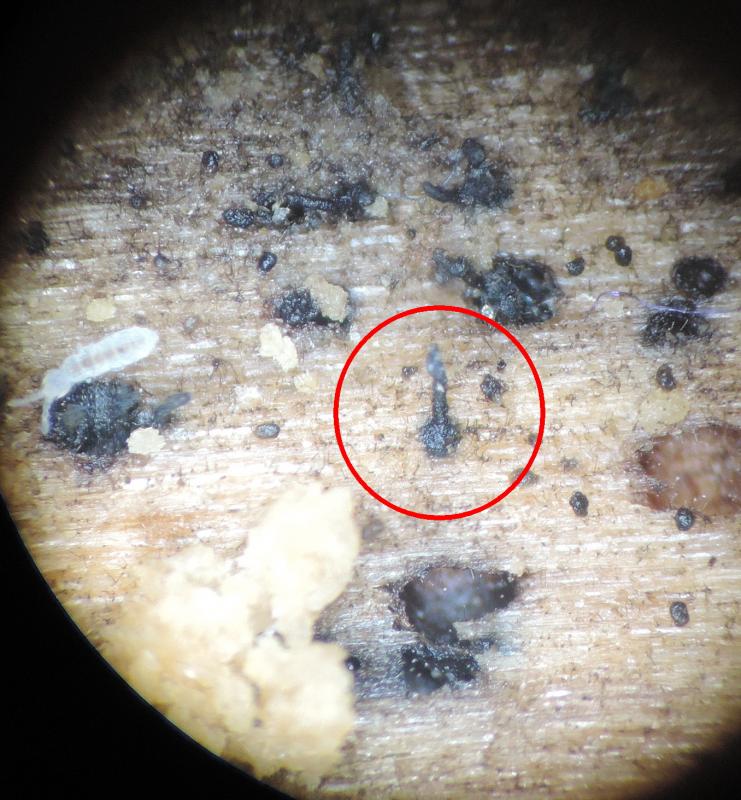
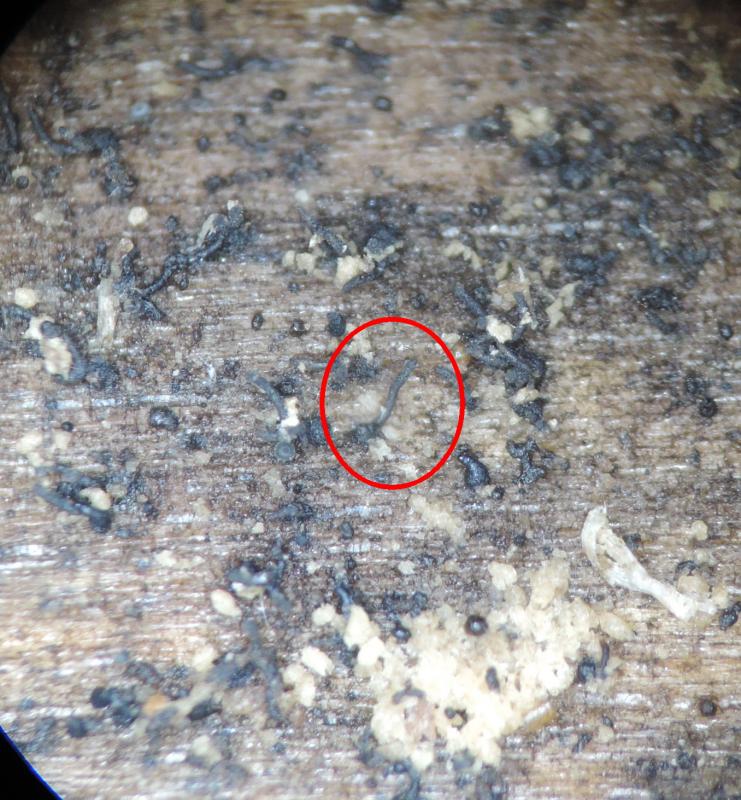
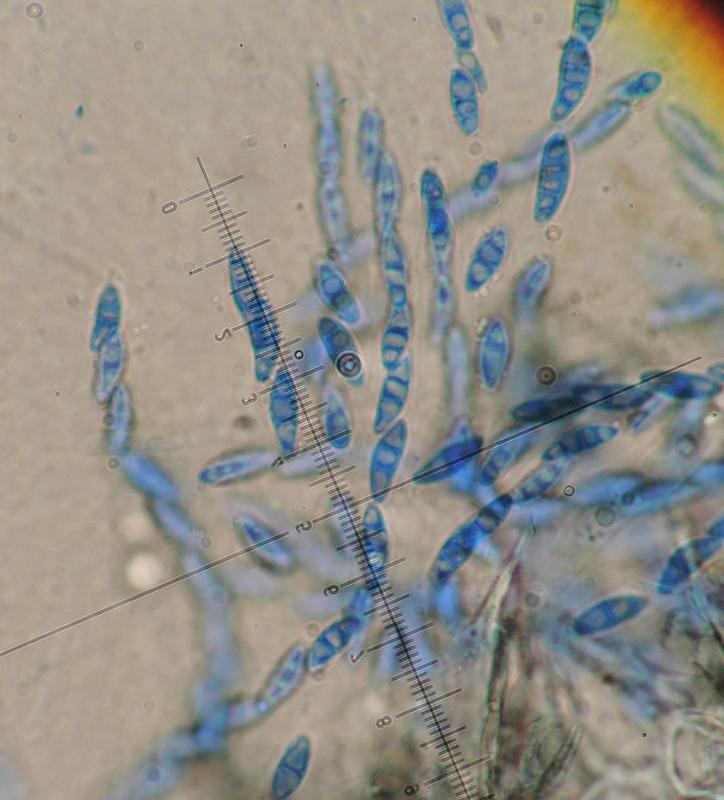
The pycnidia (0.25-0.5 mm) with necks up to 0,7 mm, half to largely immersed in the substratum. Top of neck with light-coloured drops consisting of spores.
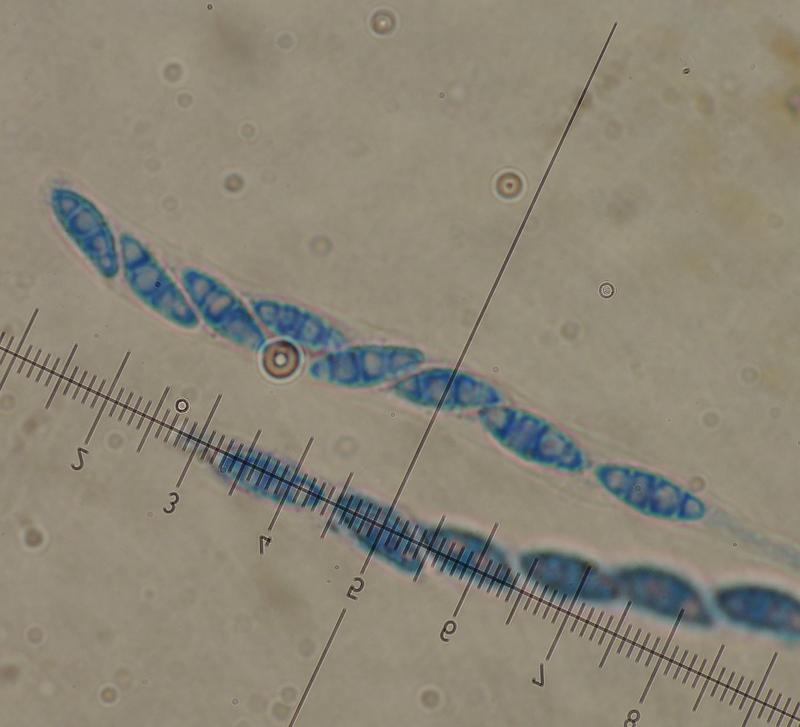
My first idea was: Lentomitella, i.e. L. crinigera but this species has a short stipe and ellipsoid striated spores with rounded ends (no stipes shown in drawings and photos of Reblova 2006). Ceratosphaeria is another long-necked pyrenomycete, but these species have even longer spores and/or more septa. Another option would be Rhodoveronaea varioseptata, of which the teleomorph was described by Reblova in 2009. Some characters fit well (spore form, spore wall, thin stipe), but this possibility was rejected because the spores are too small compared with the epitype: 14-16.5 x 6-6.5 mu (the other, Swedish specimen examined by Reblova has even larger spores). Also the necks are at variance with Reblova's description: not tapering to the top and much longer.
What else could it be? All suggestions will be much appreciated.