
03-05-2026 10:57
 Castillo Joseba
Me mandan el material seco de Galicia (España) re
02-05-2026 12:42
Alain BRISSARDBonjour à tousJeuidi 30 avril dernier on m'a remi
02-05-2026 13:06
Pauline. PennaBonjour Please can someone help me with this id
01-05-2026 22:45
 Thierry Blondelle
Bonjour à tous, Une récolte sur bouse séchée d
28-04-2026 20:07
 Lothar Krieglsteiner
... on twig in the air at standing Ceratonia siliq
14-04-2026 05:32
Ethan CrensonHi all, A few weeks back a friend pointed out som
28-04-2026 20:33
Vitus SchäfftleinHello, I found Trochila ilicina on Ilex aquifoliu
30-04-2026 10:28
Rot BojanHello, by appearance I would say that I am dealing
On Abies needles
Zuzana Sochorová (Egertová),
04-07-2013 23:29
 Good evening,
in spring I found these small ascomycetes on Abies alba needles. The biggest ones measured about 1 mm in diameter. I though it could be Cistella acuum, but everything is too long in my fungus - spores are 5 - 8 x 1 - 1,5 µm, asci 40 - 44 x 3 - 4 µm, hairs up to 105 x 2,5 µm. The inner ring is blue in Melzer. The hairs are covered with granules.
The other possibility I considered was Dasyscyphella pulverulenta, but my fungi lack the yellow resin and the shape of spores is a little bit different in comparison with this picture: http://www.ascofrance.com/forum/15317/cistella-dasyscyphella?
Locality: Czech republic, Moravia, Dlouhá Loucka
Date: 13th April 2013
Would someone have a tip?
Thanks a lot, Zuzana
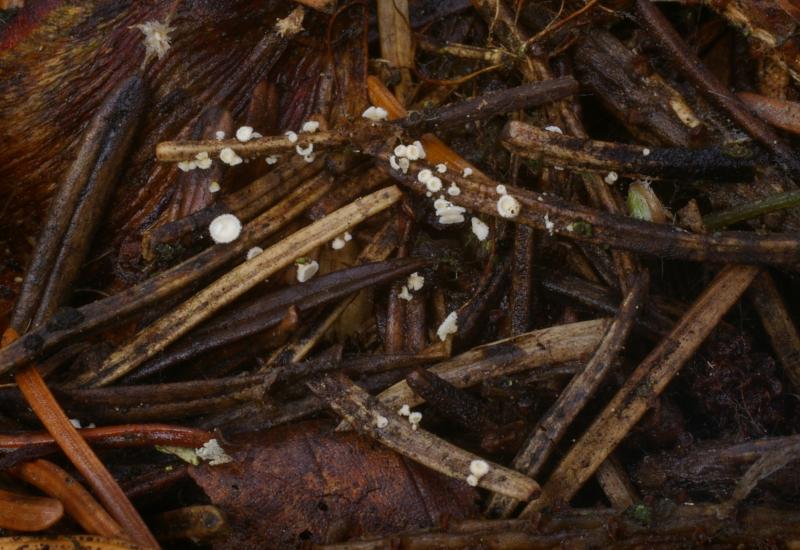
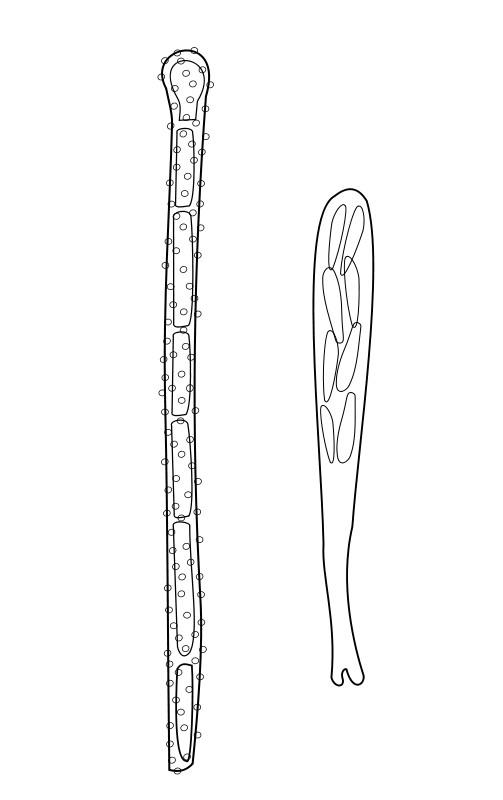
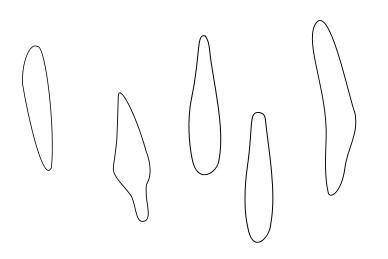
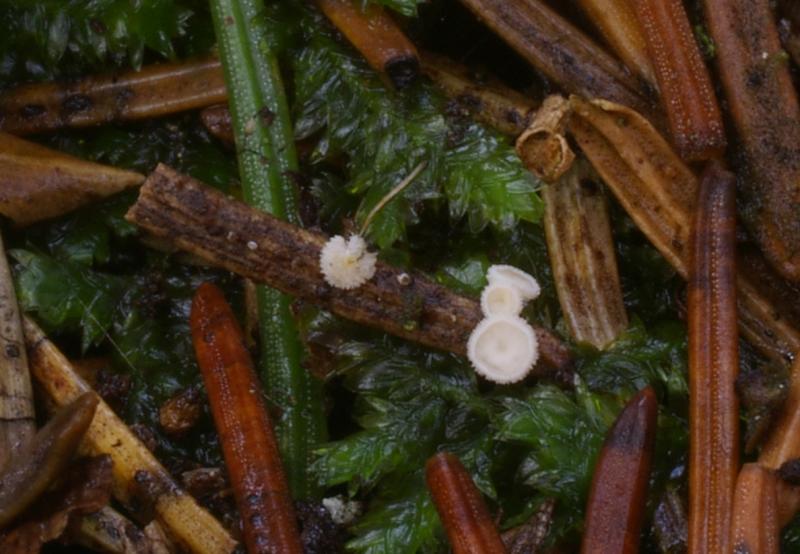
Hans-Otto Baral,
04-07-2013 23:53

Re : On Abies needles
D. pulverulenta is on Pinus, and on Picea exists a paler, more whitish form (pulv. var. piceicola). It could well be one of these. Are the hairs actually so densely septate?
Your drawings are a bit too schematic, from a photo I would perhaps be more sure. The hair apex should be smooth, not warted, however. Otherwise Lachnum virgnineum would be an option.
Zotto
Your drawings are a bit too schematic, from a photo I would perhaps be more sure. The hair apex should be smooth, not warted, however. Otherwise Lachnum virgnineum would be an option.
Zotto
Zuzana Sochorová (Egertová),
05-07-2013 07:16
Re : On Abies needles
Thank you. The hairs are really quite densely septated - I saw up to 11 septs in a hair. The whole hair is warted.
It´s not possible to make photos in my microscope :-( I tried to take a photo by a camera put on the eyepiece, but there´s nothing to see there (no details).
Probably Lachnum virgineum is the best idea.
It´s not possible to make photos in my microscope :-( I tried to take a photo by a camera put on the eyepiece, but there´s nothing to see there (no details).
Probably Lachnum virgineum is the best idea.
Hans-Otto Baral,
05-07-2013 07:48
Re : On Abies needles
The dense septation near the hair apex is very unusual in Lachnum, but typical of Brunnipila. Maybe it is only a divided plasma in the dead state, no true septa?
You have a camera with a much bigger lens than the eyepiece, I assume.
You have a camera with a much bigger lens than the eyepiece, I assume.
Zuzana Sochorová (Egertová),
05-07-2013 07:57
Re : On Abies needles
Maybe it is only a divided plasma in the dead state, no true septa? Yes, it could be. The "septa" were quite thick. Good idea.
You have a camera with a much bigger lens than the eyepiece, I assume.? Yes, I do :-) I will try o get a more suitable camera then and make some photos of the microstructures.
hannie wijers,
05-07-2013 11:24
Re : On Abies needles
Hello,
my way to make pictures through de bino, is an older type of the canon with display. They have the same lensopening as the oculair of the bino. I already do this for years. When the camera is broke down I look at bijv, Markplaats to buy an older example. The costs are low then.
Hannie
.
my way to make pictures through de bino, is an older type of the canon with display. They have the same lensopening as the oculair of the bino. I already do this for years. When the camera is broke down I look at bijv, Markplaats to buy an older example. The costs are low then.
Hannie
.
Martin Bemmann,
05-07-2013 18:44

Re : On Abies needles
Hi Zuzana,
be sure you have your camera set to infinity (very often a mountain symbol) not to macro or something else...
regards
Martin
be sure you have your camera set to infinity (very often a mountain symbol) not to macro or something else...
regards
Martin
Hans-Otto Baral,
05-07-2013 22:36
Re : On Abies needles
But macro works also: I am doing my microphotos with the Coolpix always at the closest focus (2 cm), it makes a little more magnification, as I use the minimum zoom.
Important is to open the aperture and to have strong light to get a short shutter speed.
Zotto
Important is to open the aperture and to have strong light to get a short shutter speed.
Zotto