
27-04-2026 20:52
 Lothar Krieglsteiner
Found on hanging tiwg of Olea europaea in dried-ou
27-04-2026 18:48
Tony MoverleyCollected 23rd April 2026, Norfolk, EnglandSwarms
27-04-2026 17:41
Lothar Krieglsteiner
.. Algarve, same leaf than the last post. The con
27-04-2026 18:05
Lothar Krieglsteiner
... still attached at standing tree. The green con
27-04-2026 17:16
Lothar Krieglsteiner
.. Algarve, moist lying.The conidiomata look like
27-04-2026 12:54
Steve ClementsBonjour. Ce petit champignon blanc résupiné et
27-04-2026 09:59
Pauline. PennaBonjour Can anyone advise me on these pycnidia fo

22-04-2026 20:54
 Enrique Rubio
Hi to everybody.This Pyrenopeziza grew in moist le
Another fungus on Tilia wood
Enrique Rubio,
01-01-2013 18:10
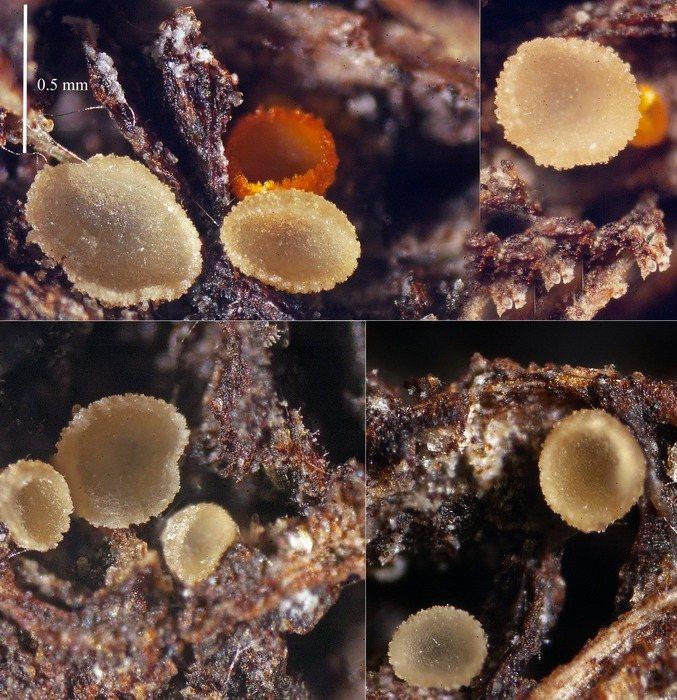
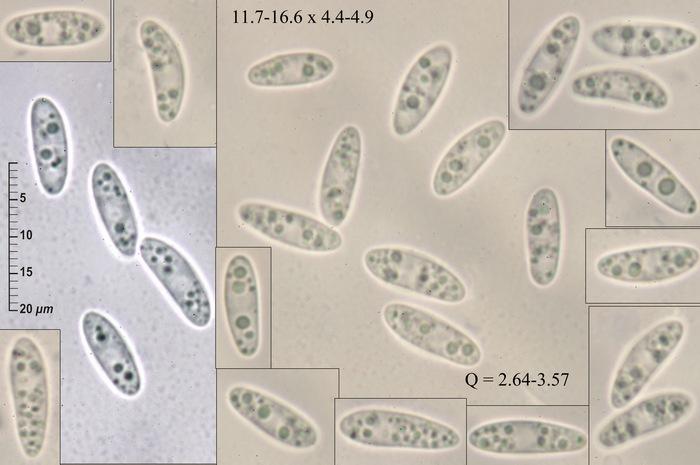
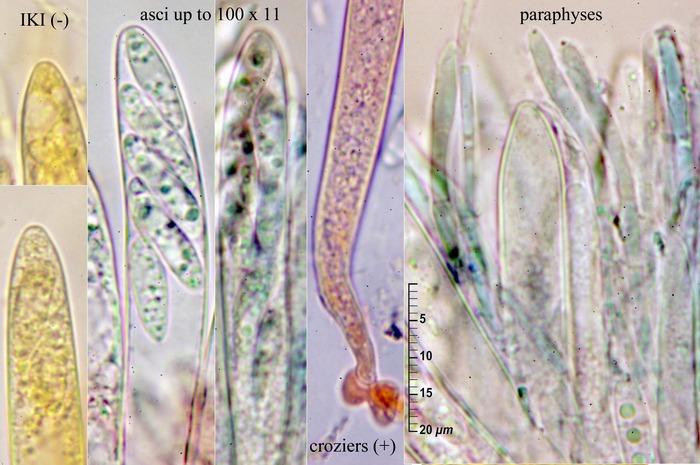
Hello again and happy new year for allTogether with the ascomata of Psilocistella/Psilachnum species on Tilia wood that turns reddish with ammonia vapour (see the macrophoto) they were another witish cupulate ascomata with big 8-spored asci IKI (-) negative and croziers (+) positive. IKI with KOH pret. is negative (-) too.
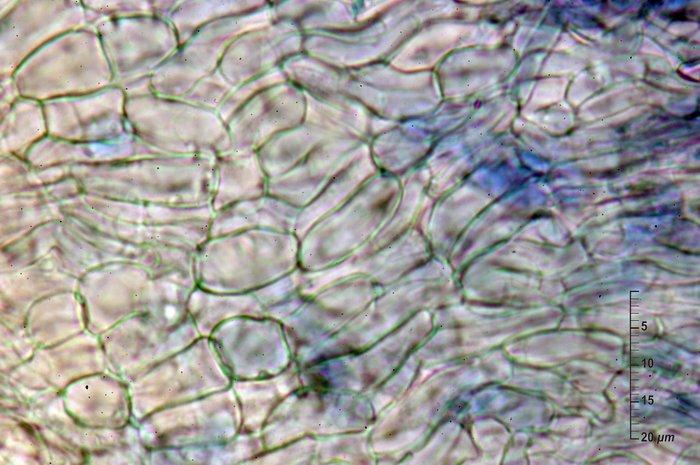
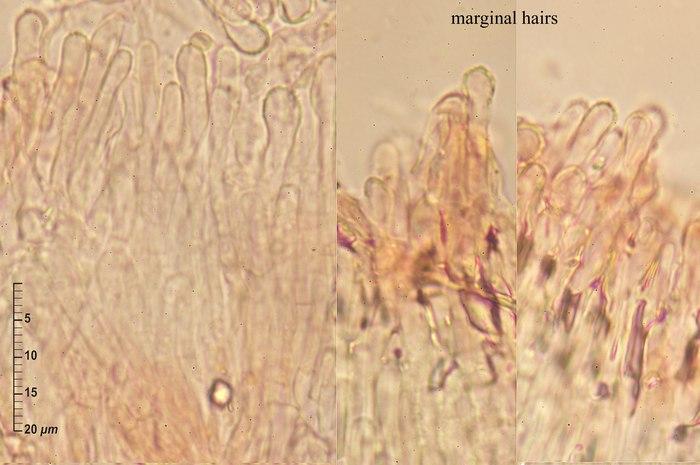
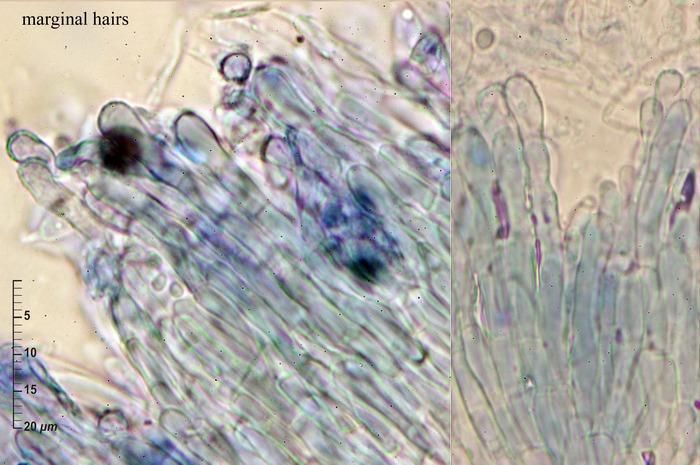
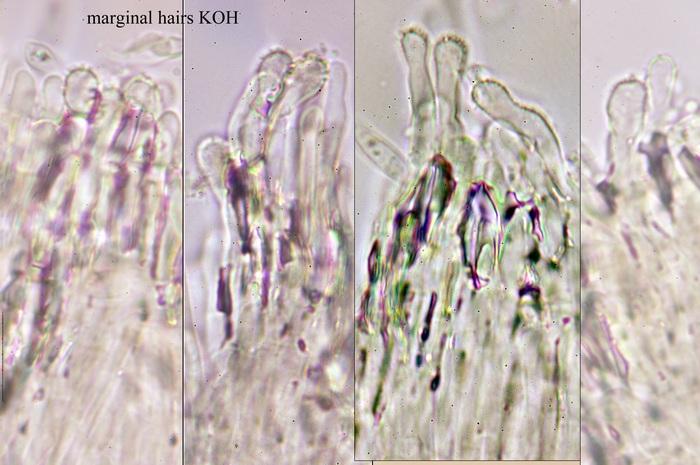
The marginal hairs are very agglutinated and very difficult to segregate. Initially they seem to be smooth but the end cell is very finelly verrucose in KOH. For it, my impression is that this fungus could be a Cistella species that I don't know.
What do you think?
Many thanks again
Hans-Otto Baral,
01-01-2013 18:30

Re : Another fungus on Tilia wood
I once had a Cistella on Tilia bark of an attached branch, together with a strange and new Orbilia (O. jurana) on the calcareous Schwäbische Alb. It has also inamyloid asci but spores much smaller (7-12 x 2-2.8), so I identified it as Cistella cf. mali. Yours has too large spores for mali.
One with such large spores on Populus bark (HB 6930) has faintly hemiamyloid apical rings.
Zotto
One with such large spores on Populus bark (HB 6930) has faintly hemiamyloid apical rings.
Zotto
Guy Garcia,
01-01-2013 18:31
Re : Another fungus on Tilia wood
Bonjour Enrique,
voir peut-être du côté de "Cistella" perparvula mais tes spécimens présentent des spores et des asques plus grands.
Amitiés, Guy
voir peut-être du côté de "Cistella" perparvula mais tes spécimens présentent des spores et des asques plus grands.
Amitiés, Guy
Enrique Rubio,
01-01-2013 21:47
Re : Another fungus on Tilia wood
Thank you to both.
So, Cistella sp.
So, Cistella sp.