
10-06-2026 21:16
 François Freléchoux
Bonsoir,Le dernier du jour, en attendant votre avi
11-06-2026 19:01
 William Slosse
Hello all,In an attempt to make a culture of a sus
11-06-2026 19:03
 Nicolas VAN VOOREN
Chers membres d'Ascofrance,Le site sera placé en

09-06-2026 18:32
Camille MertensSur morceau de roseau immergé 0,5 - 0,7 mm de dia
10-06-2026 12:54
Steve ClementsBonjour encore, Pouvez-vous m'aider, s'il vous pl
10-06-2026 21:07
François Freléchoux
Toutes les tiges de gentianes jaunes de l'an passÃ
10-06-2026 13:41
François Freléchoux
Bonjour à nouveau, Voici une trouvaille d'hier.
10-06-2026 11:53
Steve ClementsBonjour, This disco is abundant on dead stems of
A Xylaria globosa (Spreng. ex Fr.) Mont. is a only Xylaria species with red-orange colorations in the ascostroma. This specimen found in the Cordillera Central, 500 mts. altitude, has these characteristics. The orange-red coloration develops only in thin sterile cilindrical stromata arising between fertile globose black stromata , they have few peritecias. The ascospores are 18-24 x 6-8 microns.
In http://mushroaming.com/Amazing_Amazon is referred as X. glabrosa, but i cant found any references to this specie.
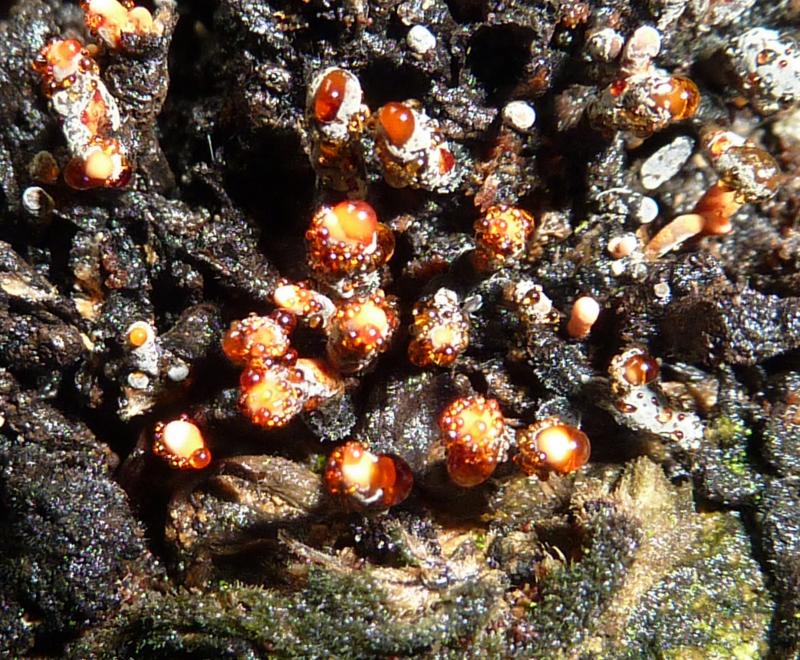
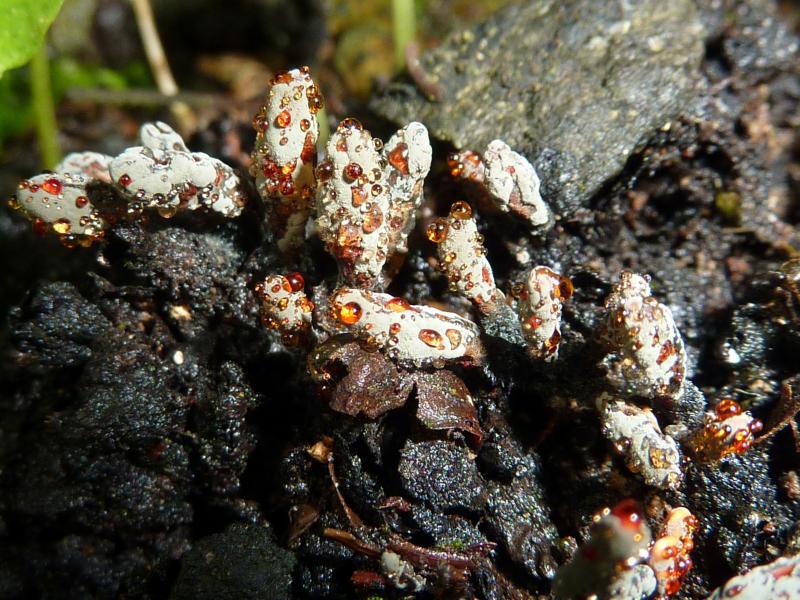
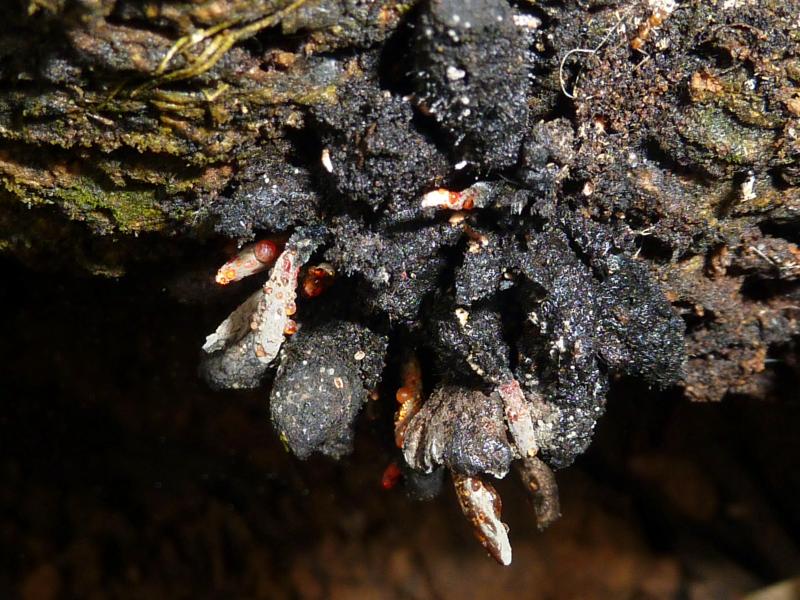
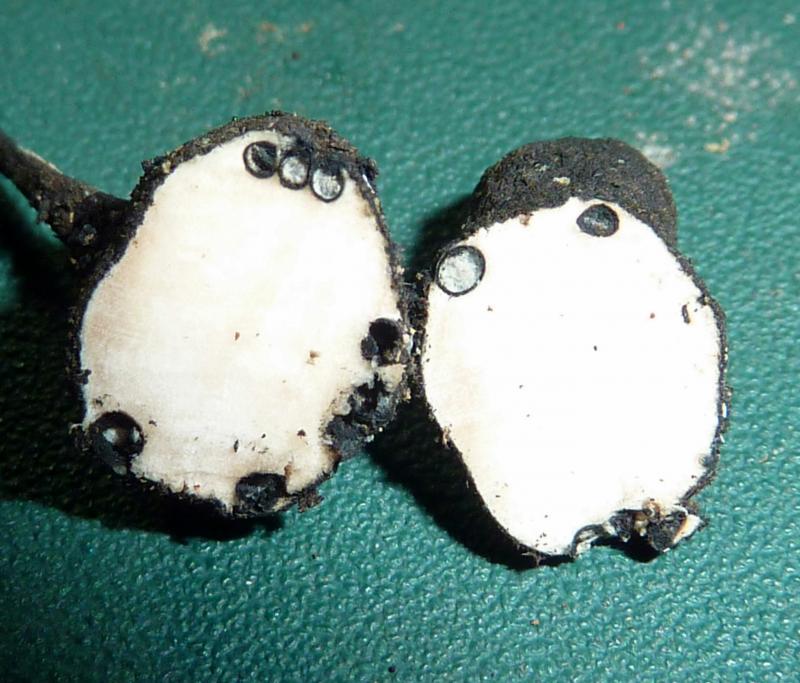
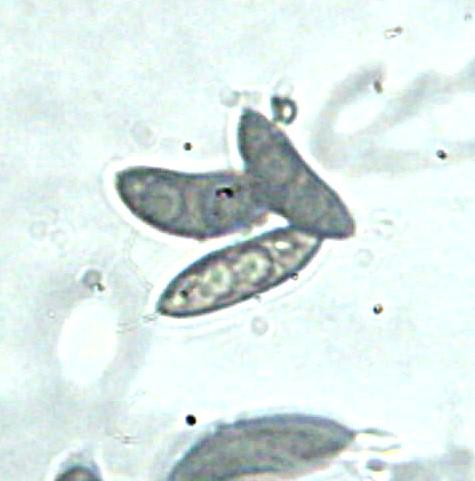

Saludo.
In my experience X. polymorpha s.st. and X. obovata (syn schweinitzii) never produce red droplets when emerging but my concept of X. globosa does (= anisopleura). But this complex still needs a lot of attention using other methods :-)
The red drop producing taxon is extremely common in Ecuador and presumably over most of the Neotropics
cheers
Thomas