17-05-2026 19:05
Thomas FlammerI have found this tiny 200 ym cup shaped apothecia
17-05-2026 16:41
Margot en Geert VullingsWe found this Lachnum on an old Rubus stem.Fruitbo
05-04-2026 22:46
 Lothar Krieglsteiner
on wood of Ceratonia, Algarve, 3.4.2026.The color
15-05-2026 13:33
Sylvie Le GoffBonjour à tousJe serais très reconnaissante enve
16-03-2011 14:31
roman vargas albertoHi. I would like some opinion about this Peziza
14-05-2026 05:36
Ethan CrensonHi all, I haven't paid much attention to Lachnu
10-05-2026 23:17
 Andreas Gminder
Hello,today we found in a moist steep decidous for
11-05-2026 12:32
 Bernard CLESSE
Pourriez-vous m'aider à identifier cette héloti
13-05-2026 15:26
 François Freléchoux
Bonjour,Voici une récolte faite il y a quelques j
12-05-2026 15:41
 Nicolas VAN VOOREN
Dear Ascolovers, especially interested in Pezizale
 Hello,
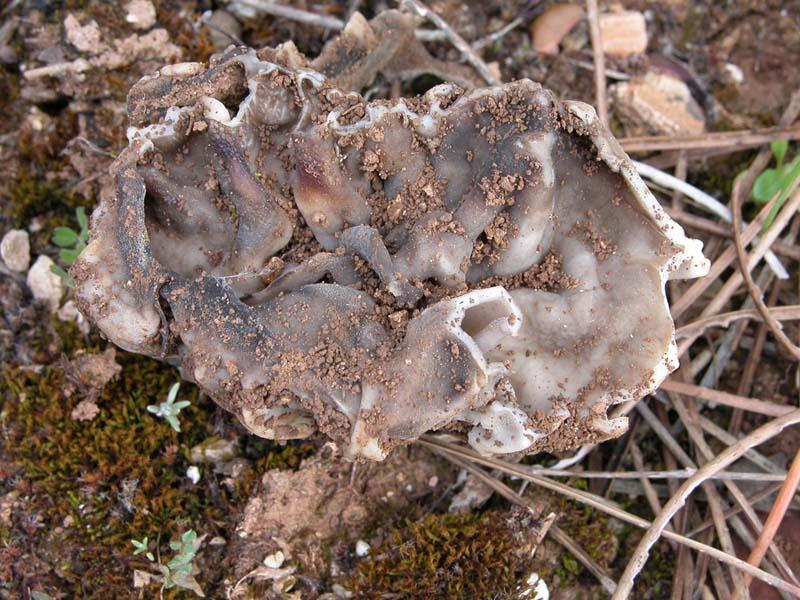
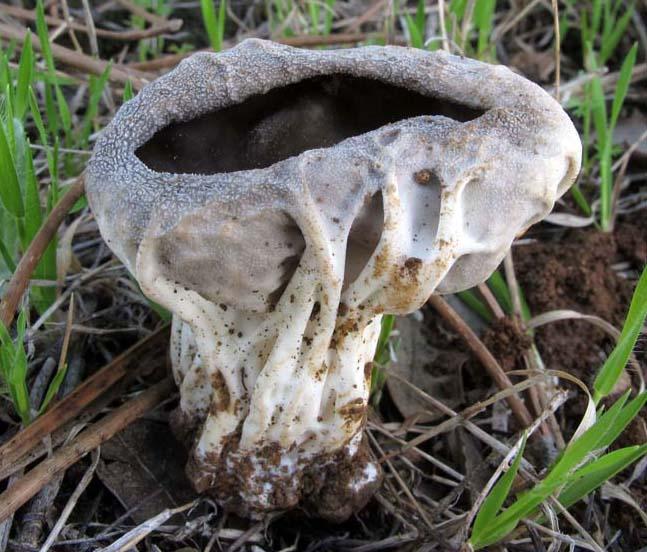
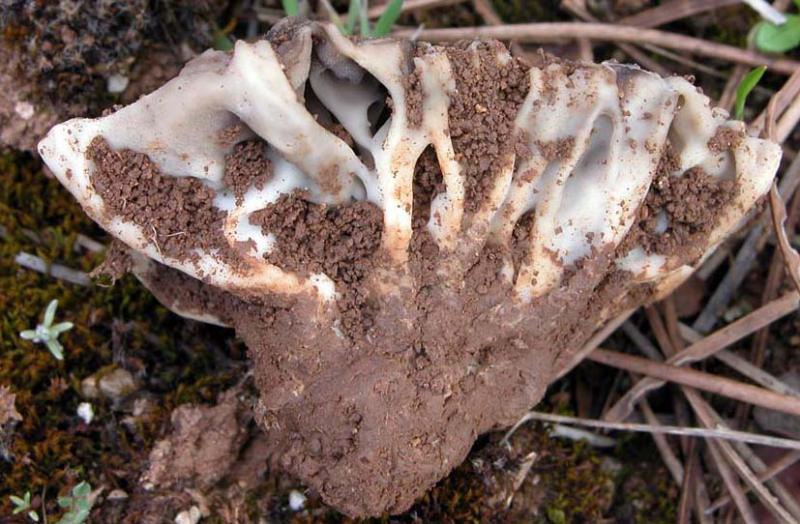
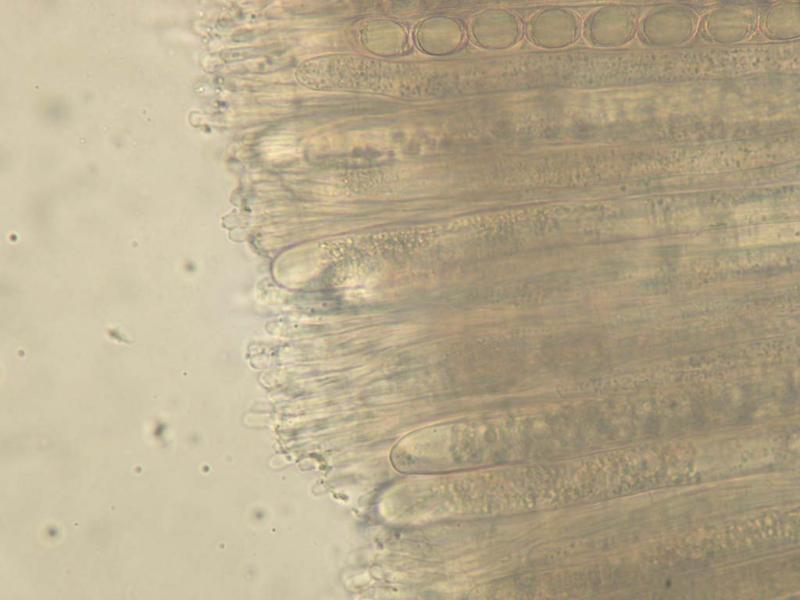
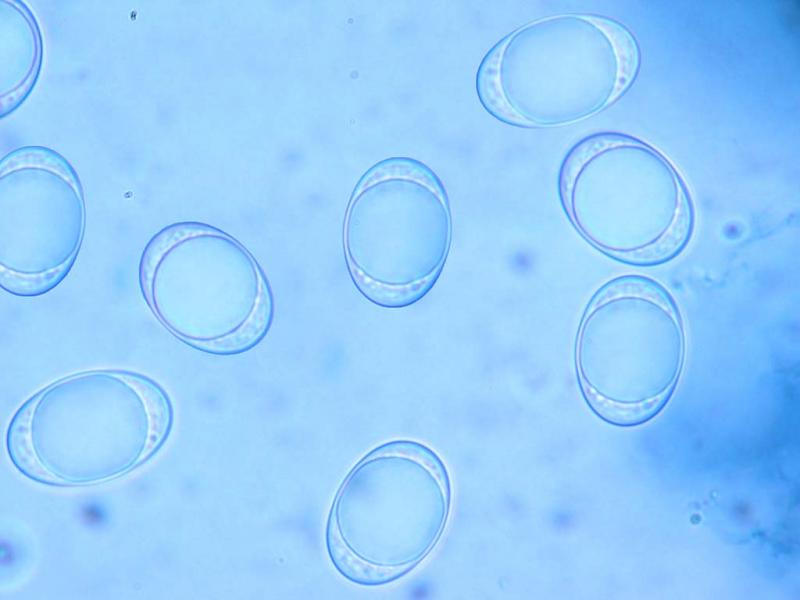
Helvella are epigeous fungi but these Helvella live entirely underground and they are fully mature underground. Macroscopic and microscopic features, at maturity, are like Helvella costifera: irregular cup-shaped, 2-9 cm broad, up to 9 cm high. Asci 250-300 x 13-15 µ, paraphyses 3-5 µ, spores 15-16 X 10-12 µm Q=1,33-1,60
Habitat: Hypogeous under Quercus ilex subsp. ballota in clay and limestone soils. Mars through May
Video: http://www.youtube.com/watch?v=1oGm4ZK7Gx4
Thanks in advance for any help you are able to provide
Antonio Rodriguez
¿Alguien conoce una Helvella hipogea?
Hola,
El género Helvella está formado por especies epigeas, pero esta Helvella completa su ciclo completamente hipogea. Nos la encontramos todos los años en terrenos arcillosos y calizos, bajo Quercus ilex subsp. ballota, desde marzo hasta mayo. Detectamos su presencia por los bultos y las grietas que hace en el terreno, pero nunca hemos llegado a verla fuera de la tierra.
Su aspecto macroscópico y microscópico es compatible con Helvella costifera: forma de copa irregular, 2-9 cm. de ancho, hasta 9 cm de alto. Ascos: 250-300 x 13-15 µ, paráfisis 3-5 µ, esporas 15-16 X 10-12 µm Q=1,33-1,60.
Vídeo: http://www.youtube.com/watch?v=1oGm4ZK7Gx4
Se agradecen opiniones
Antonio Rodríguez
Donadini J.C. et al. 1975 [1976] Bull. Soc. Mycol. France 91(4): 555
I always harvested H. semiobruta almost buried semiobruta and a single harvest of H. astieri who was épigéeous
I did not know neither Helvella semiobruta nor Helvella astieri, but they look very different from my Helvella.
I think the hipogeous habit of this Helvella is an adaptation to dry habitats where it grows.
A future truffle!
Antonio Rodríguez
Gracias por las respuestas,
No conocía ni la H. semiobruta ni la H. astieri, pero son muy diferentes a mi Helvella.
Creo que el desarrollo hipogeo de esta Helvella es una adaptación a un hábitat demasiado seco para una Helvella.
¡Un futura trufa!
Antonio Rodríguez