
10-06-2026 21:16
 François Freléchoux
Bonsoir,Le dernier du jour, en attendant votre avi
11-06-2026 19:01
 William Slosse
Hello all,In an attempt to make a culture of a sus
11-06-2026 19:03
 Nicolas VAN VOOREN
Chers membres d'Ascofrance,Le site sera placé en

09-06-2026 18:32
Camille MertensSur morceau de roseau immergé 0,5 - 0,7 mm de dia
10-06-2026 12:54
Steve ClementsBonjour encore, Pouvez-vous m'aider, s'il vous pl
10-06-2026 21:07
François Freléchoux
Toutes les tiges de gentianes jaunes de l'an passÃ
10-06-2026 13:41
François Freléchoux
Bonjour à nouveau, Voici une trouvaille d'hier.
10-06-2026 11:53
Steve ClementsBonjour, This disco is abundant on dead stems of
Cucurbidothis parmeliarum (pithyophila var. cembrae) - on Abies
Lothar Krieglsteiner,
08-12-2025 17:37
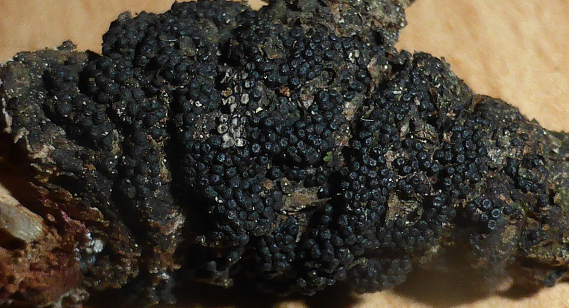
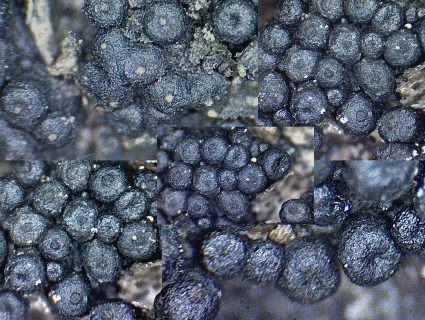
 20.6.25, on branch of Abies infected and thickened by Melampsorella caryophyllacearum (rust fungus-cancer), leg. C. Weinkötz in the scope of a fungal seminar, Germany, Baden-Württemberg, Schwäbischer Wald
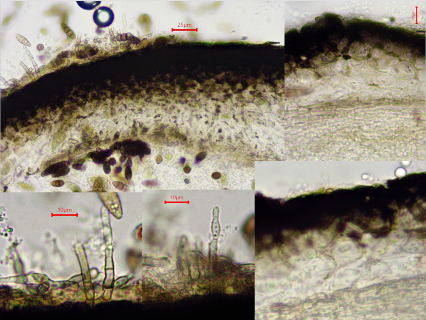
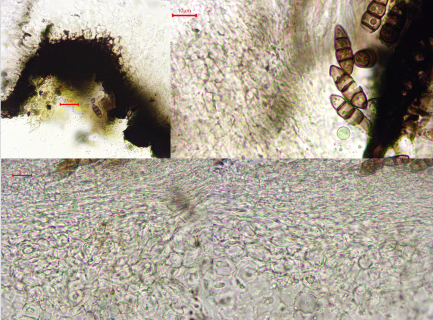
I think the fungus shouid be bitunicate, and the spores reminde me of Melanomma or something related. I do not find a fully fitting fungus in the book of Björn Wergen. The brown, 3-septate spores measure about 21-24/(6,5)7-7,5(8) µm. There is no reaction with Melzers reagent, and there are croziers at the base of the asci.
Who can help? Best regards, Lothar
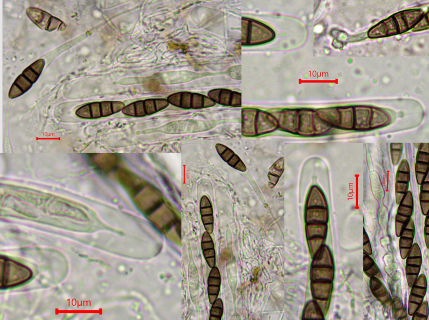
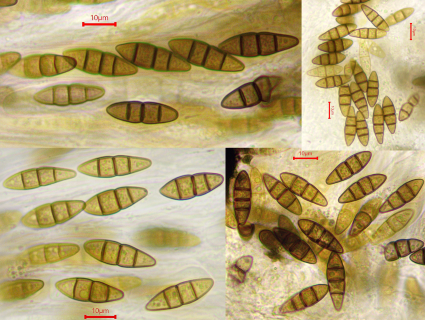
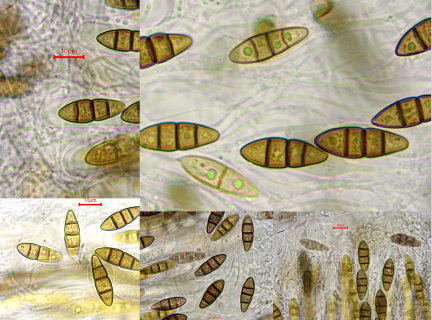
Andgelo Mombert,
16-01-2026 11:51

Re : possibly related to Melanomma - on Abies
Hello,
Perhaps Cucurbidothis pithyophila var. cembrae ?
Andgelo
Perhaps Cucurbidothis pithyophila var. cembrae ?
Andgelo
Lothar Krieglsteiner,
16-01-2026 12:14
very likely Cucurbidothis pithyophila var. cembrae - on Abies
Hello Angelo,
thank you very much for your proposal. This seems to be a very good hint - as far as I can find quick information in the internet. I also have the book of Migula who mentions Rehms variety (without longitudinal septa), and the data given sound good.
Best regards, Lothar
P.S. If somebody has acces to the following publication, this could be interesting:
Boyce, J. S., 1952: Cucurbitaria pithyophila, an entomogenous fungus. Plant Dis. Reptr. 36 (2), 62—63.
thank you very much for your proposal. This seems to be a very good hint - as far as I can find quick information in the internet. I also have the book of Migula who mentions Rehms variety (without longitudinal septa), and the data given sound good.
Best regards, Lothar
P.S. If somebody has acces to the following publication, this could be interesting:
Boyce, J. S., 1952: Cucurbitaria pithyophila, an entomogenous fungus. Plant Dis. Reptr. 36 (2), 62—63.
Nihad Omerovic,
16-01-2026 16:52
Re : possibly related to Melanomma - on Abies
Lothar Krieglsteiner,
17-01-2026 09:26
Re : possibly related to Melanomma - on Abies
thank you!
Joanne Taylor,
16-02-2026 17:16
Re : possibly related to Melanomma - on Abies
Please see this post Lothar, regarding this fungus:
http://www.ascofrance.com/search_forum/84040
Thanks, Jo Taylor
http://www.ascofrance.com/search_forum/84040
Thanks, Jo Taylor
Lothar Krieglsteiner,
16-02-2026 17:41
Re : possibly related to Melanomma - on Abies
Hello Jo,
thank you very much for your posts and the link to your interesting paper.
So my fungus must be C. parmeliarum, not a very appropriate name for a fungus growing with or on evertebrates not lichens (but so ist taxonomy).
I will send you an e-mail with the exact collection data. I will have a look at the specimen and try to find the adelgids, but this can take some time.
Best regards, Lothar
thank you very much for your posts and the link to your interesting paper.
So my fungus must be C. parmeliarum, not a very appropriate name for a fungus growing with or on evertebrates not lichens (but so ist taxonomy).
I will send you an e-mail with the exact collection data. I will have a look at the specimen and try to find the adelgids, but this can take some time.
Best regards, Lothar
Joanne Taylor,
16-02-2026 23:30
Re : possibly related to Melanomma - on Abies
It is a rather unfortunate name .... However, the adelgid Adelges piceae occurs in Abies species and the adelgid Adelges abietis occurs on Picea .... so mycological taxonomists do not have a monopoly on confusing names.....!
Lothar Krieglsteiner,
17-02-2026 16:57
Re : Cucurbidothis parmeliarum (pithyophila var. cembrae) - on Abies
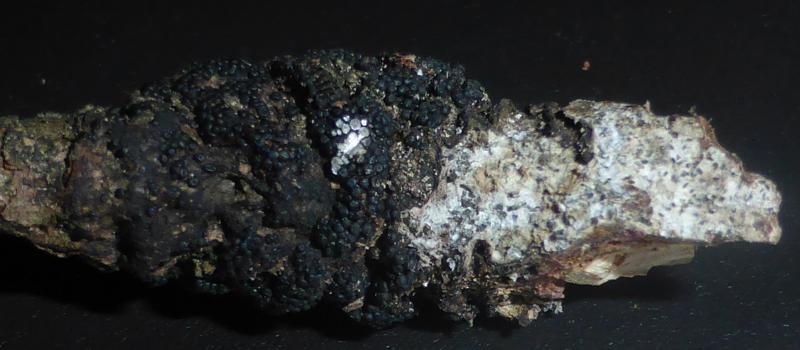
I just found the specimen in my box and found that all below the fungi there is a white layer belonging to the adelgid tomentum. I did not see the adelgids themself.
Joanne Taylor,
18-02-2026 12:17
Re : Cucurbidothis parmeliarum (pithyophila var. cembrae) - on Abies
Dear Lothar,
From your image it looks like the adelgids have dried up. The little black speckles visible amongst the white filaments are likely to be them. If you want to check, you can make a slide of some of that material. You can imagine why it took a century before mycologists made the connection between the fungus and the adelgids, as exsiccatae specimens were often studied. In fresh specimens the adelgids are pink and plump, especially at the expanding edges of the stroma.
Best wishes,
Jo
From your image it looks like the adelgids have dried up. The little black speckles visible amongst the white filaments are likely to be them. If you want to check, you can make a slide of some of that material. You can imagine why it took a century before mycologists made the connection between the fungus and the adelgids, as exsiccatae specimens were often studied. In fresh specimens the adelgids are pink and plump, especially at the expanding edges of the stroma.
Best wishes,
Jo
Lothar Krieglsteiner,
18-02-2026 13:00
Re : Cucurbidothis parmeliarum (pithyophila var. cembrae) - on Abies
Hello Jo,
thank you very much for the additional information.
Yes, I was surprised myself to find the whole under-layer under the ascomata built by the white adelgid-tomentum.
Best regards, Lothar
thank you very much for the additional information.
Yes, I was surprised myself to find the whole under-layer under the ascomata built by the white adelgid-tomentum.
Best regards, Lothar