
10-06-2026 21:16
 François Freléchoux
Bonsoir,Le dernier du jour, en attendant votre avi
11-06-2026 19:01
 William Slosse
Hello all,In an attempt to make a culture of a sus
11-06-2026 19:03
 Nicolas VAN VOOREN
Chers membres d'Ascofrance,Le site sera placé en

09-06-2026 18:32
Camille MertensSur morceau de roseau immergé 0,5 - 0,7 mm de dia
10-06-2026 12:54
Steve ClementsBonjour encore, Pouvez-vous m'aider, s'il vous pl
10-06-2026 21:07
François Freléchoux
Toutes les tiges de gentianes jaunes de l'an passÃ
10-06-2026 13:41
François Freléchoux
Bonjour à nouveau, Voici une trouvaille d'hier.
10-06-2026 11:53
Steve ClementsBonjour, This disco is abundant on dead stems of

Does anyone knows the actual taxonomic status of Nectria ellisii C. Booth?
Thanks in advance

The name Nectria ellisii Booth is unchanged although it is not the genus Nectria.
According to Booth's description, it could be the genus Lasionectria.
Regards,
Christian
Cheers,
Christian

 1959-n73-Booth-0001.pdf
this hard to find paper will be very useful to many of us, even though the nomenclature is a bit outdated.
Cheers,
Jacques
Thanks a lot, Chris!
Regards
Maybe this fungus is 'Nectria' ellisii. My collection was made on Iris pseudacorus leaves on a damp place together with Nectriella dacrymycella.
The hairy yellow ascomata are 250-275 microns and the ascospores seem to be faintly striate.
What do you think?
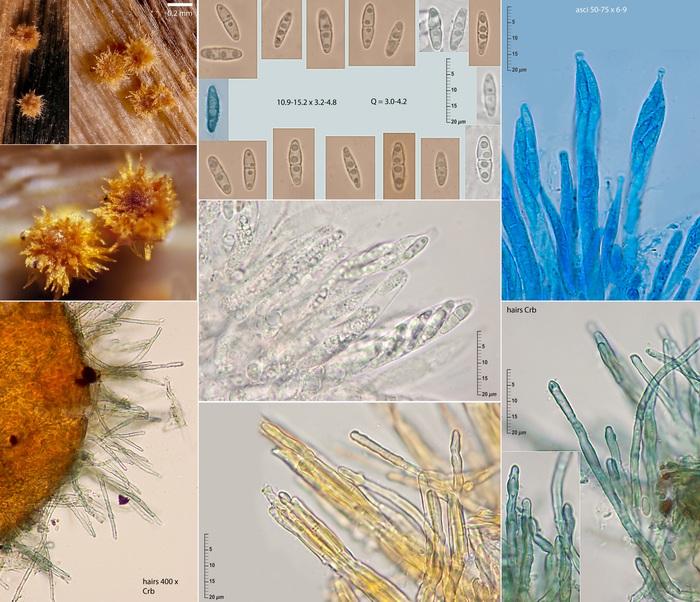
there are two possible genera: Lasionectria or Ijuhya. Hairs of Lasionectria arise from cells of the wall while the hairs of Ijuhya occur from the base of ascomata agglutinated to form teeth, arranged in a stellate fringe around upper margin of perithecia.
I attach two keys of these genera, maybe they will help you.
Regards,
Christian
So I need to cut it. Well, I'll try it but I don't know if I'm to be able with so small ascomata.
Thanks Christian!
Hi Christian
Might you do a better idea with these pics?
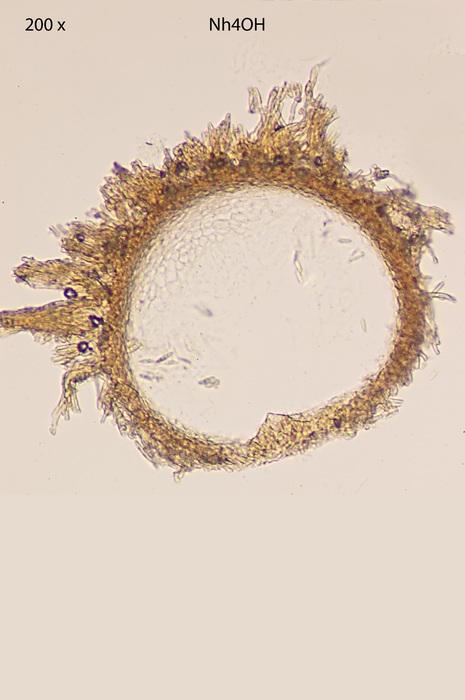
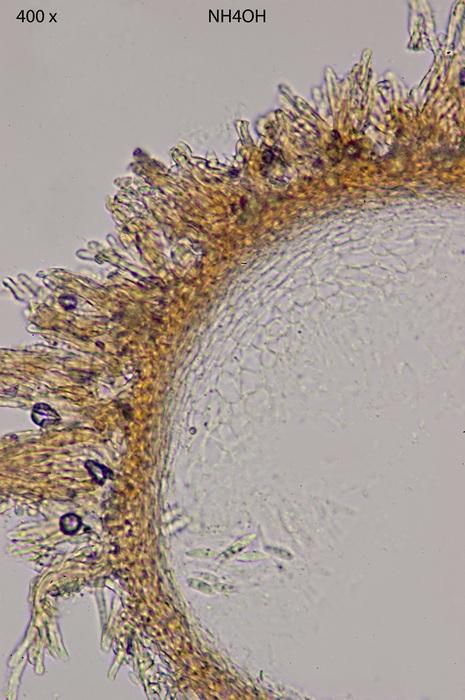
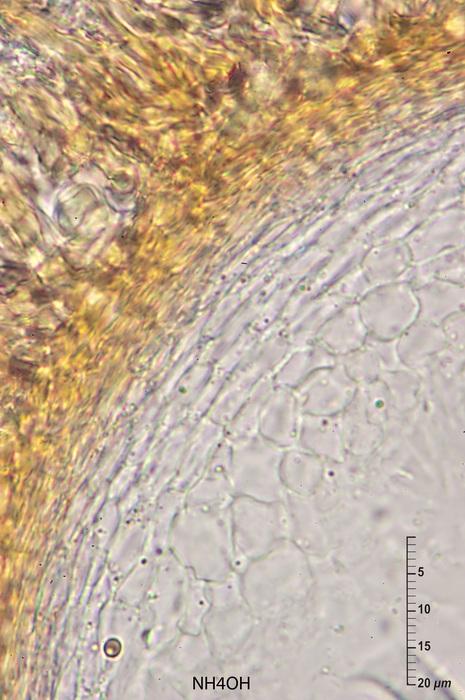
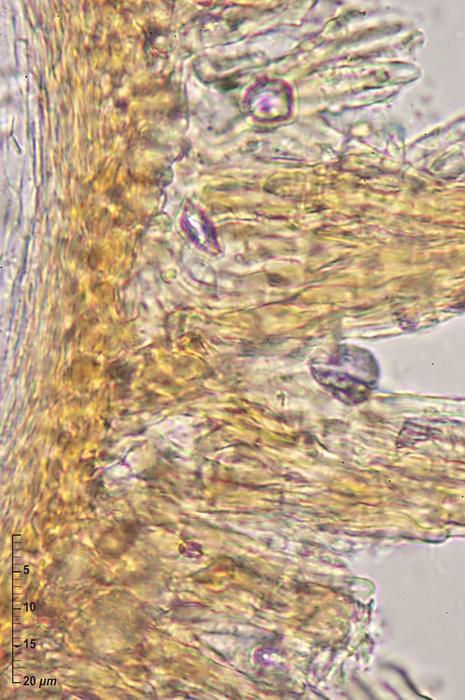
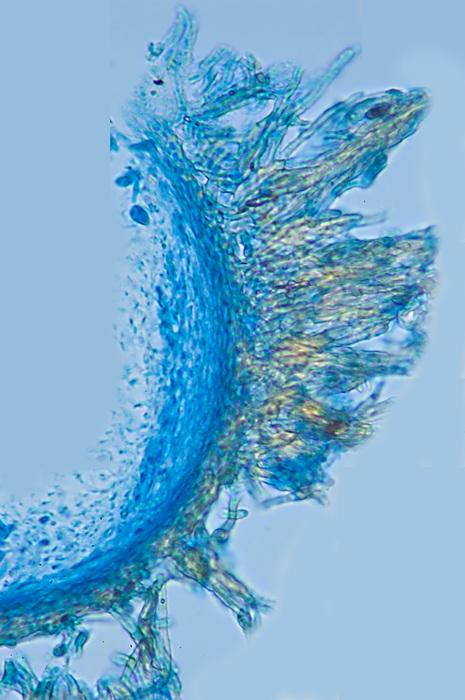
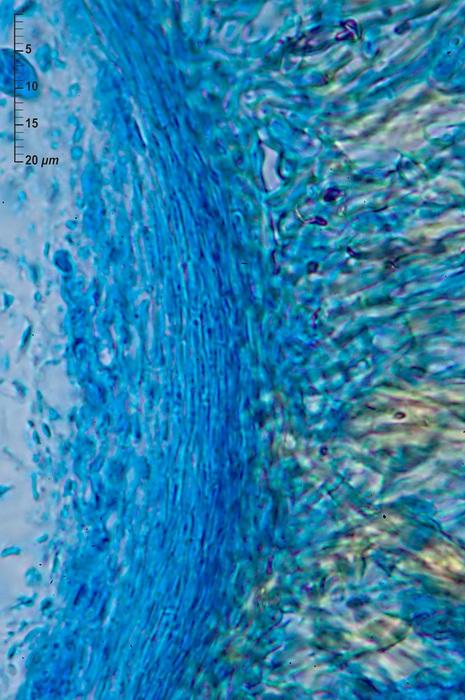
It would be great if you could send me a part of your collection.
Christian
Excuse me, Christian. I wanted to say Ijuhya...
Yes I'll send you my material. Remember that I think the ascospore are ver finely striate.