
23-05-2026 18:57
Sylvie Le GoffBonjour à tousRécolté sur une branchette de Sal
22-05-2026 14:44
 Lothar Krieglsteiner
in unripe condition citrine yellow, then soon fadi
23-05-2026 11:44
 Charles Grapinet
Hello, I am having trouble identifying this copro
22-05-2026 21:35
Steve ClementsBonjour, I expected this find on old wood on our
22-05-2026 18:12
Lothar Krieglsteiner
... in moist chamber from Portugal.As the fungus s
22-05-2026 20:08
Ethan CrensonHello all, Yesterday in NYC I was visiting an e
11-01-2022 16:36
 Jason Karakehian
Hi does anyone have a digital copy of Raitviir A (
20-05-2026 17:47
Margot en Geert VullingsWe found this Mollisia on dead Juncus stems mown l
22-05-2026 14:47
Gernot FriebesHi,superficial ascomata collected on bark of a liv
 Hi to all
This fungus
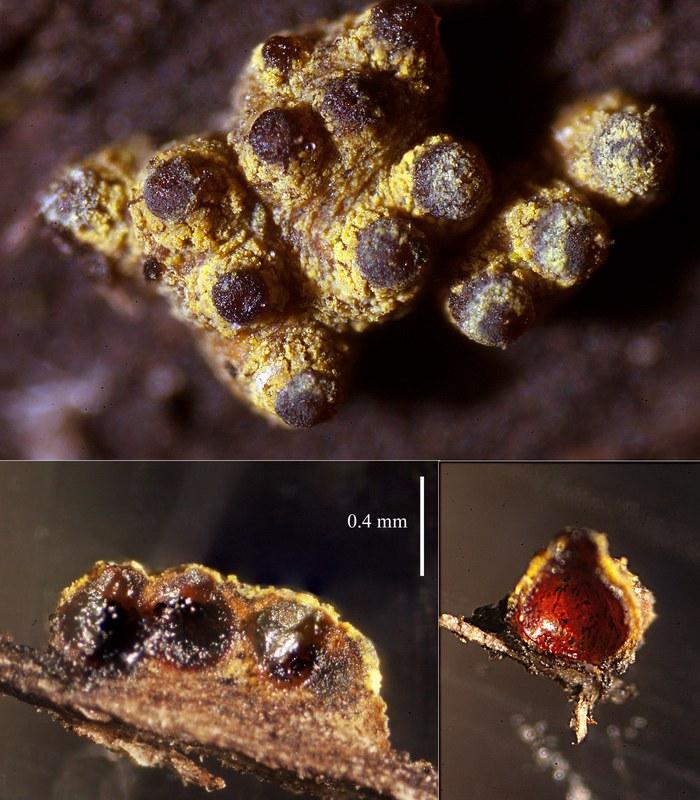
make superficial and ostiolate pseudothecia, singly or in small groups up to
20-25 pyriform pseudothecia 0.3-0.4 mm high but really they are not stromatic.
The host is a hanging decorticated branch of Quercus ilex in a sunny exposed submediterranean
situation growing close to Corticium medioroseum, a typical southern fungus.
The pseudothecial walls, covered by a yellowish KOH negative covering, are redish and the gelatinous content orange.
I don't know what genus belongs this rare fungus(Dictyotrichiella, Capronia?...)
Many thanks again for your help

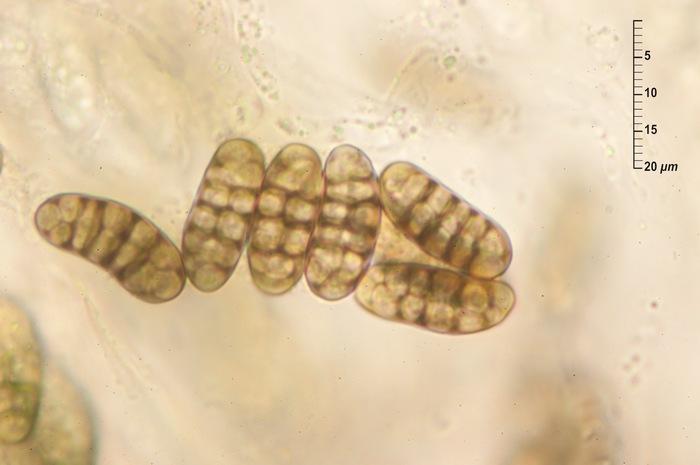
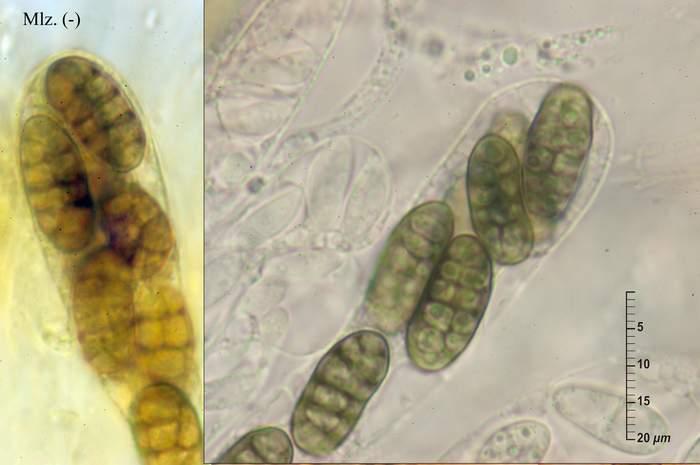
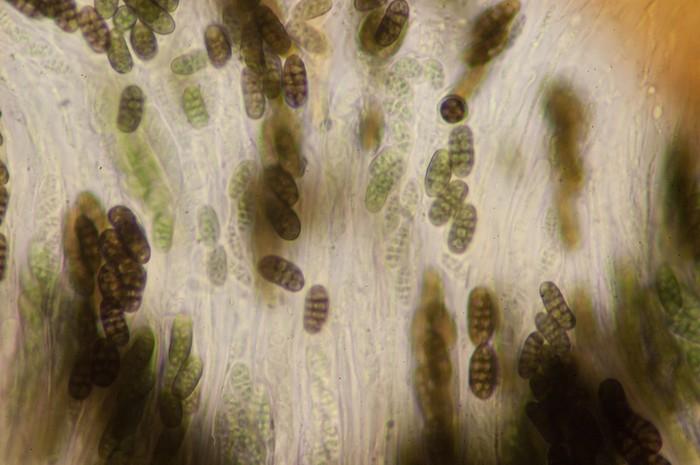
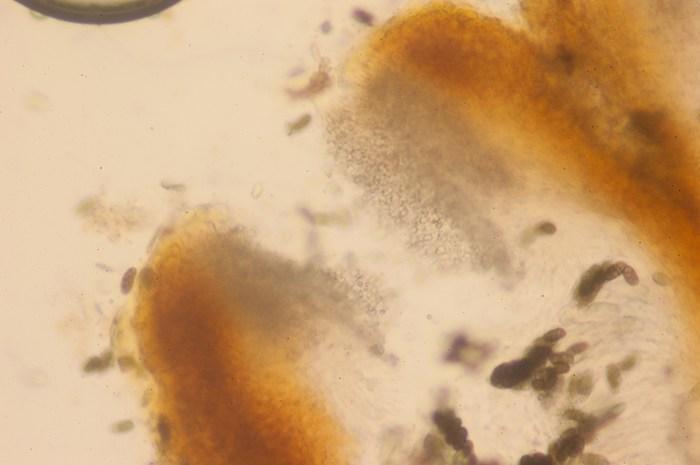

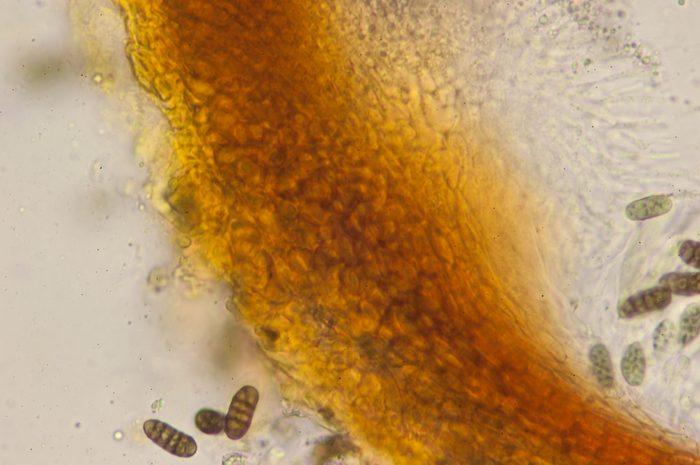
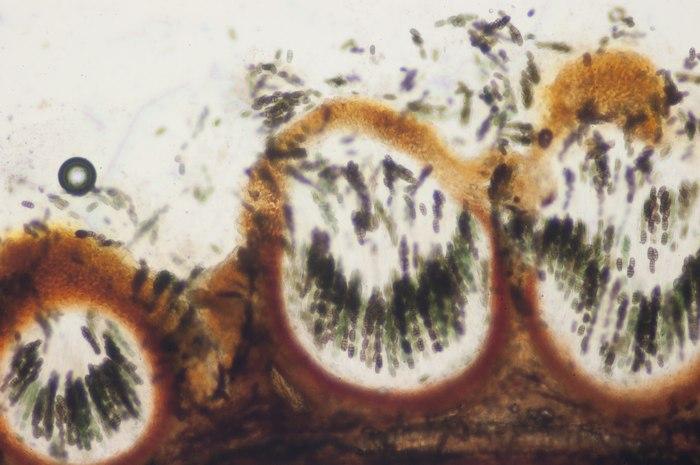
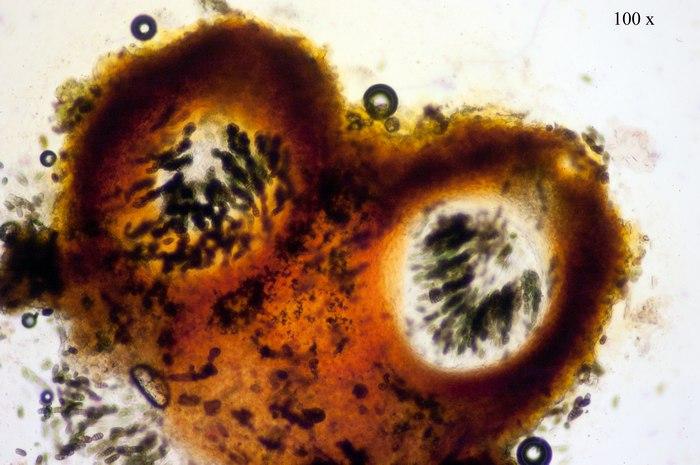
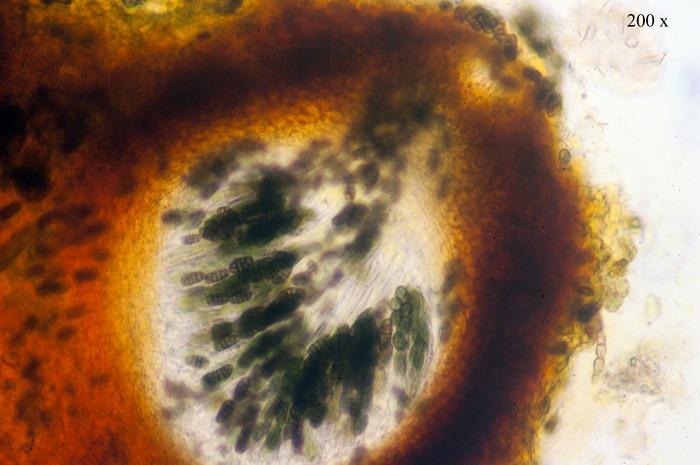
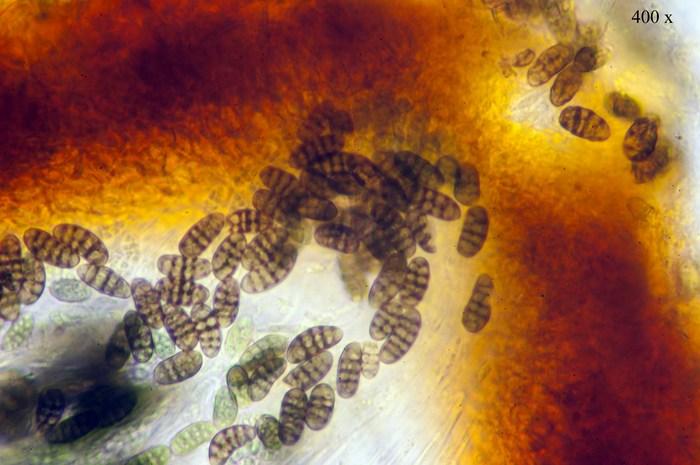

very nice and colourful fungus! I wonder if asci are really bitunicate, they seem fairly thin-walled on your photo. This should be checked on immature asci. A possible lead is Thyridium, a genus of unitunicate pyrenomycetes with muriform ascospores and coloured hyphae around perithecia. I know T. vestitum but it lacks the orange interior. You can find it in Barr 1983, Mycotaxon 43: 149-157.
Un saludo,
Jacques
maybe something related to Thyronectroidea chrysogramma (Ellis & Everh.) Seaver? See the description in Seaver (1909):
http://www.cybertruffle.org.uk/cyberliber/59350/0001/005/0206.htm
There's possibly a more recent description in Rossman, Mem. N. Y. bot. Gdn 49: 259 (1989) but unfortunately I don't have this paper.
Best wishes,
Gernot
PS: It's certainly not a Capronia (=Dictyotrichiella).
Thyronectria chrysogramma has been thoroughly re-described by Rossman & Samuels (1999, Genera of Bionectriaceae etc) with spores 32-35 x 7-11 µm that are too big for Enrique' fungus. The orange interior is not recorded.
Likely something different but not that far.
Jacques

Quelle coïncidence, je peinais justement à déterminer un asco à spores muriformes trouvé sur Morus. Cela doit être T. vestitum.
La doc que tu cites Jacques est dans Mycotaxon 18 et non 43. Les numéros de pages sont les bons.
Je vais de ce pas contrôler ma récolte.
Alain
Pas de couleur orangée pour le mien.
Jacques, toi qui connais bien vestitum, tu le reconnais ici ?
Les spores ont été mesurées à 19-23 x 9,5-11 µm.
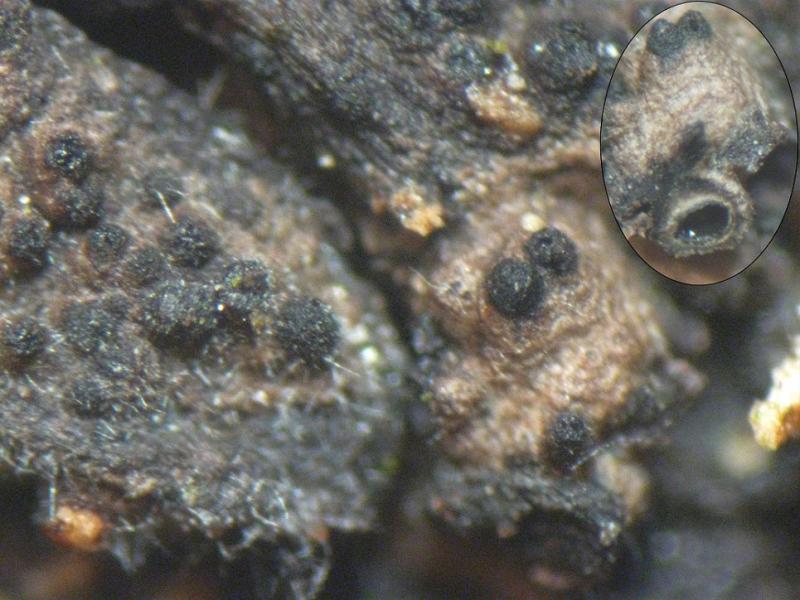
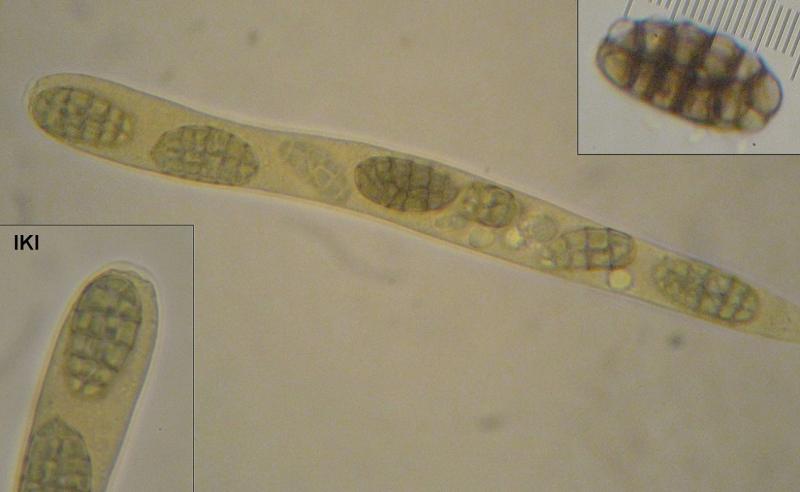
Thanks, Walter
l'aspect macro est très variable et je n'ai vu que deux récoltes. Il y a peut être plusieurs espèces différentes sous le nom de vestitum et je compte sur Walter pour clarifier la situation.
Enrique je pense que ta récolte intéresserait aussi Walter.
Amitiés,
Jacques
I think this fungus is not T. vestitum, a fungus (perhaps more fungi...) with more inmersed and blackish perithecia with long, cylindrical asci. The asci of this fungus are clavate and shorter.
Really the gelatinous content of the pseudothecia is not orange, it's only the reflection (transparency) of their orange walls.
I will send my material to Walter
Many thanks to all for your opinion
Enrique

Est-ce que Walter t'a dit quelque chose sur ta récolte ? J'ai quelque chose de très semblable.
Merci.
Yannick
Hi Yannick
Definitely it was a new described species, Thyronectria asturiensis Jaklitsch & Voglmayr 2014, that we have found also on Rhamnus alaternus as well on Quercus ilex
Salut Yannick,
Depuis il ya eu du neuf. Voir Persoonia 33 (2014) ; Thyronectria asturiensis
Alain
Je vais relire la publi.