
27-02-2026 17:51
 Michel Hairaud
Bonjour, Quelqu'un peut il me donner un conseil p
27-02-2026 16:17
 Mathias Hass
Hi, Found this on Betula, rather fresh fallen twi
28-02-2026 14:43
 Alain GARDIENNET
A new refrence desired :Svanidze, T.V. (1984) Novy
01-03-2026 18:02
 Francois Guay
I found this mystery Helotiales on an incubated le
01-03-2026 14:10
 Antonio Couceiro
Hola, me gustaria conocer opiniones sobre este tem
01-03-2026 18:46
 Robin Isaksson
Hi! This species i se from time to time in the
01-03-2026 08:55
Michel Hairaud
Bonjour , Je souhaiterais recevoir cet article :Â
Leotiomycetes on Phragmites stem in Ireland
Alden Dirks,
20-08-2024 23:32
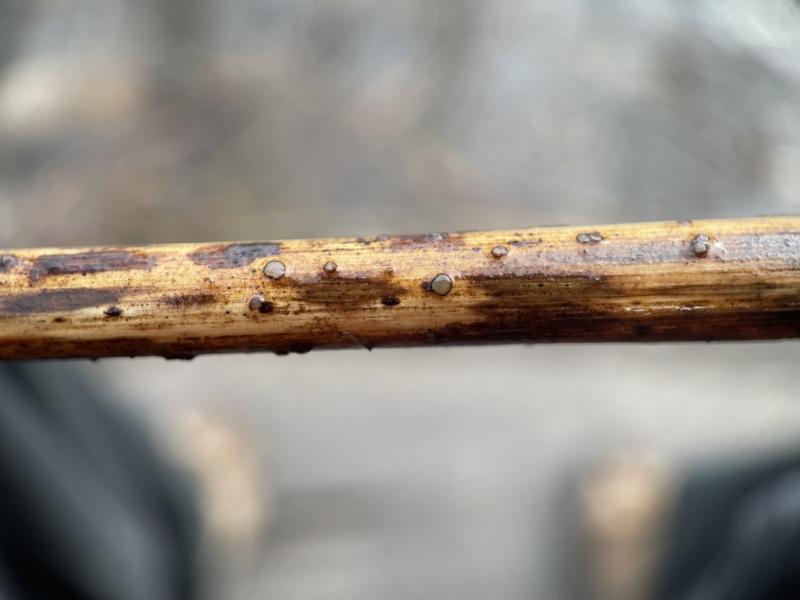
https://www.inaturalist.org/observations/236965918
Unfortunately my desktop computer crashed when I went to plug in a USB stick and the power chord jostled so I don't have any microscopic photos or measurements. But perhaps a general description of the microscopic features is enough for some ideas...
Spores long, multiseptate, with 9 (?) segments. Amyloid ascus pore. Ectal excipulum of textura prismatica (?).
Tissue was isolated for sequencing.
Hans-Otto Baral,
21-08-2024 10:10

Re : Leotiomycetes on Phragmites stem in Ireland
Quite impossible to say. 9-celled spores would be extraordinary, however. Any idea of the length/width relation? Ascis uodine reacion blue or red? The ectal excipulum I would have expected to be more of globose-angular cells. Anything about parahyses?
Alden Dirks,
21-08-2024 18:27
Re : Leotiomycetes on Phragmites stem in Ireland
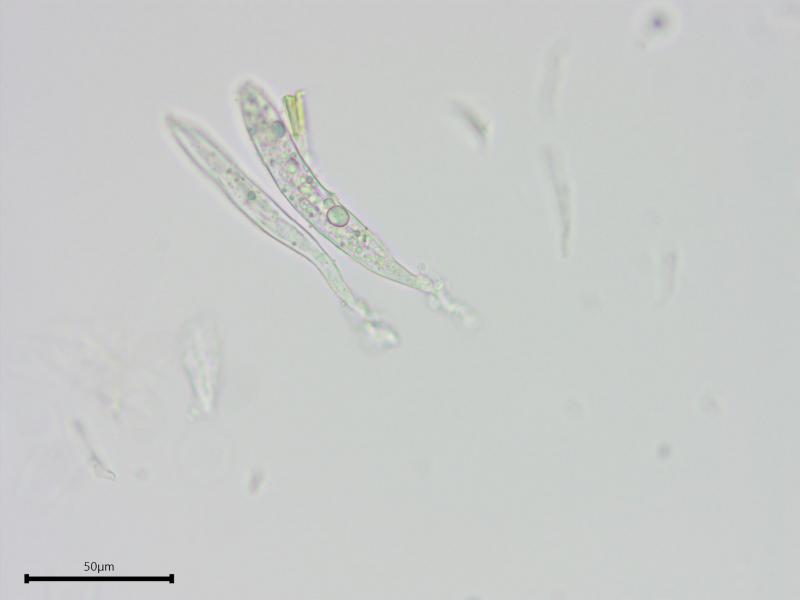
Still super bummed about losing all the work I did yesterday but here are a few more photos to continue the discussion.
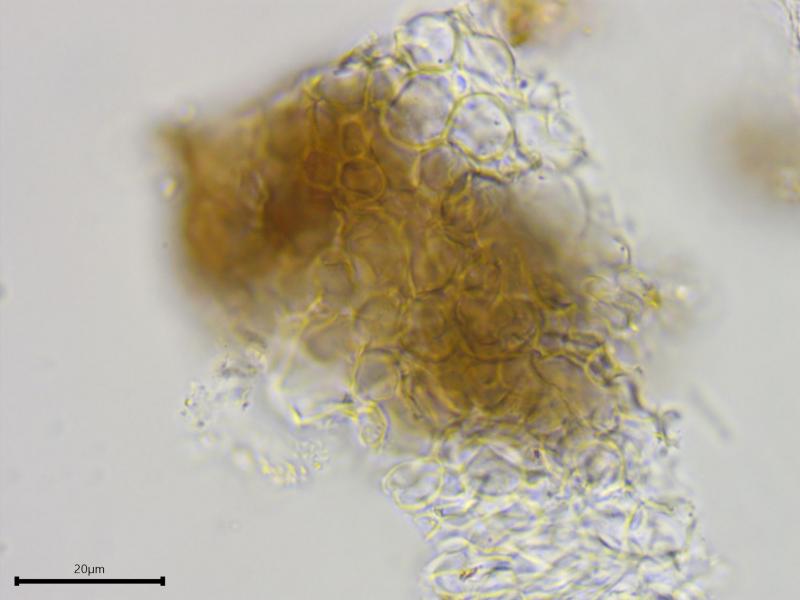
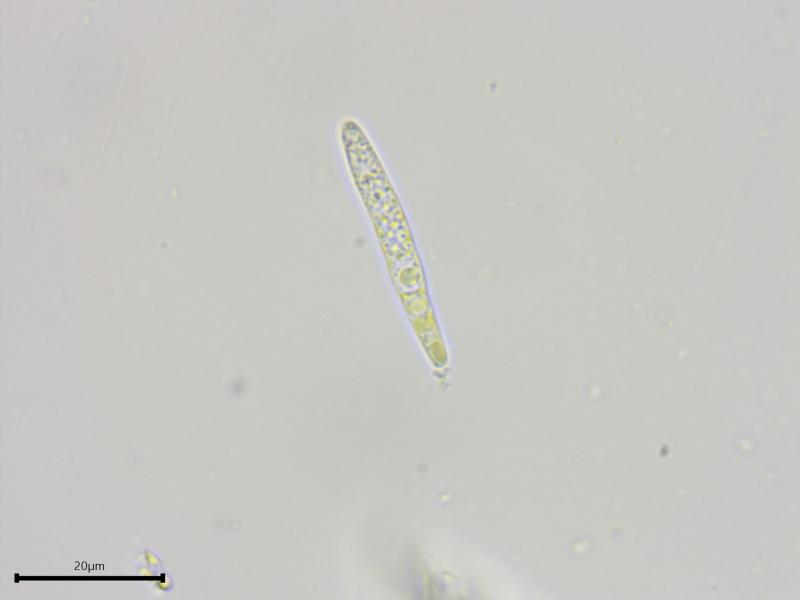
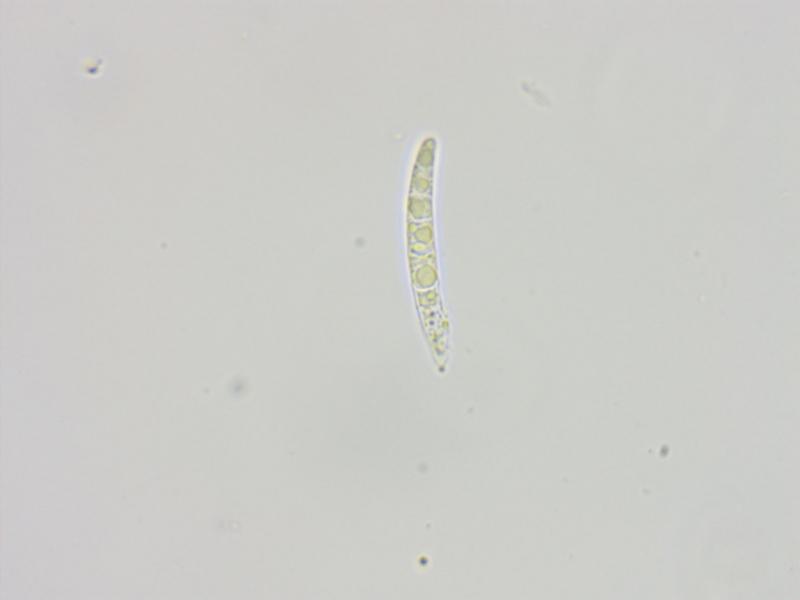
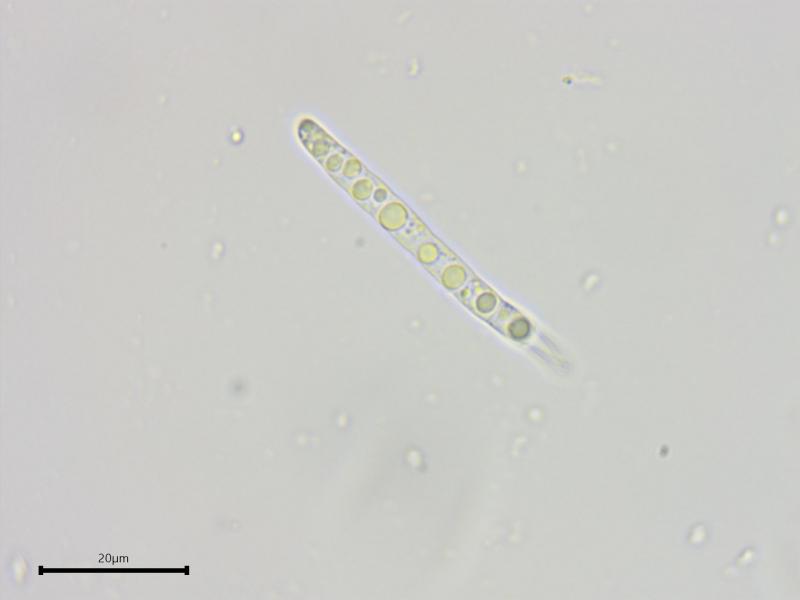
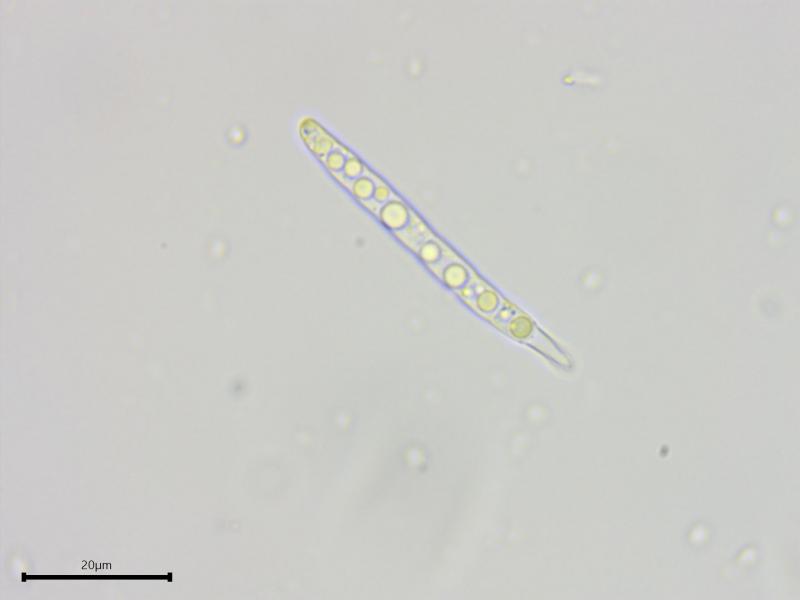
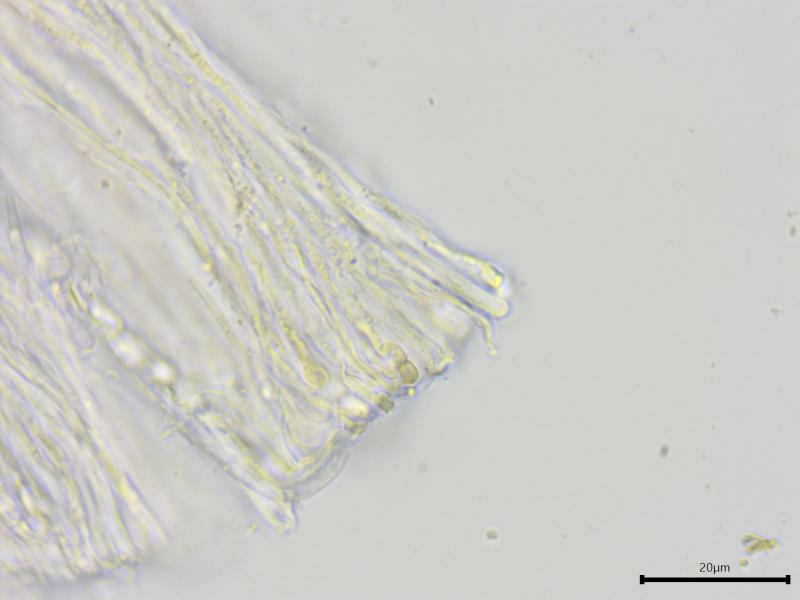
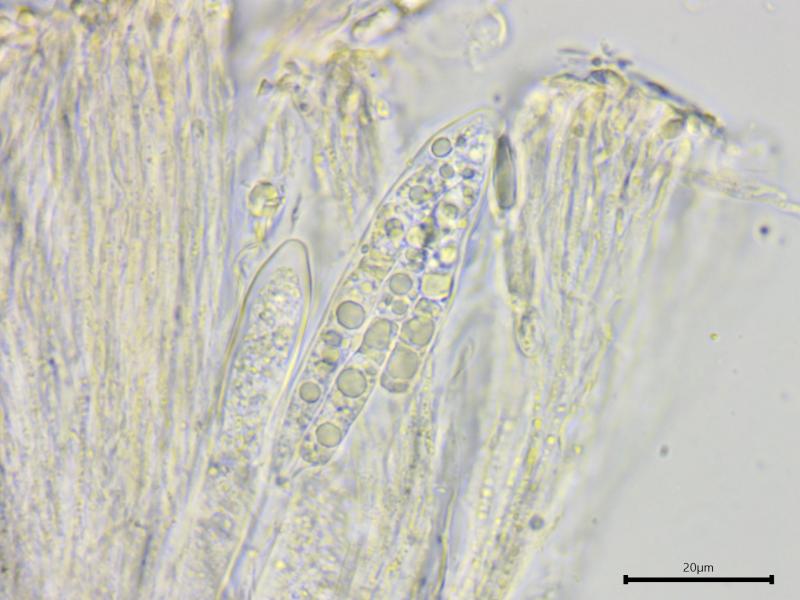
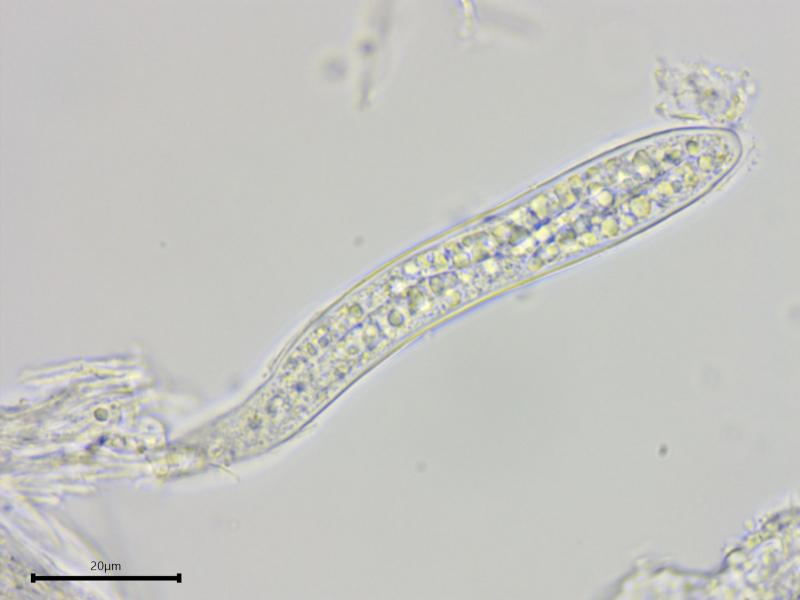
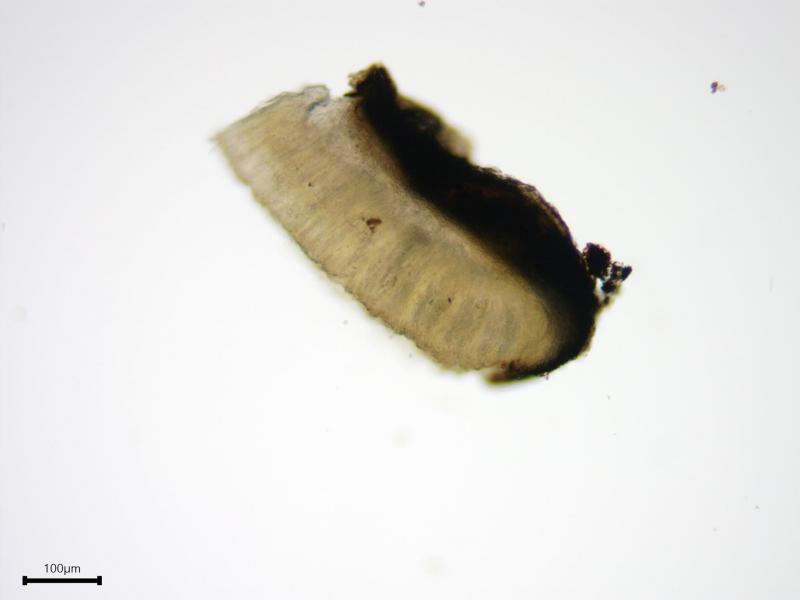
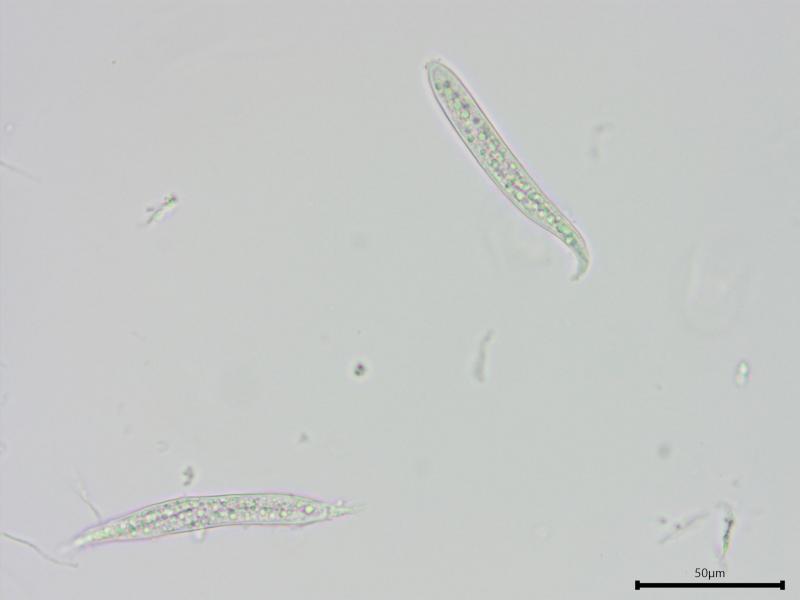
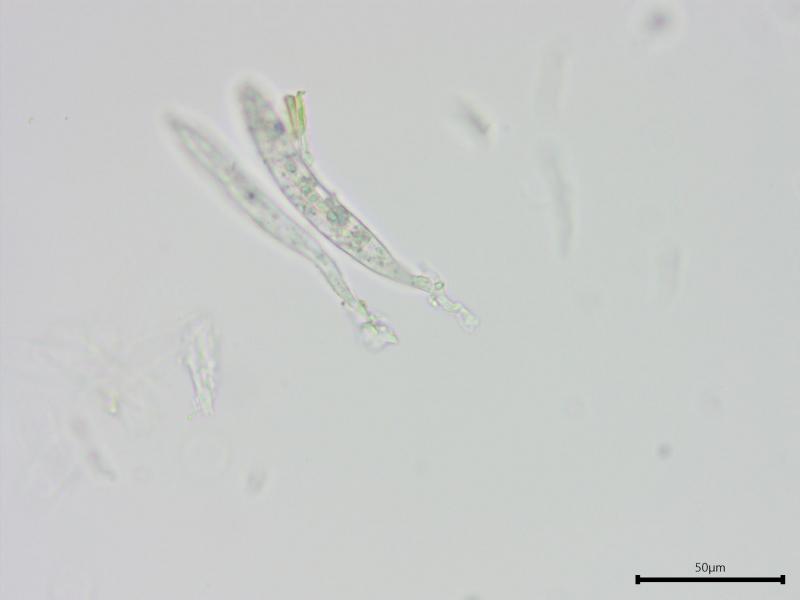
Paraphyses about 3.5 µm wide at tips, slightly clavate. Ascospores 35-52 µm long by 4-5 µm wide, with 8 or so septa (not entirely sure), each segment usually with a single large guttule. Asci about 100 µm long by 13 µm wide. I think they might have croziers. Ascus pore blue (amyloid in Melzer's reagent). Yes, you are right on the ectal excipulum - globose-angular cells.
Paraphyses about 3.5 µm wide at tips, slightly clavate. Ascospores 35-52 µm long by 4-5 µm wide, with 8 or so septa (not entirely sure), each segment usually with a single large guttule. Asci about 100 µm long by 13 µm wide. I think they might have croziers. Ascus pore blue (amyloid in Melzer's reagent). Yes, you are right on the ectal excipulum - globose-angular cells.
Hans-Otto Baral,
21-08-2024 20:30
Re : Leotiomycetes on Phragmites stem in Ireland
The apical ring should better be tested in Lugol (IKI), and especially a photo of the ring would be valuable. The paraphyses might have contained refractive vacuoles (VBs), but this is now quite uncertain. A possibility would be the genus Niptera. But N. macrospora has 2-spored asci.
Alden Dirks,
21-08-2024 21:06
Re : Leotiomycetes on Phragmites stem in Ireland
Thanks for the thoughts! I don't have Lugol's solution so I'll have to test that later.
At this stage, would there be anything diagnostic with a clearer picture of the apical ring?
I have tissue isolated into EnA (extract-n-amp) solution and CTAB. It might be a little while before I have access to a molecular lab again, but eventually I'll be able to sequence these little guys.
At this stage, would there be anything diagnostic with a clearer picture of the apical ring?
I have tissue isolated into EnA (extract-n-amp) solution and CTAB. It might be a little while before I have access to a molecular lab again, but eventually I'll be able to sequence these little guys.
Alden Dirks,
21-08-2024 21:18
Re : Leotiomycetes on Phragmites stem in Ireland
Something like Belonopsis excelsior or Neobelonopsis sp. seem like possibilities!
Hans-Otto Baral,
21-08-2024 21:36
Re : Leotiomycetes on Phragmites stem in Ireland
You are right, Mollisia excelsior would be a good option, the macroscopy (flat apos) fits. Only the spores are usually 3.5-4 µm wide. M. asteroma has narrower spores and more a raised margin.
There is a CBS sequence in GB (ITS+LSU) and another not uploaded ITS sequence is 100% the same.
Alden Dirks,
21-08-2024 23:02
Re : Leotiomycetes on Phragmites stem in Ireland
Excellent, I'm glad we came to a good candidate, and that there are sequence data to confirm our hypothesis when the time comes. Thanks!