
21-04-2026 13:36
Gernot FriebesHi,I am out of ideas for this one. I collected Sal
21-04-2026 13:19
Gernot FriebesHi,this Lophodermium on Typha has ascospores measu
21-04-2026 13:05
Gernot FriebesHi,this hyphomycete feels familiar but I was not a
20-04-2026 22:00
 Malcolm Greaves
These pale yellow, hairy ascos were growing on cul
19-04-2026 21:23
Steve ClementsBonjour, I found this anamorphic fungus on old pl
19-04-2026 20:46
Steve Clements1 mm diameter approx spherical conidiophores on pl
12-04-2026 17:56
 Hardware Tony
Found on dead stems in February earlier this year
17-04-2026 19:16
 Enrique Rubio
Hi to everybodyI would appreciate any assistance r
14-04-2026 05:32
Ethan CrensonHi all, A few weeks back a friend pointed out som
17-04-2026 15:14
 Bruno Coué
Bonjour.Récoltes du 16/04/2026, sur feuilles mort
These ascomycetes were growing on standing dead wood of Salix caprea, on the edge a forest road. Collected on the 21.12.2025 in Oslo, Norway.
The ascospores are clavate to ellipsoid and have a few lipid drops. OCI 2-3
7,2-10,6 (11,5) x (2,2) 2,4-2,9 µm
Me= 8,8 x 2,8 µm
Asci IKI+ bb. I am a bit uncertain, but I believe that it has croziers (see attached photos).
36,8-49,6 x 7,2-8 µm
The hairs have highly refractive (glassy) tips, that react dextrinoid in melzer's reagent, thick walls and septa.
28,8-64 x 2,4-3,2 µm
The spore measurements were taken from newly discharged spores in a water mount. All other measurements were taken from living cells.
I have two questions regarding this species:
1. Could this be Olla/Protounguicularia transiens?
2. Is there any other species with glossy, dextrinoid hairs that one should be aware of when determining this species?
Thank you in advance and best regards,
Hulda
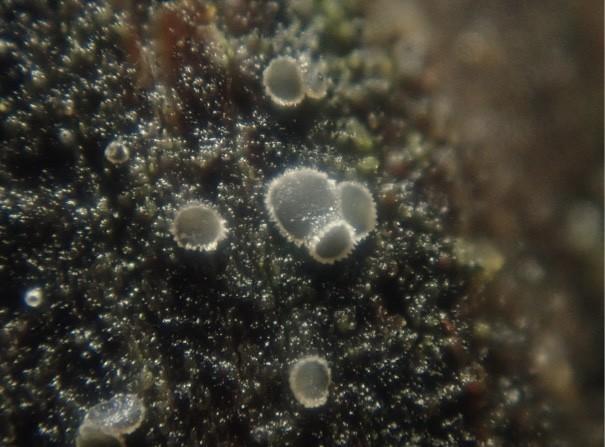
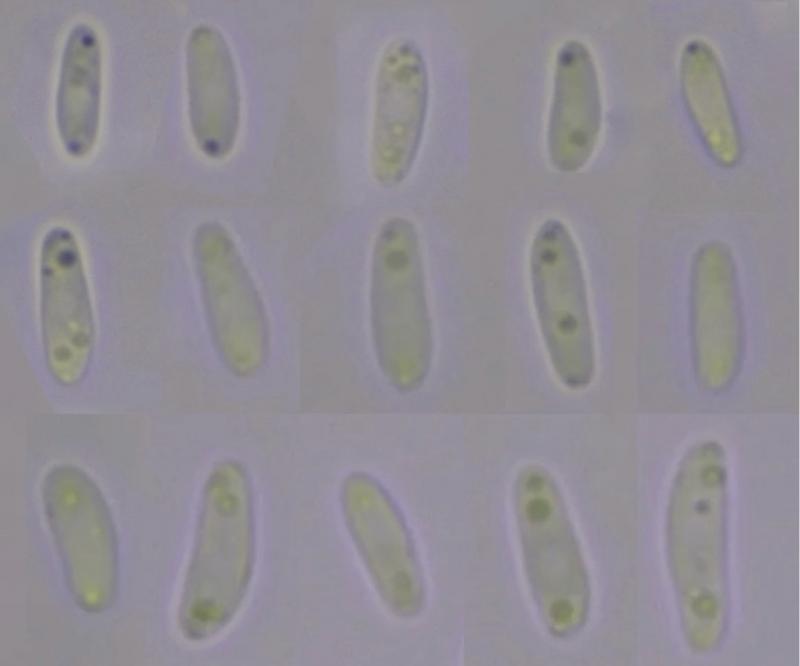
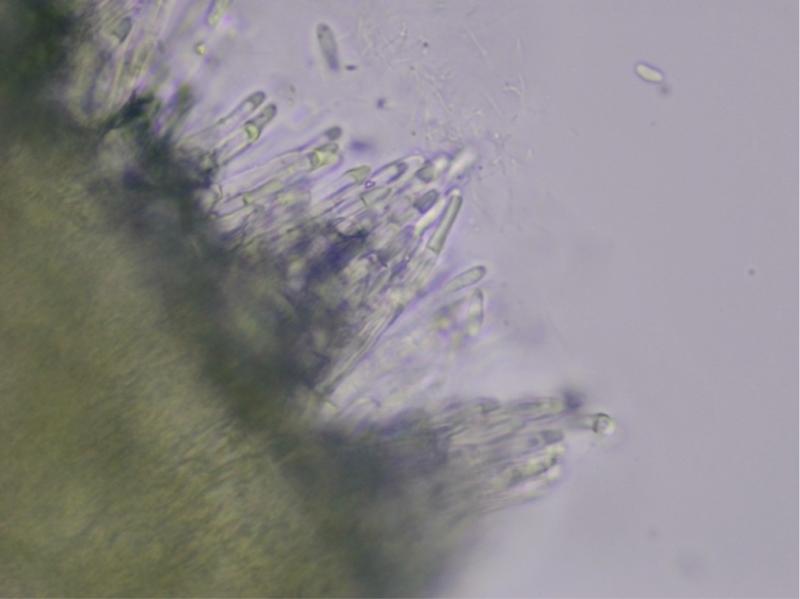
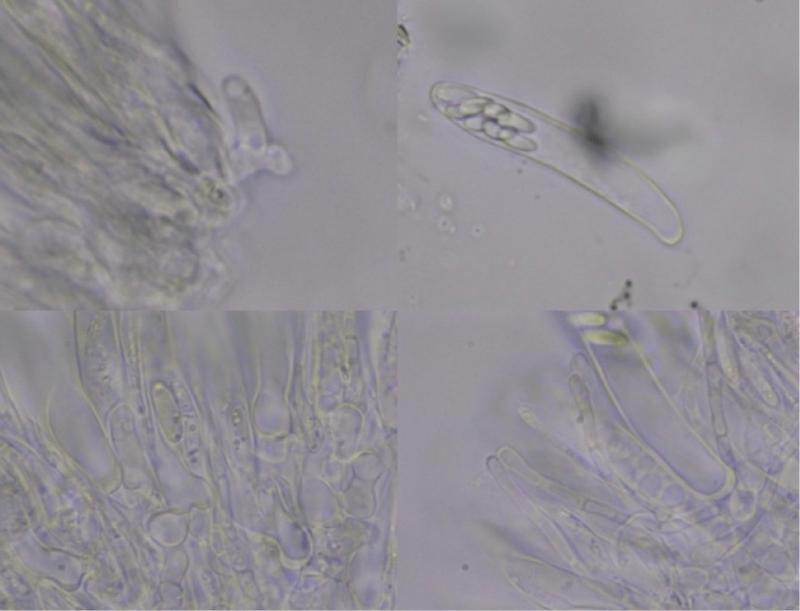
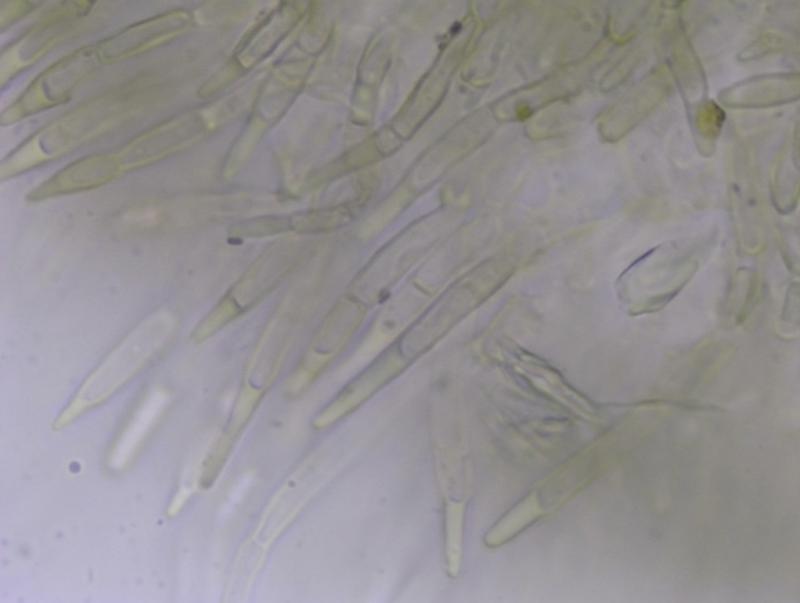
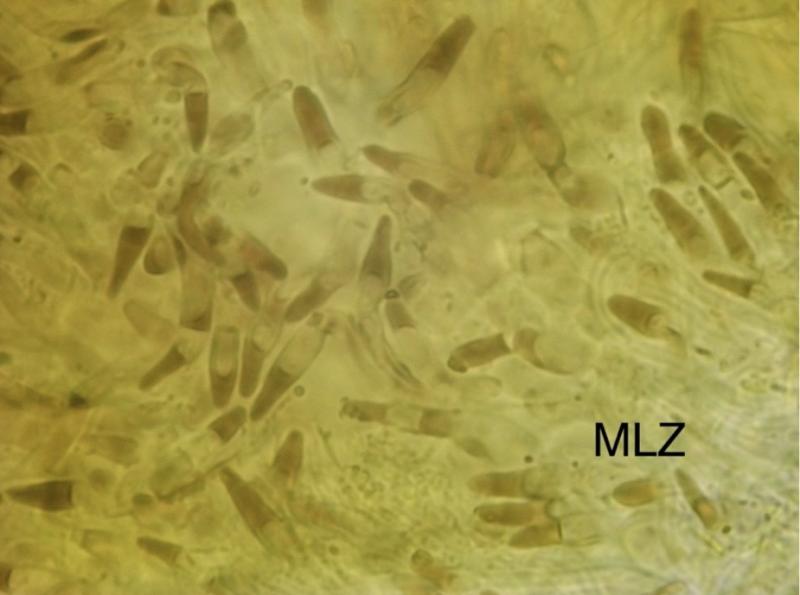
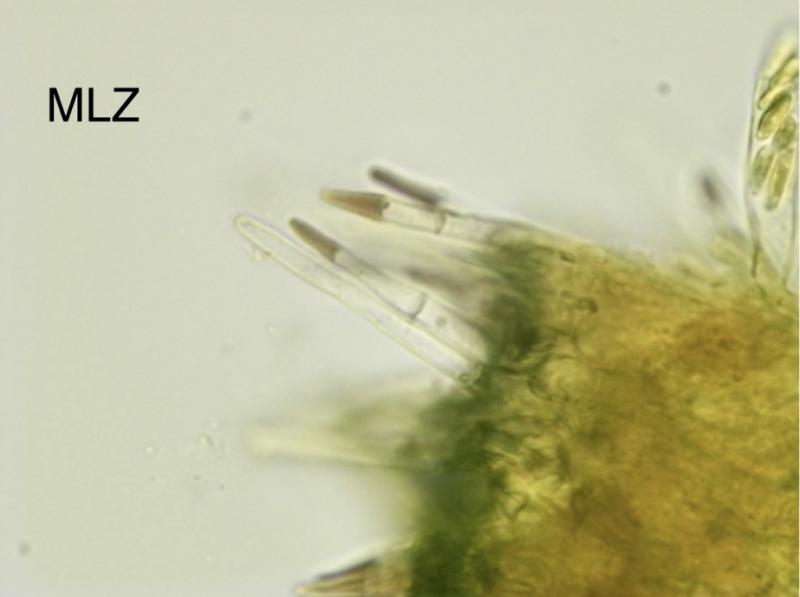
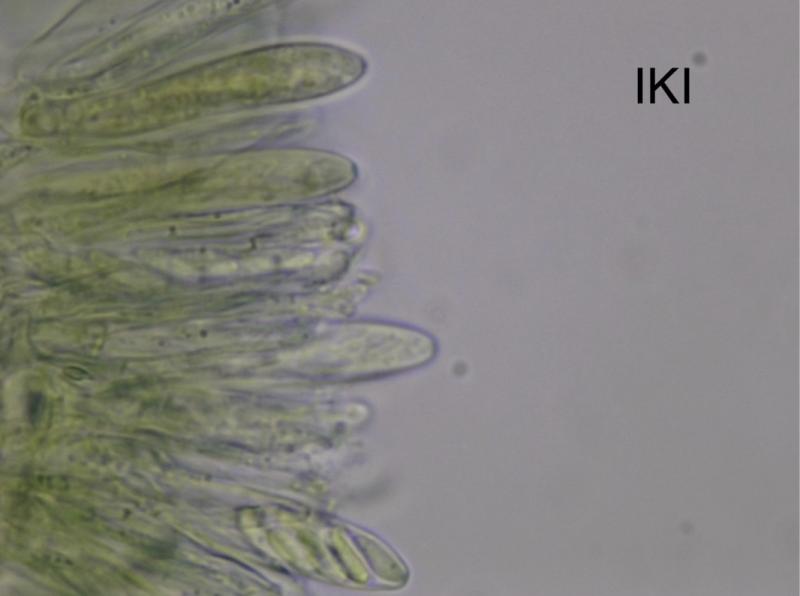

1. O. transiens sure!
2. Good question. Yes and no. O. transiens is somewhat variable (ascus base, the size of the glassy apex) and no thorough study exists including ecology, genetics etc. There's Olla verna, but not sure what that is and how it is distinguished from transiens in the end. Then there is material that has the general appearance of Hyaloscypha/Olla/etc. These have usually multiseptate hairs and sometimes also dextrinoid hairs - but no glassiness. That's usually also material without a (good) species hypothesis. Some Hyalopeziza species have dextrinoid glassiness ( and are most likely +- related to Olla and the genera around), but they are not usually "glossy" in the sense of Olla transiens the way I understood the question.
bw,
Timo
Kind regards,
Hulda