
10-06-2026 13:41
 François Freléchoux
Bonjour à nouveau, Voici une trouvaille d'hier.
10-06-2026 12:54
Steve ClementsBonjour encore, Pouvez-vous m'aider, s'il vous pl
10-06-2026 11:53
Steve ClementsBonjour, This disco is abundant on dead stems of
10-06-2026 10:45
François Freléchoux
Bonjour à nouveau, Encore une détermination qui
08-06-2026 10:16
 Spooren Marco
I don`t have a clou about this fungus,it is not in
10-06-2026 09:24
François Freléchoux
Bonjour, J'imagine que cette détermination ne do
09-06-2026 18:32
Camille MertensSur morceau de roseau immergé 0,5 - 0,7 mm de dia
08-06-2026 17:00
François BartholomeeusenGood day everyone, On June 5 2026, I collected de
07-06-2026 15:10
 William Slosse
Hello everyone,On 05-06-26, I found following asco
Lachnum fasciculare?
Filip Fuljer,
30-05-2023 11:00
 Hello everyone,
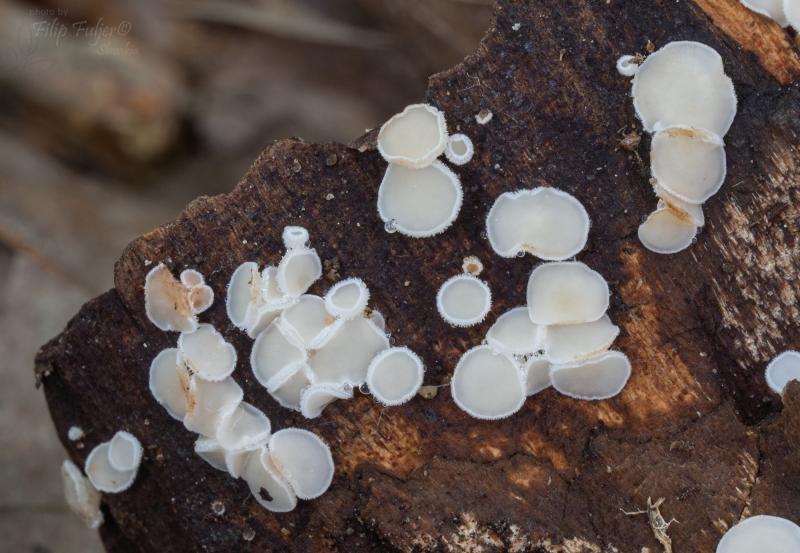
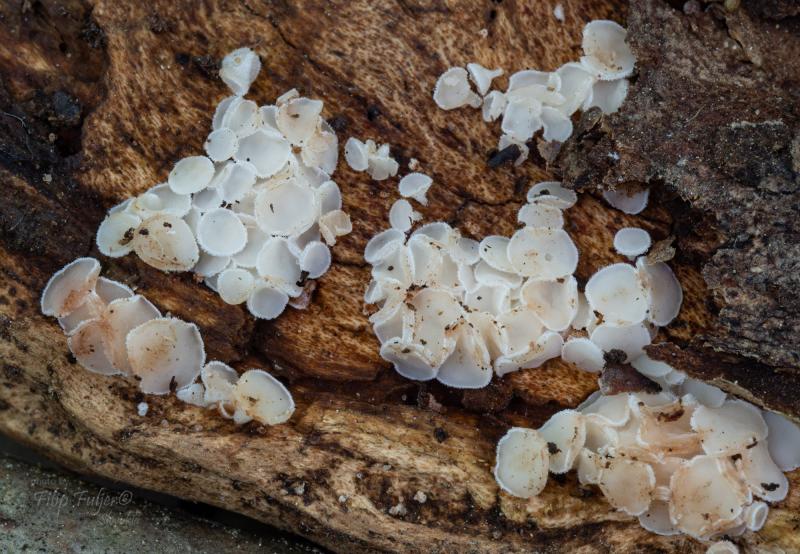
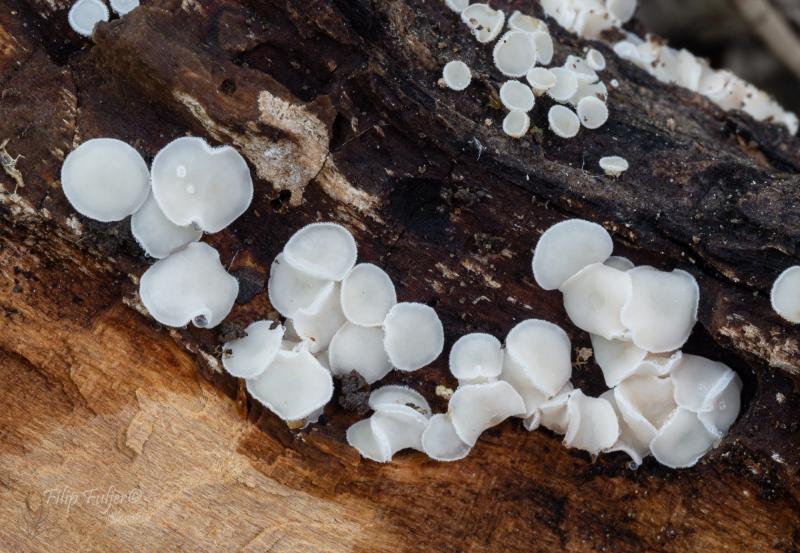
I need your help once again, I found some Lachnum species on decaying wood of deciduous tree, which I cannot properly identify.
Locality: Slovakia, Central Europe, Petrovice village, abbrev. +- 370 m, south facing slope, deciduous forest (Quercus sp., Crataegus monogyna, Acer campestre, Populus tremula, Prunus spinosa, Cerasus avium), under robust Quercus sp. and Crataegus monogyna, well hidden in litter (leaves, small twigs, acorns...), on decaying wood of deciduous tree (probably oak)
_______
Apos - white or faintly creamish colored, after touch turning color to lightly brownish red, 1-3,5 mm broad, with stipe (not sessile).
Spores - fusiform, OCI 0-1, 7-10,1 x 1,8-2,2 µm
Asci - 8 spored, with croziers, 53,2-65,5 x 4,3-5,4 µm
Paraphyses - lanceolate, with strongly refractive VBs, protrunding asci 25-36 µm, thickness of p. - 4-5,2 µm
Hairs - endings slightly capitate or distrinctly clavate, septated, covered by warts, with VBs, 67-77 x 5,1-5,4 µm, without oxalate crystals
Photos of microscopic characters: https://drive.google.com/drive/folders/1tGSN0yMiC7OkJJJ9TNX_aiv9b31HKZuS?usp=sharing
Thanks a lot,
Filip
Hans-Otto Baral,
30-05-2023 11:25

Re : Lachnum fasciculare?
Yes, this all sounds like L. fasciculare. Quercus you can easily distinguish by its large pores arranged in rings.
To my knowledge there is no sequence in GenBank under that name.