
09-06-2026 18:32
Camille MertensSur morceau de roseau immergé 0,5 - 0,7 mm de dia
08-06-2026 10:16
 Spooren Marco
I don`t have a clou about this fungus,it is not in
08-06-2026 17:00
François BartholomeeusenGood day everyone, On June 5 2026, I collected de
07-06-2026 15:10
 William Slosse
Hello everyone,On 05-06-26, I found following asco
05-06-2026 11:02
Thomas Læssøehttps://svampe.databasen.org/observations/10596691
07-06-2026 12:09
 François Freléchoux
Bonjour, Voici une brève description de ce qui m
07-06-2026 12:43
Steve ClementsBojour. This was a strange find on a stick on my
12-07-2015 00:05
 Nedim Jukic
This one from the same locality as the previous on
06-06-2026 17:44
Steve ClementsBonjour, This disco was on planed wood 3 x 1.5 cm
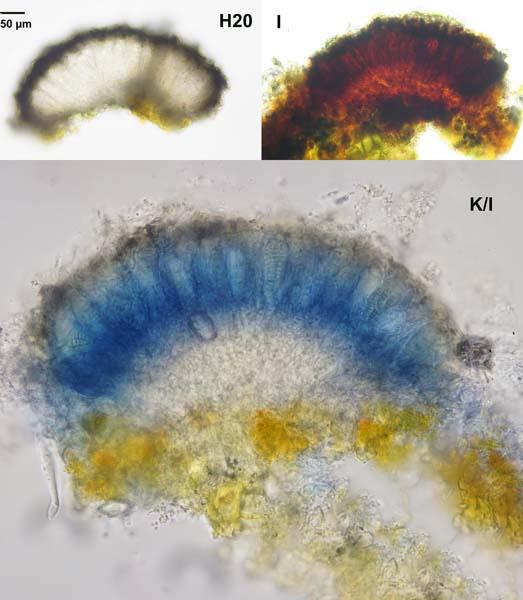
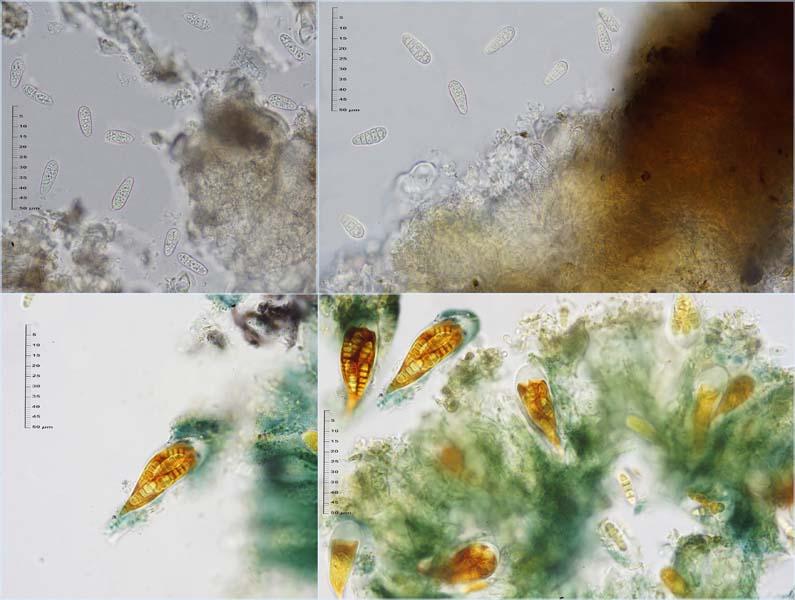
Talo blanco de 15 x 5 cm de longitud con apotecios redondeados o alargados, de color crema, pruinosos, inmersos en el talo, de 0,2 x 1 mm de longitud. Apotecio I+rojo. K/I+ azul. Esporas hialinas, elípticas, con los polos redondeados y uno de los extremos mas estrecho que el otro. Esporas con 4 septos de 16-20x 7 µm. Excípulo poco desarrollado, hipotecio de color claro de hasta 100 micras de altura. Epitelio marrón grisaceo que se vuelve verde oliva al tratamiento con KOH. Talo C-, P-, K-. Fotobionte trentepholia. Conidios no observados.
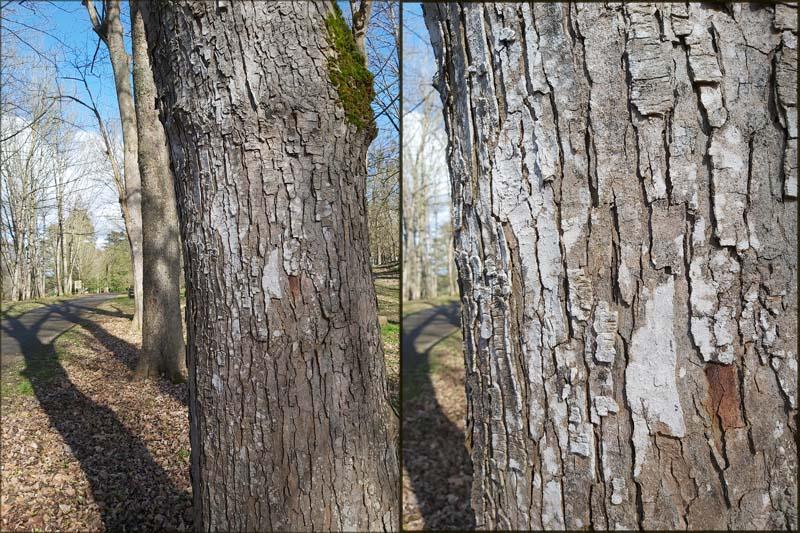
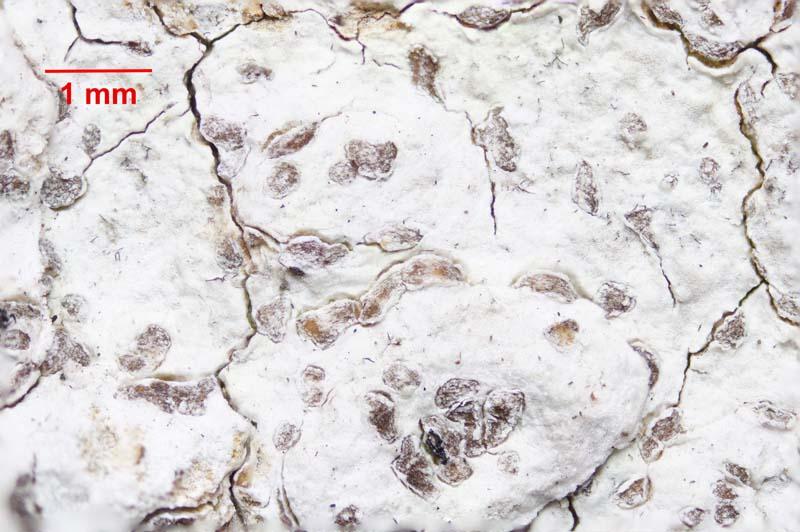
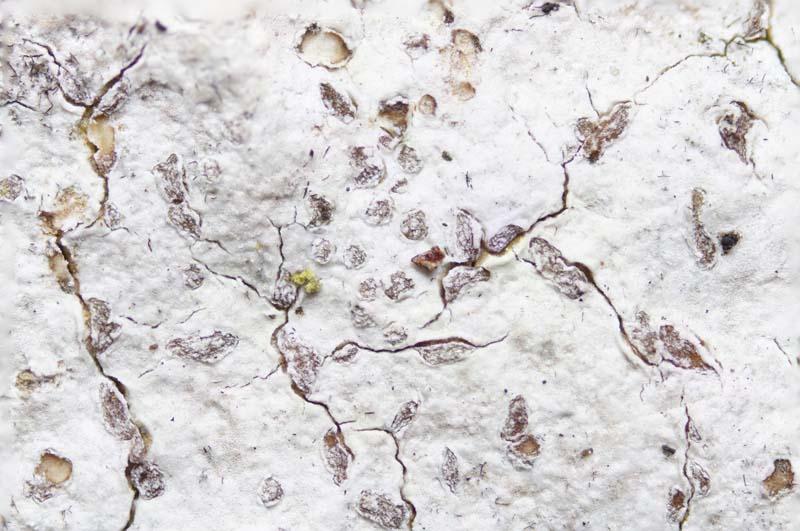
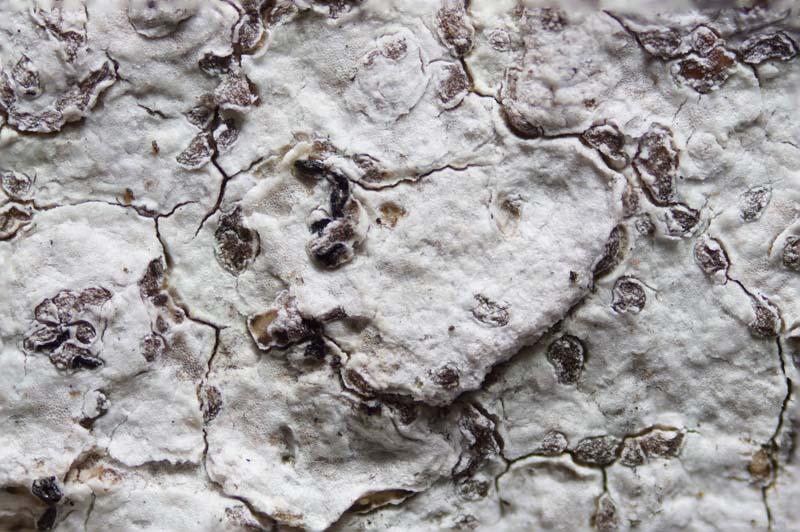
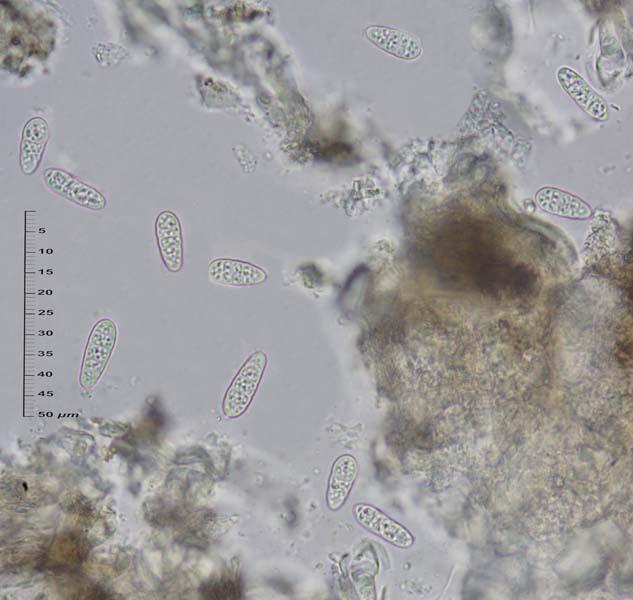

it could be Reichlingia zwackhii, theoretically the thallus should contain 2'-O-methylperlatolic acid
best
Zdenek
Había pensado en R.zwackhii, pero la había desechado por que la descripción dice que la celula apical es mas engrosada (the apical cell enlarged) y en la mayoría de mis observaciones no es así... La descripción de Pachnolepia pruinata tambien me gusta, pero el talo no es C+.
Agradezco tus opiniones.
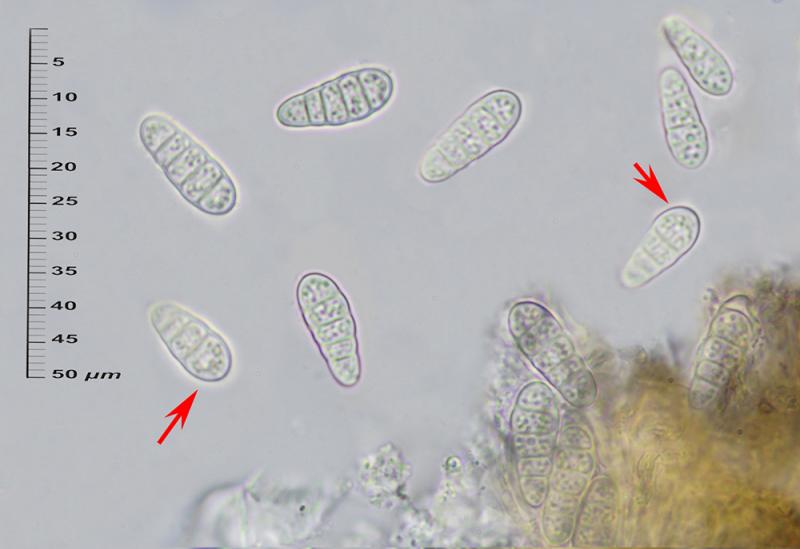
There were some misunderstandings as for using the name Arthonia/Reichlingia zwackhii in literature in the past, and was it sometimes referred as an initial parasite on Phlyctis argena. Possibly because of the existance of a lichenicole with the same species epithet - Leciographa (Phacographa) zwackhii. This seems to be an obligate parasite on Phlyctis argena. But possibly also Reichlingia and Phlyctis may sometimes grow together, and then results of chemical analyses might be biased.
But the chemistry should be reliable (if you have a possibility to do TLC) as for this species placing in Reichlingia. Recommend to consult your specimen with Andreas Frisch (andreas.frisch@ntnu.no), who is the expert on these things and a willing person.
Zdenek
Hemos escrito a Andreas Frisch y nos ha sugerido lo siguiente, (corto y pego):
I'm inclined to call this Arthonia (Pachnolepia) pruinata because of the spores lacking a clearly enlarged apical cell and spore shape as well. But from pictures alone it is difficult to be sure. I also have not seen this strong red coloration of the hymenial gels in iodine in Reichlingia so far (usually pale to deep blue, but this may depend on concentration). We have recently found a Pacholepia pruinata specimen in Norway lacking arthoniaic acid (Frisch et al. 2020) that was confirmed by B. Coppins.
As Zdenek mentioned, TLC might be helpful in confirming presence or absence of arthoniaic acid.
De momento no tengo acceso a TLC por lo que solo me queda seguir aprendiendo. Muchas gracias.
bueno, verdad. Andreas is the highest authority in Arthoniales so we should believe him.
Buenas noches. Zdenek