
10-06-2026 13:41
 François Freléchoux
Bonjour à nouveau, Voici une trouvaille d'hier.
10-06-2026 11:53
Steve ClementsBonjour, This disco is abundant on dead stems of
10-06-2026 12:54
Steve ClementsBonjour encore, Pouvez-vous m'aider, s'il vous pl
10-06-2026 10:45
François Freléchoux
Bonjour à nouveau, Encore une détermination qui
08-06-2026 10:16
 Spooren Marco
I don`t have a clou about this fungus,it is not in
10-06-2026 09:24
François Freléchoux
Bonjour, J'imagine que cette détermination ne do
09-06-2026 18:32
Camille MertensSur morceau de roseau immergé 0,5 - 0,7 mm de dia
08-06-2026 17:00
François BartholomeeusenGood day everyone, On June 5 2026, I collected de
07-06-2026 15:10
 William Slosse
Hello everyone,On 05-06-26, I found following asco
Schizothecium alloeochaeta?
Joop van der Lee,
26-01-2022 08:56

Found on donkey dung.
Normally these animals cannot be found in the wild in Holland but in this case they were protecting sheep against wolve attacks.
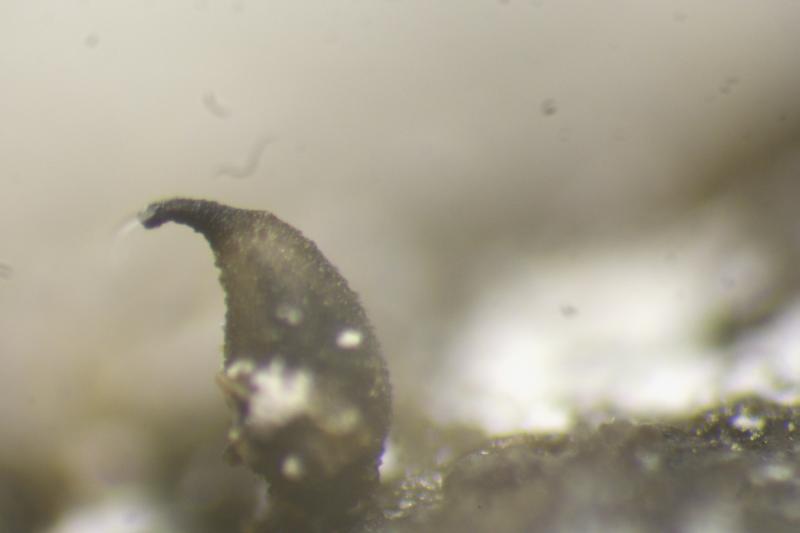
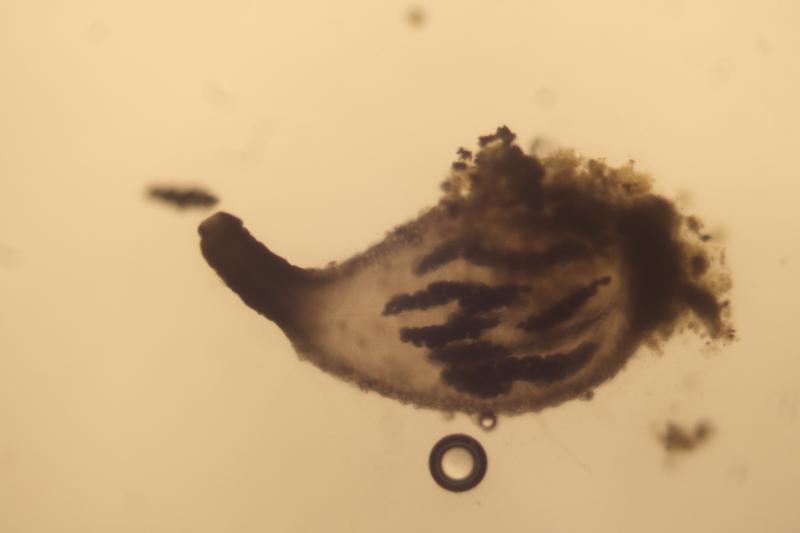
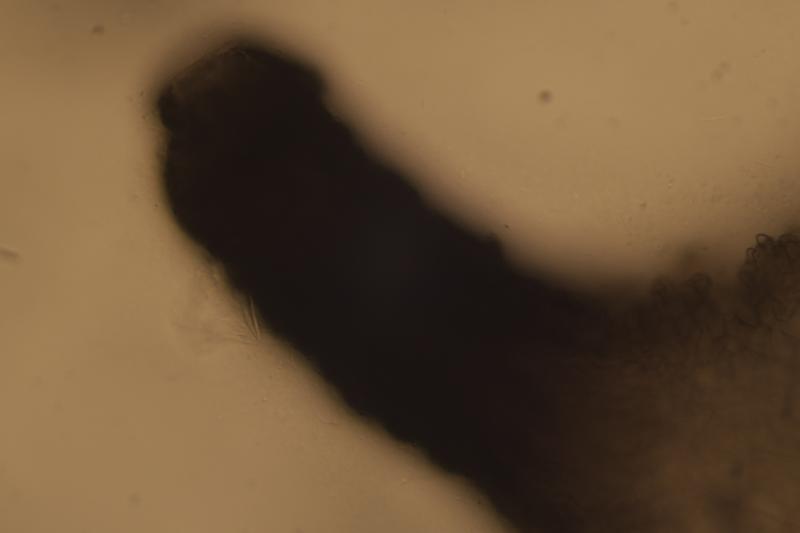
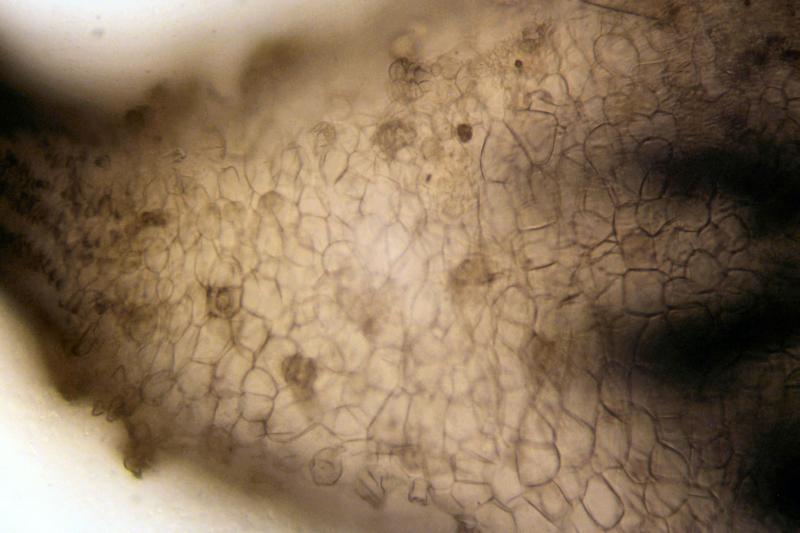
Perithecia: 580x362 um; neck cylindrical 182x102 um covered with black papillae; body covered with small agglutinated hairs.
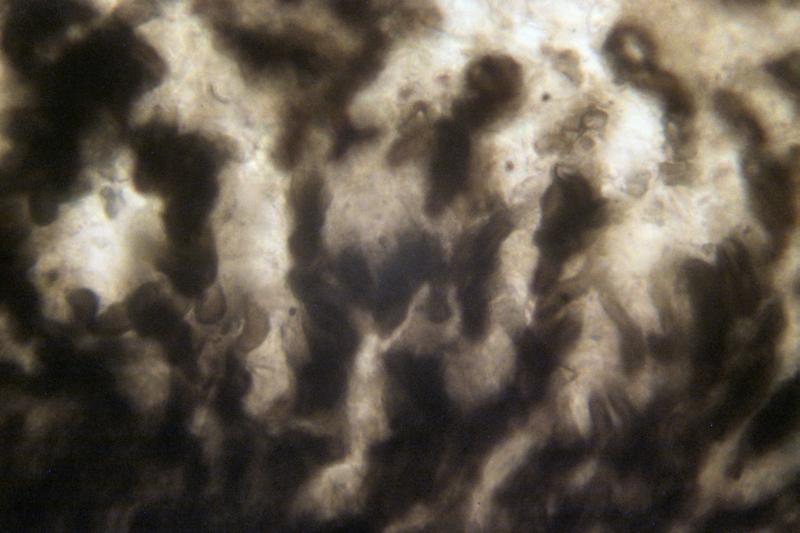
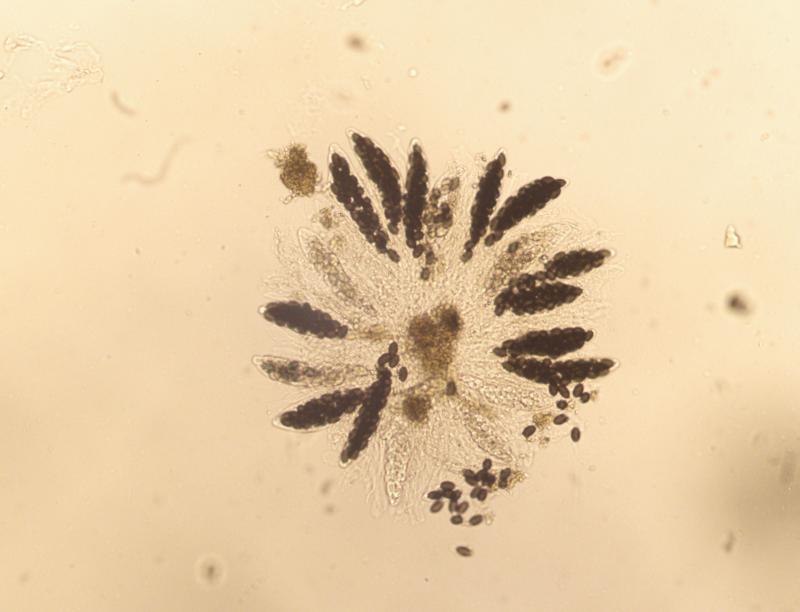
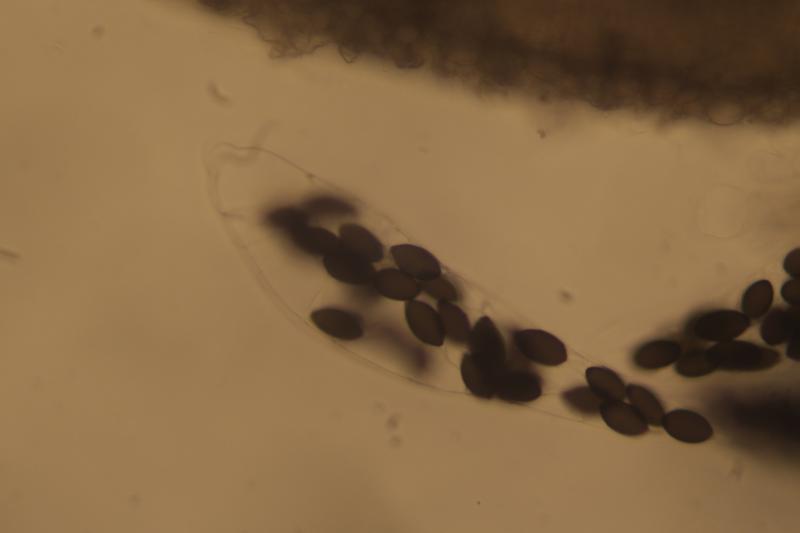
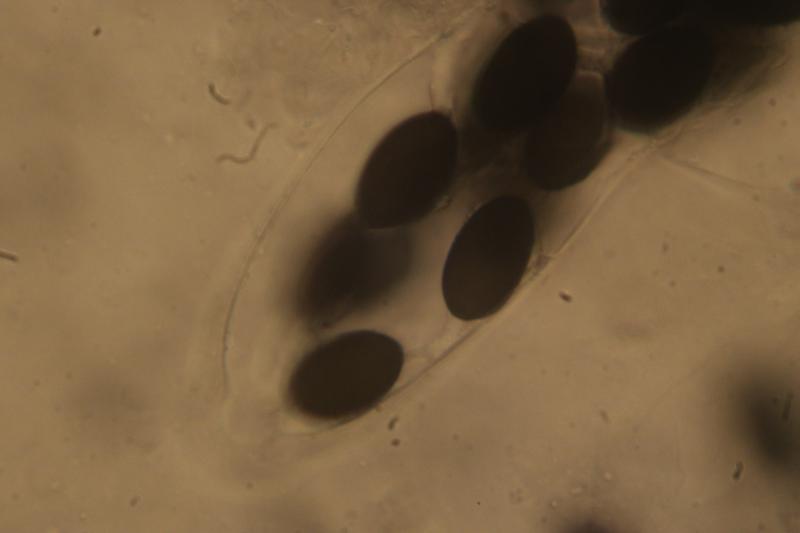
Asci: 32-spored with a spore bearing part of 153-215x4r1-47 um and a long stalk
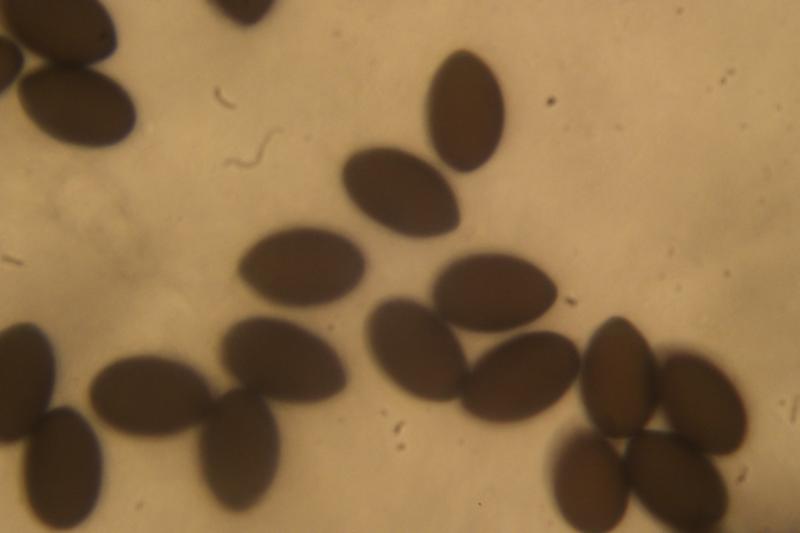
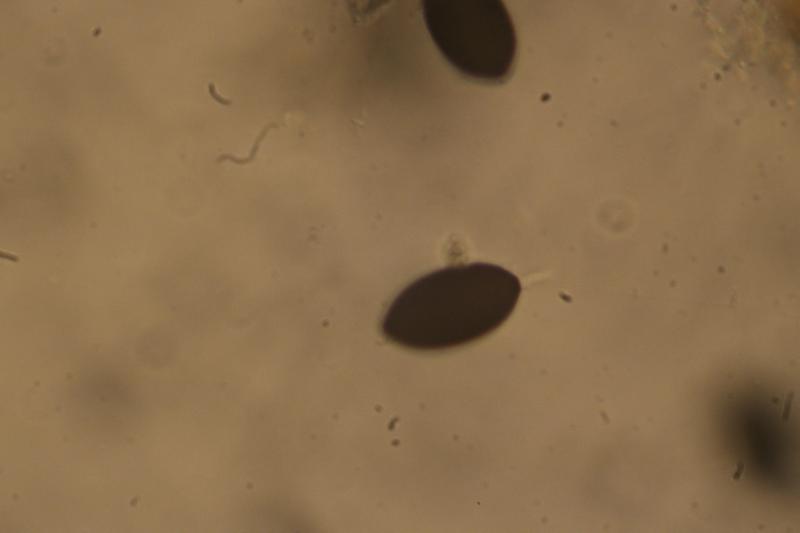
Sp;ores: ellipsoide; 19.6-21.4x11.6-12.6 um; pedicel 4.8x1.5 um; upper cauda 2.6x10.5 um; lower cauda not observed.
Joop
Björn Sothmann,
26-01-2022 09:21

Re : Schizothecium alloeochaeta?
Hi Joop,
why not simply Schizothecium dakotense? All the features that you describe seem to fit rather well for this species. According to Doveri 2004, S. alloeochaeta is only known from the type, has slightly smaller spores and should be covered in hyphoid hair.
Björn
Michel Delpont,
26-01-2022 09:54

Re : Schizothecium alloeochaeta?
Absolutely; that's pretty much what I answered yesterday to Joop!
Michel.
Joop van der Lee,
26-01-2022 10:36
Re : Schizothecium alloeochaeta?
Hello Björn and Michel,
Thanks for your response, I do agree that measurements of perithecia, asci and spores do fit the description but I do have some problems with the long neck.
In Doveri 2004 the photo of the perithecium (photo 20) for S. dakotense does not show a long neck because that one is still immature.
In Bell and Mahony 1995 the drawing of P. dakotensis does not show a long neck either.
The only documentation that show a longer neck is Mirza & Cain 1969 for P. dakotensis
I replaced photo-5 with a new one providing improved presentation for the base of the neck.
A few minutes ago I zoomed in on photo-1 & photo-2 and it revealed that the top of the neck was covered with spores as is seen many times with Schizothecium species.
I measured the neck by means of the narrow ostiole channel which is 148x88 um, so that solves my problem with the neck.
Joop
Thanks for your response, I do agree that measurements of perithecia, asci and spores do fit the description but I do have some problems with the long neck.
In Doveri 2004 the photo of the perithecium (photo 20) for S. dakotense does not show a long neck because that one is still immature.
In Bell and Mahony 1995 the drawing of P. dakotensis does not show a long neck either.
The only documentation that show a longer neck is Mirza & Cain 1969 for P. dakotensis
I replaced photo-5 with a new one providing improved presentation for the base of the neck.
A few minutes ago I zoomed in on photo-1 & photo-2 and it revealed that the top of the neck was covered with spores as is seen many times with Schizothecium species.
I measured the neck by means of the narrow ostiole channel which is 148x88 um, so that solves my problem with the neck.
Joop