
02-05-2026 13:06
Pauline. PennaBonjour Please can someone help me with this id
02-05-2026 12:42
Alain BRISSARDBonjour à tousJeuidi 30 avril dernier on m'a remi
01-05-2026 22:45
 Thierry Blondelle
Bonjour à tous, Une récolte sur bouse séchée d
28-04-2026 20:07
 Lothar Krieglsteiner
... on twig in the air at standing Ceratonia siliq
14-04-2026 05:32
Ethan CrensonHi all, A few weeks back a friend pointed out som
28-04-2026 20:33
Vitus SchäfftleinHello, I found Trochila ilicina on Ilex aquifoliu

30-04-2026 10:28
Rot BojanHello, by appearance I would say that I am dealing
27-04-2026 18:48
Tony MoverleyCollected 23rd April 2026, Norfolk, EnglandSwarms
27-04-2026 20:52
Lothar Krieglsteiner
Found on hanging tiwg of Olea europaea in dried-ou
Capronia porothelia?
Bernard Declercq,
09-01-2020 16:04
 Hi,
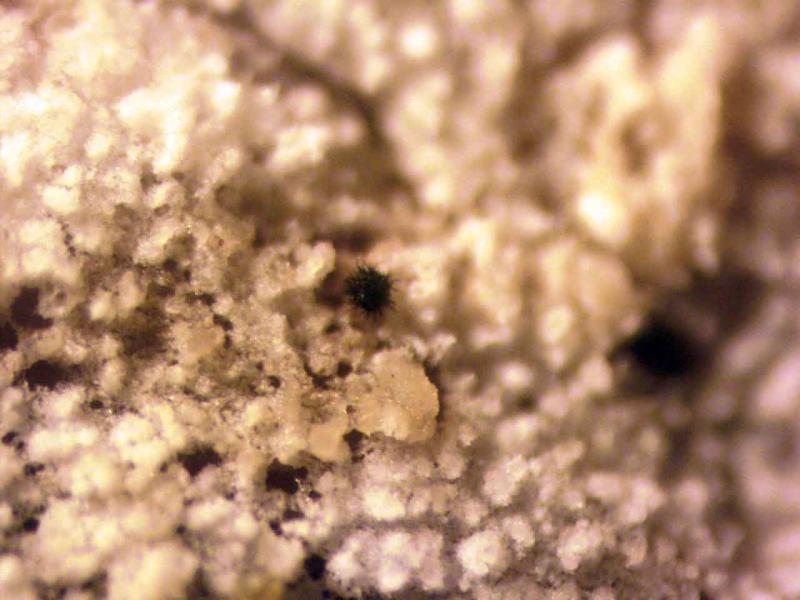
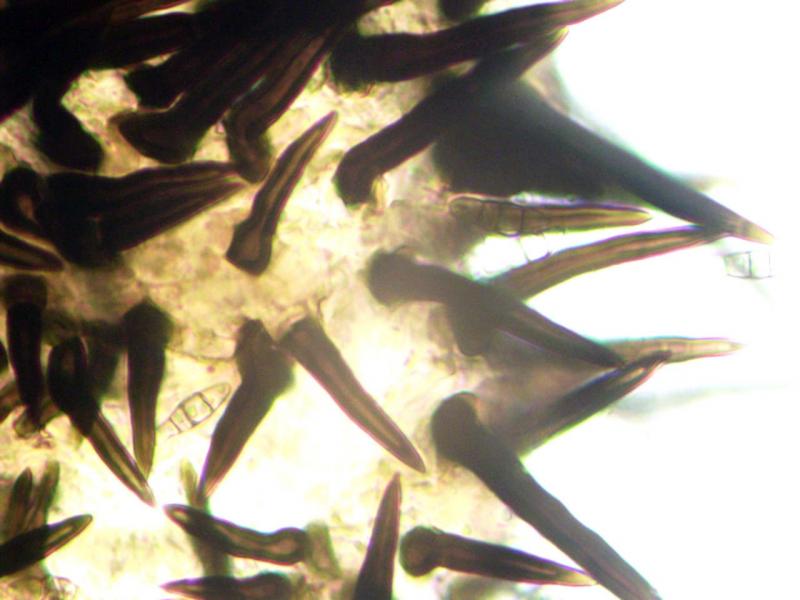
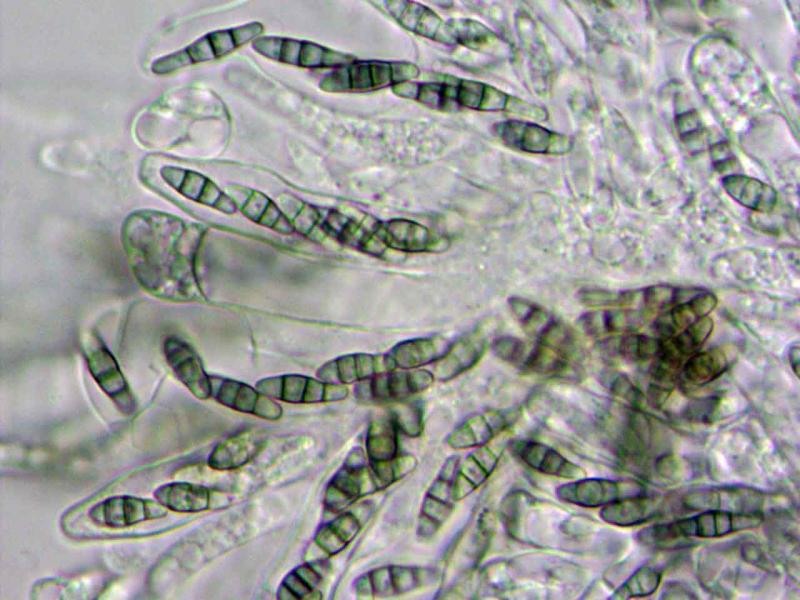
Hi,Collected on Xylodon nespori on decaying wood of Pinus: Ascomata semi-immersed in the fungus, globose, 100-120 µm diam., black, setose. Asci 8-spored, e.g. 52x8 µm. Ascospores fusiform, (9)10-13(14)x3-4 µm, 3-septate, smooth, pale greyish brown. Hairs acute, 15-65x4.5-5 µm, with swollen base, thick-walled with narrow lumen, aseptate, dark brown. Peridium surface with pale brown textura angularis.
Your help is welcome.
Best regards,
Bernard
Hans-Otto Baral,
09-01-2020 21:15

Re : Capronia porothelia?
Hi Bernard
you know that some Capronia species react hemiamyloid (Lugol) with their interascal gel? This might be useful for identification.
Zotto
Bernard Declercq,
10-01-2020 10:18
Re : Capronia porothelia?
Hi Zotto,
Yes, you mentioned this before on this forum. Where can I find any specific literature about this reaction within Capronia?
Bernard
Yes, you mentioned this before on this forum. Where can I find any specific literature about this reaction within Capronia?
Bernard
Hans-Otto Baral,
10-01-2020 10:28
Re : Capronia porothelia?
I am not sure if it is published...
Gernot Friebes,
10-01-2020 12:10
Re : Capronia porothelia?
Hi, Bernard,
to me, Capronia porothelia is a common species on the hymenophor of old basidiomata of Laxitextum bicolor, where it usually grows mostly immersed and does not produce well-developed setae. I do not recognize this species here. A similar species, also growing on basidiomycetes, is C. spinifera, which could be a consideration. Another option would be that this is something around the very common C. pilosella and that the connection to the basidiomycete is just by chance. A tricky one, as is often the case with this genus...
Best wishes,
Gernot
to me, Capronia porothelia is a common species on the hymenophor of old basidiomata of Laxitextum bicolor, where it usually grows mostly immersed and does not produce well-developed setae. I do not recognize this species here. A similar species, also growing on basidiomycetes, is C. spinifera, which could be a consideration. Another option would be that this is something around the very common C. pilosella and that the connection to the basidiomycete is just by chance. A tricky one, as is often the case with this genus...
Best wishes,
Gernot
Hans-Otto Baral,
10-01-2020 12:30
Re : Capronia porothelia?
If anyone wants to look in my old and bad key, here it is. It shows where we observed amyloid hymenial gel and where inamyloid. It was either pure red (rr) or negative, never rb.
I also see that gernot made a key.
 Capronia-key-2006-0001.doc