
06-05-2026 11:25
 Castillo Joseba
Me mandan el material seco de Galicia (España) re
28-04-2026 20:07
 Lothar Krieglsteiner
... on twig in the air at standing Ceratonia siliq
05-05-2026 22:40
Gernot FriebesHi,I believe this is a Plagiostoma growing on a Sa
04-05-2026 18:13
 Stephen Martin Mifsud
ID request for what seems to be a true aquatic fun
04-05-2026 16:39
Stephen Martin Mifsud
ID request: This specimen was collected in Malta o
28-07-2011 18:31
 Alex Akulov
Dear FriendsToday I made the pdf file of Velenovsk
04-05-2026 09:50
Castillo Joseba
Me mandan el material seco de Galicia,(España) re
02-05-2026 12:42
Alain BRISSARDBonjour à tousJeuidi 30 avril dernier on m'a remi
02-05-2026 13:06
Pauline. PennaBonjour Please can someone help me with this id
mollisioid mystery
Chris Yeates,
18-09-2018 15:33

Bonjour tous
Normally I steer clear of this daunting group, but a recent collection with abundant apothecia was too tempting.
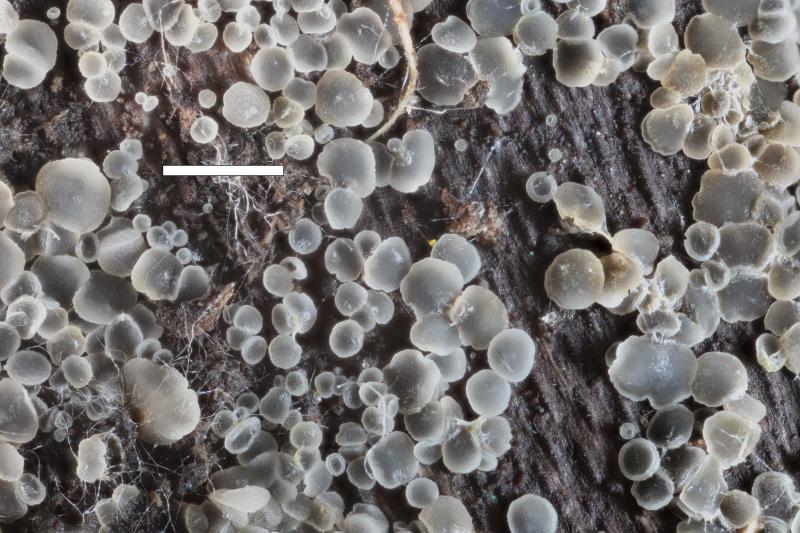
Apothecia densely gregarious; with a margin only when very young then plane; pale grey with some turning pale yellowish-brown. No reaction to KOH. Scale bar in photograph = 1mm.
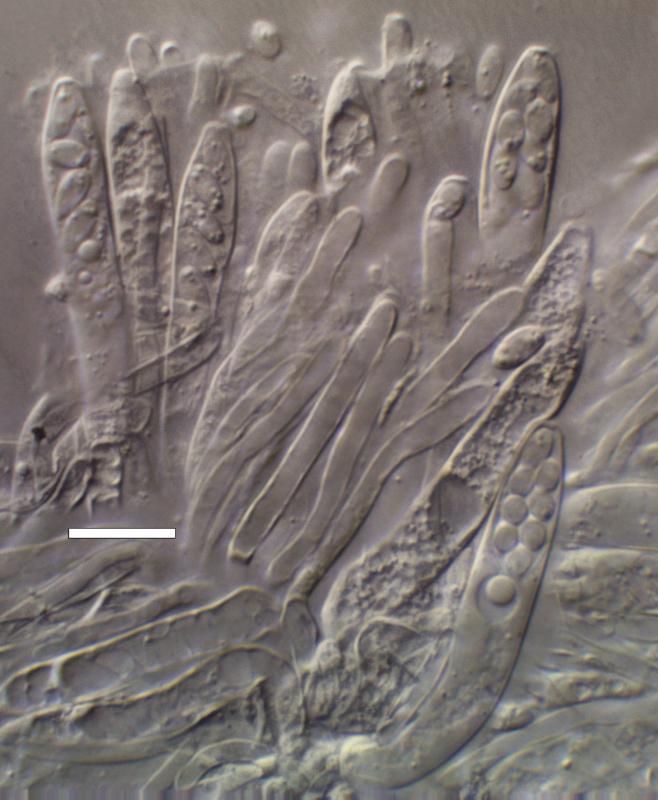
Paraphyses with no vacuolar contents - apparently completely "empty" (hence my confusion). Scale bar in photograph = 10µm.
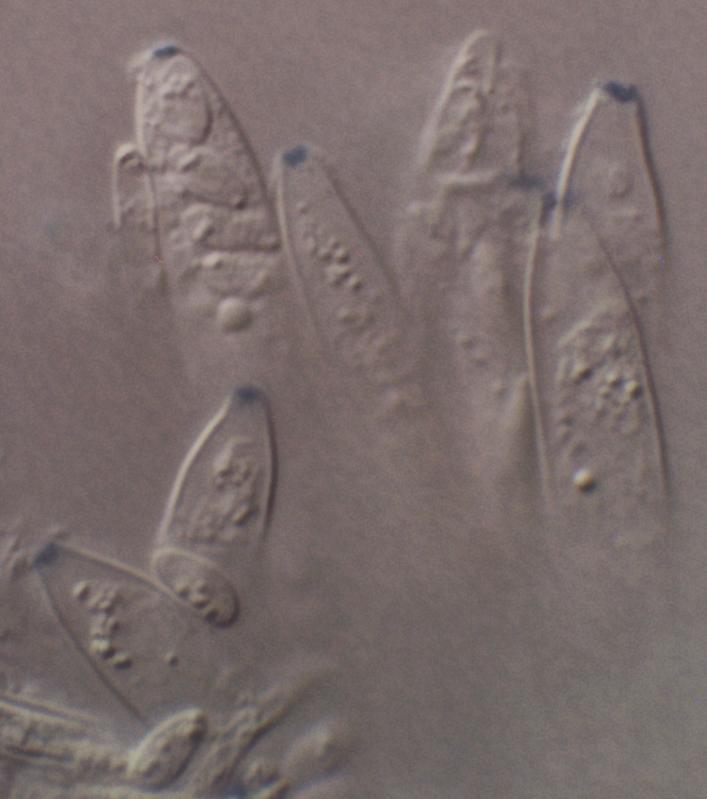
Asci 8-spored, IKI bb, apparently with croziers; occasionally a "Psilachnum body" was observed.
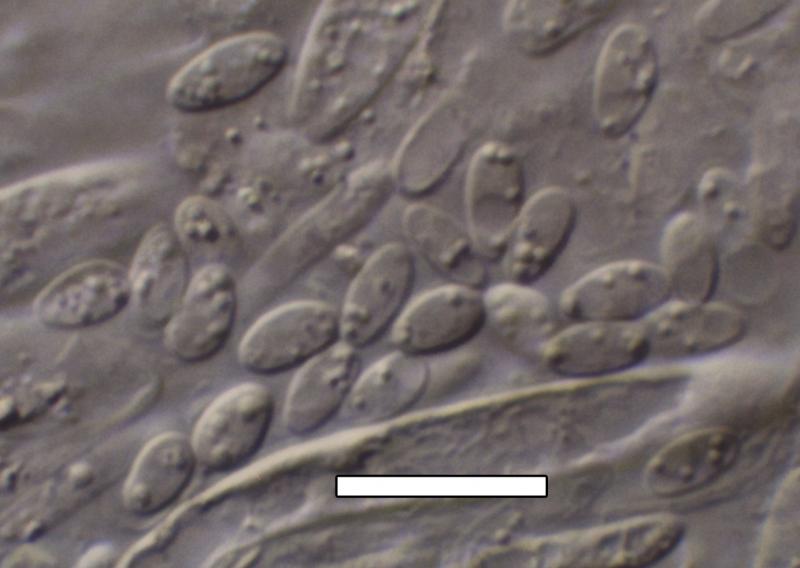
Ascospores ovoid-ellipsoid, occasionally slight fusoid, guttules as in photograph. Scale bar in photograph = 10µm.
Any suggestions very welcome.
Chris
Hans-Otto Baral,
18-09-2018 16:16

Re : mollisioid mystery
Hi Chris
does the fungus also have a substrate? :-)
The living paraphyses look "empty", so logically the KOH reaction is negative.
This should be a Pyrenopeziza. The small spores appears to point to P. aquosa. That species has typically the Psilachnum-drop.
Zotto
does the fungus also have a substrate? :-)
The living paraphyses look "empty", so logically the KOH reaction is negative.
This should be a Pyrenopeziza. The small spores appears to point to P. aquosa. That species has typically the Psilachnum-drop.
Zotto
Chris Yeates,
18-09-2018 17:44
Re : mollisioid mystery
Thanks for the quick response Zotto.
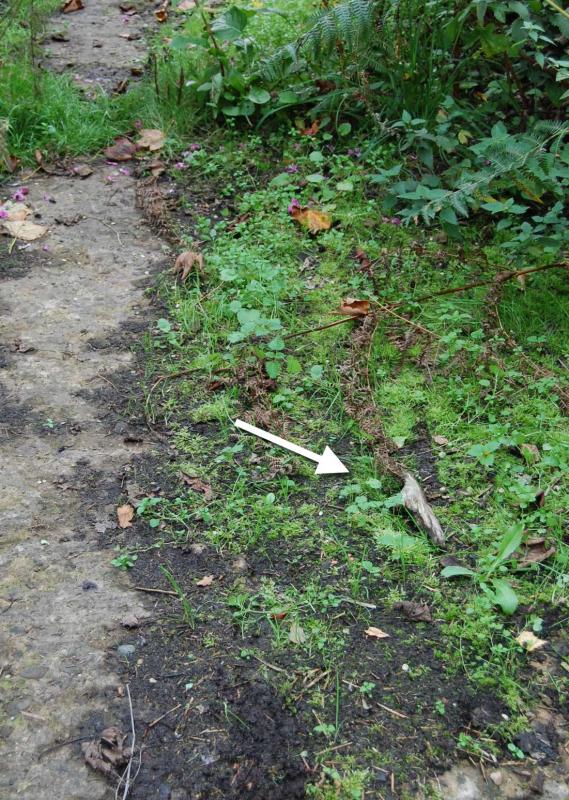
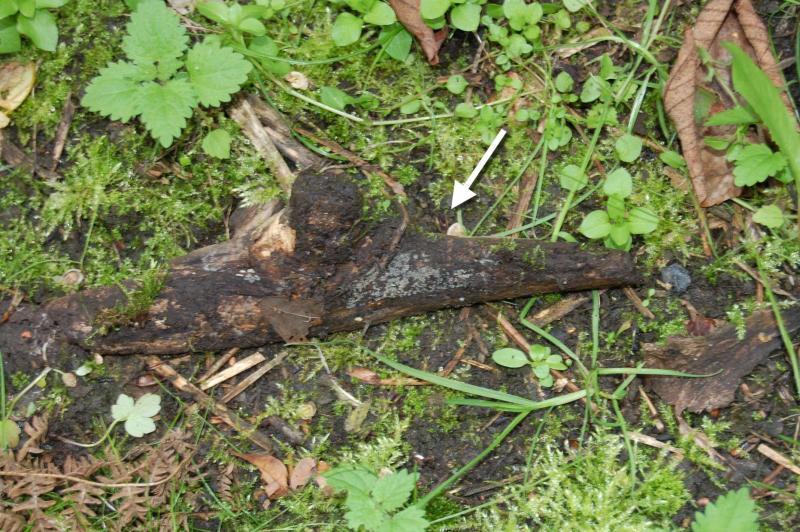
Here are photo's showing the collection site. The fungus was growing on the underside of a piece of decorticated wood - I assumed, from this area of Quercus - lying at the side of a long-disused concrete track at the edge of woodland.
I had assumed Pyrenopeziza but couldn't immediately think of lignicolous ones, and of course older works still put aquosa in Mollisia.
I think P. aquosa is definitely in the right area. I have quickly looked through the long and interesting http://www.ascofrance.com/search_forum/27917 thread, where the question of "Mollisia" dextrinospora is raised. I too think Ellis and Ellis's Mollisia aquosa is something different - the marginal cells on my fungus were only slightly larger and more enlarged than the rest of the excipulum, rather like your HB 7640. By contrast E & E's fungus has distinctly elongated marginal cells.
Best wishes
Chris
Hans-Otto Baral,
18-09-2018 17:55
Re : mollisioid mystery
Yes there were some questions.....