
21-04-2026 22:14
Margot en Geert VullingsThis cup fungus was found on April 10, 2026, on lo
21-04-2026 13:36
Gernot FriebesHi,I am out of ideas for this one. I collected Sal
21-04-2026 13:19
Gernot FriebesHi,this Lophodermium on Typha has ascospores measu
21-04-2026 13:05
Gernot FriebesHi,this hyphomycete feels familiar but I was not a
20-04-2026 22:00
 Malcolm Greaves
These pale yellow, hairy ascos were growing on cul
19-04-2026 21:23
Steve ClementsBonjour, I found this anamorphic fungus on old pl
19-04-2026 20:46
Steve Clements1 mm diameter approx spherical conidiophores on pl
12-04-2026 17:56
 Hardware Tony
Found on dead stems in February earlier this year
17-04-2026 19:16
 Enrique Rubio
Hi to everybodyI would appreciate any assistance r
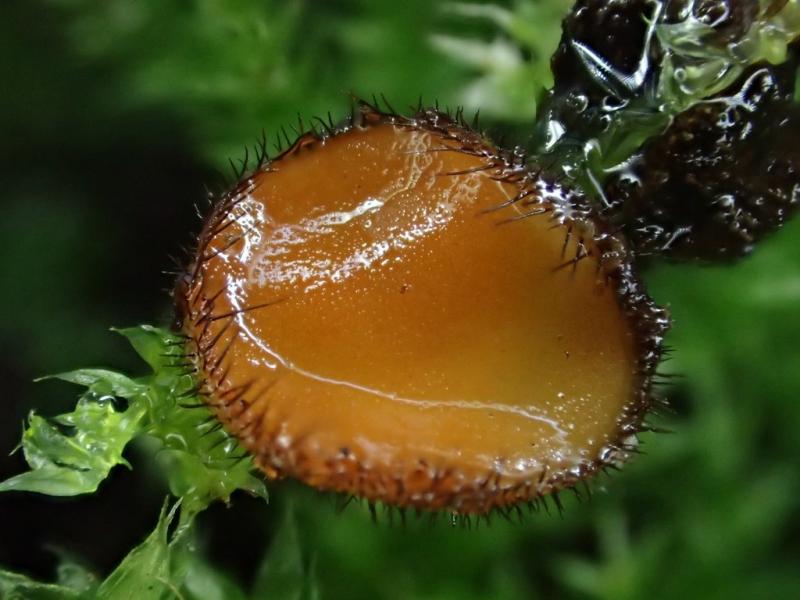
 Aware that Scutellinia scutellata is probably a whole species group, I wonder whether something more can be said about this Asco that I found today in N Germany on lying dead poplar wood, mostly on the cut edge between mosses.
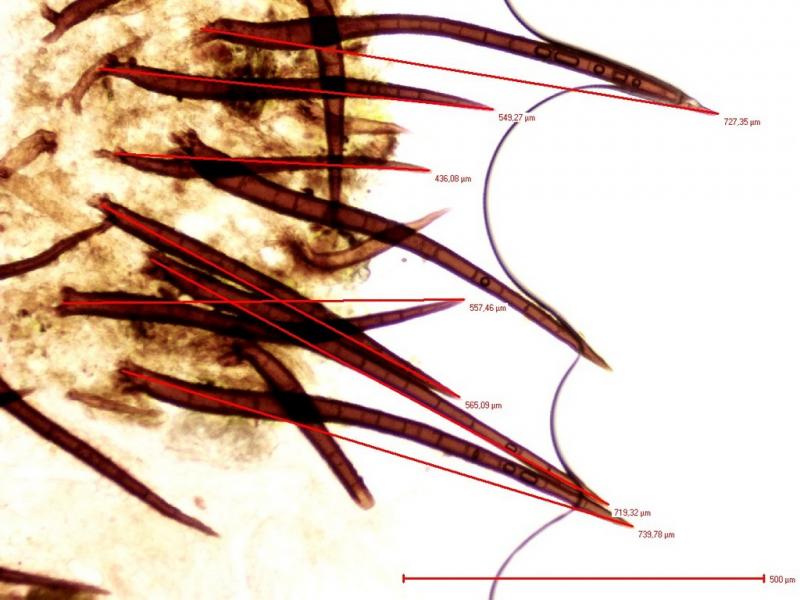
Fruitbody ~5 mm, hairs dark brownish, mostly 400-750 µm long, up to 16x septate, ending sharply pointed.
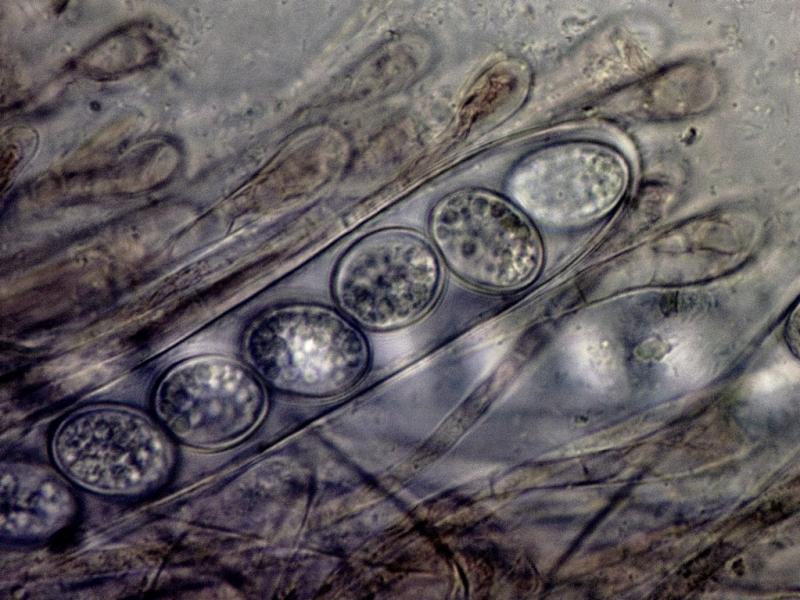
Asci mostly rounded at the end, 200-260 µm long, about 20 µm in diameter.
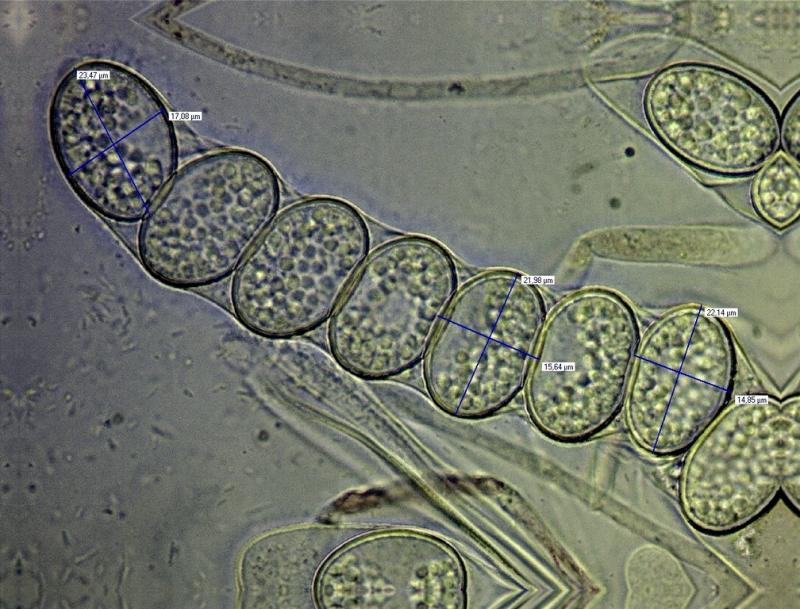
Spores with many small oil drops, smooth, seemingly double-walled, 15-17 x 22-23 µm.
Paraphyses 3-4 µm wide, at the end widening up to 9 µm.
Scutellinia scutellata?
Thanks & best wishes Chris

Could you make a preparation of spores in the blue cotton outside Asci ?
Michel.
Thanx
Chris
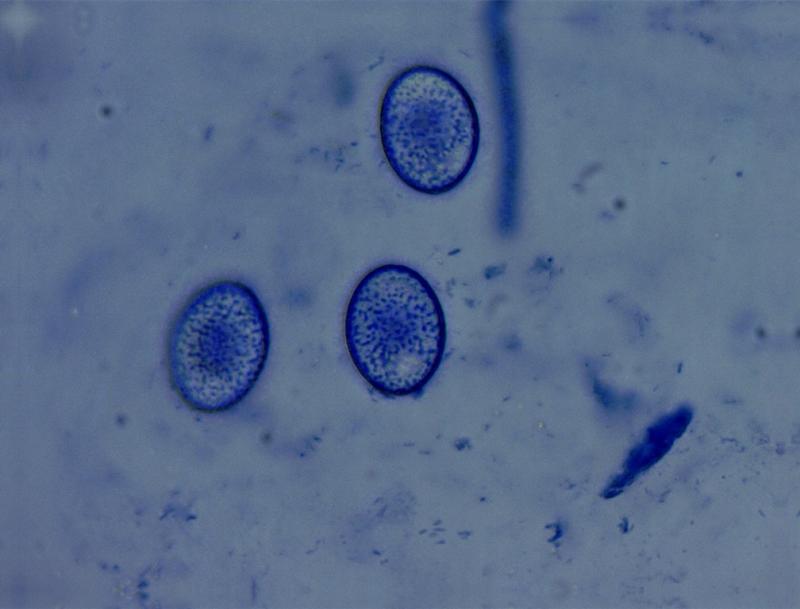
The spore shape/size and ornamentation and the hair length/septa/root and being flexous all fit very well with S olivascens for me.
Mal
Malcolm was faster than me to answer; I was in the moment to hesitate between S.olivascens and S.kerguelensis, but I'd rather S.kerguelensis over ornamentation and form spores that seems closer to me. But as often with this kind it is sometimes difficult to decide.
Michel.
I did look at S kerguelensis. The spore ornamantation looks small as you would expect for the species but I felt the hairs especially the roots looked a better fit for S olivascens. Beñat has S k as having hairs 130-480 but with so many similarities between the species so I couldn't argue strongly agains S kerguelensis.
Mal
Michel.
After this discussion and further research I'd go for olivascens, the main rerason being the hairs and their roots. In olivascens the hairs are longer than in kerguelensis, some of them s-shaped (not so in kerguelensis) and mostly bifurcate (in kerguelensis only one third so), multiple-septate (in kerguelensis only sparsely septate).
An interesting description of S. olivascens in German language I found in
http://www.pilzforum.eu/board/thema-scutellinia-olivascens--29656
which fits very well to my collection.
So thanks again and best wishes
Chris