
03-06-2026 14:39
Thomas FlammerApothecia yellow, glassy-transparent, 80 - 120 ymS
03-06-2026 19:45
 Miguel Ángel Ribes
Good afternoonI'm completely baffled by this suppo

16-03-2014 13:39
 Enrique Rubio
HI to all I'm looking for B. Hein's article on Wi
02-06-2026 14:33
 Nicolas VAN VOOREN
Hello.I'm searching for a PDF copy of the followin
18-10-2022 00:12
Valencia Lopez Francisco JavierHola amigos/asRecientemente encontré esta colecci
02-06-2026 17:58
Louis DENYBonjour forum, Sur feuille de Populus tremula, en


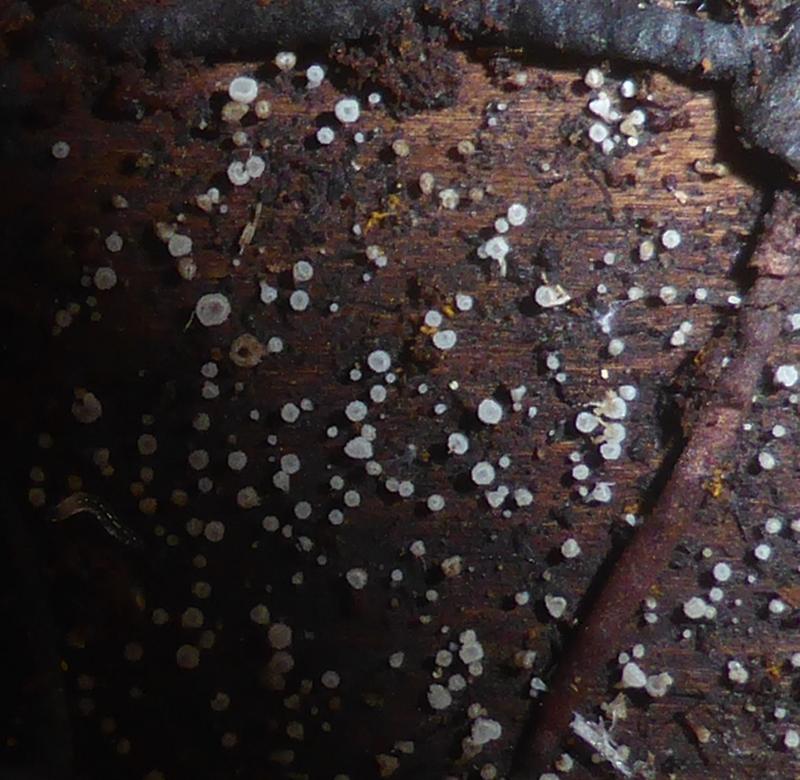
.. on a standing, dead log with thousands of fruitbodies, found 11.8. in the Bavarian Forest.
The white, stalked apothecia are downy.
Excipulum prismatica, with end-cells finely rough-warty, partly brown
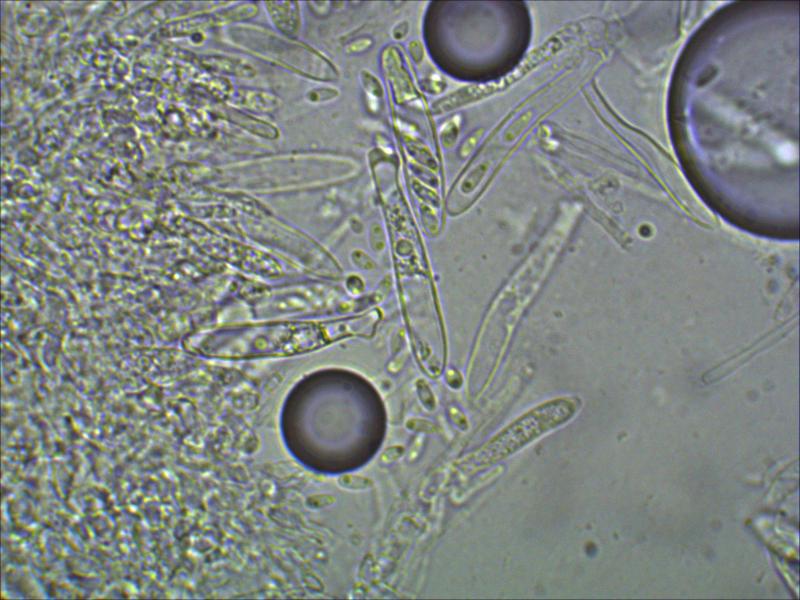
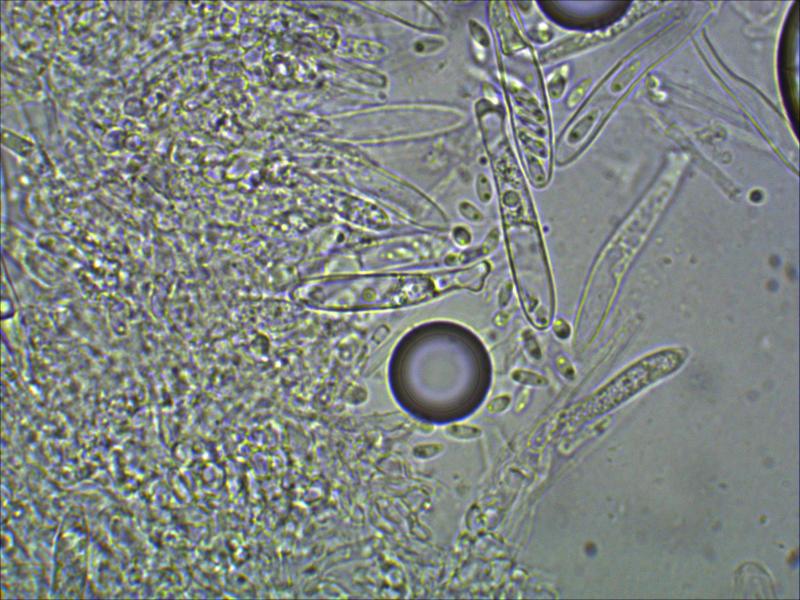
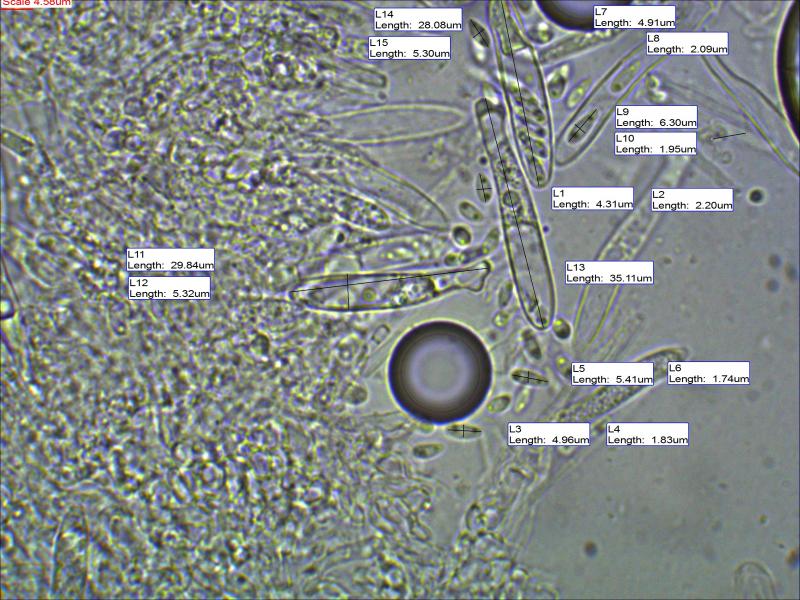
Asci about 30-35/5-6 µm, IKI+ euamyloid with Calycina-type, often at the base with long-cylindrical refracting content, with croziers
Spores about 4,5-7/1,7-2,5 µm, mostly with two guttules, somewhat fusoid
Paraphyses not very conspicuous - in IKI with brown guttules (also in excipulum cells)
Deep in my mind I had the name Calycina resinae-piceae (I think Zotto once determined a find of mine with this?) and in ascofrance I found this:
http://www.ascofrance.fr/forum/1229/small-asco-on-the-inner-surface-of-pinus-radiata-wood
The spores are almost the same appearance as mine - and I think I am not too far away ...
Can somebody help?
Best regards from Lothar (still working in the Bavarian forest)
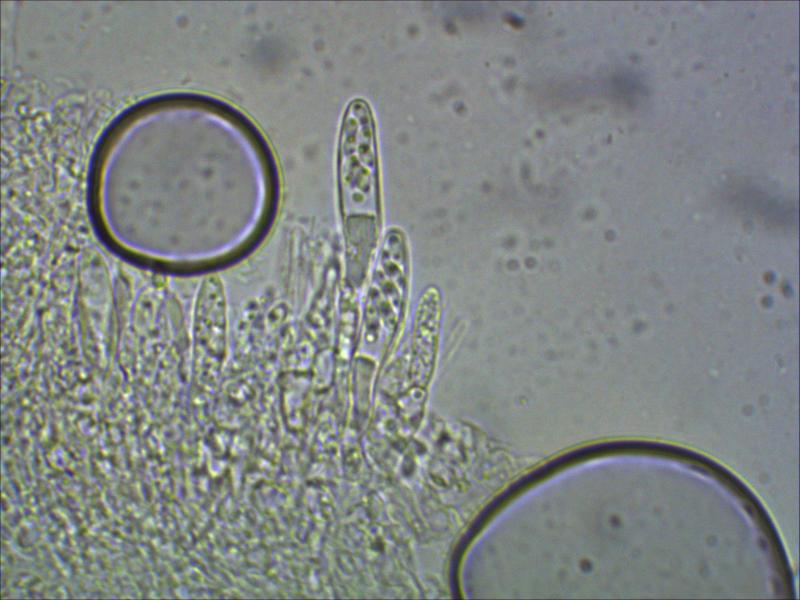
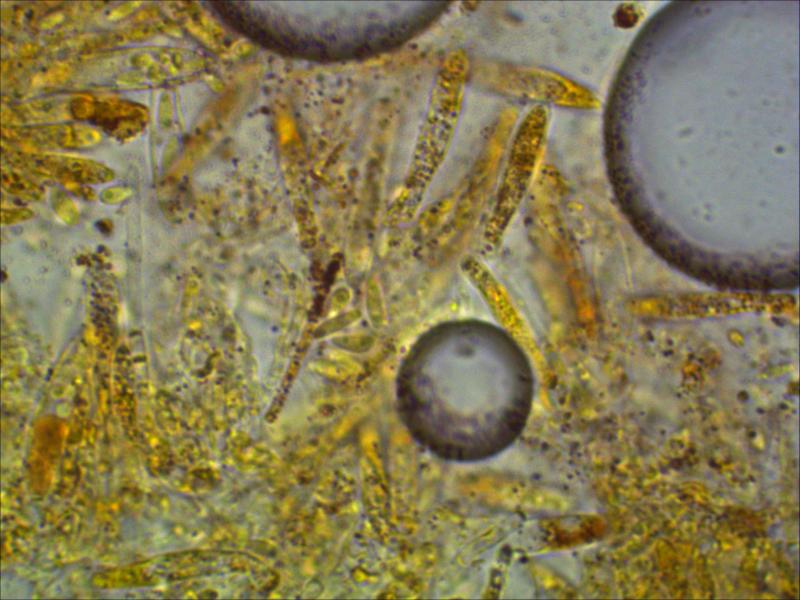
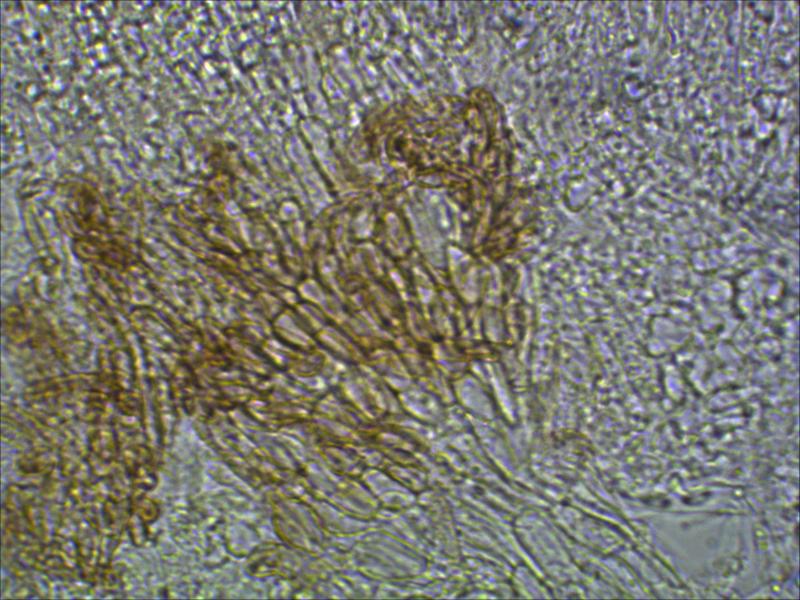

this resinae-piceae has actually fusoid spores with a high lipid content (4), while yours are partly clavate and only 2. It reminded me of Psilocistella conincola, but that has hooked hairs. Are you sure that there are no hairs? Perhaps Ciliolarina is also worth a try.
Zotto
Hi Zotto,
yes, there are hairs - i called them excipulum end cells, and they are granulose, sometimes brown. Ciliolarina - yes, surely a good idea. I think I will make another slide later ...
Thank you and best regards from Lothar
P.S. The apothecia were not on resin, but on naked wood.

Hymenoscyphus resinae-piceae is in fact a Ciliolarina too.
this one looks the most like Ciliolarina neglecta, I suppose the paraphyses content was turning violet for a short while and than became brown.
Would you mind drieing a part for DNA extraction for comparisation with neglecta and ligniseda/laetifica.?
Herzlich,
Stip
Dear Stip,
I already dried a specimen and can send you a part of it. But this will - sorry - take some time, because I am very busy and much "on the road" in the next weeks.
Thank you very much for your opinion and interest. Unfortunately, the specimen was three days old before I dried some of it, but I hope it will contain good DNA.
Please attach your post adress in a mail to me: lkrieglsteiner@t-online.de">lkrieglsteiner@t-online.de
Best regards from Lothar
thanks, that would be great! Ciliolarina has my interest for a long time and this neglecta, laetifica, ligniseda group needs more study.
Yes I hope the fruitbodies were dried quick enough but when they were on the edge of full ripeness that will probably no problem.
cheers,
Stip