27-04-2026 17:41
 Lothar Krieglsteiner
.. Algarve, same leaf than the last post. The con
27-04-2026 18:05
Lothar Krieglsteiner
... still attached at standing tree. The green con
27-04-2026 17:16
Lothar Krieglsteiner
.. Algarve, moist lying.The conidiomata look like
27-04-2026 12:54
Steve ClementsBonjour. Ce petit champignon blanc résupiné et
27-04-2026 09:59
Pauline. PennaBonjour Can anyone advise me on these pycnidia fo

22-04-2026 20:54
 Enrique Rubio
Hi to everybody.This Pyrenopeziza grew in moist le
24-04-2026 03:16
 David Chapados
Found while looking at something else from wood in
22-04-2026 01:06
 Richard VALERI
Bonjour à tous.Je vous présente cette Nectria s.
 Hi to all,
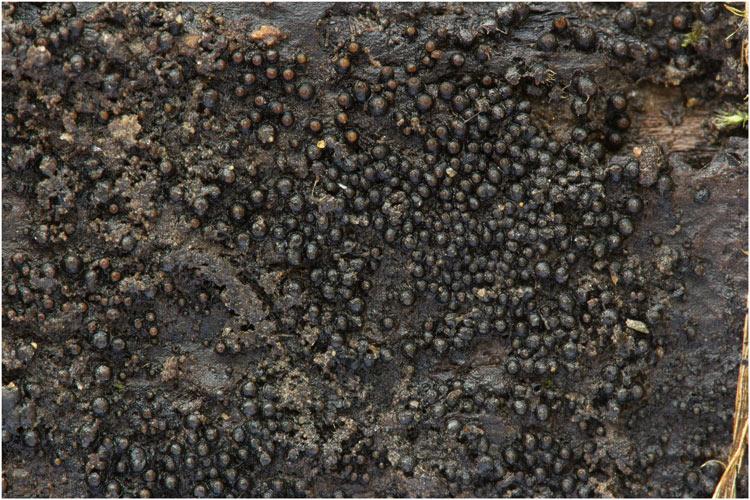
I found this fungus on a decorticed wood (unknown) in southeast Brazil after several days of rain.
I first classified it as Herpotrichia, but after a closer exam it occurred to me that it fits better into Byssosphaeria. However, I realized that this two genera share a lot of characteristics and their morphological distinction seems to be very subtle (at least to me!!).
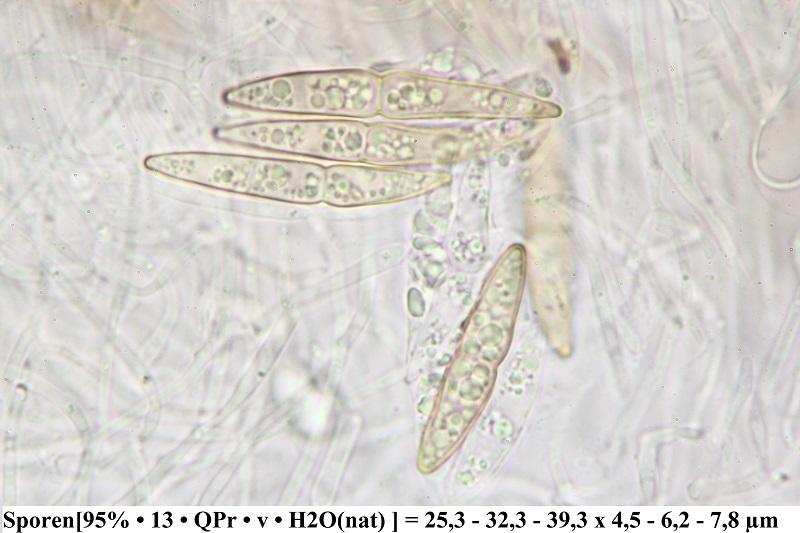
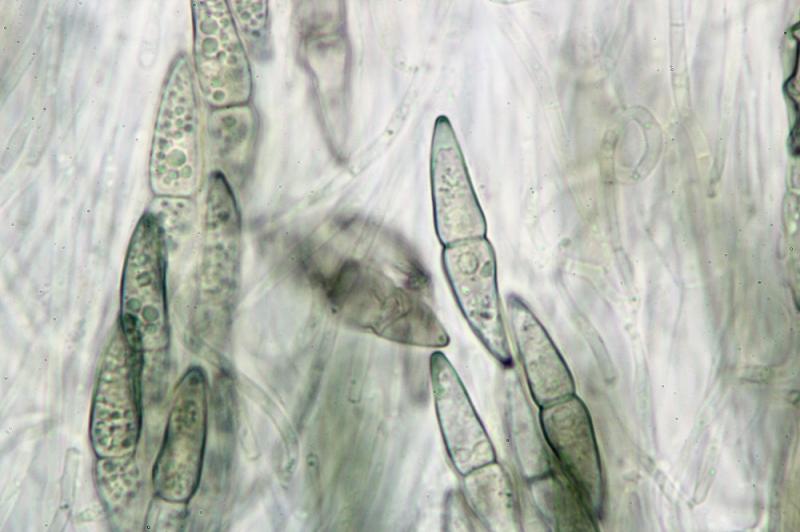
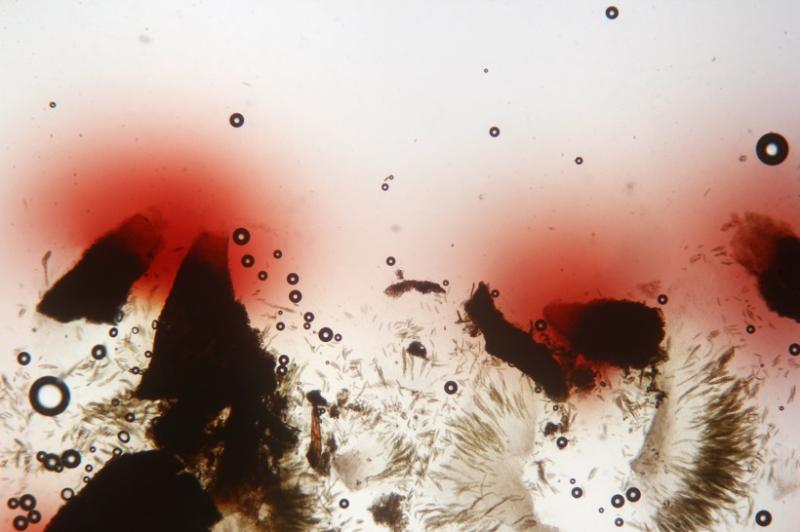
The specimen has black superficial ascomata 500-600 ?m, growing over a subiculum and with hyphal appendages covering its lower 2/3; apex flatened, ostiolum yellowish, producing reddish extractable pigments and staining reddish in KOH 10%, walls 65-80 m thick, and presenting an areolate pattern; asci 150-160 ?m long (including pedicel), pedicel 40-50 ?m long; ascospores 28-42 x 6-8 ?m, 1-septate, becoming 3-septate (old and germinating ascospores), initially hyaline, becoming pale brown to yellowish brown when mature, with a mucilaginous sheath surrounding ascospores and protruding at ends as appendages.
Based in the works of Barr (Mycotaxon 20:1-38) and Chen & Hsieh (Sydowia 56:24-38) this specimen fits well within B. scheidermayeriana. Although ascomata are smaller compared with the sizes provided by Chen & Hsieh (720-900), they still fit with those provided by Barr (500-825).
Additionally to the works of Barr (1984), Chen & Hsieh (2004) and Mugambi & Huhndorf (2009) I checked other papers describing or reporting Byssosphaeria/Herpotrichia, but except by the comments in Barr's work, none of them mention the KOH reaction of the opening region. Since the light coloured ostiolum is commonly present in Byssosphaeria, but sometimes difficult to see in dry specimens, it occurred to me that perhaps the KOH reaction could be an easy and quick test to separate Byssosphaeria from Herpotrichia. Looking at Barr's paper (Mycotaxon 20: 1-38) it was not clear to me if in all Byssosphaeriaspecies the reaction was "positive" since for some species she wrote "pigment not leaching out in KOH". This mean that the "mouth" turned reddish, but without leaching the pigments, or it didn't turn reddish at all?
So, I was wondering who wants to check this hypothesis performing the KOH reaction in yours Byssosphaeria/Herpotrhichia specimens and sharing the results here in the forum. Or if anybody knows this is bullshit, share that too!!
Thanks
Dartanha
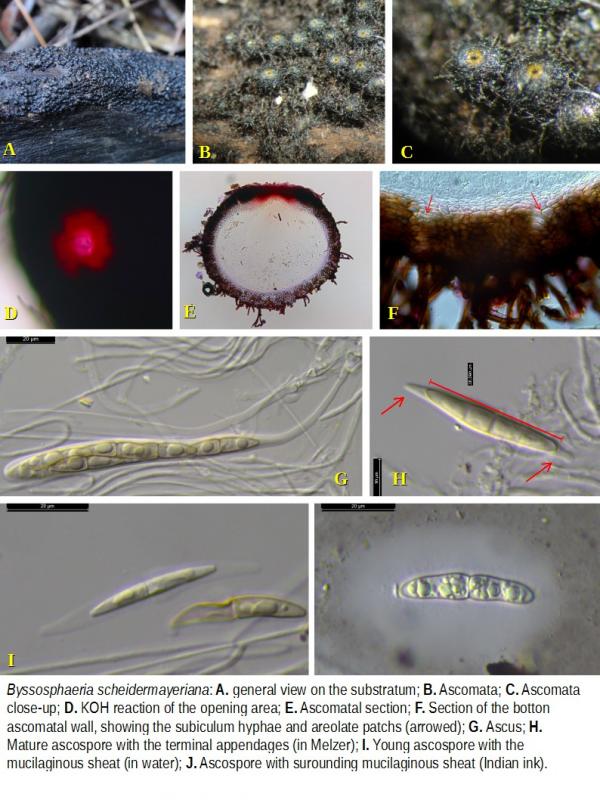
here is my result of the KOH Reaction on my B. schiedermeyeriana.
best regards,
Thorben