

05-05-2026 22:40
Gernot FriebesHi,I believe this is a Plagiostoma growing on a Sa
06-05-2026 11:25
 Castillo Joseba
Me mandan el material seco de Galicia (España) re
06-05-2026 17:23
Thomas Læssøehttps://svampe.databasen.org/observations/10594257
28-04-2026 20:07
 Lothar Krieglsteiner
... on twig in the air at standing Ceratonia siliq
04-05-2026 18:13
 Stephen Martin Mifsud
ID request for what seems to be a true aquatic fun
04-05-2026 16:39
Stephen Martin Mifsud
ID request: This specimen was collected in Malta o
28-07-2011 18:31
 Alex Akulov
Dear FriendsToday I made the pdf file of Velenovsk
04-05-2026 09:50
Castillo Joseba
Me mandan el material seco de Galicia,(España) re
Amphisphaeria sp.
Gernot Friebes,
07-03-2016 11:31
this species, which I assume is an Amphisphaeria, grows plentifully on a corticated branch of Fraxinus or Ulmus on the ground. I checked the paper by Wang et al. (2004) but couldn't find a species that fits well with this collection. The ascospores measure about 18–21 x 5,5–7 µm and appear to be smooth and without a sheath. Maybe someone has an idea!
Best wishes,
Gernot
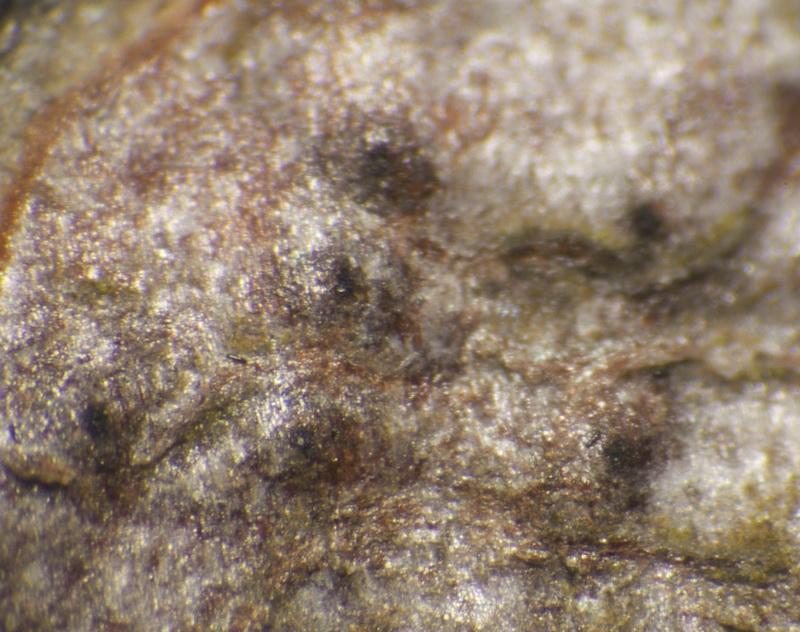
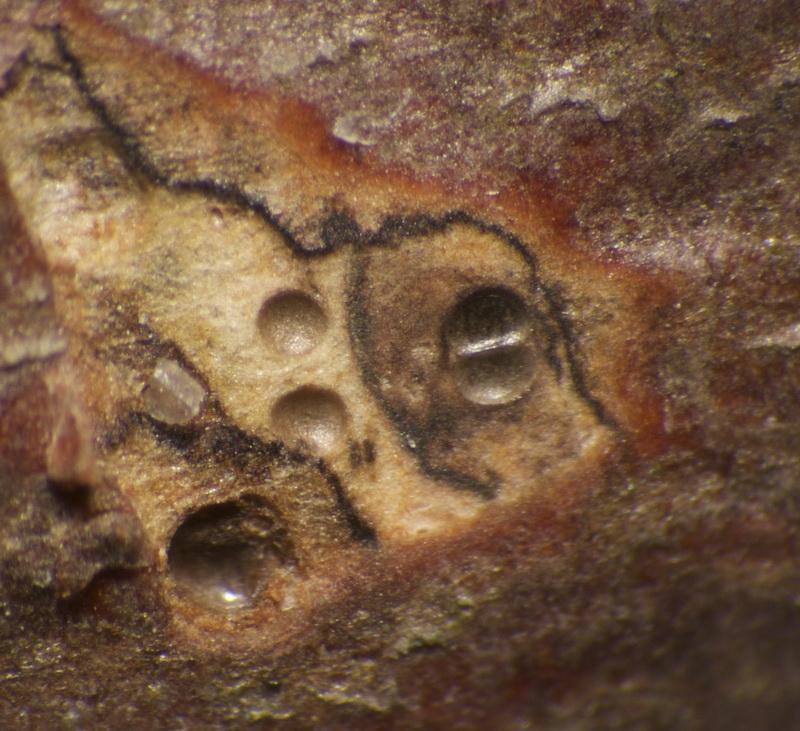
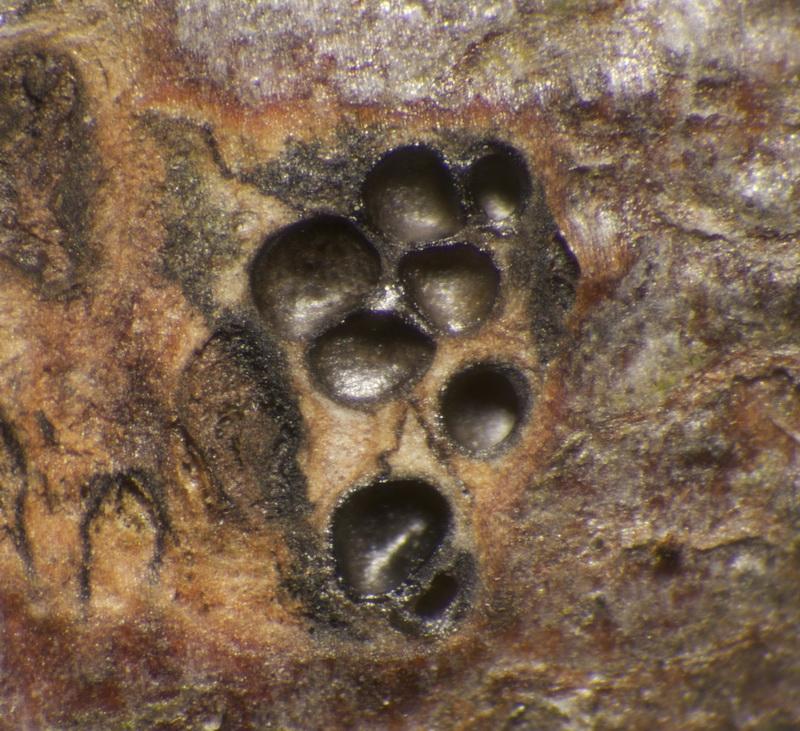
 Dok1-0001.pdf
Alain GARDIENNET,
07-03-2016 18:17

Re : Amphisphaeria on Fraxinus
Hi Gernot,
Have you looked towards Amphisphaeria umbrina (or A. cavata) ?
Alain
Gernot Friebes,
08-03-2016 12:26
Re : Amphisphaeria on Fraxinus
Thanks for your suggestion, Alain! I have no experience with A. umbrina but looking at the description and images in Wang et al. I feel like the ascospores of A. umbrina should be a bit darker brown than in my collection. Also it seems like the morphology of the ascomata is somewhat different but I think that could certainly vary to some degree...
Best wishes,
Gernot
Best wishes,
Gernot