19-04-2026 21:23
Steve ClementsBonjour, I found this anamorphic fungus on old pl
19-04-2026 20:46
Steve Clements1 mm diameter approx spherical conidiophores on pl
12-04-2026 17:56
 Hardware Tony
Found on dead stems in February earlier this year
17-04-2026 19:16
 Enrique Rubio
Hi to everybodyI would appreciate any assistance r
14-04-2026 05:32
Ethan CrensonHi all, A few weeks back a friend pointed out som
17-04-2026 15:14
 Bruno Coué
Bonjour.Récoltes du 16/04/2026, sur feuilles mort
12-04-2026 15:52
Gernot FriebesHi,I'm looking for help with this anamorph collect
14-04-2026 21:52
Gernot FriebesHi,found on dead leaves of Carex elata. Conidia: 4
16-04-2026 22:09
Buckwheat PeteHello, I'd like to ask about this older specimen:
15-04-2026 19:33
Fátima Durán ManzanequeHi!! I need help, I found this Ascomycete but I d
 Hello,
I would welcome your advice on this Bryoscyphus.
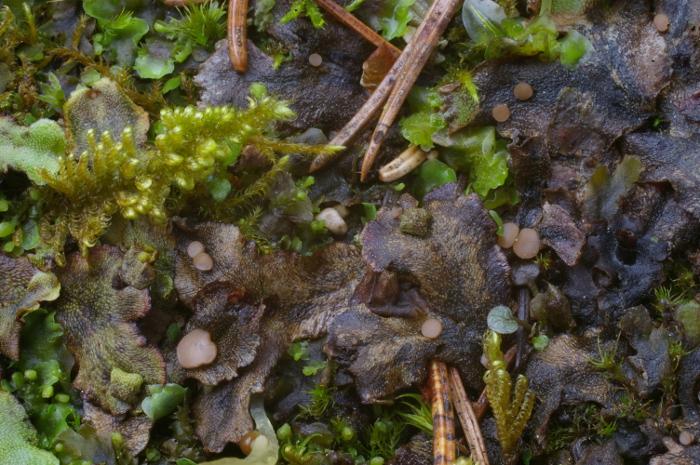
It was collected in Slovakia, Mala Fatra NP, in a gorge, on old thalli of Preissia quadrata, 10 May 2015.
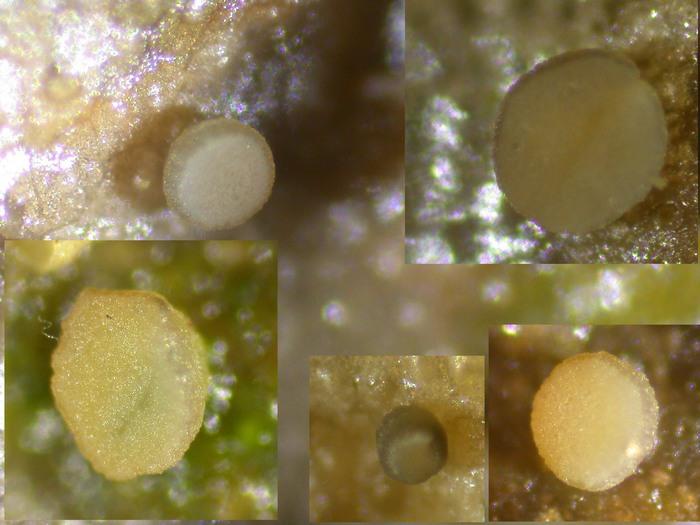
Apothecia grew in small groups, were slightly convex or plane, +- rounded from an upper view, pale brown, 0.5-2.5 mm in diameter, shortly stipitate.
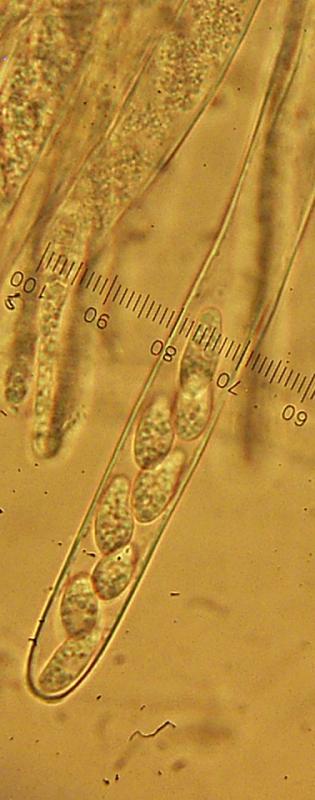
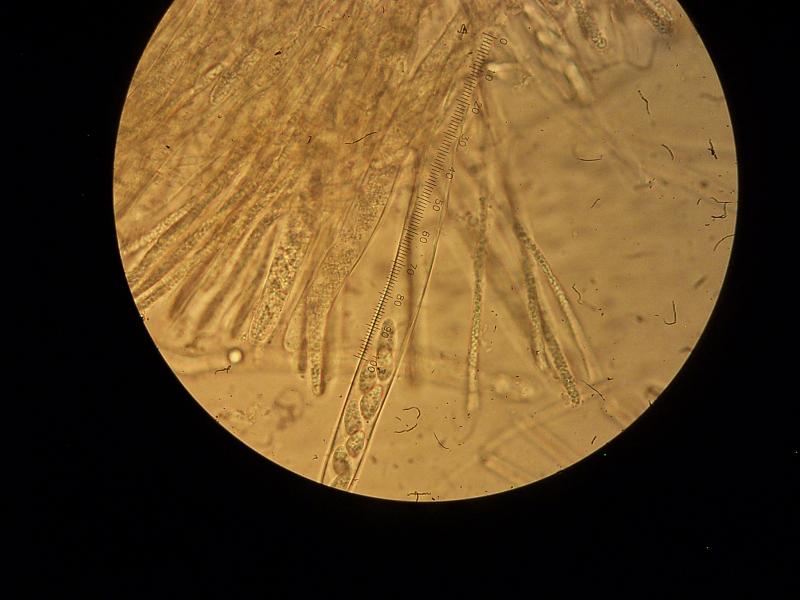
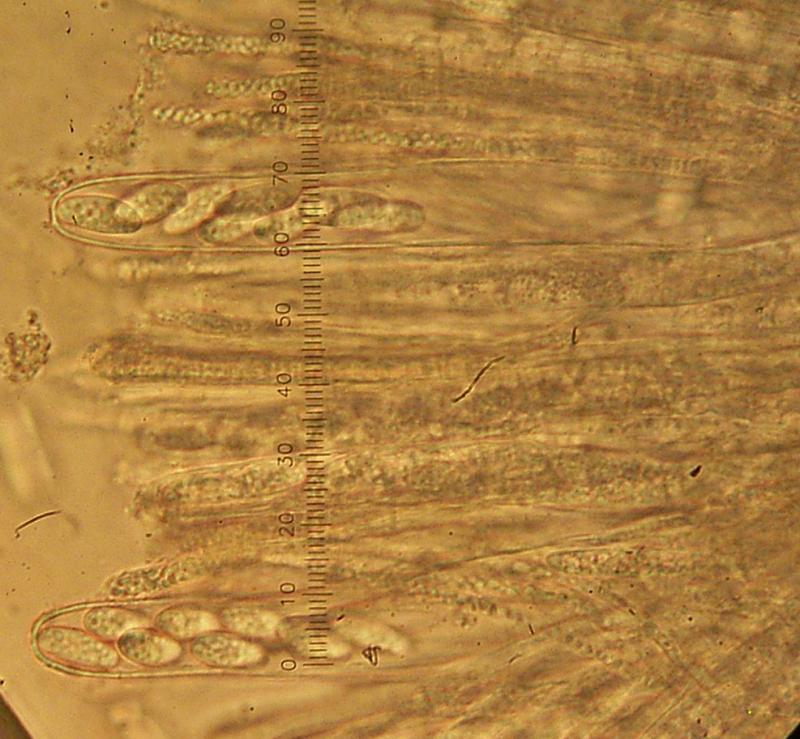
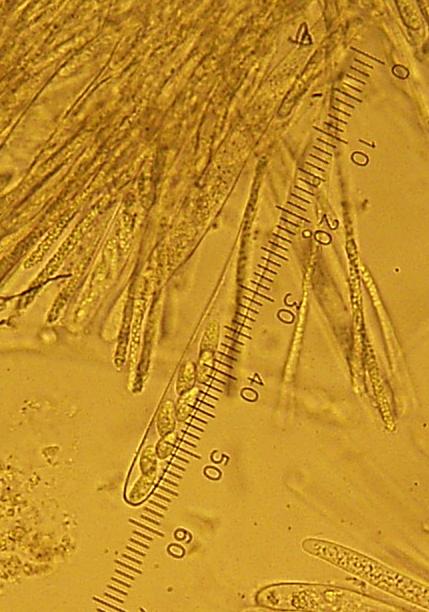
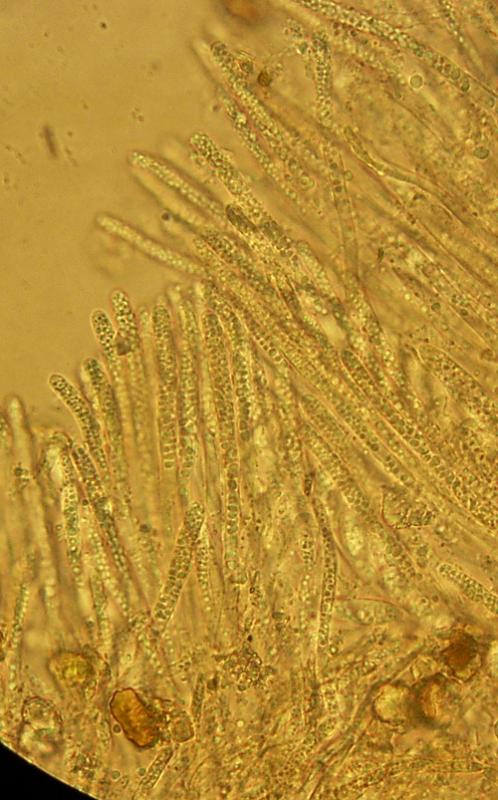
Asci cylindrical, inoperculate, octosporic, uniseriate or biseriate, IKI+, 130-160 x 9-12 micrometers.
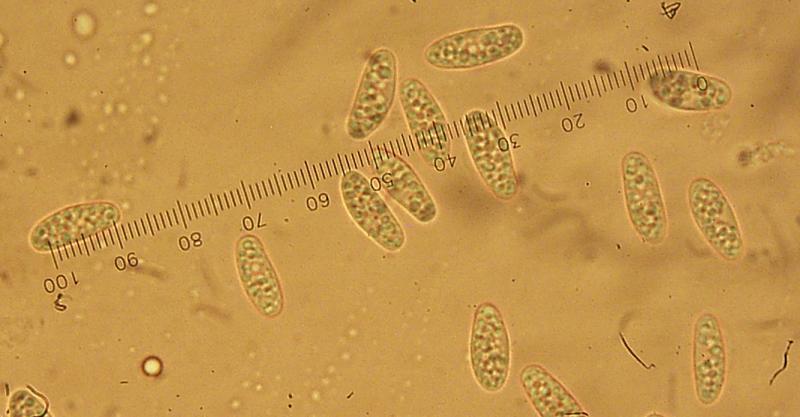
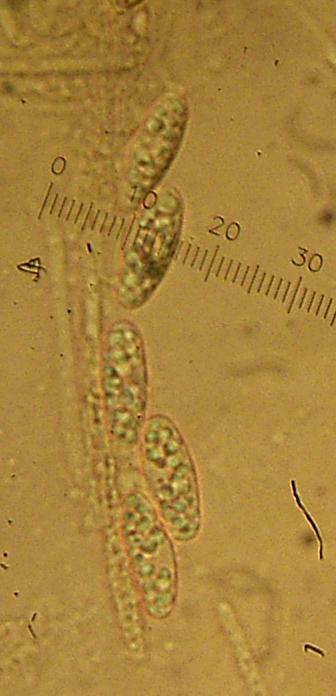
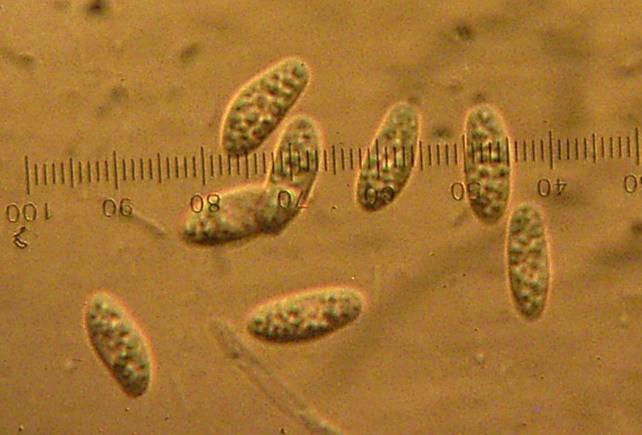
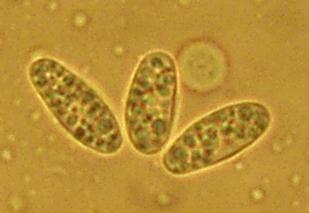
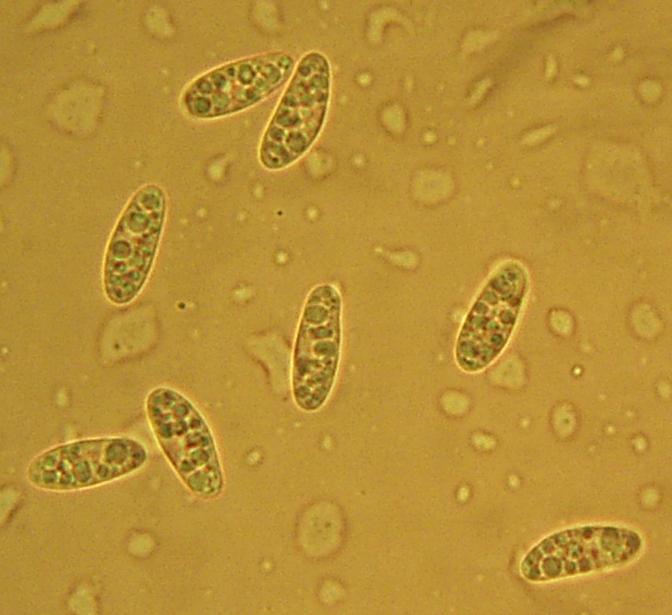
Spores unequilateral, smooth, with many small droplets, 12.5-15(17) x (4.5)5-5.5(6) micrometers.
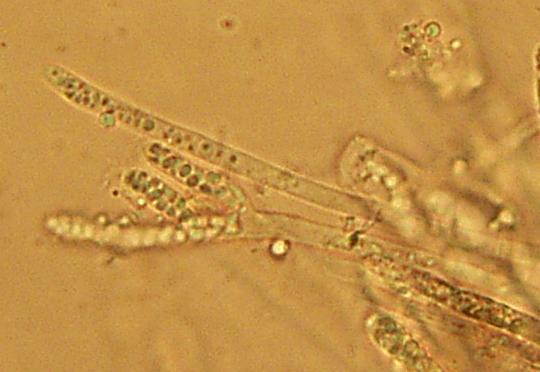
Paraphyses filled with small droplets, hyaline or pale brown, septate, branched, with an obtuse apex, 3-3.5 micrometers broad, straight.
Med. excipulum consisting of cylindrical thin-walled cells (2.5-4 micrometers broad).
Ectal excipulum combination of textura angularis and text. prismatica. Hair-like projections not observed.
No combination of characters in the key in the article by Verkley et al. 1997 fits perfectly. Preissia (member of Marchantiaceae) is not mentioned as a substrate in any of the species in the key. B. dicrani and B. turbinatus have totally different hosts, so I´m considering B. atromarginatus, B. marchantiae and B. conocephali. The width of spores is between B. atromarginatus and B. marchantiae, asci are too long for B. atromarginatus, spore shape wrong for B. marchantiae. For B. conocephali, the hairs are missing.
Zuzana
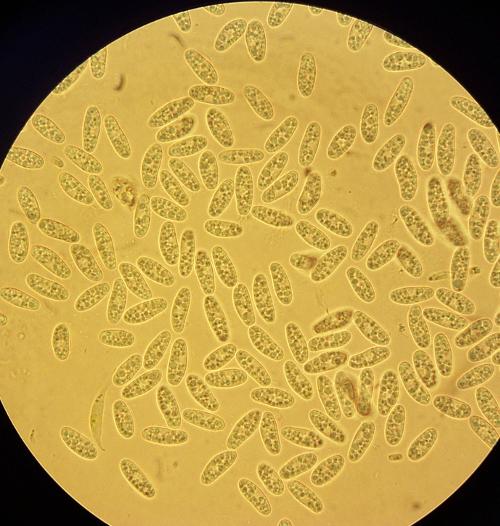
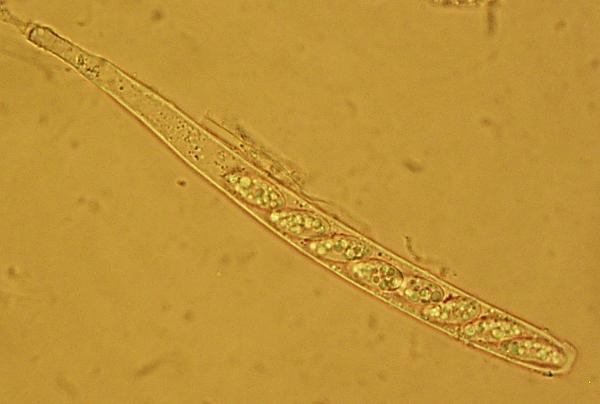
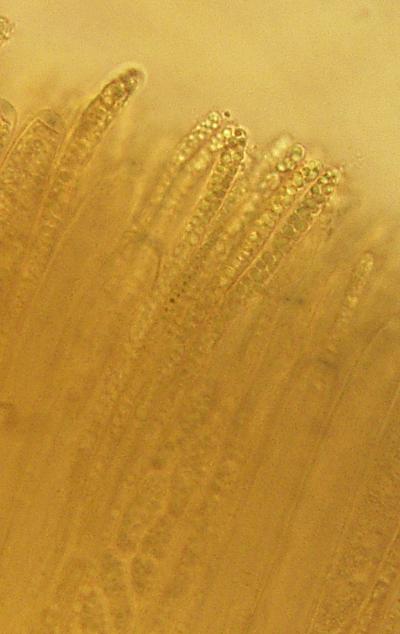
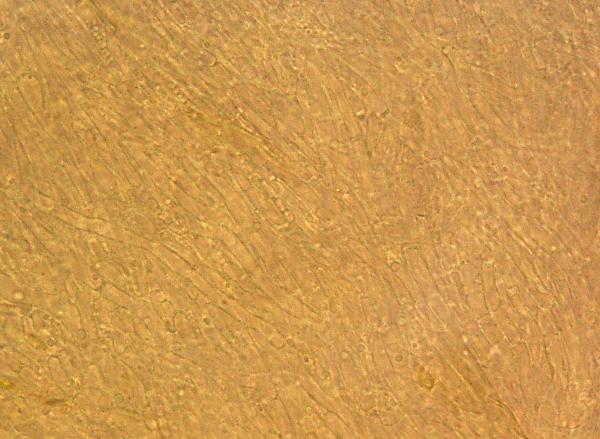
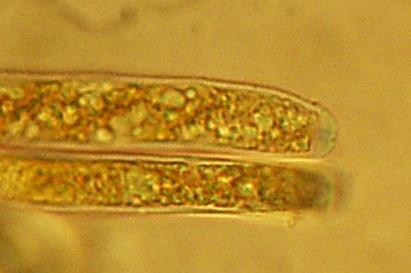
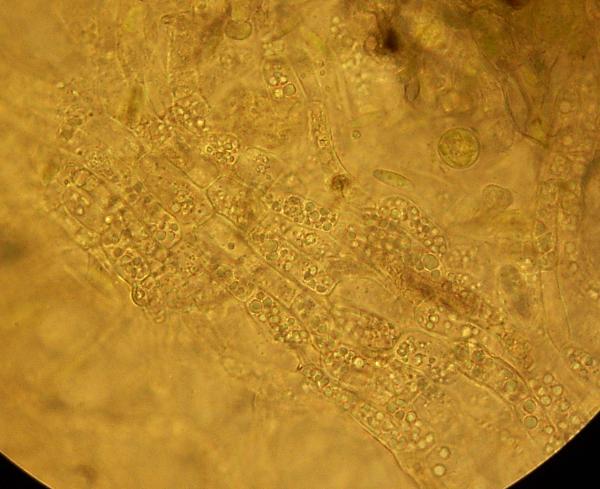
Je pense qu'il s'agit de B. atromarginatus Verkley, van Aa & G. de Cock. Voir ma publication en dossier attaché.
Amicalement
René
DOUGOUD, R. (2003) - Bryoscyphus atromarginatus. - Mycol. Montenegrina VI: 7-11.
René

Dear Rene,
I would also like to receive the file. Thanks in advance,
Yours, Lothar Krieglsteiner

Bonjour Zuzana, René et tous,
Belle récolte et belles photos.
I did not recognize the spores of a last year collection I called B. atromarginatus (on Lunularia cruciata). As in René's paper (which I also used for identification) the spore shape is different , along with guttulation . Spore width of my collection (MH 120114) never exceed 4.5 µm and there always is an empty area in the spore guttuation.
Asci never exceed 120 (130) µm
I do not know B. marchantiae.
I attach pics .Amitiés Michel
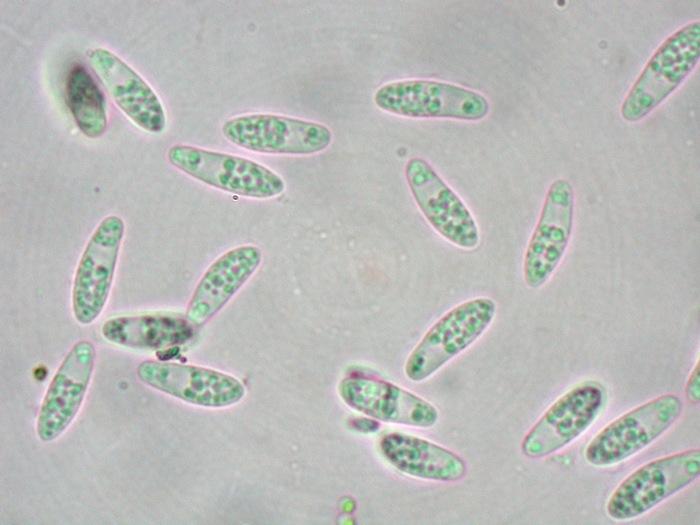

this is actually striking how the nucleus is in the lower part of the spore in your fungus. In all my available images I see the empty region +/- in the middle part.
Spore width seems variable, I have 3.5-4.5 up to rarely 5-5.5 µm.
Of course, I am not sure if all is the same, but i would at first sight think that yours belongs here.
Zotto
In my collection the spores often have an empty zone too, but rather small. I add some new photos.
Comparing my data with those in René´s article, I can see few differences - the substrate, somewhat different size of spores and asci (I measured everything fresh, in water). If I understand the French text well, René´s paraphyses were simple (mine are sometimes branched, see the photo with two lateral branches). I also never observed septa in the spores.
But these differences are probably not very important.
Best regards, Zuzana
Septation occurs only in overmature spores in this group, so it depends on the ripeness of the apos.
Zotto