
28-04-2026 20:07
 Lothar Krieglsteiner
... on twig in the air at standing Ceratonia siliq
14-04-2026 05:32
Ethan CrensonHi all, A few weeks back a friend pointed out som
28-04-2026 20:33
Vitus SchäfftleinHello, I found Trochila ilicina on Ilex aquifoliu

30-04-2026 10:28
Rot BojanHello, by appearance I would say that I am dealing
27-04-2026 18:48
Tony MoverleyCollected 23rd April 2026, Norfolk, EnglandSwarms
27-04-2026 20:52
Lothar Krieglsteiner
Found on hanging tiwg of Olea europaea in dried-ou
28-04-2026 22:51
 Bernard CLESSE
Bonsoir à toutes et tous,Pourriez-vous m'aider à
29-04-2026 08:01
Lothar Krieglsteiner
... on twig attached to small tree of Citrus auran
29-04-2026 10:44
Lothar Krieglsteiner
growing at moist, drying-out soil at the side of a
 Hi to all!
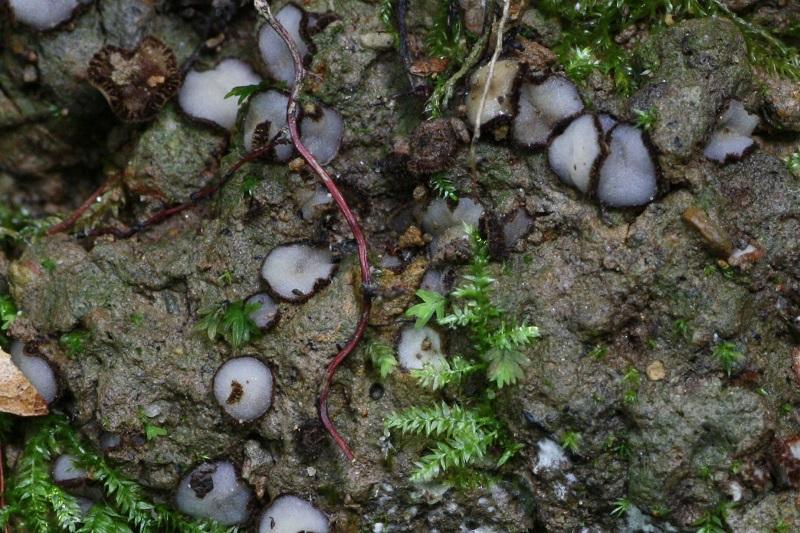
I need your help with this fungus that appears directly on the ground in a beech forest. (Páramo, Puerto de la Ventana, Asturias, Spain. 13-VIII-2014, 1400 msm).
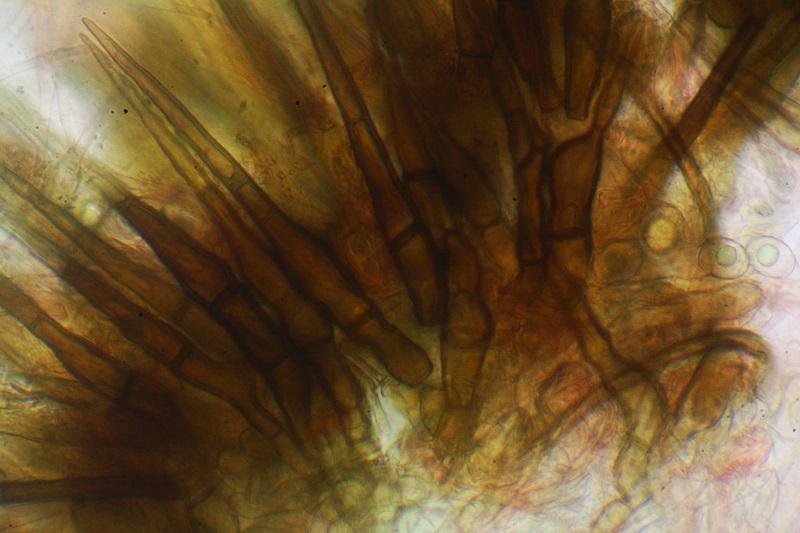
Apothecia up to 7-8 mm, with white or gray hymenium with small brown hairs.
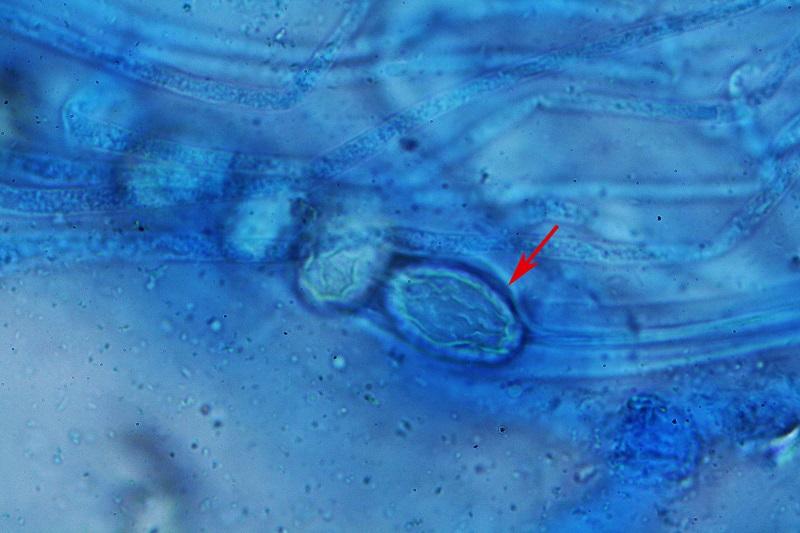
Asci up to 210?m, 8-spored and with croziers. Paraphyses up to 225?m, 2-3 septa and 10-12 ?m apex. Ascospores hyaline, roughened walled spores and smooth walled in young ones, broadly fusiform and with one big guttule. Me: 18-20 (22) x 12-13 (14) ?m.
I thought something close to Trichophaea spp. For example, T. woolhopeia but it is a species with fine warts in young spores. Another closely related species is T. velenovskyi with more fusiform spores and other ornamentation, equal to T. paludosa group.
Study with rehydrated material in isotonic water and blue lactophenol.
Maybe someone knows something more..
Best regards,
Borja
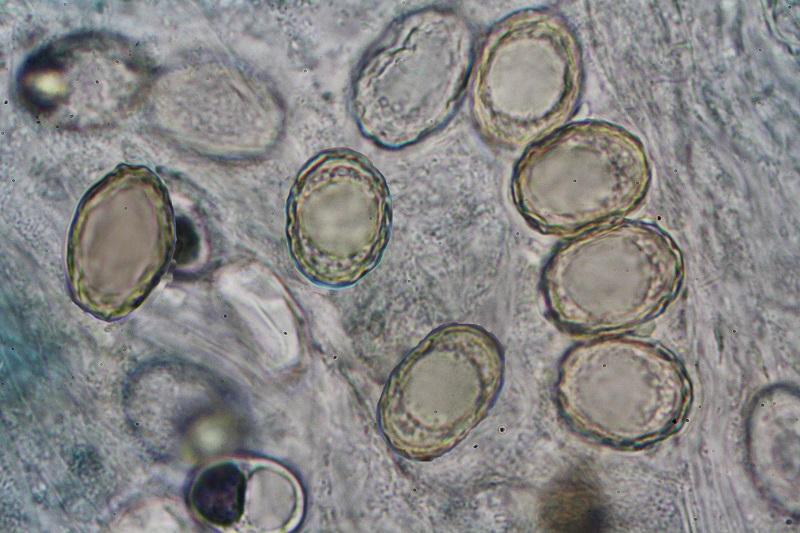
je ne vois pas autre chose que T. woolhopeia (Cke & Phill.) Boud. Cependant, êtes vous sûr que les ascospores sont fusiformes (ce n'est pas le cas sur vos photos) et qu'elles sont verruqueuses ?
René
I agree with René that this is indeed T. woolhopeia.
Normally the broad spores of this species are smooth but in some cases a "false ornamentation" can occur. I have described this phenomenon in my article (see added pdf). The epispore is loosening from the sporewall for some reason and it looks like an ornamentation but it's not cyanophilic. I have seen several similar collections from Belgian, Germany and Spain.
Best wishes,
Ron
 Een sleutel tot de Europese soorten van de genera Trichophaea, Trichophaeopsis en Paratrichophaea
Ron, I was answering when I recieved your comment. I think you are right! Its an very variable species indeed!
Thank you very much!
Borja
Did you really find two collections of T. woolhopeia with ornamented ascospores?
This probably is another species of Trichophaea or you did find something nobody else has ever seen before because the ascospores of T. woolhopeia are smooth.
Do you have a good description of these finds or dried material to examine?
Kind regards,
Ron
Yes I have two more collection, far from this one, where I found this carasteristic. Not the same because the ornamentatition is formed by fine warts but similar. I´ll send you some more information in privately.
Borja