
28-04-2026 22:51
 Bernard CLESSE
Bonsoir à toutes et tous,Pourriez-vous m'aider à

28-04-2026 21:50
 Pablo Sandoval
Hola a todos,Espero se encuentren bien. Hace mucho
27-04-2026 18:05
 Lothar Krieglsteiner
... still attached at standing tree. The green con
28-04-2026 20:33
Vitus SchäfftleinHello, I found Trochila ilicina on Ilex aquifoliu
28-04-2026 20:07
Lothar Krieglsteiner
... on twig in the air at standing Ceratonia siliq
27-04-2026 20:52
Lothar Krieglsteiner
Found on hanging tiwg of Olea europaea in dried-ou
27-04-2026 18:48
Tony MoverleyCollected 23rd April 2026, Norfolk, EnglandSwarms
27-04-2026 17:41
Lothar Krieglsteiner
.. Algarve, same leaf than the last post. The con
27-04-2026 17:16
Lothar Krieglsteiner
.. Algarve, moist lying.The conidiomata look like
Interesting Perithecia from leaves of Ledum palustre
Nina Filippova,
20-06-2014 13:49
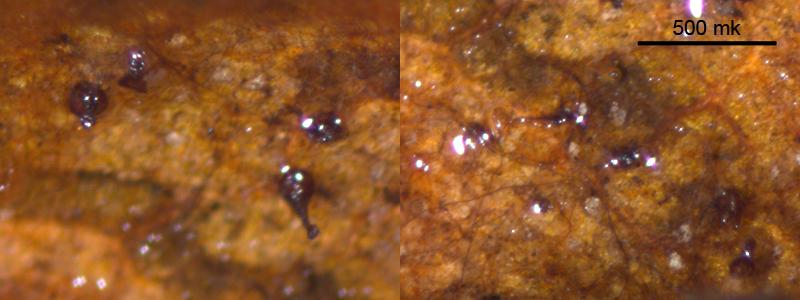
Coordinates: N60,891352° E68,690042°, 16.06.2014.
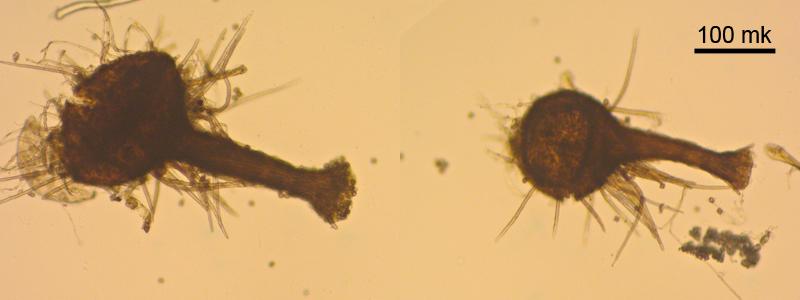
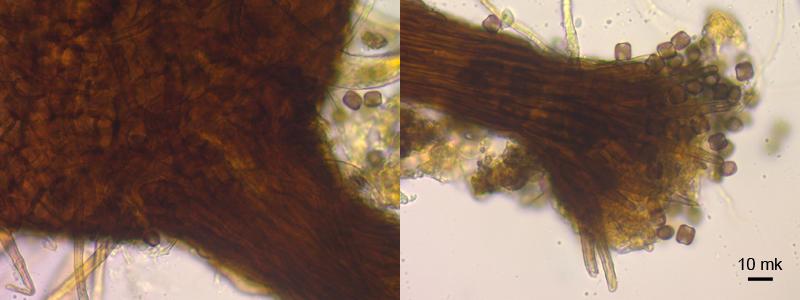
Perithecia on lower side of the leaf, scattered, submerged under epidermis with protruding neck, up to 400 mk high, perithecium about 150 mk in diameter, neck about 30-40 mk broad, with collar up to 100 mk.
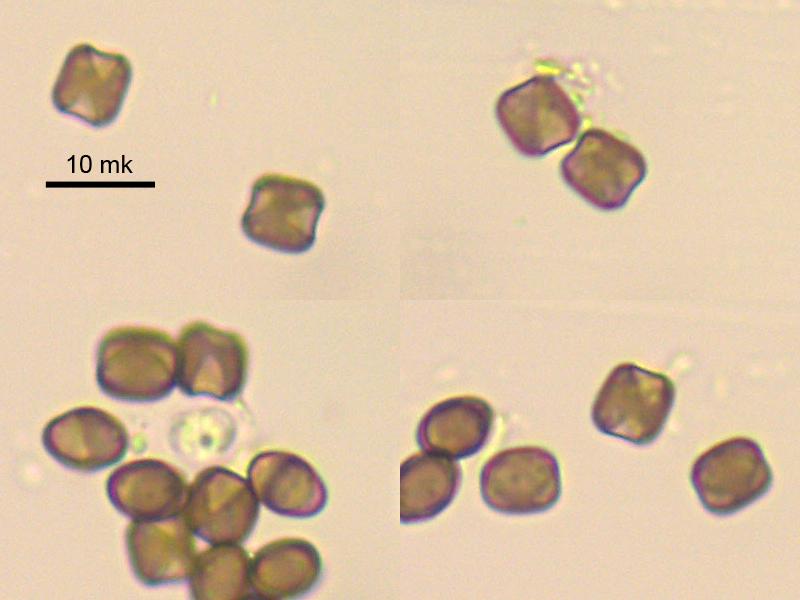
Outer peridium from brown angular cells, covered with outgrowing hyphoid brown setae up to 200 mk long, 7 mk broad at base; neck covered by parralel brown hyphae 3-4 mk broad, in upper part of the neck these hyphae create rosette; spores cubical, about 6.7 x 6.3 mk, with thin wall on two opposite sides.
Paul Cannon,
20-06-2014 14:03
Re : Interesting Perithecia from leaves of Ledum palustre
This is a species of Scopinella - possibly S. solani but it's a long time since I worked on them. They are ascospores rather than conidia - the asci deliquesce at an early stage.
Nina Filippova,
20-06-2014 14:39
Re : Interesting Perithecia from leaves of Ledum palustre
Thank you, Paul. I will look later in literature for exact identification.
Nina.
Nina.
David Malloch,
20-06-2014 15:13

Re : Interesting Perithecia from leaves of Ledum palustre
Hi Nina,
This may be S. barbata Lév.
My notes say:
"Growing on decaying oak leaves in Europe and Algeria. Asci 8-spored. Ostiolar hyphae extending well beyond the fused portion of the neck and forming a basket-like arrangement holding spores. Lateral hairs of the ascomata not spine-like and fused in groups of only 2 or 3. Spores more than 5-6um long"
It may not be restricted to oak leaves; there are probably not enough reports of this species in the literature to be sure about substrate-specificity.
Dave
This may be S. barbata Lév.
My notes say:
"Growing on decaying oak leaves in Europe and Algeria. Asci 8-spored. Ostiolar hyphae extending well beyond the fused portion of the neck and forming a basket-like arrangement holding spores. Lateral hairs of the ascomata not spine-like and fused in groups of only 2 or 3. Spores more than 5-6um long"
It may not be restricted to oak leaves; there are probably not enough reports of this species in the literature to be sure about substrate-specificity.
Dave