
28-04-2026 20:33
Vitus SchäfftleinHello, I found Trochila ilicina on Ilex aquifoliu

30-04-2026 10:28
Rot BojanHello, by appearance I would say that I am dealing
27-04-2026 18:48
Tony MoverleyCollected 23rd April 2026, Norfolk, EnglandSwarms
14-04-2026 05:32
Ethan CrensonHi all, A few weeks back a friend pointed out som
27-04-2026 20:52
 Lothar Krieglsteiner
Found on hanging tiwg of Olea europaea in dried-ou
28-04-2026 22:51
 Bernard CLESSE
Bonsoir à toutes et tous,Pourriez-vous m'aider à
29-04-2026 08:01
Lothar Krieglsteiner
... on twig attached to small tree of Citrus auran
29-04-2026 10:44
Lothar Krieglsteiner
growing at moist, drying-out soil at the side of a

What could this be?
Gerrit Jansen,
27-03-2014 15:38
 Hi all,
 Could anyone give me an idea what this could be?
Thanks, Gerrit
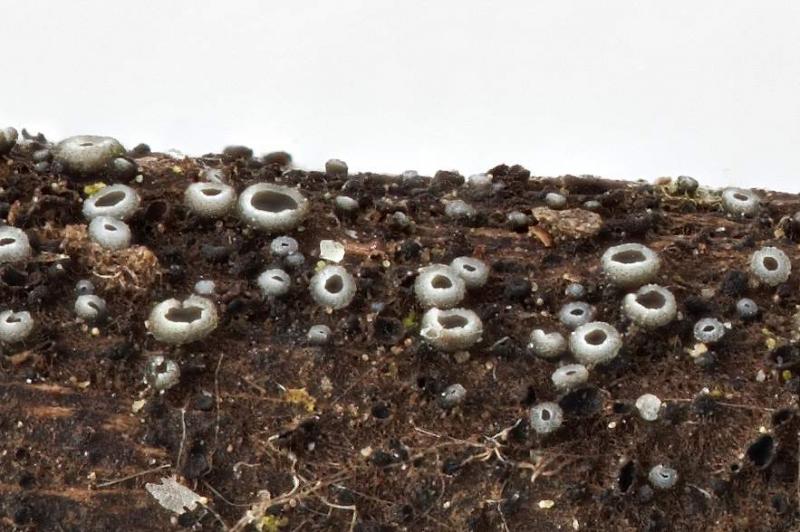
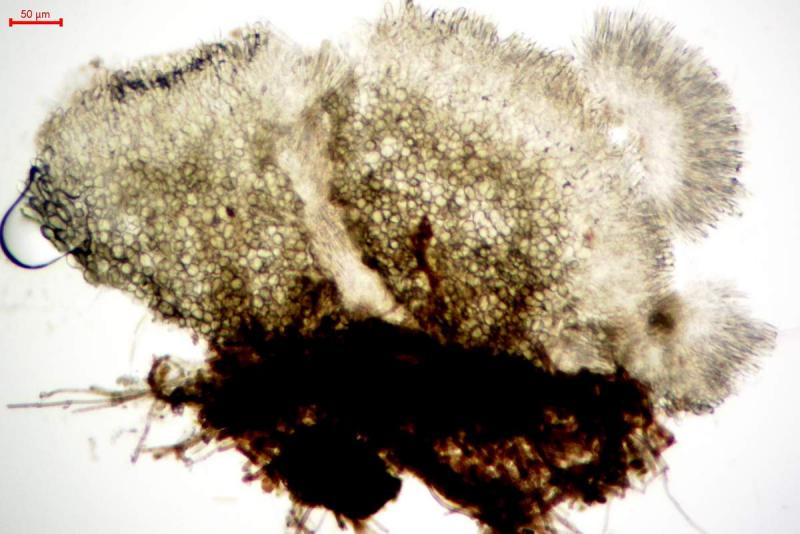
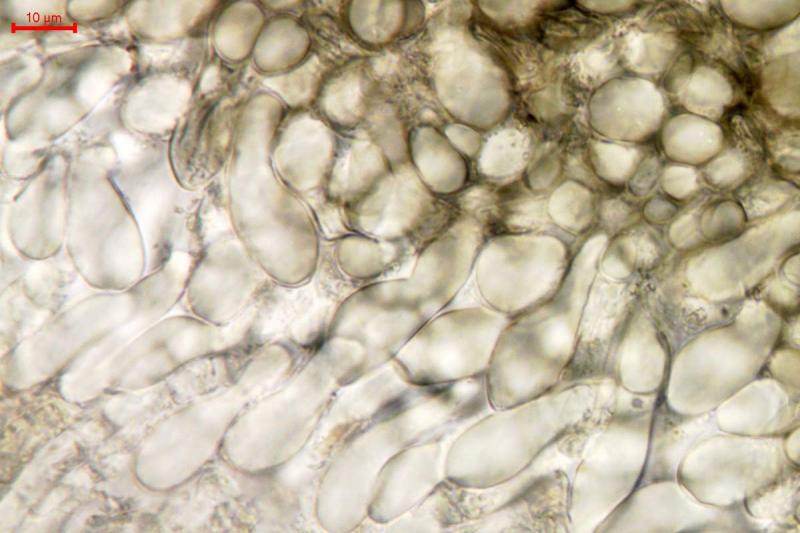
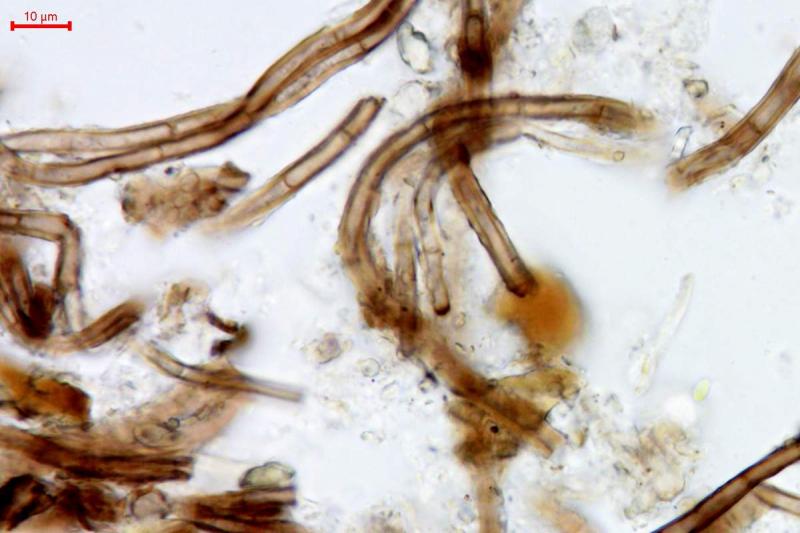
On fallen branch of Salix. Apothecia diam 0.3-0.4 (0.5) mm, sessile.
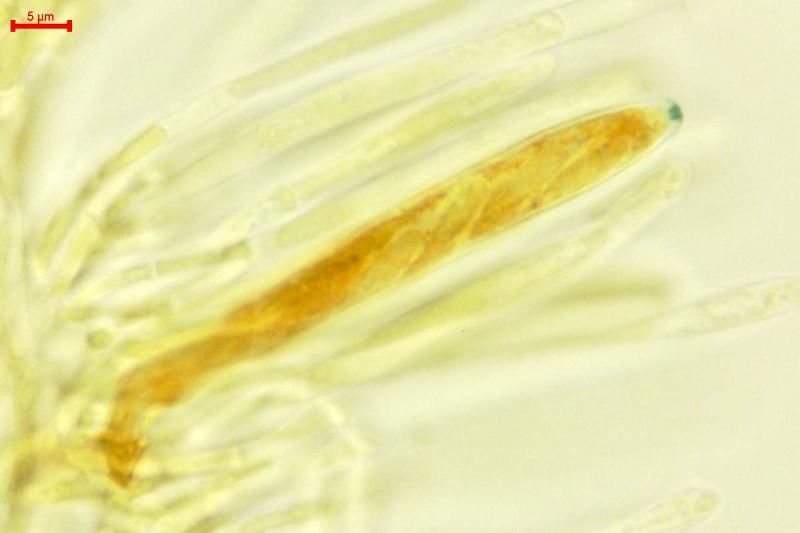
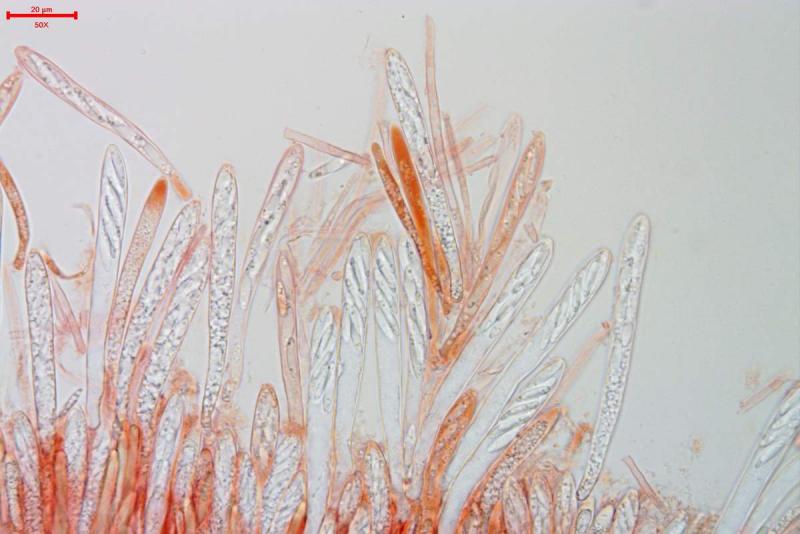
Ascus contains 8 spores, iodine positive, 69-66 x 9-10 ?m, croziers present.
Paraphyses cylindrical width 2-3.5 ?m.
Spores non septate, 7-16.5 x 2-3.5 ?m; Qav.=4.4; n=15; spores taken from apothecium in Congo red in 5% ammonia.
Chris Yeates,
27-03-2014 16:28

Re : What could this be?
Hello Gerrit
have you checked to see if there is a KOH reaction?
regards
Chris
have you checked to see if there is a KOH reaction?
regards
Chris
Gerrit Jansen,
27-03-2014 16:52
Re : What could this be?
Hi Chris,
The apothecium turns yellowish greenish in 5% KOH.
Gerrit
The apothecium turns yellowish greenish in 5% KOH.
Gerrit
Luc Bailly,
27-03-2014 18:30

Re : What could this be?
Hi Gerrit,
Also: could you take the size of spores just in water? In Congo read, that will disturb the measures. Check also if the spores aren't septate now and then.
Looking at the spores in water is absolutely necessary, because NH4OH and KOH can influence the number and look of the guttules.
Then, take Andreas Gminder's key: http://www.mollisia.de/Word_Dokumente/key.doc
Cheers - LUC.
Also: could you take the size of spores just in water? In Congo read, that will disturb the measures. Check also if the spores aren't septate now and then.
Looking at the spores in water is absolutely necessary, because NH4OH and KOH can influence the number and look of the guttules.
Then, take Andreas Gminder's key: http://www.mollisia.de/Word_Dokumente/key.doc
Cheers - LUC.
Gerrit Jansen,
27-03-2014 21:32
Re : What could this be?
Hi Luc and Chris,
I measured the spores in water 12.7 x 2.9 um.
Thanks for the link to Andreas Gminders Mollisia key. With your help and the key I quickly arrived at Mollisia fusca.
Problem solved, thanks again.
Regards, Gerrit
I measured the spores in water 12.7 x 2.9 um.
Thanks for the link to Andreas Gminders Mollisia key. With your help and the key I quickly arrived at Mollisia fusca.
Problem solved, thanks again.
Regards, Gerrit
 fusca-6D-214800-Mollisia-fusca-0001.pdf